

A Wild, Weedy, and Intoxicating Orchid, Part 2

Posted November 8th, 2021 by Marc Cohen
Categories: Cool Growers, Orchids in the Wild, Photos

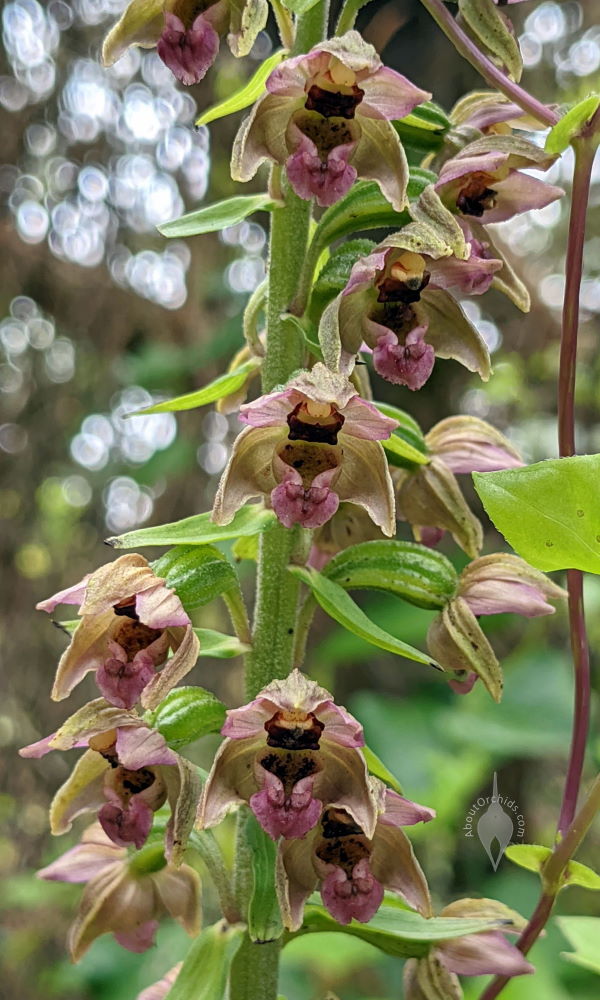
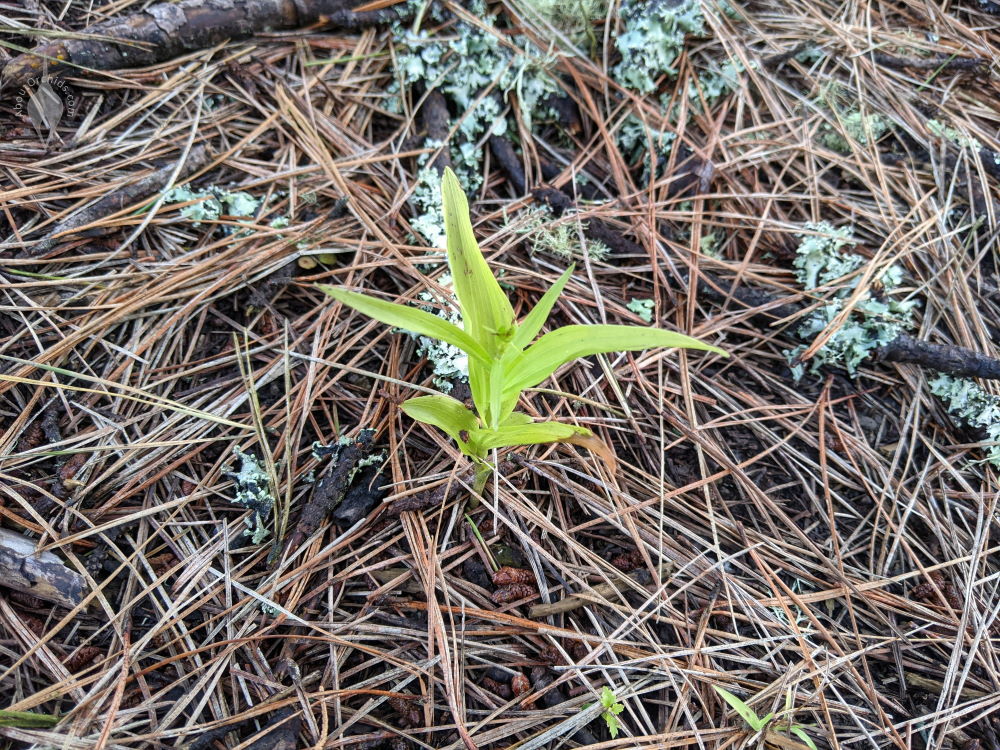
Epipactis helleborine, orchid species flowers, Broad-leaved helleborine growing wild in Pacifica, CaliforniaEpipactis helleborine, orchid species flowers, Broad-leaved helleborine growing wild in Pacifica, CaliforniaEpipactis helleborine, orchid species plant growing among pine needles and lichens, Broad-leaved helleborine growing wild in Pacifica, California

The Broad-Leaved Helleborine is indeed a wild, weedy, and intoxicating orchid. It’s an invasive species in North America, with nectar that drugs its insect pollinators. On the coast, just south of San Francisco, the plants near us grow in a tough botanical neighborhood. Their small patch of woods on a steep hillside is full of invasive species, such as ivy, Pampas Grass, and ice plant. Probably the most common native is Poison Oak. Local deer and other herbivores eat much of the greenery. After two years of bad drought, the forest is dry. Fortunately, since these pictures were taken, we’ve had rain, but these orchids grew with very little rainfall. Instead, they must have relied on fog dripping from the tall conifers above them.

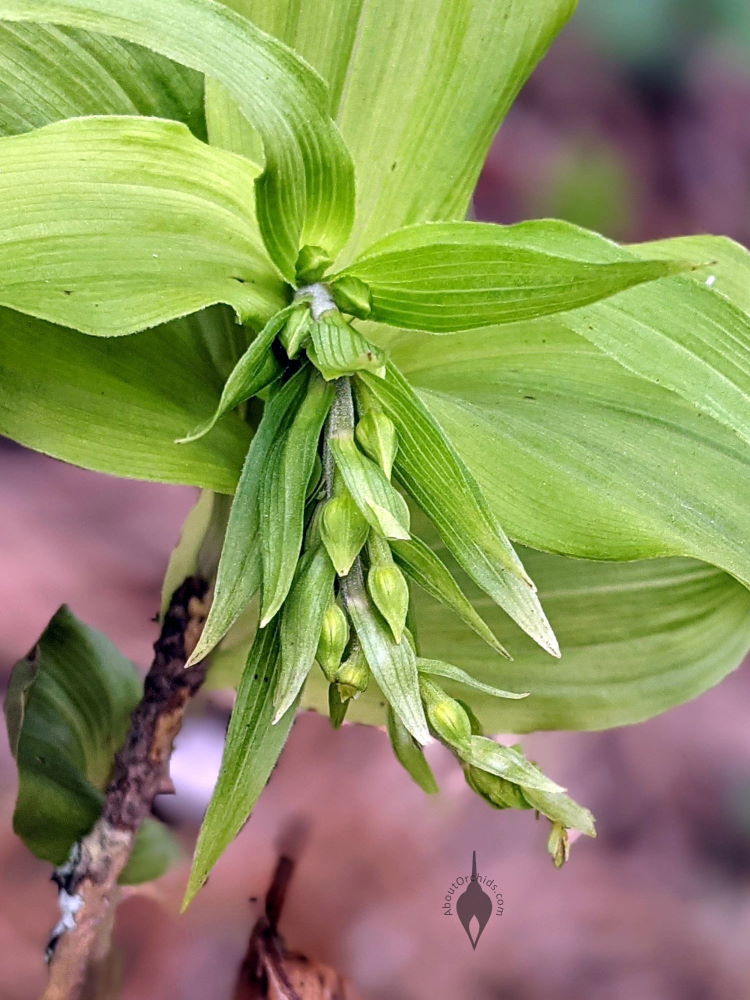
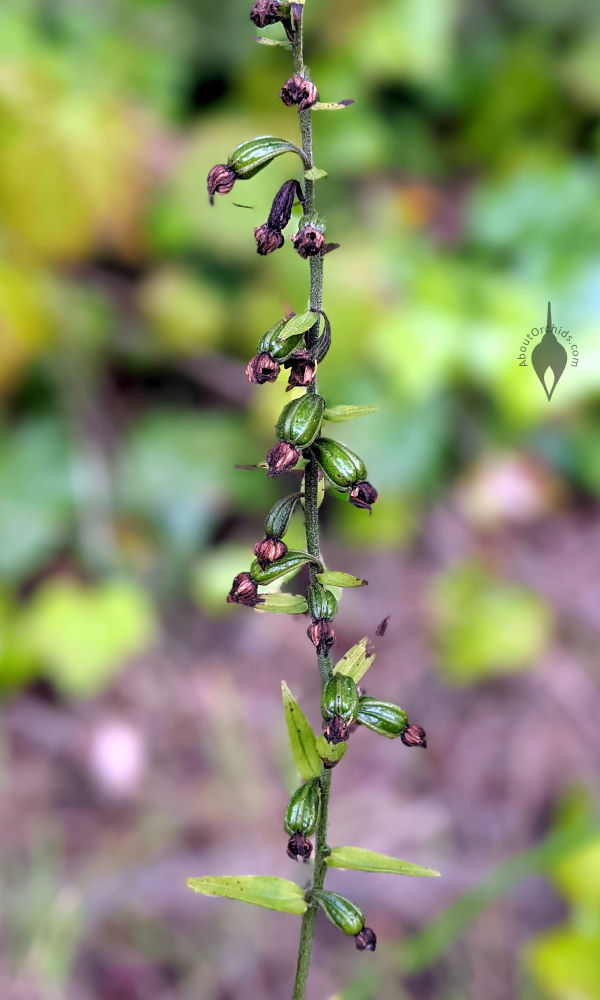
Epipactis helleborine, orchid species leaves and young flower buds, Broad-leaved helleborine growing wild in Pacifica, CaliforniaEpipactis helleborine, orchid species with flower buds, Broad-leaved helleborine growing wild in Pacifica, CaliforniaEpipactis helleborine, orchid species with seedpods, Broad-leaved helleborine growing wild in Pacifica, California

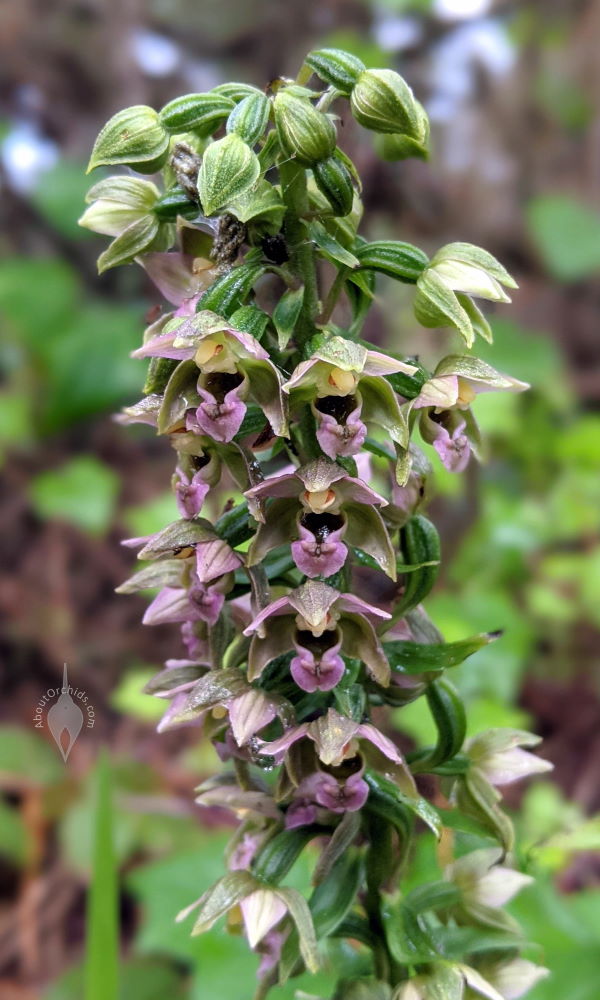
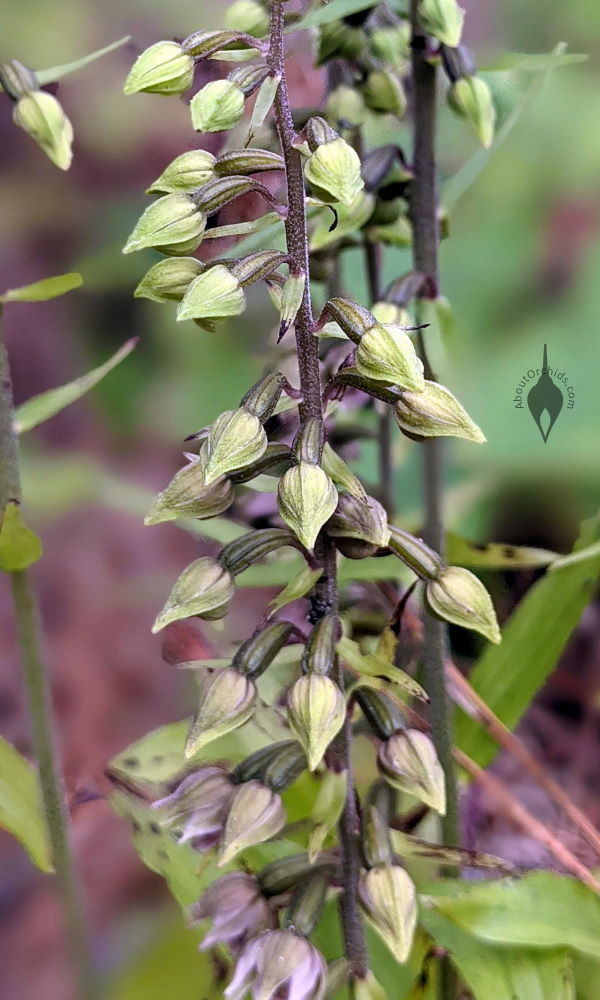
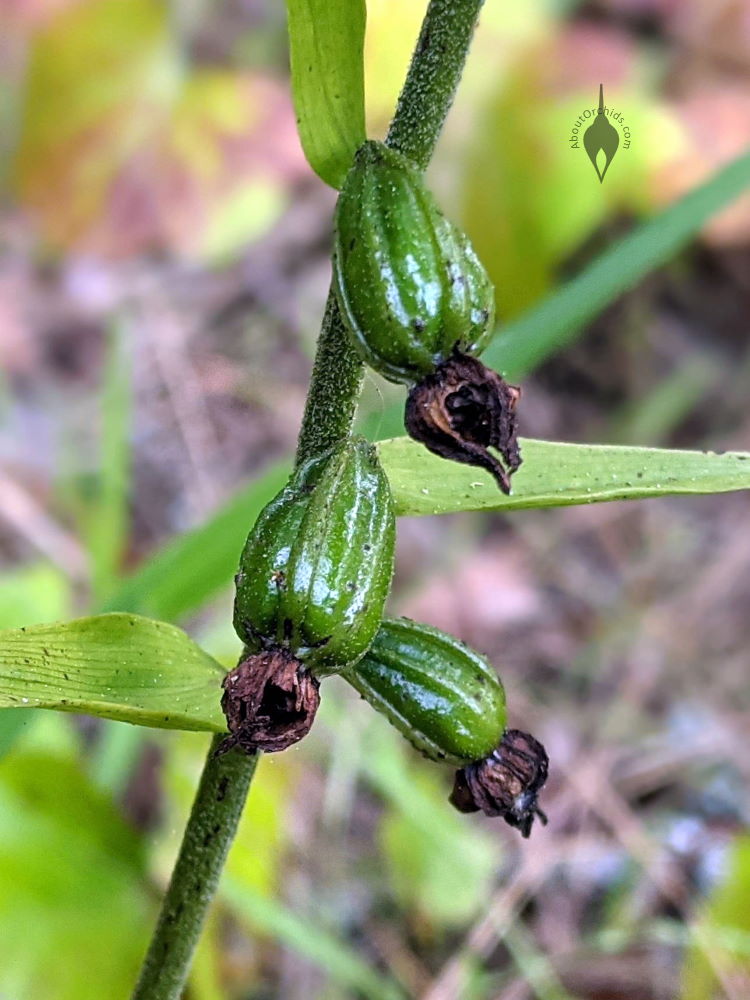
When these photos were shot in late summer and early fall, there were over a dozen plants in different stages of growth. Some had maturing seedpods, others were in full bloom, while a few more were just starting to send up young flower buds. The mature plants were about waist high, with blooms less than 3/4 inch (1.9 cm) wide. Without fail, every flower formed a seedpod. While this is partly due to that intoxicating nectar, it’s also a trait of self-pollinating plants. Undoubtedly, reliable masses of tiny, windblown seeds help this orchid to conquer new areas.

Epipactis helleborine, orchid species with seedpods, close up of seedpods, Broad-leaved helleborine growing wild in Pacifica, CaliforniaEpipactis helleborine, orchid species leaves, Broad-leaved helleborine growing wild in Pacifica, CaliforniaEpipactis helleborine, orchid species plant with leaves and seedpods, Broad-leaved helleborine growing wild in Coast Redwood forest in Memorial County Park, Loma Mar, San Mateo County, California

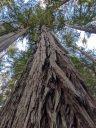
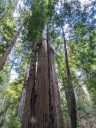
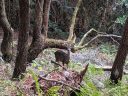
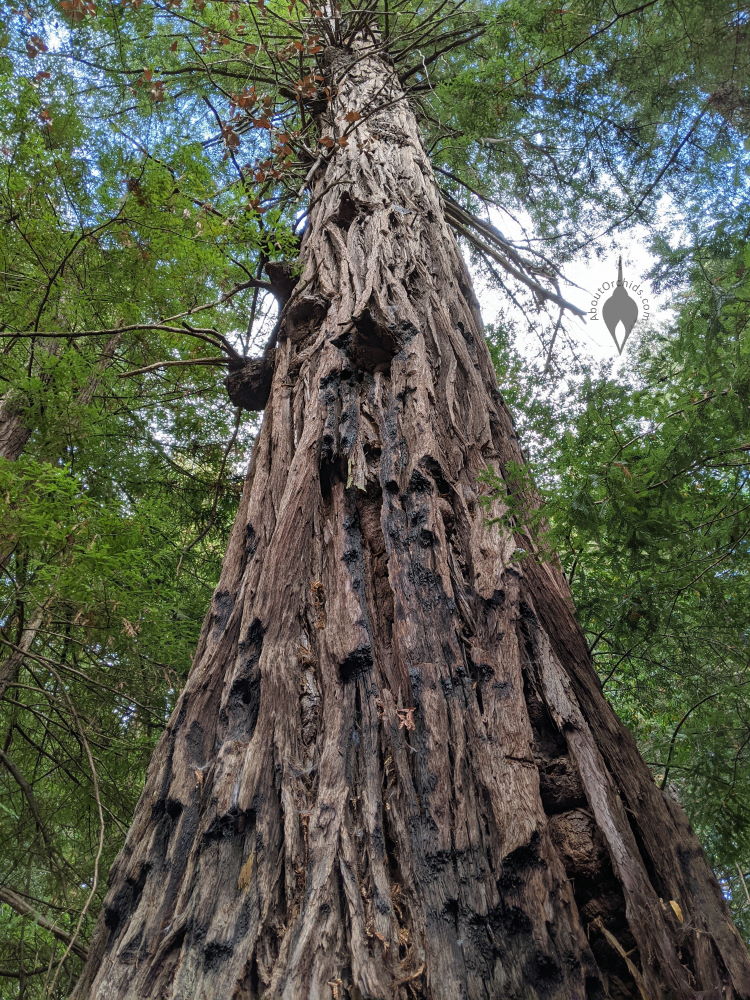
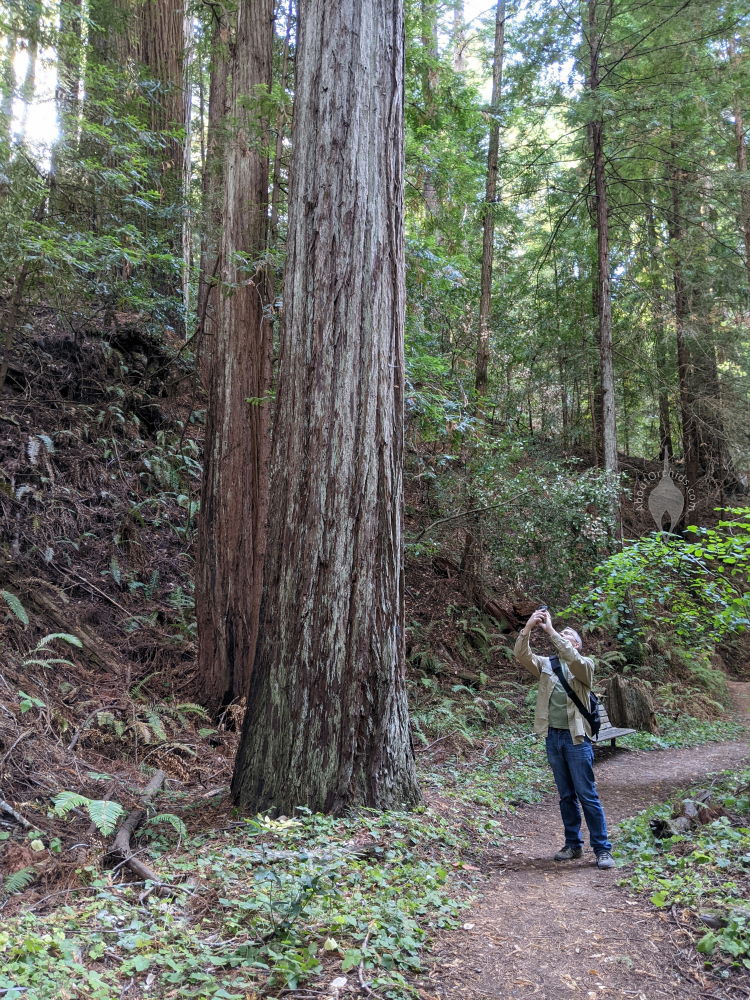
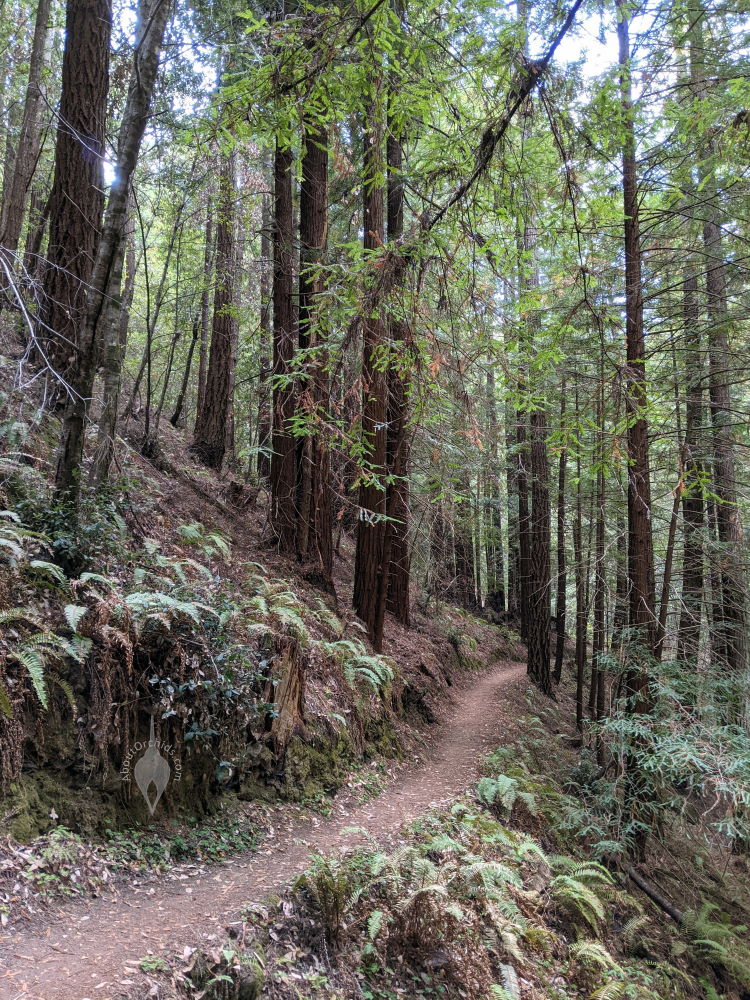
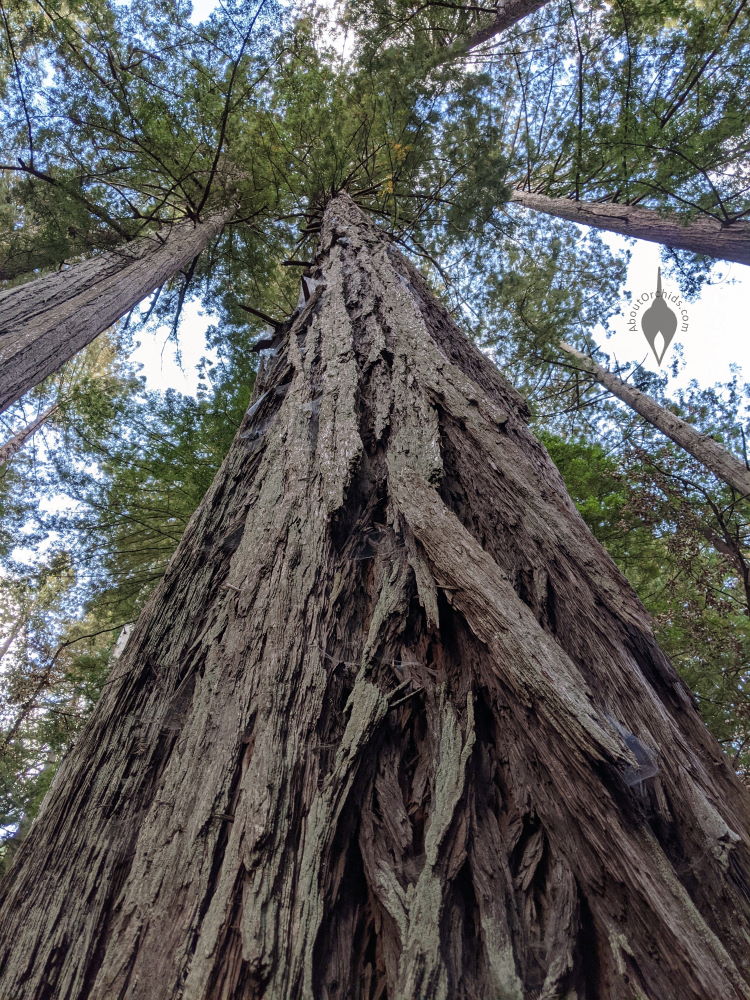
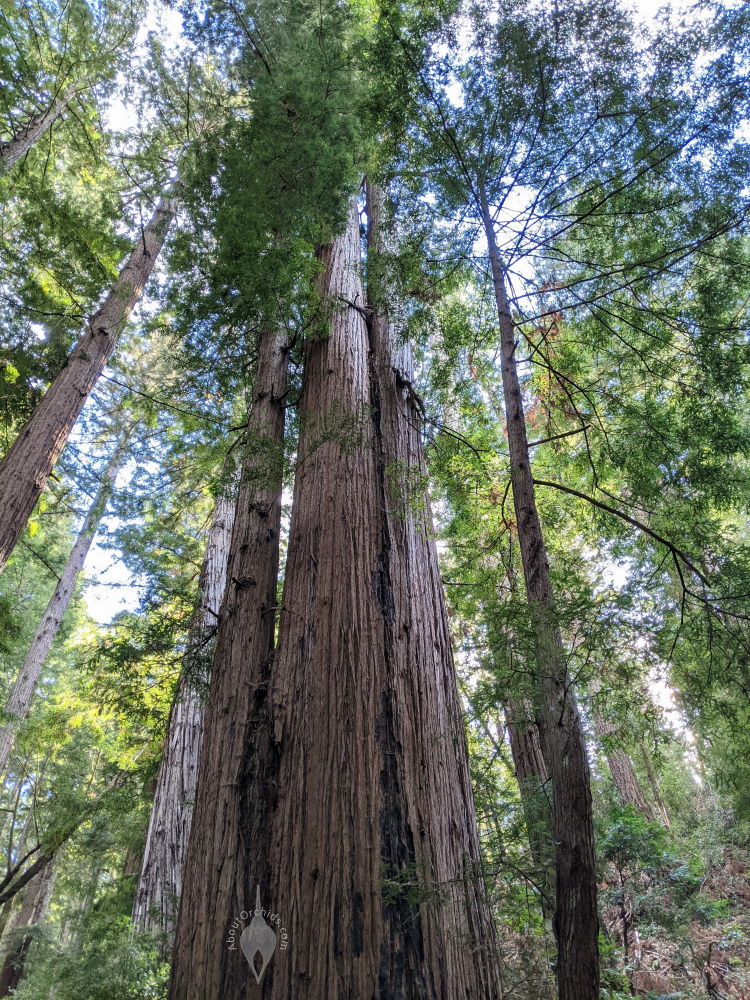
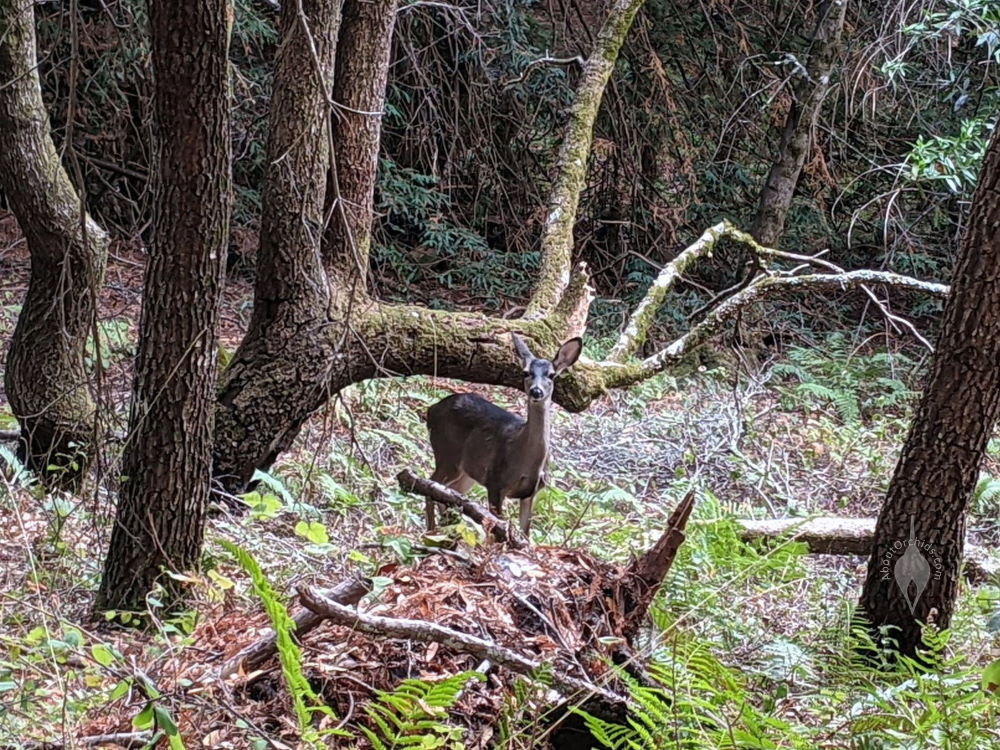
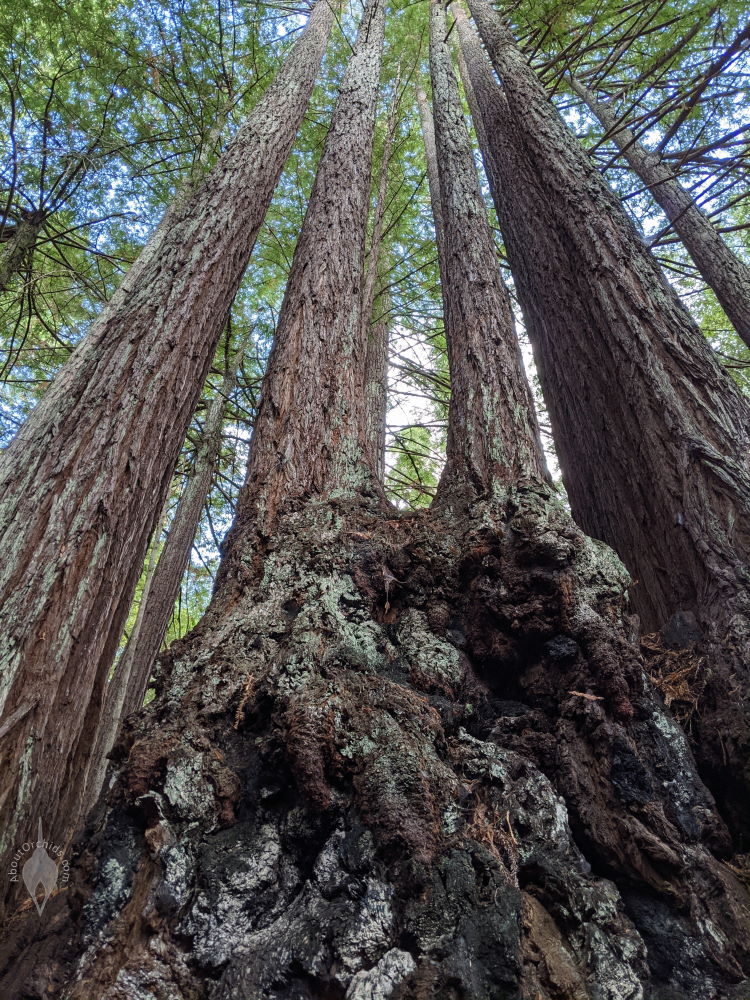
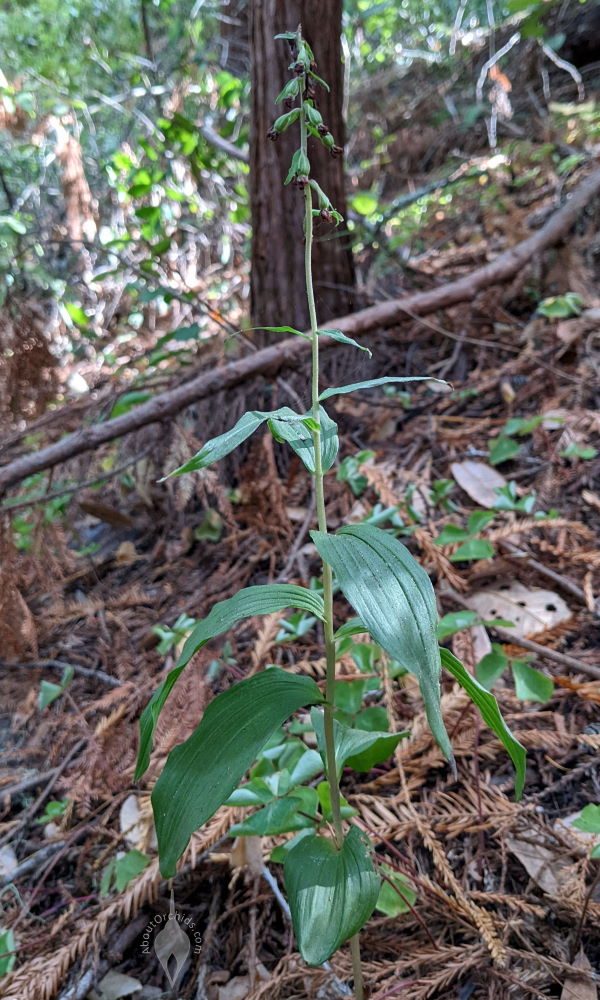
This final photo in this post wasn’t taken in Pacifica, but in San Mateo County Memorial Park, about 40 miles (64 km) south of here, and further inland. In early October, growing under enormous Coastal Redwoods, the Broad-Leaved Helleborines had all finished flowering, and sported maturing seedpods. While it was exciting to see orchids growing wild, it was also sad to see these invasives, but no native species. Still, under the shadows of giant trees, they seemed very much at home.
November Orchid Events

Posted November 1st, 2021 by Marc Cohen
Categories: Events

This month’s events with health precautions include the virtual Orchid Digest International Speakers Day. It features a great group of experts discussing orchids in India, Peru, Borneo, and the Philippines.

November 5 – 7
Central Coast-Hunter Regions Cymbidium Society Show, Tuggerah Super Centre, Wyong Rd. & Bryant Dr., Tuggerah, NSW, Australia
November 7
Tiny Jungle Nursery Tour, Daly City, California; $10 per person; all proceeds benefit the San Francisco Orchid Society; proof of COVID vaccination and mask required
November 12 – 14
Exposition d’Orchidées, Église Saint Pierre, Pl. Saint Pierre, Touques, France
November 13
Orchid Digest International Speakers Day: A Virtual Experience, live speakers and Q&A; registration fee $30 USD; registrants will also receive a link to event recording that will remain active for two weeks
November 13 – 14
Deerfield Beach Orchid Society Show & Sale, Safe Schools Institute, 1790 Spanish River Blvd., Boca Raton, Florida
November 13 – 14
Ft. Pierce Orchid Society Show & Sale, River Walk Center, 600 N. Indian River Dr., Ft. Pierce, Florida
November 13 – 14
Niagara Frontier Orchid Society Show, Buffalo and Erie County Botanical Gardens, 2655 S. Park Ave., Buffalo, New York
November 19 – 21
Atlanta Orchid Society Show & Sale, Atlanta Botanical Garden, 1345 Piedmont Ave. NE, Atlanta, Georgia

A Sweet Little Caucaea Orchid

Posted October 27th, 2021 by Marc Cohen
Categories: Cool Growers, Fragrant Orchids, Growing, Mini Orchids, Photos, Watering

Caucaea phalaenopsis, orchid species flower, Phalaenopsis-Like Oncidium, fragrant miniature orchid, grown outdoors in Pacifica, CaliforniaCaucaea phalaenopsis, orchid species flowers, Phalaenopsis-Like Oncidium, fragrant miniature orchid, flowers with water drops, grown outdoors in Pacifica, CaliforniaCaucaea phalaenopsis, orchid species flowers, Phalaenopsis-Like Oncidium, fragrant miniature orchid, grown outdoors in Pacifica, California

This Caucaea was a great find at a San Francisco Orchid Society sale last year. It’s a cool-growing miniature with a strong, sweet fragrance. Caucaeas are in the Oncidium family, and they’re named after the Cauca region of the northern Andes. Caucaea is pronounced “kaw-KAY-uh.”

Caucaea phalaenopsis, orchid species flower, Phalaenopsis-Like Oncidium, fragrant miniature orchid, grown outdoors in Pacifica, CaliforniaCaucaea phalaenopsis, close up photo of orchid species flower, Phalaenopsis-Like Oncidium, fragrant miniature orchid, grown outdoors in Pacifica, CaliforniaCaucaea phalaenopsis, close up photo of flower column and lip, orchid species flower, Phalaenopsis-Like Oncidium, fragrant miniature orchid, grown outdoors in Pacifica, California

This species is Caucaea phalaenopsis, named for its resemblance to moths. It shouldn’t be confused with Phals, or Moth Orchids, which belong to a different genus. Caucaea phalaenopsis is native to cloud forests in Ecuador, at elevations above 2700 feet (823 m.) My plant seems to have settled into our back garden quite happily, enjoying the morning sun, cool temps, and regular fog. The blooms on its first flower spike survived several weeks, and swelling flower buds on a second spike promise more to come. It even emerged unscathed from last weekend’s powerful rainstorm, when we had over 6 inches (15 cm) of rain in a single day, and wind gusts exceeding 65 miles per hour (105 km/h.)

Caucaea phalaenopsis, orchid species flower, Phalaenopsis-Like Oncidium, fragrant miniature orchid, grown outdoors in Pacifica, CaliforniaCaucaea phalaenopsis, orchid species flower with water drops, Phalaenopsis-Like Oncidium, fragrant miniature orchid, grown outdoors in Pacifica, CaliforniaCaucaea phalaenopsis, orchid species flowers, Phalaenopsis-Like Oncidium, fragrant miniature orchid, grown outdoors in Pacifica, California

The flowers aren’t very large, but they pump out a lot of fragrance. Their scent is pleasant and floral, like a rose. These plants should be watered regularly, and never allowed to dry out completely. They don’t enjoy warm weather, but seem to tolerate short periods of heat, as long as there is high humidity. The last row of photos below shows three other charming Caucaea species. For growers with cool temps and good humidity, Caucaeas are sweet little orchids.

Caucaea nubigena, orchid species flowers, Pacific Orchid Expo 2019, San Francisco, CaliforniaCaucaea olivacea, orchid species flowers, Pacific Orchid Expo 2016, San Francisco, CaliforniaCaucaea sanguinolenta, orchid species flowers, Asuka Orchids, San Bruno, California

Orchidelirium: How a Modern-Day Flower Madness Is Fueling the Illegal Trade

Posted October 20th, 2021 by Marc Cohen
Categories: Botanical Gardens, Conservation, In the News

All over the world, rare plants are being stolen from the wild, and from botanical gardens. London’s legendary Kew Gardens employs security officers and cameras 24 hours a day. Its orchids, however, need extra protection. Many are displayed in locked glass cabinets to prevent theft. The rarest aren’t put out for visitors at all. Spurred on by social media, with orchid influencers and unboxing videos, illegal global markets are sadly thriving. The true size of the illegal trade isn’t known, but many varieties are being driven into extinction. Before species can be scientifically described, they’re stripped from the wild by poachers. As a result, botanists must hide locations of new finds, and work to reintroduce and protect endangered varieties. Kew scientist Mike Fay explains why orchids inspire such delirium: “They don’t have a normal lifestyle. They indulge in strange pollination, they have to have a relationship with a fungus for the seeds to even germinate, they have weird and wonderful flowers that are incredibly variable. Some are difficult to keep going, so it’s a way of showing you are a good horticulturist.”

Researching Fungi to Save Orchids from Extinction

Posted October 13th, 2021 by Marc Cohen
Categories: Conservation, In the News, Videos

Orchid seeds don’t carry nutrients. Instead, they rely on a specific fungus to supply food so they can germinate and grow. In the video below, Dr. Viswambharan Sarasan explains how this impacts Kew Gardens’ work to save rare British orchids. Scientists must collect fungi from orchid roots, take months to cultivate them, and identify which one each orchid needs. It’s like they’re matchmaking for endangered species.

A Wild, Weedy, and Intoxicating Orchid: Epipactis helleborine

Posted October 7th, 2021 by Marc Cohen
Categories: Cool Growers, Orchids in the Wild, Photos

Epipactis helleborine with wasp, orchid species flower, Broad-leaved helleborine growing wild in Pacifica, CaliforniaEpipactis helleborine with wasp, orchid species flower, Broad-leaved helleborine growing wild in Pacifica, CaliforniaEpipactis helleborine, orchid species flower, Broad-leaved helleborine growing wild in Pacifica, California

Have you ever seen a drunk wasp? I have. Dave and I recently spotted one while were on a trail in a small wooded area near our home in Pacifica. The insect, shown in the first two photos above, was intoxicated from the nectar of a wild orchid, the Broad-Leaved Helleborine. The wasp hung upside down from a flower, moving slowly and erratically, and barely responding to our presence. We both spent a few minutes taking pictures, and then left it to sober up.

Epipactis helleborine, orchid species flowers, Broad-leaved helleborine growing wild in Pacifica, CaliforniaEpipactis helleborine, orchid species flowers, Broad-leaved helleborine growing wild in Pacifica, CaliforniaEpipactis helleborine, orchid species flower, Broad-leaved helleborine growing wild in Pacifica, California

That intoxicating nectar is only one of the reasons why the Broad-Leaved Helleborine, Epipactis helleborine, is a fascinating orchid. It drugs its pollinators so they’ll stay on the flowers, too drunk to fly away, and therefore more likely to pick up and drop off pollen. The intoxicants in the flowers are far too weak to affect humans, but pack a wallop for the insects. Yet, that’s only part of this orchid’s successful strategies. In fact, it’s so successful that it’s become an invasive plant in North America. The species is native to Europe, Asia, and northern Africa, but has become established in the USA and Canada as well. As a result, it’s earned the nickname “weedy orchid.”

Epipactis helleborine, orchid species plant with seedpods, Broad-leaved helleborine growing wild in Pacifica, CaliforniaEpipactis helleborine, orchid species flower, Broad-leaved helleborine growing wild in Pacifica, CaliforniaEpipactis helleborine, orchid species flower, Broad-leaved helleborine growing wild in Pacifica, California

There’s definitely a lot to say about this intriguing species. Check back here soon for more photos and info about this intoxicating orchid.

October Orchid Events

Posted October 1st, 2021 by Marc Cohen
Categories: Events

This is the busiest month of orchid events since the pandemic began. More in-person shows are including health precautions, like mask requirements, in their publicity. There are still others which fail to do that, but they’re not listed here. Miami’s big annual show is a welcome return this month.

October 1
PhalFanatics Phalaenopsis Symposium, online speakers, auction, and workshop; USD $35 members/$45 non-members registration fee
October 1 – 3
Tamiami International Orchid Festival, Redland Fruit and Spice Park, 18701 SW 248 St., Homestead, Florida
October 1 – 3
Exposition et Vente d’Orchidées, Abbaye de Fontfroide, Rd 613, Narbonne, France
October 2
Wairoa Orchid Society Show, Presbyterian Church Hall, Queen St., Wairoa, New Zealand
October 2 – 3
Oklahoma Orchid Society Show & Sale, Will Rogers Gardens Exhibition Center, 3400 NW 36th St., Oklahoma City, Oklahoma
October 2 – 3
Northwest Orchid Society Fall Show & Sale, Volunteer Park Conservatory, 1400 E. Galer St., Seattle, Washington
October 2 – 3
Canterbury Orchid Society Show, Mineral & Lapidary Club Hall, 110 Waltham Rd., Christchurch, New Zealand
October 6 – 17
Central California Orchid Society Show at the Big Fresno Fair, Fresno Fairgrounds, 1121 S Chance Ave., Fresno, California
October 8 – 10
Exposition d’Orchidées, Salle du Broustic, 11 Esp. du Broustic, Andernos-les-Bains, France
October 9
Taller Virtual: Cultivo de Orquídeas, Sociedad Colombiana de Orquideología; online workshop in Spanish; $28.000 Colombian Pesos registration fee

Read the rest of this post »

Extraordinary Catasetum Orchids

Posted September 28th, 2021 by Marc Cohen
Categories: Dormancy, Fertilizing, Fragrant Orchids, Misc

In Defense of Plants explains why Catasetum orchids really stand out. They have fascinating flowers, but unlike most orchids, these beauties have different male and female blooms. This puzzled botanists long ago, who thought that they were separate species. It was the famous scientist Charles Darwin who finally resolved the confusion. Darwin studied how the male flowers launch their pollen at bees which have tripped a trigger. Attached to a small disk of glue, the pollen flies out and sticks to the bee, ready to be carried to another blossom.

Some Catasetum varieties have symbiotic relationships with ants, which live within their old pseudobulbs. The ants help protect the plants from being eaten, and also fertilize the orchids. Native to Central and South American jungles, Catasetums are closely related to Clowesias, Cycnoches, and Mormodes. They’re deciduous, dropping their leaves in the tropical dry season, and growing new ones as rains return.

To learn more about these extraordinary species and their stunning hybrids, also check out Catasetinae.com. The website includes lots of photos and culture information.

The Autumn Equinox

Posted September 22nd, 2021 by Marc Cohen
Categories: Photos

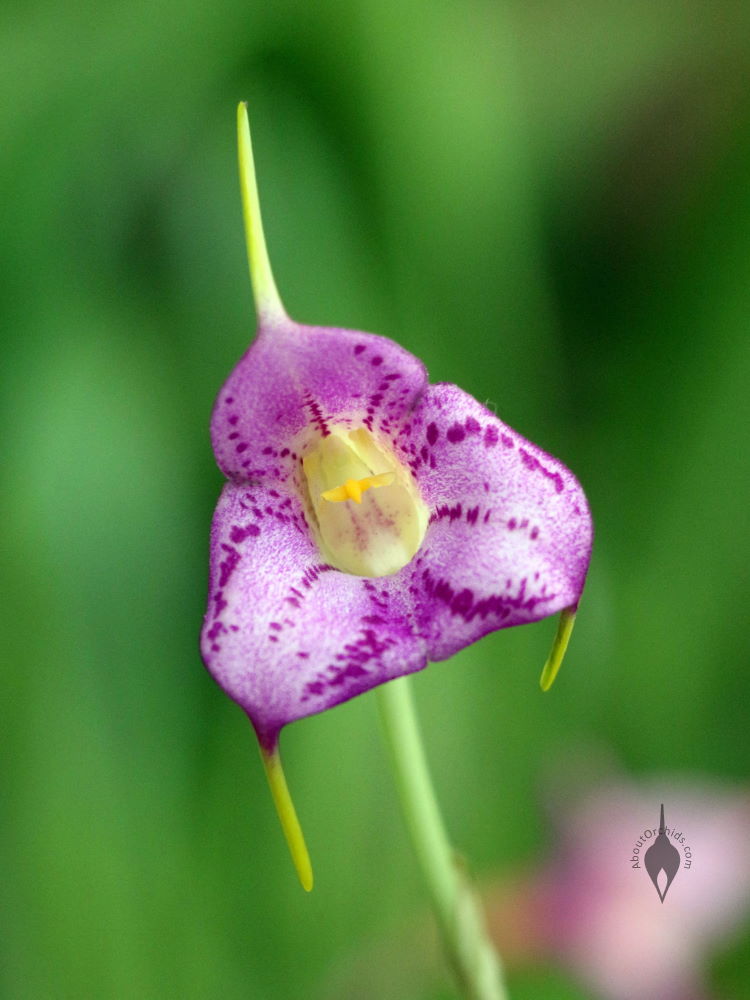
Phragmipedium schlimii, Phrag, Lady Slipper, orchid species flower and bud, Orchids in the Park 2019, Golden Gate Park, San Francisco, CaliforniaDendrobium victoriae-reginae, orchid species flowers, bluish purple flowers, Pacific Orchid Expo 2019, San Francisco, CaliforniaMasdevallia meleagris, orchid species flower, pleurothallid, Pacific Orchid Expo 2019, San Francisco, California

Cattleya cernua, Sophronitis cernua, orchid species flower, miniature orchid, orange yellow and purple flower, grown indoors in San Francisco, CaliforniaTrichopilia sanguinolenta, Helcia sanguinolenta, orchid species flower, grown indoors in San Francisco, CaliforniaPaphiopedilum Robinianum, orchid hybrid flowers with curly petals, Lady Slipper, Conservatory of Flowers, Golden Gate Park, San Francisco, California

A long time ago, when I moved to California from the East Coast, I thought it was spring all the time. Part of my culture shock was learning that the seasons were different here. Around Philadelphia where I grew up, we had hot, humid summers, and cold, snowy winters. In contrast, San Francisco summers are mild and foggy, spring and autumn are warm, and winters are cool and rainy. But no matter the weather or location, today is the equinox everywhere. Day and night are balanced at 12 hours each, for a very brief time. From the equator to the poles, it’s the same. To celebrate this rare moment of global unity, enjoy this eclectic mix of orchids. Most of these photos are from shows, but a few are from my own garden. Happy Equinox.

Masdevallia chaparensis, orchid species flowers and leaves, purple and pink flowers, pleurothallid, grown outdoors in San Francisco, CaliforniaPhalaenopsis pulcherrima, Phal, Moth Orchid, Doritis pulcherrima var. champorensis alba, orchid species flower, yellow and white flower, Orchids in the Park 2016, Golden Gate Park, San Francisco, CaliforniaPhragmipedium, Phrag, Lady Slipper, orchid species flower, Orchids in the Park 2019, Golden Gate Park, San Francisco, California

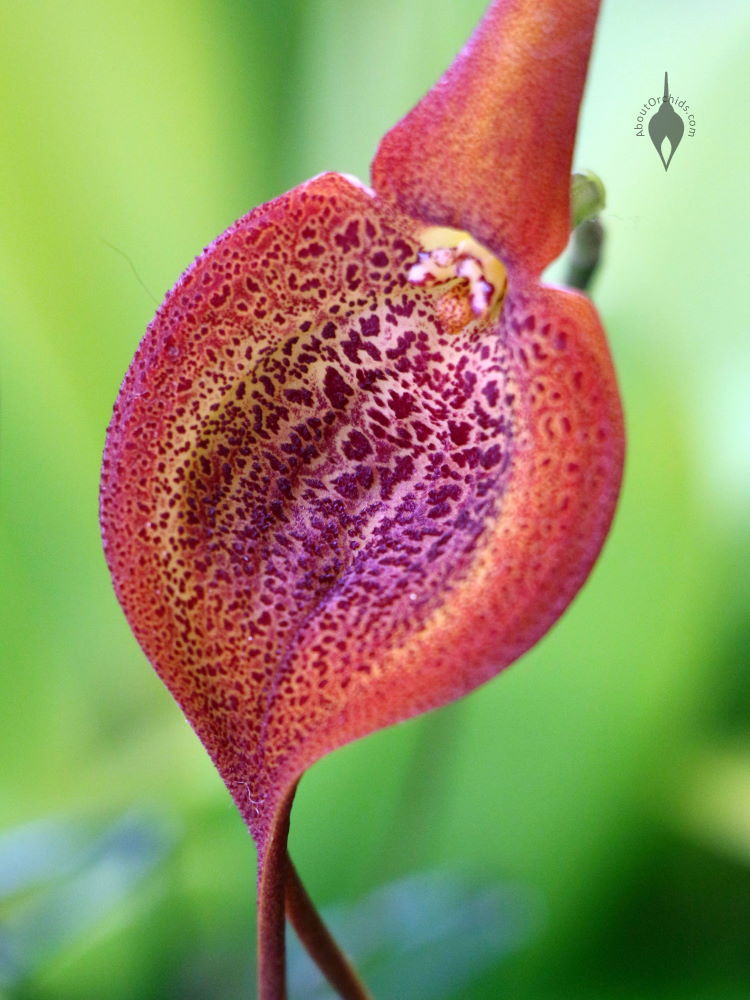
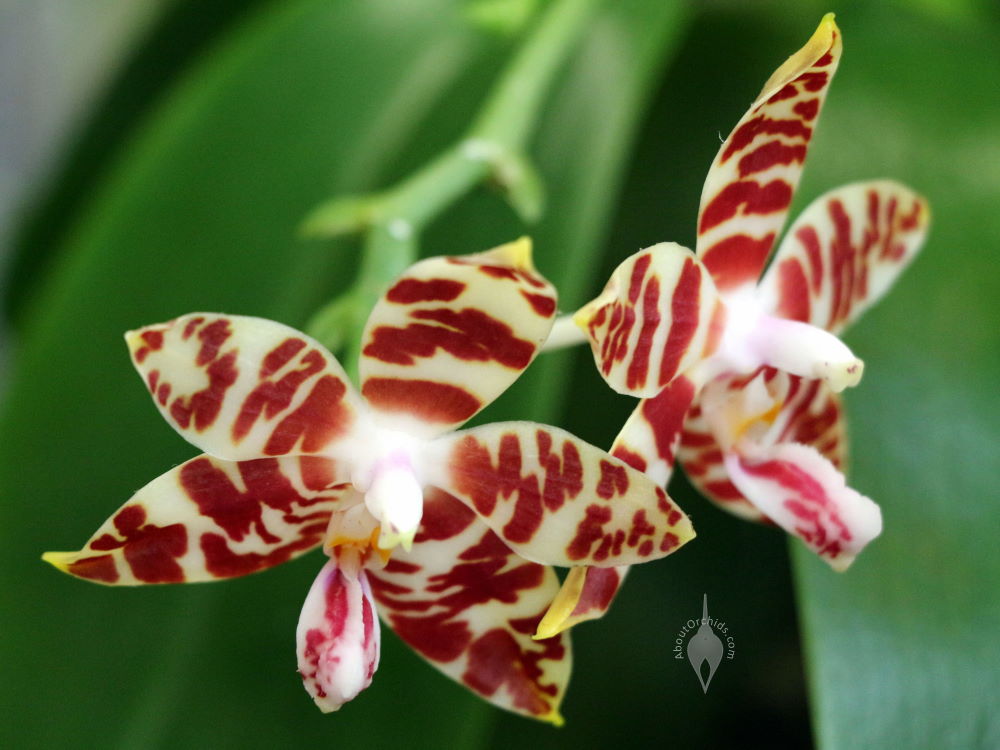
Masdevallia Morning Glory, orchid hybrid flower, red and purple flower, pleurothallid, Pacific Orchid Expo 2019, San Francisco, CaliforniaPhalaenopsis celebensis, orchid species flowers, Phal, Moth Orchid, Orchids in the Park 2016, Golden Gate Park, San Francisco, CaliforniaGongora portentosa, orchid species flowers, Montreal Botanical Garden, Canada

Join the Slipper Orchid Alliance

Posted September 19th, 2021 by Marc Cohen
Categories: Conservation

If you love Lady Slippers, then the Slipper Orchid Alliance (SOA) is for you. This non-profit group is dedicated to conserving these incredible flowers, and educating everyone about them. Lady Slippers have a pouch, and include Paphs, Phrags, Cyps, Mexipediums, and Selenipediums. The SOA offers photo galleries, culture sheets, and a quarterly journal. Members can choose to receive the “Slipper Orchid” journal online or in print. It features informative articles, news, book reviews, and lots of great photos. Join the SOA to feed your Slipper Orchid addiction.