Masdevallia

Posted August 20th, 2011 by Marc Cohen
Categories: Cool Growers, Fertilizing, Mini Orchids, Photos, Watering

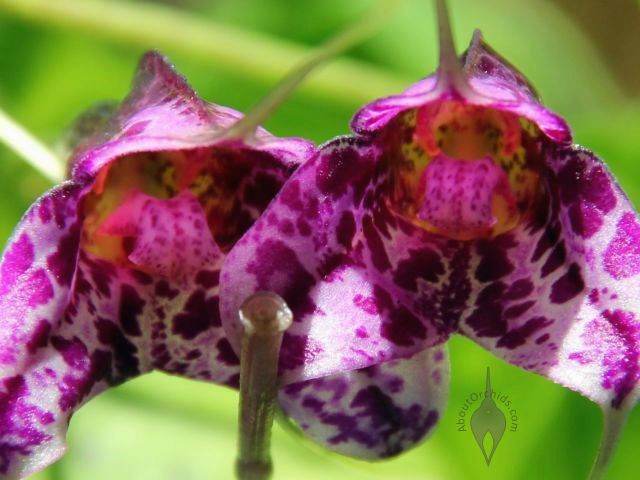
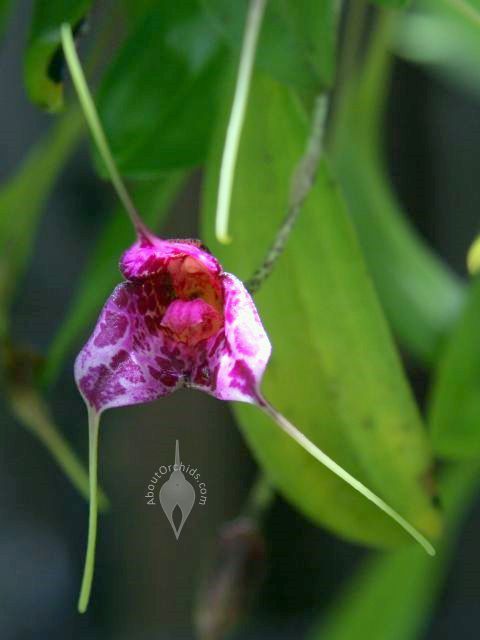
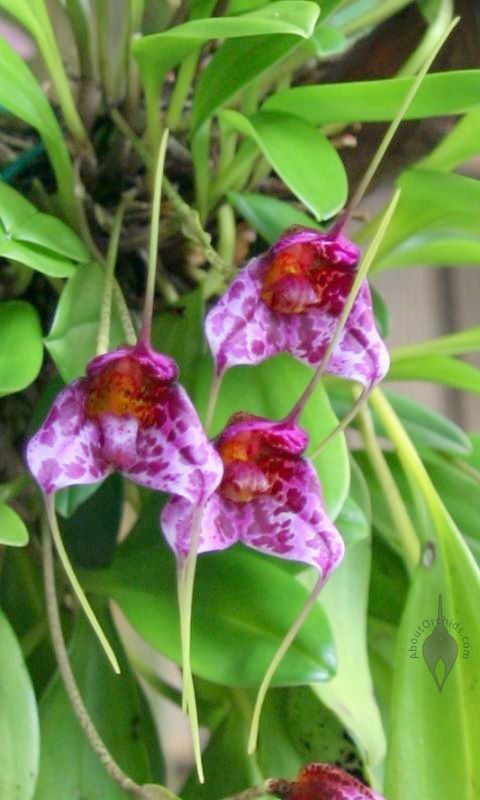
No, it’s not winter — it’s just another cool, foggy San Francisco summer. Fortunately, it’s the perfect climate for this Bolivian beauty. Dozens of delightful pink and purple Masdevallia flowers opened more than a month ago in our back garden, and they’re still going strong.

Masdevallia flowers and leavesMasdevallia flowerMasdevallia flowers

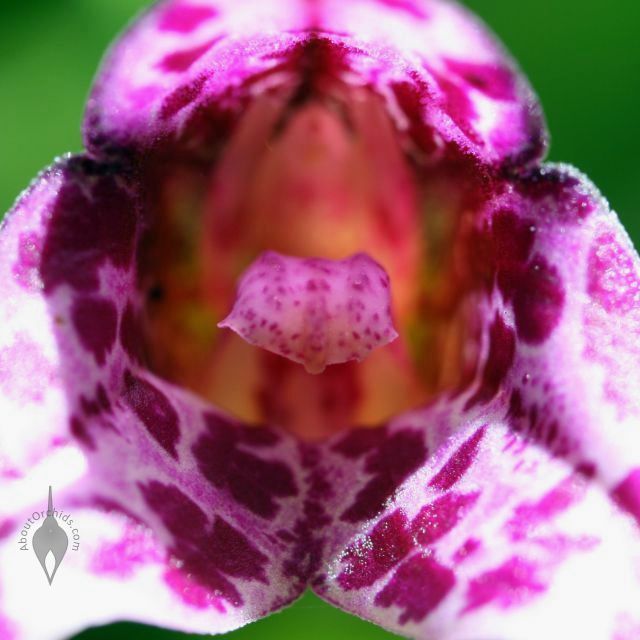
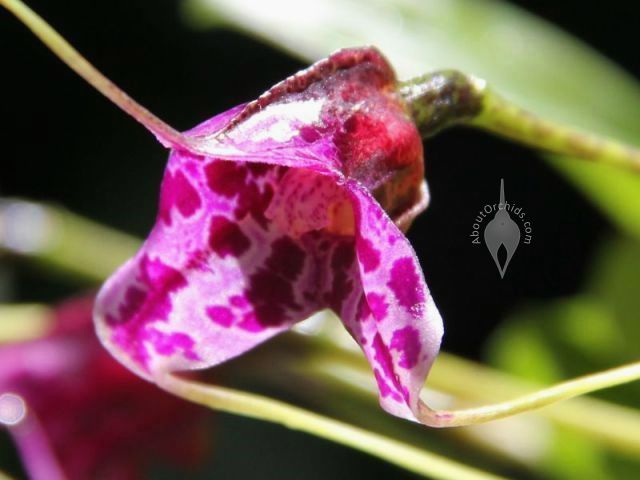
This species is native to elevations of 8000 – 9000 ft. (2438 – 2743 m.) from only a single valley near Cochabamba, Bolivia. That’s the largest city in Chapare Province, which provides the species name Masdevallia chaparensis. Its cloud forest home in that narrow band of the Andes is similar to this mild climate about 5 miles from the Golden Gate. Since there’s no rain here during summer, I water daily until winter rains resume. It loves a good shot of compost, but growers who use artificial fertilizers should only use weak doses.

Masdevallia flower close upMasdevallia flowerMasdevallia flower

Orchid Allergies and Sensitivities

Posted August 14th, 2011 by Marc Cohen
Categories: Misc, Problems

Are you an allergy sufferer who fears that your nose has confined you to a life of plastic flowers? Orchids may be the answer. Allergic reactions to orchids are rare because they don’t have airborne pollen. Instead, their pollen clumps in waxy little balls called pollinia. Since it doesn’t float freely in the air, it’s unlikely to cause sneezing, itching, or watery eyes. People with hay fever, like me, often remain symptom-free in a room full of blooming orchids.

Any organic matter can cause allergies, and orchid sensitivities do exist. Naturally occurring chemicals in plants may be benign to most people’s immune systems, but bother others. In addition, orchid growers may use pesticides, herbicides, fungicides, or growth hormones. These chemicals can sometimes cause symptoms in sensitive individuals, ranging from mild reactions to more severe rashes or breathing problems.

For those affected by fragrances, there are many scentless orchids. Most commonly sold Phals, Paphs, Dendrobiums, Epidendrums, Masdevallias, and Oncidiums have no perfume. Avoid Cattleyas, Cymbidiums, and Miltonias, which usually have scents.

Artificial fertilizers may cause reactions. Some people may be sensitive to potting material like bark or moss. A few orchid varieties have sap that irritates skin. Some types of lady slippers grow prickly hairs on their stems and leaves, but they are not commonly cultivated.

No flower is 100% allergy free, but orchids have the advantage of their harmless pollen. In fact, the Asthma & Allergy Foundation of America has chosen the orchid as its official flower. So put away those plastic blossoms, and try orchids instead. Your nose will thank you.

Help Save Native Orchids

Posted August 9th, 2011 by Marc Cohen
Categories: Conservation

The American Orchid Society (AOS) is helping the Nature Conservancy to restore an important piece of land. Myrtle Head is a 72 acre (29 hectare) remnant of native pine savanna near the North Carolina coast. It’s part of the Green Swamp, which is considered one of the top biodiversity hotspots in North America. The Venus Flytrap is its most famous resident, but the Green Swamp is also home to 18 native North American orchid species. These include several types of Epidendrums, Platantheras, Spiranthes, and Pogonias. For more info and lots of great orchid pictures from the Green Swamp, check out this article from the Orchid Conservation Coalition about habitat loss in the area.

Money raised by the AOS will go to restore native habitat, and give these local species a better foothold at Myrtle Head. To help, go to the AOS homepage and click on the “Myrtle Head Savanna” tab. Links to donate are at the bottom of that page. Any size contribution is appreciated.

Cultivar Names

Posted August 5th, 2011 by Marc Cohen
Categories: Orchid Names, Photos

An orchid name tag may include a cultivar name, which recognizes an interesting or exceptional plant line. The word “cultivar” is a contraction of “cultivated variety.” Properly written, it’s capitalized within single quotes. These 3 beauties provide our examples:
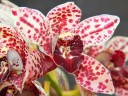
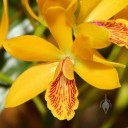
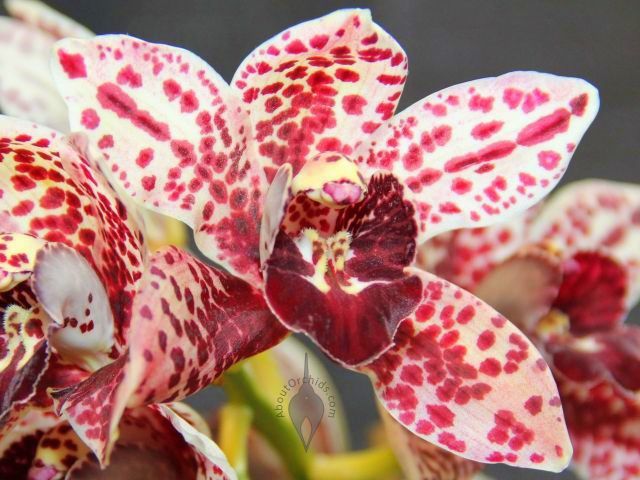
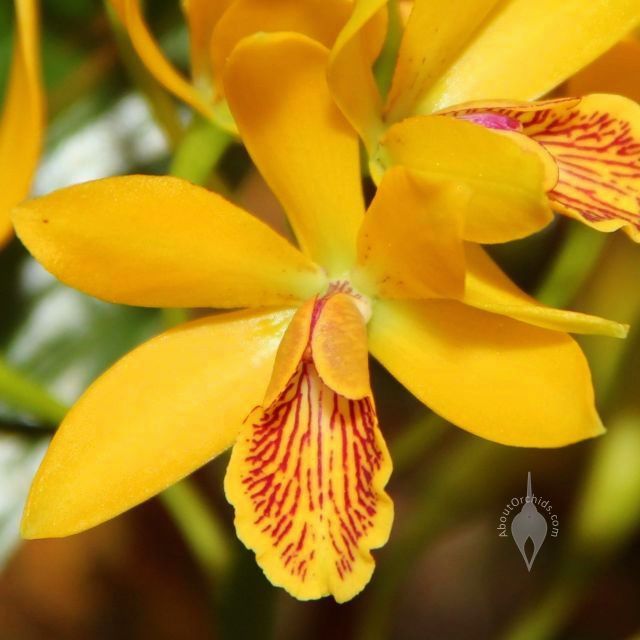
Cymbidium Lotza Spotz 'Jacob'Epicattleya Chic 'Zebra'Rhynchostylis gigantea 'Spots'

Cymbidium Lotza Spotz ‘Jacob’ is a hybrid with the cultivar name ‘Jacob’. When grown from seed, each plant has a different genetic mix than its siblings, and each produces a slightly different flower. Orchid breeders can give a cultivar name to any individual plant with desirable traits. Other siblings from the cross of those same hybrid parents can receive their own cultivar names. Siblings in this line include Cymbidium Lotza Spotz ‘Rome’ and Cymbidium Lotza Spotz ‘Mac’.

The orange and red Epicattleya Chic ‘Zebra’ is a hybrid with the cultivar name ‘Zebra’. Contrasting stripes on the flower lip may have inspired the choice of ‘Zebra’. A plant may be worthy of a cultivar epithet if it has attractive colors, abundant blooms, or vigorous growth. The International Code of Nomenclature for Cultivated Plants (ICNCP) regulates these names.

Rhynchostylis gigantea ‘Spots’ is a species with larger-than-usual purple spots, which is a naturally-occurring mutation. Natural variations occur in all plants, and plant vigor, color patterns, or flower shapes may vary within the same species. If it’s not distinct enough to be a different species, it’s considered a variant. Any single plant may exhibit these deviations, and an orchid grower may give it a distinguishing name, like ‘Spots’.

If a cultivar wins an award, that award becomes part of its name. For example, Zygopetalum BG White ‘Stonehurst’ HCC/AOS (Highly Commended Certificate/American Orchid Society) boasts its status as a winner.

Because a cultivar is a distinct genetic strain, it can only be reproduced by cloning, divisions, or keikis. As exact copies, they carry the cultivar name. However, crossbreeding with another orchid would create a different hybrid, since the offspring would have a different genetic makeup. The cultivar name would not apply to these descendants.
August Orchid Shows

Posted August 1st, 2011 by Marc Cohen
Categories: Botanical Gardens, Events

From a palace in Scotland to malls in Australia, orchid shows beautify many locales. Enjoy these opportunities to see incredible flowers, talk to local experts, and buy plants for your own collection.

August 3 – 7
Orquideas, Pajaros y Flores, Jardin Botanico, Medellin, Colombia
August 5 – 6
Houston Orchid Society Workshop, Crooker Center, St. Thomas Univ., 3900 Graustark, Houston, Texas
August 5 – 7
Hilo Orchid Society Show, Edith Kanakaole Stadium, 865 Piilani St., Hilo, Hawaii
August 5 – 7
Orchids by the Sea, Dee Why RSL, Pittwater Rd., Dee Why, NSW, Australia
August 12 – 14
Cymbidium Club of Australia National Orchid Extravaganza, Dural Recreation Centre, Ellerman Park, 25a Kenthurst Rd., Round Corner, Dural, NSW, Australia
August 12 – 14
Sapphire Coast Orchid Club Winter Show, Twyford Hall, Market St., Merimbula, NSW, Australia
August 13 – 14
Orchid Festival, Scone Palace, Perth, Scotland, UK
August 14
West Cornwall Orchid Society Open Day, 13 Pendarves Rd., Camborne, Cornwall, UK
August 18 – 21
Western Suburbs Orchid Society Winter Show, Ashfield Mall, Liverpool Rd., Ashfield, NSW, Australia
August 19 – 21
St. Ives Orchid Fair, St. Ives Showground, Mona Vale Rd., St. Ives, NSW, Australia

Read the rest of this post »

The Beautiful Tricks of Flowers

Posted July 28th, 2011 by Marc Cohen
Categories: General Gardening, In the News, Videos

If you don’t have your own electron microscope, you’ll enjoy this entertaining video from TED and an accompanying article in the UK’s Guardian. Jonathan Drori showcases some of the most incredible pollination strategies among the world’s quarter-million flowering plants. Naturally, orchids are some of the stars of the show. With dazzling photos, his talk highlights Darwin’s Orchid, Oncidiums, Lady Slippers, and many more. The floral trickery includes ultraviolet patterns, insect mimicry, landing strips to guide pollinators, and even a strangely mammal-like Philodendron from Brazil (that last one starts at the 9 minute mark.) Flower lovers will find this a beautiful and fascinating talk on these evolutionary miracles.

Coelogyne

Posted July 23rd, 2011 by Marc Cohen
Categories: Cool Growers, Dormancy, Fragrant Orchids, Growing, Photos, Watering

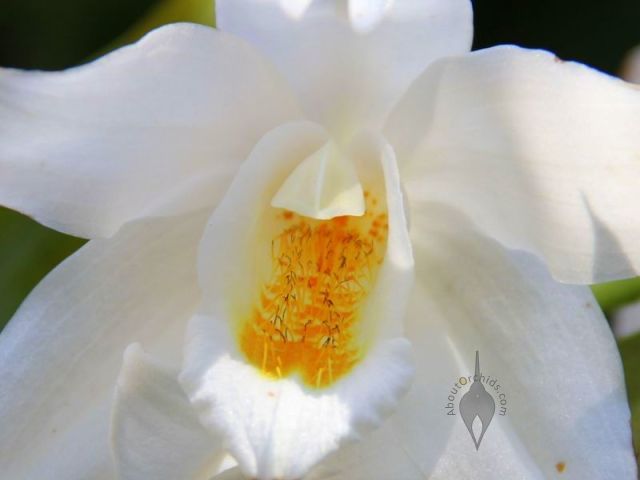
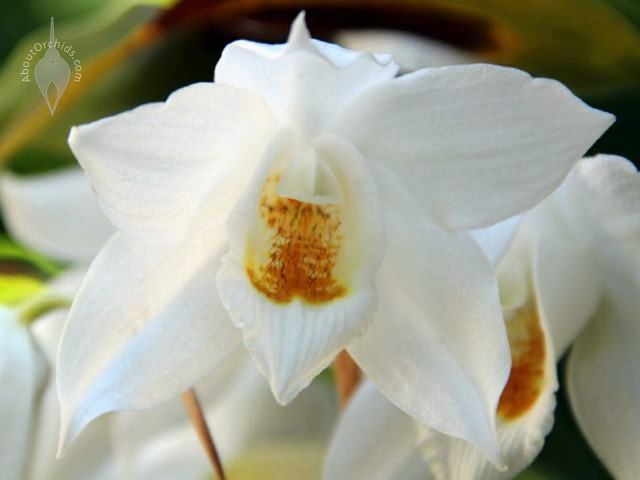
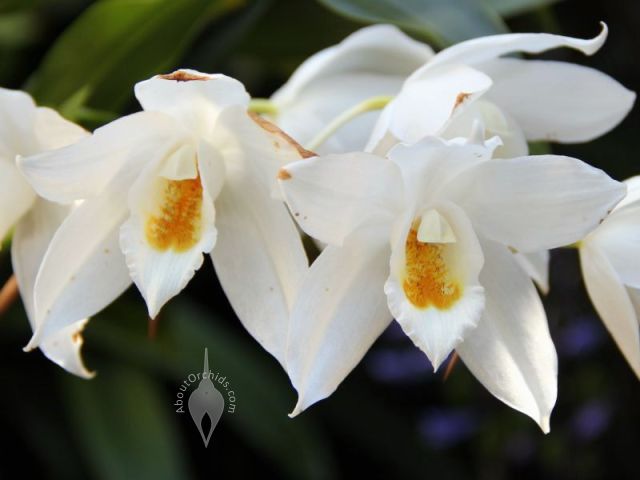
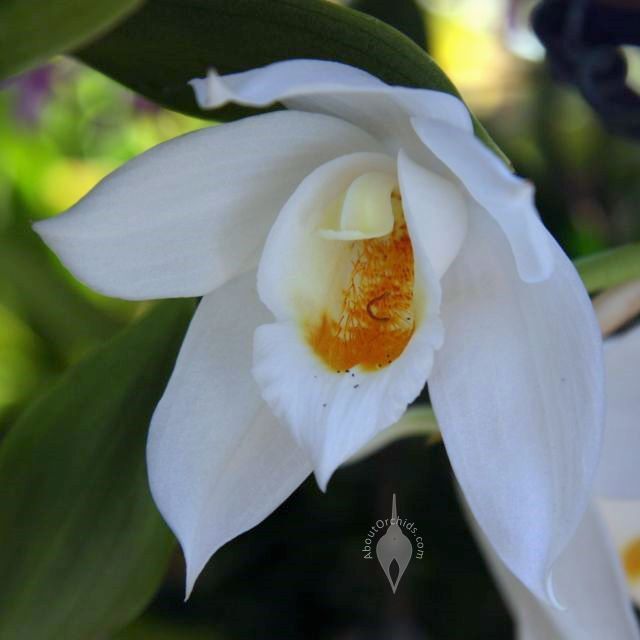
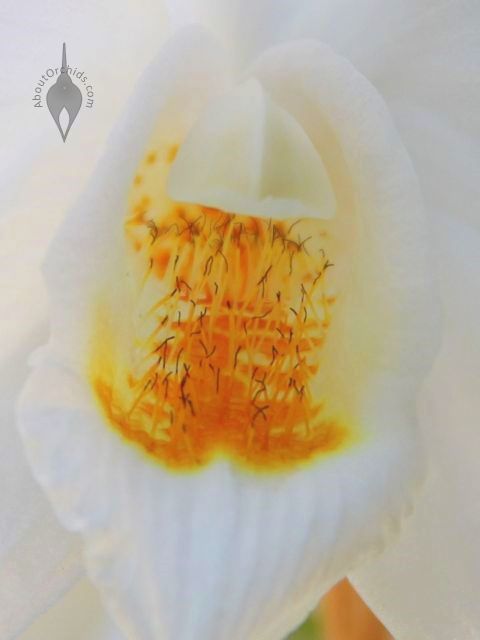
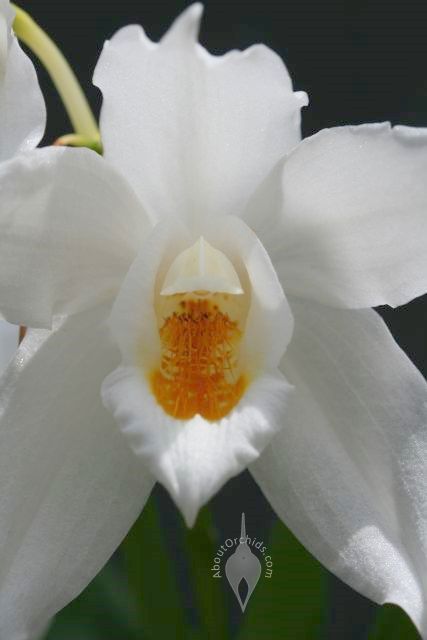
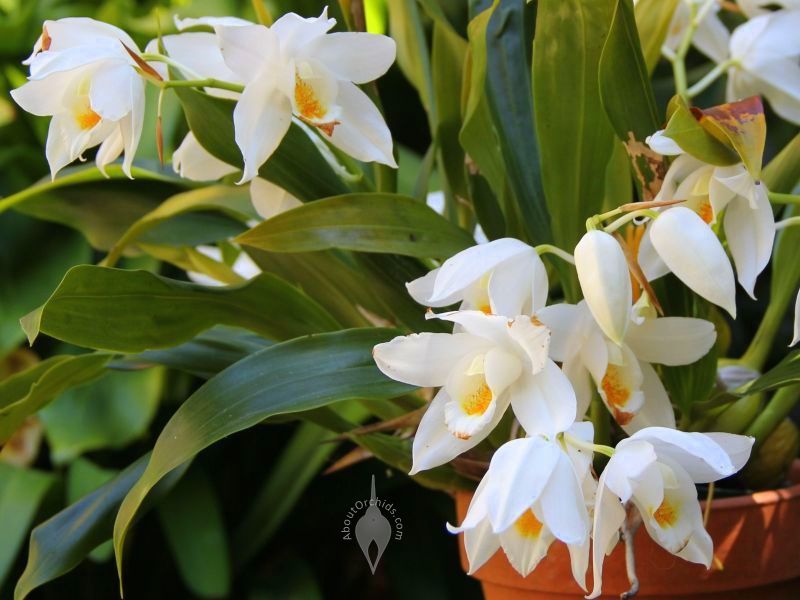
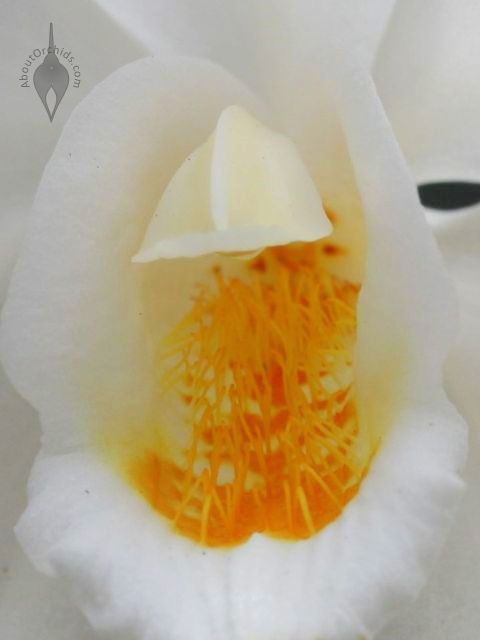
Fortunately, it’s easier to grow a Coelogyne than it is to figure out how to say it. Each of these pure white flowers has a bright orange lip, and delights with a sweet scent. Blooms can last a month or more.

Coelogyne flowerCoelogyne flowerCoelogyne flowers

To pronounce it, say “see-LODGE-in-ee.” This species originates in the mountains of Vietnam, where it grows in cloud forests up to 6500 ft. (2000 m) high. It can handle a wide range of temperatures. Mine lives outside all year in the San Francisco fog, and receives some direct sun.

Coelogyne flowerCoelogyne flower close upCoelogyne flower

Coelogynes like frequent waterings during spring and summer, and less during winter dormancy. They enjoy regular fertilizer, high humidity, and good air movement. Almost 200 different Coelogyne species include varieties to suit warm, intermediate, or cool climates. They’re great for beginners who are ready to try a challenge beyond hybrids.

Coelogyne flowers and budsCoelogyne flowers and leavesClose up of Coelogyne flower lip

Orchid Olympics

Posted July 18th, 2011 by Marc Cohen
Categories: Events, In the News

Excitement is building months ahead of the 20th World Orchid Conference (WOC) in Singapore. Nicknamed the “Orchid Olympics,” the WOC occurs every 3 years. From November 13 – 20, it’s happening at the astonishing Marina Bay Sands, where it’s expected to attract 300,000 visitors. The WOC includes a show with 50,000 orchids, vendors from 15 countries, and a conference featuring 140 speakers. The tiny isle of Singapore is one of world’s largest orchid exporters, and first hosted the conference in 1963. Detailed WOC info is available at the official website.

In addition to the world’s largest orchid event, conference attendees will be able to enjoy a special sneak-preview of the Flower Dome. It’s a remarkable 3 acre (1.2 hectare) conservatory, one part of the Gardens by the Bay complex, which is set to open officially next year. The Flower Dome will only be open for WOC ticket holders during the conference.

Australian Orchid Foundation

Posted July 14th, 2011 by Marc Cohen
Categories: Conservation

Since 1976, the Australian Orchid Foundation has worked for orchid conservation, study, promotion, and education. Run by volunteers, it’s making tremendous progress to benefit native orchids. Australia is home to many fascinating and unusual species, like the Brilliant Sun Orchid, and also numerous varieties of Dendrobium, Pterostylis, and Sarcochilus. They all face threats from habitat destruction, climate change, and invasive plants and animals. To counter these dangers, the Australian Orchid Foundation funds research projects and runs a seed bank. They have an extensive list of publications for sale (note the prices are in Australian dollars.) You can support their work with an online donation (tax deductible in Australia.)

Sarcochilus

Posted July 9th, 2011 by Marc Cohen
Categories: Cool Growers, Growing, Mini Orchids, Photos, Problems

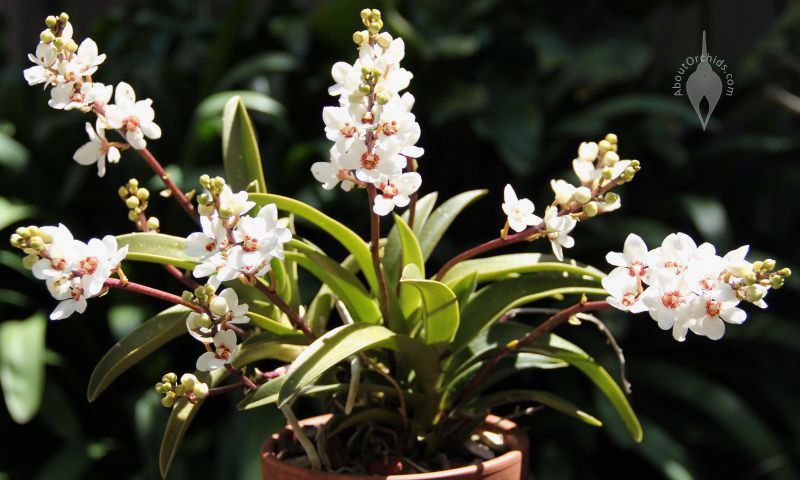
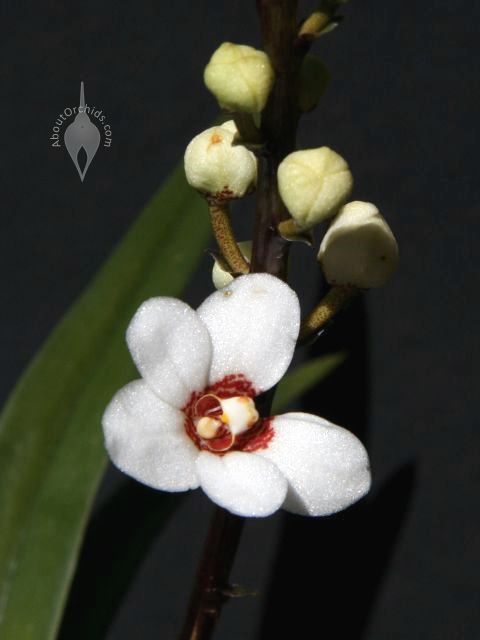
If you think that orchids are all delicate and fragile, here’s a hardy Australian mini that will surprise you. This Sarcochilus is one tough species, related to Phals and Vandas. In the wild, it grows as a lithophyte, or rock plant. Its roots attach to cliff faces in eastern Australia, and they hold on despite strong ocean winds. It can handle a wide range of temperatures, and can even survive light freezes.

Sarcochilus flower and budsSarcochilus flowersSarcochilus flowers and leaves

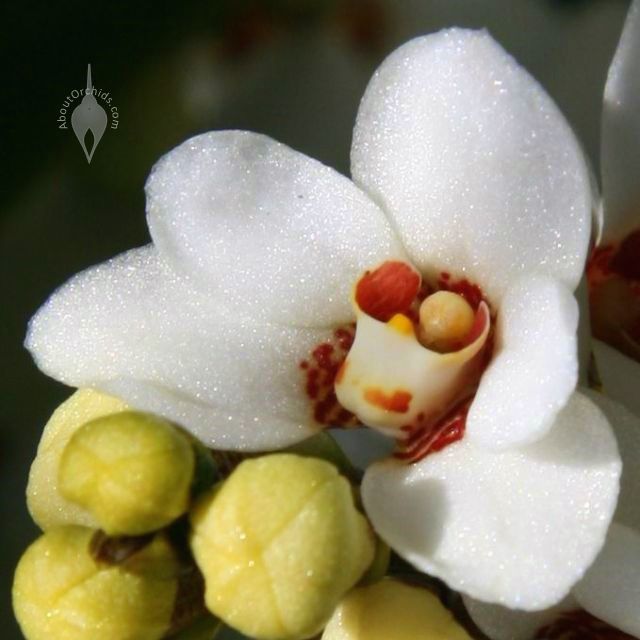
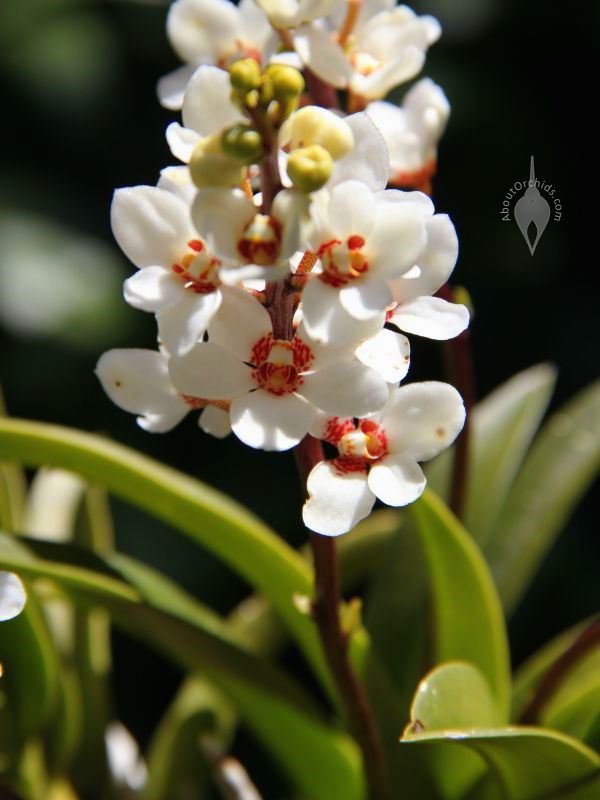
I’ve had this plant for 6 years, and it’s been a reliable annual bloomer. A nasty hailstorm damaged it last winter, but it flowered on schedule anyway. The arching sprays of sparkling white blooms can last 2 or 3 months. They may show wear-and-tear from rain, wind, heat waves, or pests, but the flowers persist. This one grows outdoors on my back deck all year, where it receives bright light with some direct sun.

Sarcochilus flowersSarcochilus plant in flowerSarcochilus flower

Even though they’re lithophytes, they grow well potted in bark. Sarcochilus like regular water and fertilizer. Their leaves and roots are susceptible to damage from the slug and snail killer metaldehyde. However, snail baits with iron phosphate are safe for them.

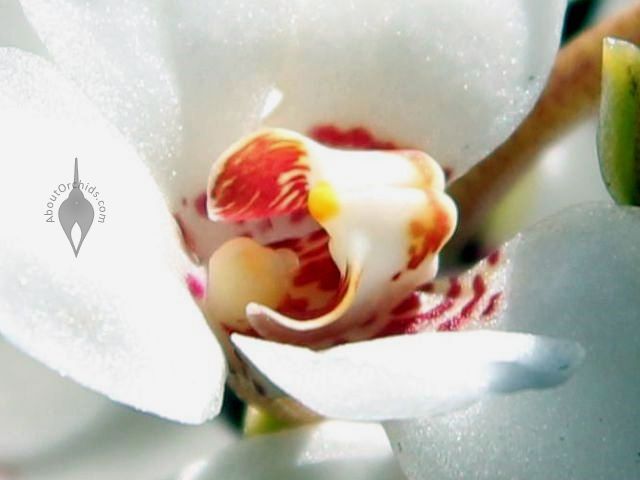
Sarcochilus flower, buds and leavesSarcochilus flower close upSarcochilus flower