Reading Your Orchid’s Leaves

Posted June 24th, 2009 by Marc Cohen
Categories: Fertilizing, Problems, Watering

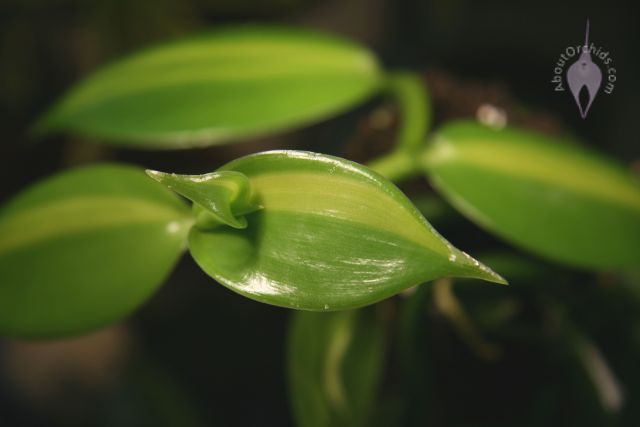
Orchids need healthy leaves to survive and thrive. If your orchid’s leaves look unhappy, take this list of common problems as a starting point to your diagnosis. Notice that some symptoms appear several times for different causes. For instance, certain signs of overwatering and underwatering are the same.

It helps to pay attention to the look and feel of your orchid’s leaves when the plant is healthy, so then you’ll have a good frame of reference to recognize a problem. While any one of these symptoms can indicate a problem, not every dark spot or yellow leaf is cause for concern. For example, older leaves (those lower on the plant) may yellow, develop spots, split down the middle, or fall off entirely. This is okay, as long as healthy new leaves are growing.

Overwatering
Mushy, wilted, limp, shrunken, or flattened leaves
Leaf split down middle
Yellow leaves
Leaves quickly turn soft and black
Underwatering
Wilted, limp, shrunken, or flattened leaves
Leaf has pronounced “ribs” or “veins”
Leaf split down middle
Edges of leaves curled under
Pleated leaves
Yellow or brown leaves
Sunburn or overheating
Large dried or dead spot on leaf; spot may start white and turn dark
Yellow leaves
Inadequate light
Yellow leaves
Dark green leaves
Leaves are floppy
Excessive fertilizer
Brown tips on leaves
Inadequate fertilizer
Yellow leaves
Low humidity
Brown tips on leaves
Wilted leaves
Allowing water to sit on leaves overnight
Mushy leaves
Needs repotting
New leaves turn to mush or turn black
Pests
Holes in leaves
Deformed leaves
Black spots
Leaves develop bronze color
Bacterial, viral, or fungal infections
Black spots or soft spots, especially those with an unusual smell
Streaks or patterns with discoloration
Yellow leaves
Cold water on leaves
Black spots

Orchis

Posted June 21st, 2009 by Marc Cohen
Categories: Cool Growers, Dormancy, Growing, Mini Orchids, Photos

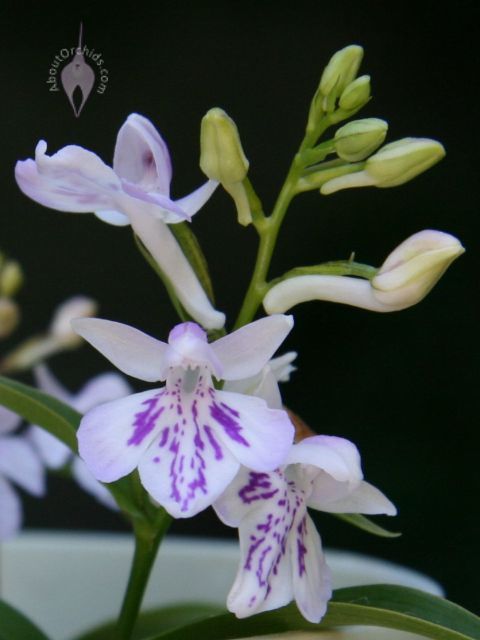
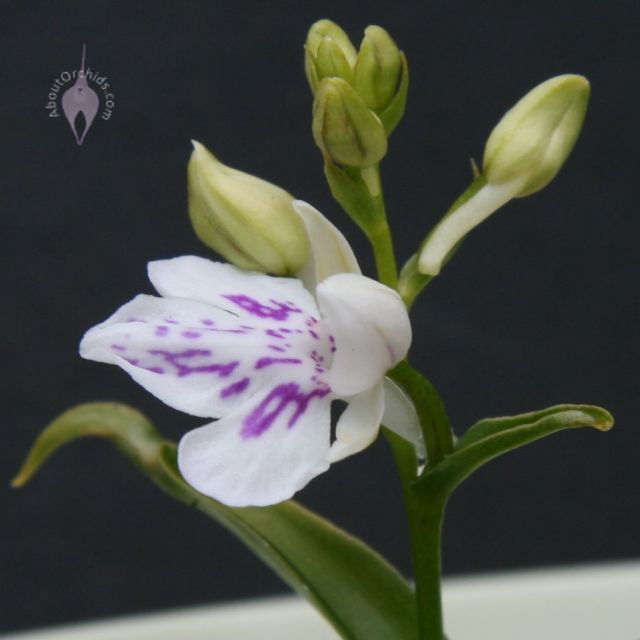
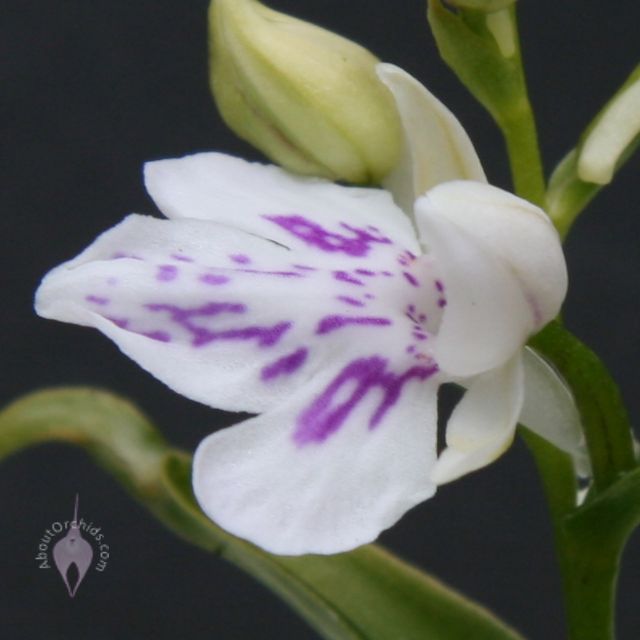
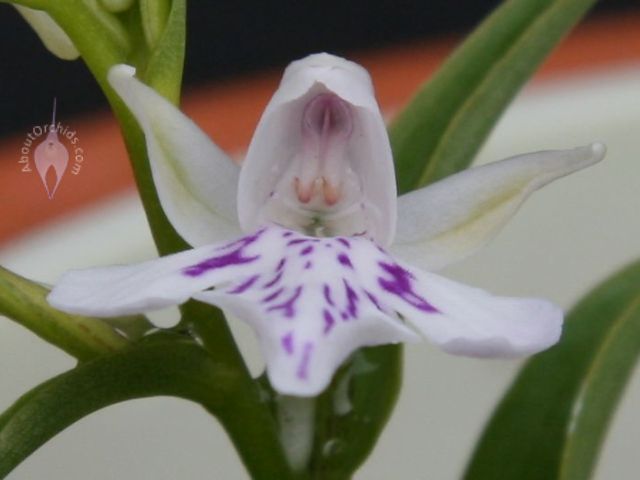
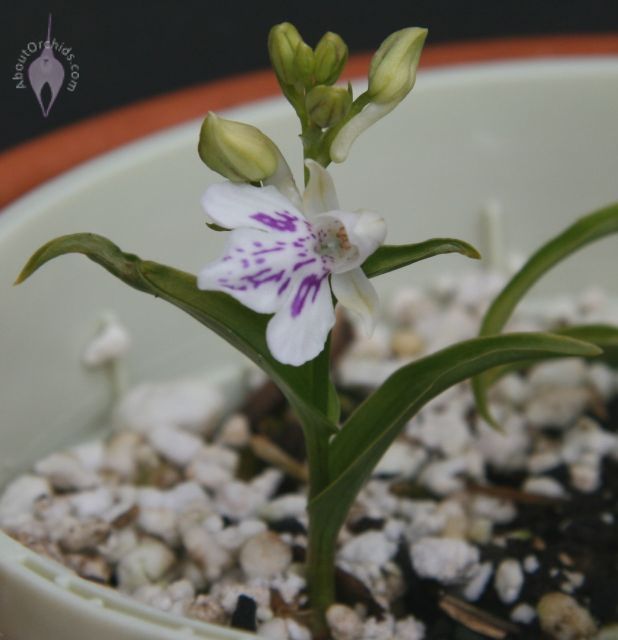
If you’re welcoming today’s summer solstice by enjoying some time outdoors, it’s always a good idea to keep your eyes open for whatever surprises nature can offer. Some can be so petite that they’re easy to overlook, but I find it’s often worth the effort to be observant. Case in point: these delightful Orchis flowers, which span less than 3/4 inch (2 cm,) and sit atop tiny plants whose stems are only 2 inches tall (5.1 cm.)  This uncommon and unusual little charmer is native to Japan, where it grows in damp grasslands, mossy cliffs, and rock crevices. Its Japanese name means “butterfly wing orchid,” an apt description of the tiny blooms.

Orchis flowersOrchis flowers and budsOrchis flower and buds

With just a few narrow leaves on a stem, it looks more like a grass than an orchid. The mini plants emerge from small tubers in the spring, and can be grown like tulips or daffodils. I planted these in rich, sandy potting soil. In the fall, they’ll start to lose their leaves, and then go completely dormant for winter. Japanese growers have developed several color varieties, ranging from shades of purple to pink to yellow.

Orchis flower close upOrchis flower close up

Orchis flower and budsOrchis flower and plant

In case you’re wondering about the similarity of the name Orchis to the word orchid, it’s not just a coincidence. Relatives of this Japanese orchid live around the Mediterranean, and they were some of the first orchids known to ancient Greeks and Romans. Over time, as Europeans discovered more kinds of orchids, the Orchis genus lent its name to the entire orchid family.

More from the California Academy of Sciences

Posted June 17th, 2009 by Marc Cohen
Categories: Conservation, Fragrant Orchids, Misc, Photos, Warm Growers

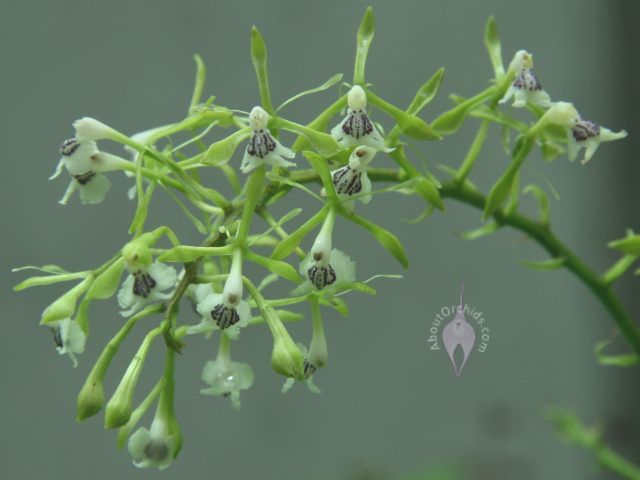
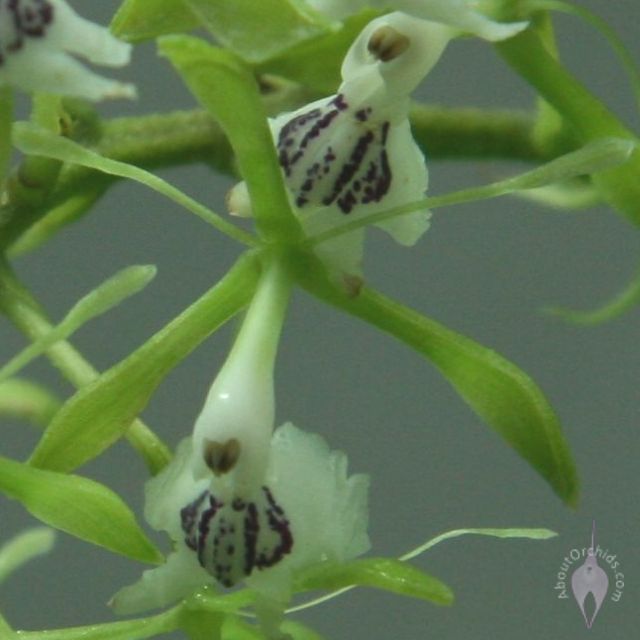
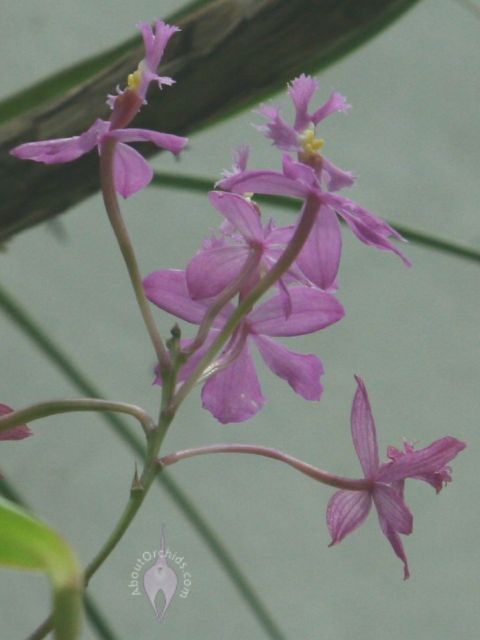
Here are some more photos from the tropical rainforest exhibit at the California Academy of Sciences. The first set shows 2 kinds of Epidendrums. With fragrant green, white, and purple flowers, Epidendrum paniculatum is a common species found from Mexico and Belize south to Brazil and Argentina. There are several color varieties of this species throughout its large range. The last picture in this set shows a different Epidendrum species with a solid purple color.

Epidendrum flowersEpidendrum flowers

Epidendrum flowerEpidendrum flowers

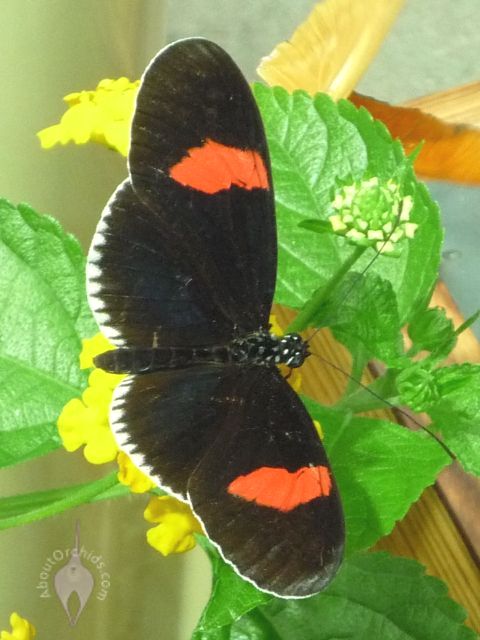
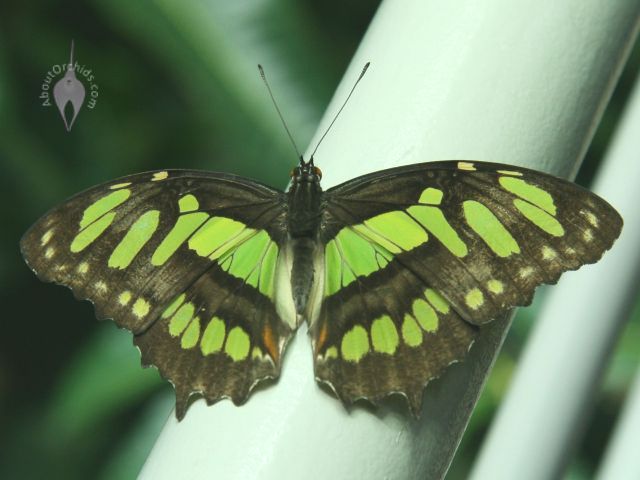
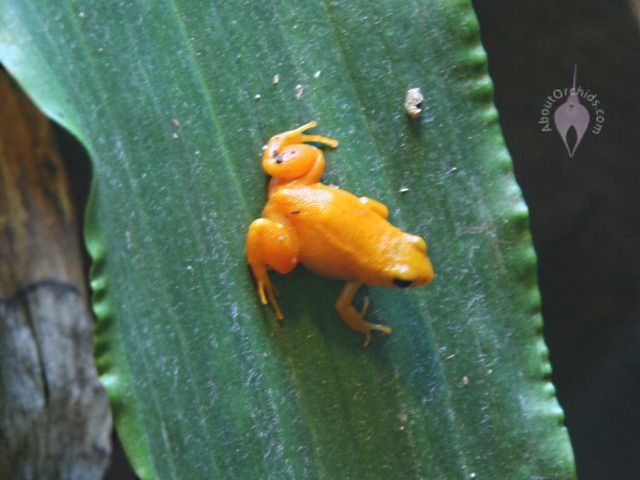
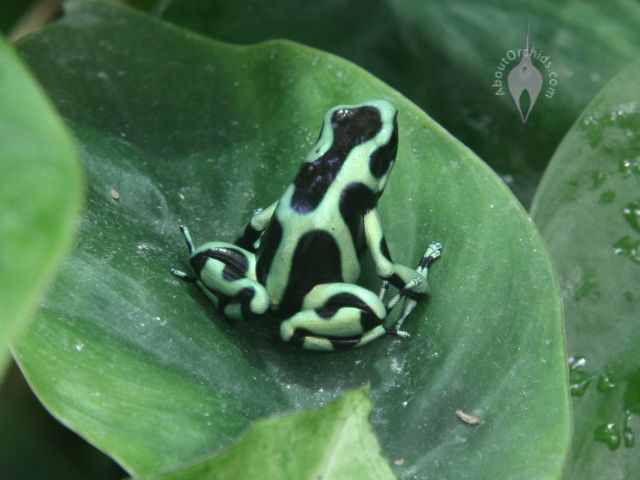
I have several readers who are butterfly lovers, and I promised some more pictures. These stunning beauties were flying all over the exhibit, but they don’t sit still for long, so taking pictures is a challenge. There are 2 more shots of poison dart frogs, named because Amazon natives used poisons from the frogs’ skins on the tips of blowdarts. The colorful frogs are tiny, under 1 inch (2.5 cm) long. Most species are critically endangered because of habitat destruction, climate change, and pollution. The Academy of Sciences works for conservation of these frogs and many more rare species, including endangered orchids.

Tropical butterflyTropical butterfly

Costa Rican poison dart frogPoison dart frog from Madagascar

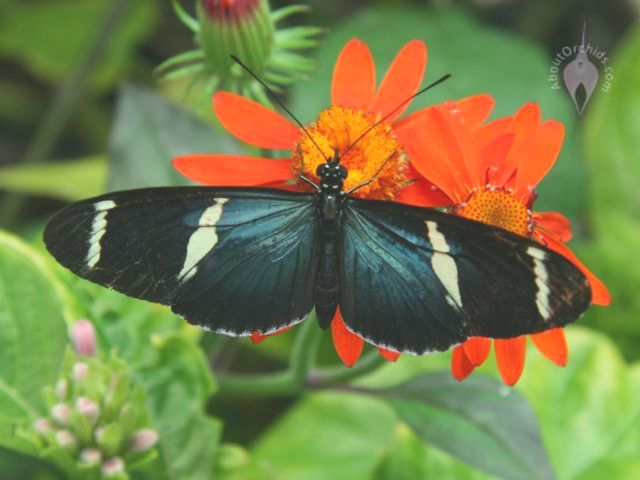
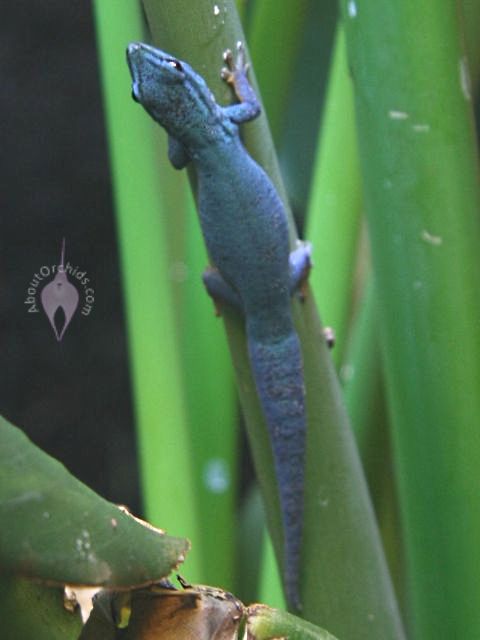
Here are even more butterflies. Along with the blue gecko in the last photo, they show a little tropical color from this amazing Academy of Sciences exhibit.

Tropical butterflyTropical butterfly

Tropical butterflyBlue lizard

Rainforest in a Bubble

Posted June 13th, 2009 by Marc Cohen
Categories: Conservation, Misc, Orchids in the Wild, Photos, Warm Growers

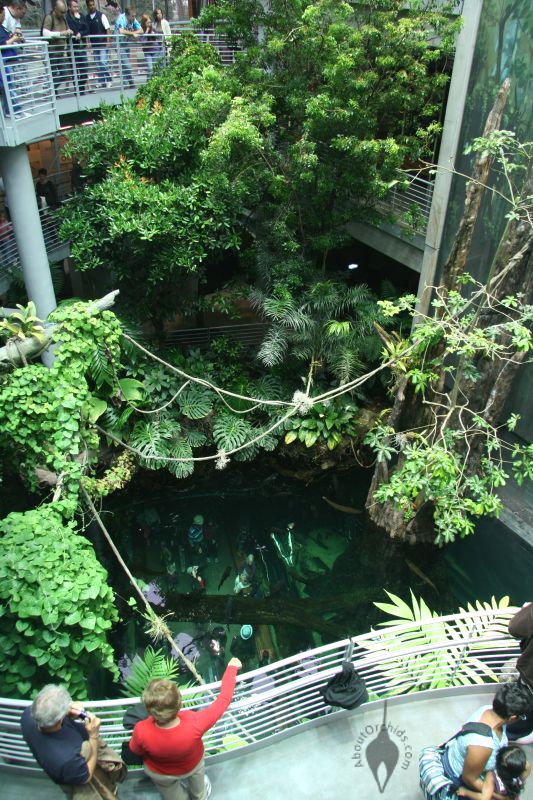
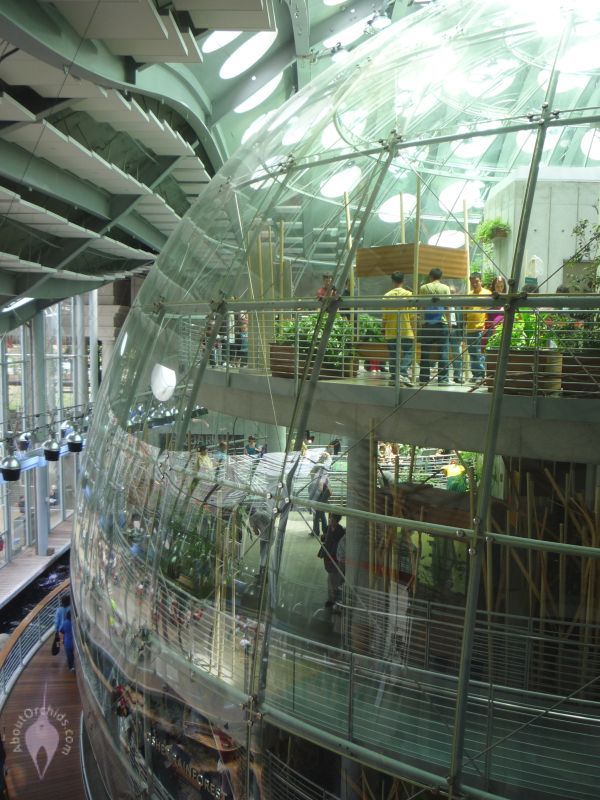
The California Academy of Sciences, located in San Francisco’s Golden Gate Park, is one of the world’s largest natural history museums. Among the many exhibits, the museum contains a remarkable 4-story rainforest housed in a dome. Inside the glass sphere, a spiral ramp allows visitors to explore the rainforest, starting on the ground and heading into the tops of the trees.

Visitors at the rainforest exhibitViewing the rainforest exhibit from different levelsView of 4 story glass dome with rainforest exhibit

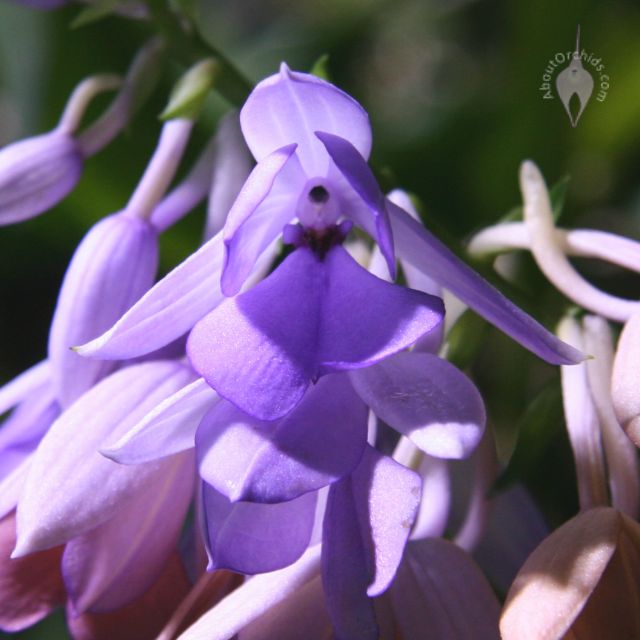
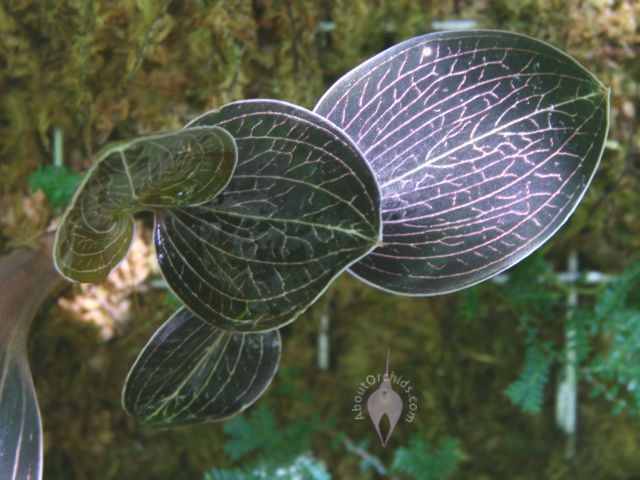
This Rainforests of the World exhibit features the flora and fauna of Indonesia, Costa Rica, and Madagascar. It’s no surprise that orchids abound. Here are pictures of a few examples: a Phalaenopsis species, an unusual Calanthe orchid from tropical Africa, and a jewel orchid with fascinating leaves. All enjoy the constant warm temperatures and high humidity inside the dome.

Phalaenopsis flowerCalanthe flowersJewel orchid leaves

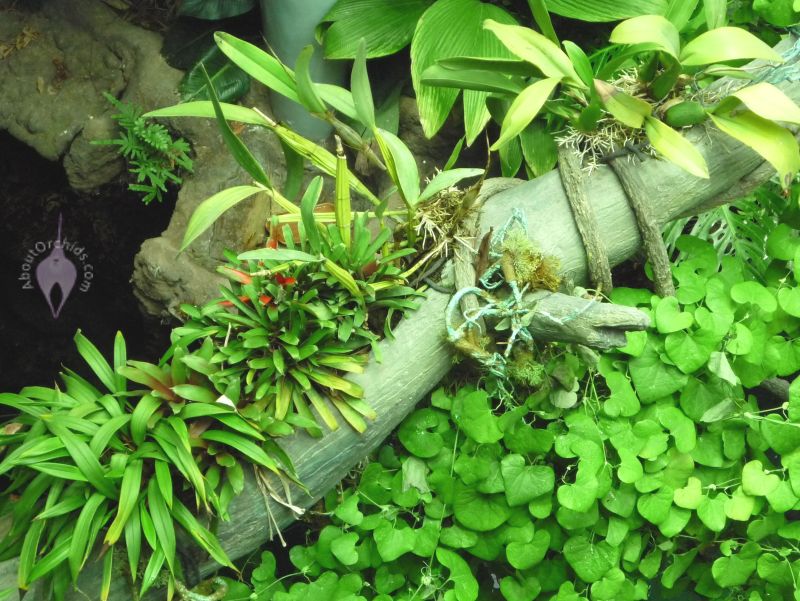
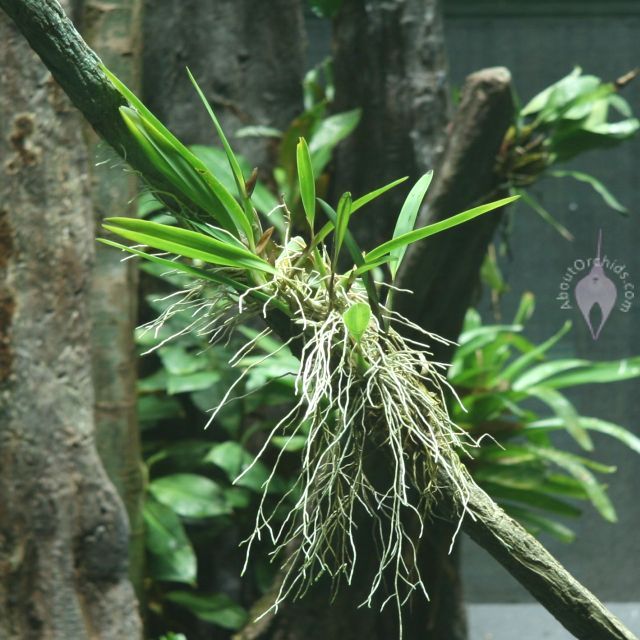
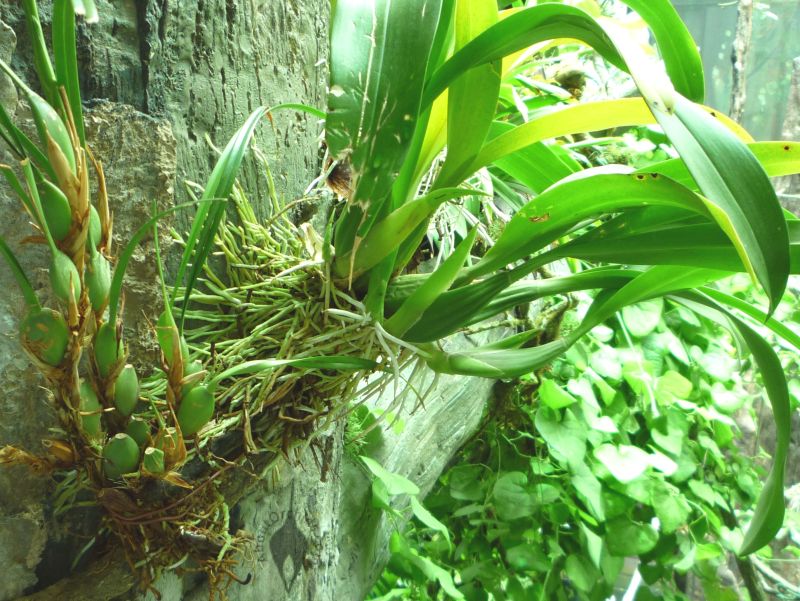
More than just a flower show, the exhibit provides an opportunity to see how orchids grow in the wild. The first photo in this next set shows how orchids grow as epiphytes, or air plants, along with bromeliads, ferns, and vines. By using their roots to hold on to trees, epiphytes take advantage of brighter light than they could receive on the shady forest floor. The 2nd photo shows an orchid attached to a branch. While some roots hold fast to the bark, others stick out in the humid air to catch moisture and nutrients. The 3rd photo shows orchids attached to a tree trunk. In the wild, the white roots hold on to the vertical surface, even in the face of strong winds and violent storms.

Air plants attached to tree branchOrchid growing on branchOrchids growing on tree trunk

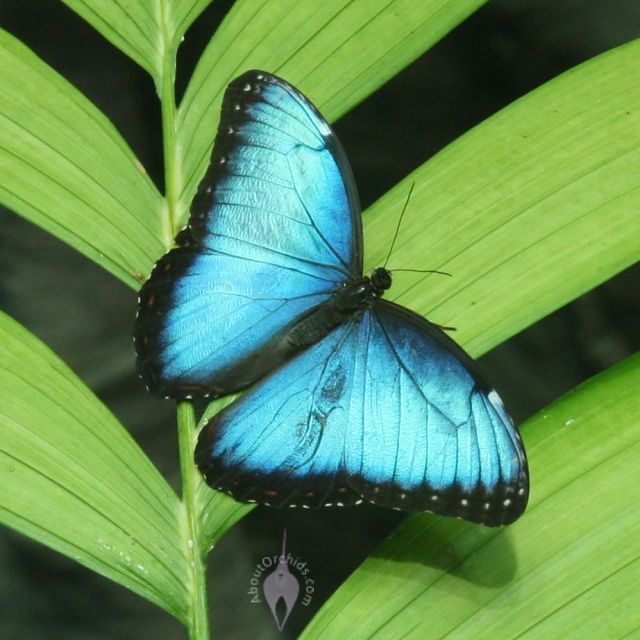
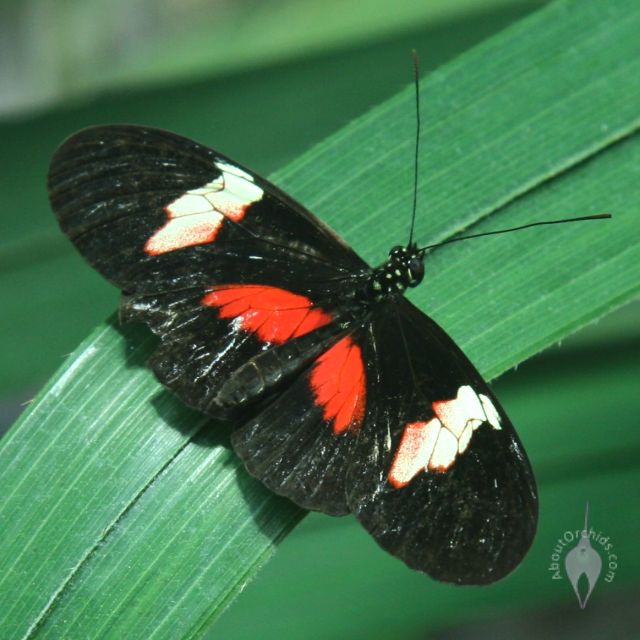
That’s a small sample of the flora, and here are some of the fauna. Butterflies pollinate some species of orchids in the wild. These beauties paused long enough for our cameras. In the final photo, the bright colors of a poison dart frog advertise its bad taste to predators. They all play their parts in complex webs of life of tropical rainforests, and also this remarkable rainforest in a bubble.

Blue Morpho butterflyTropical butterflyCosta Rican poison dart frog

Native Orchid Conference

Posted June 9th, 2009 by Marc Cohen
Categories: Conservation, Events

It’s not too late to register for the Native Orchid Conference, held June 12 – 16 in Green Bay, Wisconsin. Run by an organization of the same name, the Native Orchid Conference highlights orchids from the USA and Canada. There are over 200 species of orchids native to North America, from California to Newfoundland, from Miami to Vancouver, and even north of the Arctic Circle. This conference focuses on conservation and restoration of destroyed or damaged habitats. Orchid experts will give talks on topics such as orchid hot spots and conservation case studies. The conference also includes field-trips to nearby state parks to find orchids that survive Wisconsin’s long, cold winters.
Masdevallia Weather

Posted June 5th, 2009 by Marc Cohen
Categories: Cool Growers, Mini Orchids, Orchids in the Wild, Photos, Watering

With cool, foggy weather here in San Francisco, and even some unusual late spring showers this week, it’s the perfect climate for Masdevallias. No wonder that we have 3 different kinds in bloom at once. This first set shows a great purple hybrid with typical Masdevallia traits, like the triangular shape and bright colors. The last photo in the set shows a less noticeable family trait, with a close-up of the tiny petals and lip inside the flower.

Masdevallia flowerMalaxis flower

Masdevallia flower opening after rainstormSmall petals and lip inside a Masdevallia flower

Despite the common misconception that all orchids want warm temperatures, Masdevallias are native to cool, high-altitude rainforests with constant rain or fog. They range from mountains in Mexico and Central America south into the Andes. In cultivation they need a cool, damp climate, although they must be protected from freezing. There are warmer growing varieties also, but no matter what climate they prefer, Masdevallias need daily watering and high humidity. This orange hybrid has been a reliable bloomer for years, and enjoys living outside all year long in the San Francisco fog.

Masdevallia flowersMasdevallia flower

Masdevallia flowersMasdevallia flowers

This final set shows an extra small species from Ecuador. It’s one of the only members of the vast Masdevallia family to have multiple blooms on each flower spike. In its native home, it lives in a forest that receives very little rain, but constant fog and mist. No wonder it’s enjoying our weather!

Masdevallia flowersMasdevallia flower side view

Masdevallia flowers top viewMasdevallia flower close-up

June Orchid Shows

Posted June 1st, 2009 by Marc Cohen
Categories: Events

As we approach summer, June is a slow month for orchid shows in the northern half of the globe. Orchid lovers are tending new growth, and summer heat complicates orchid transport. In the southern half of the globe, Australia and New Zealand are approaching winter, so there are plenty of great orchid shows down under.

June 1 – 22
‘Okika o Hawai‘i Exhibit, Hamilton Library, University of Hawaii at Manoa, Oahu, Hawaii
June 5 – 7
Conejo Orchid Society Annual Show And Sale, Thousand Oaks Library, 1401 E. Janss Road, Thousand Oaks, California
June 6 – 7
The North of England Orchid Society Annual Show, The Tennants Hall, Tatton Park, Knutsford, Cheshire, UK
June 10 – 13
South Coast Orchid Society Show, Park View Mall, Princes Highway, Corrimal, New South Wales, Australia
June 12 – 14
Aiea Orchid Club Show, Aiea Elementary School, 99-370 Moanalua Road, Aiea, Oahu, Hawaii
June 12 – 13
Manawatu Orchid Society June Orchid Show, Community Leisure Centre, Palmerston North, New Zealand
June 12 – 14
Acadian Orchid Society Show, Ira Nelson Horticulture Center, 2206 Johnston St., Lafayette, Louisiana
June 13
Orchid Society of Southern California Annual Orchid Auction, Meeting Hall, First Christian Church, 221 South Sixth Street, Burbank, California
June 13 – 14
Blacktown Orchid Society Show, Centro Shopping Centre, cnr Prospect Highway and Federal Road, Seven Hill, New South Wales, Australia
June 18 – 20
Manly Warringah Orchid Society Winter Show, Warriewood Square Shopping Centre, Jacksons Rd, Warriewood, New South Wales, Australia
June 18 – 20
Blue Mountains and Penrith District Orchid Society Show, Centro Nepean Shopping Centre, Station St, Penrith, New South Wales, Australia
June 18 – 21
The Orchid Society of NSW Annual Winter Orchid Show, St. Ives Shopping Village, Mona Vale Road, St. Ives, New South Wales, Australia
June 19 – 21
Peterborough International Orchid Show, East of England Showground, Peterborough, Cambridgeshire, UK
June 25 – 28
Sutherland Shire Orchid Society Winter Show, Swanes Nursery, 80 Port Hacking Rd, Sylvania, New South Wales, Australia
June 26 – 28
Royale Orchids Fair, 1360 Brieses Rd, Peats Ridge, New South Wales, Australia
June 27 – 28
Mingara Orchid Fair, Mingara Recreation Club, Mingara Drive, Tumbi Umbi, New South Wales, Australia

Late Spring Garden

Posted May 28th, 2009 by Marc Cohen
Categories: General Gardening, Photos, Problems

Our late spring garden is full of great sights and smells, and even tastes and sounds. Orange nasturtiums are common sights in California gardens. Their flowers and leaves are edible, with a peppery flavor. However, the snails make a feast of them much more often that we do. The pink roses have a beauty and sweet scent that’s tempered by their sharp thorns. The third and fourth photos show little purple Cerinthe flowers, which reappear annually in the garden. This hardy Mediterranean plant loves the California climate. Bees return the love, and their buzzing resonates in the little tubular flowers, serving as a natural amplifier for the garden orchestra.
Nasturtium flowersRoses

Cerinthe flowersCerinthe flowers with bumblebee

I love this Japanese Painted Fern with silver foliage and bright purple stems. Violets add even more purple to the garden. Calla lilies are South African natives that love the San Francisco climate.

Japanese Painted FernViolet flowerCalla Lily

The next 3 photos show irises that put on a spectacular spring show with lots of large, colorful blooms. The final photo shows some urban wildlife:  2 California Slender Salamanders. I’ve seen this native species in the garden frequently over the years, and these 3-4 inch long (8-10 cm) bug-eaters are great for natural pest control. They even eat some of our pesky snails. Since amphibians are often sensitive to toxins, I’m happy to take the salamanders’ presence as proof that a beautiful garden is best without dangerous artificial chemicals.

Iris flowerIris flower

Iris flowerCalifornia Slender Salamanders

Orchid Conservation Alliance

Posted May 25th, 2009 by Marc Cohen
Categories: Conservation

The Orchid Conservation Alliance (OCA) is a non-profit organization dedicated to conserving orchids in their native habitats. OCA supports numerous projects to preserve orchids around the world. With the backing of individuals, orchid societies, prominent scientists, and orchid vendors, OCA places emphasis on saving wild rainforest habitats. Some of the strategies of organizations supported by the OCA include setting up rainforest preserves, working with local communities for sustainable land management, and sponsoring essential scientific research.

The OCA also organizes trips to orchid hotspots such as Brazil and Ecuador. By viewing orchids in their natural habitats, the need for saving them in their wild homes becomes readily apparent. The OCA offers several ways to contribute, including memberships and donations. Members receive benefits such as the organization’s periodic newsletters.

More from Singapore Botanic Gardens

Posted May 19th, 2009 by Marc Cohen
Categories: Botanical Gardens, Fragrant Orchids, Photos, Warm Growers

Jan-Marie took so many amazing picture from her visit to Singapore Botanic Gardens that I couldn’t possibly fit them into one post. I’ll start with more Vandas and Dendrobiums.

Vanda flowers and plantVanda flowers

Dendrobium flowersDendrobium flowers

These warm growers epitomize the word orchid. With the largest display of tropical orchids in the world, Singapore Botanic Gardens has been a pioneer in orchid breeding for decades. These Wilsonara, Dendrobium, Oncidium and Vanda photos show examples of their hybridization programs.

Wilsonara flowersDendrobium flowers

Oncidium flowersVanda flowers and leaves

Many of the orchids in these photos are hybrids that are bred to be hardy, as long as they receive good basic care. The first picture in this set shows a hybrid Dendrobium aptly nicknamed an “Antelope Dendrobium.” Besides their corkscrew petals, most Antelope Dendrobiums have a rich fragrance. The final picture shows a tunnel with thousands of yellow Oncidium flowers, surely a tropical paradise.

Antelope Dendrobium flowersDendrobium flowers

Bulbophyllum flower and plantOncidium flowers hang from arches