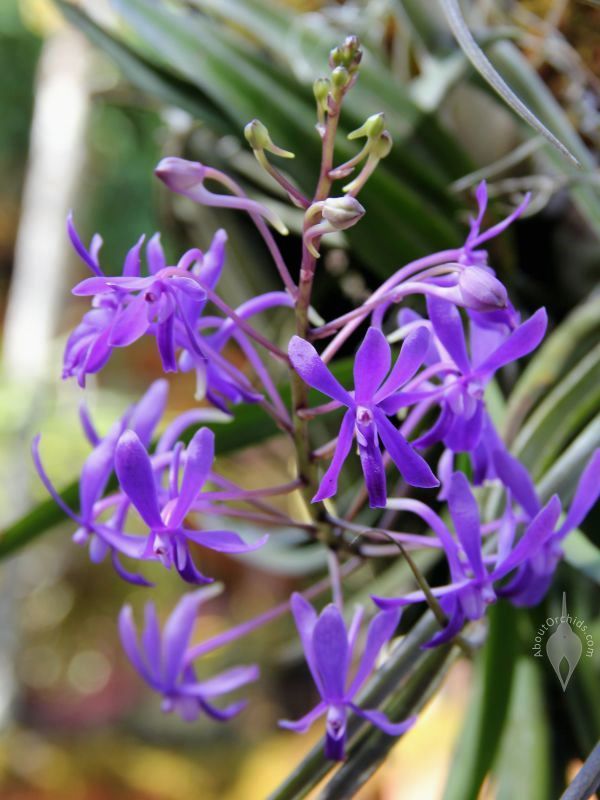
Vanilla Valentine

Posted February 4th, 2011 by Marc Cohen
Categories: Botanical Gardens, Buying Tips, Fragrant Orchids, Orchids in the Wild, Photos, Warm Growers

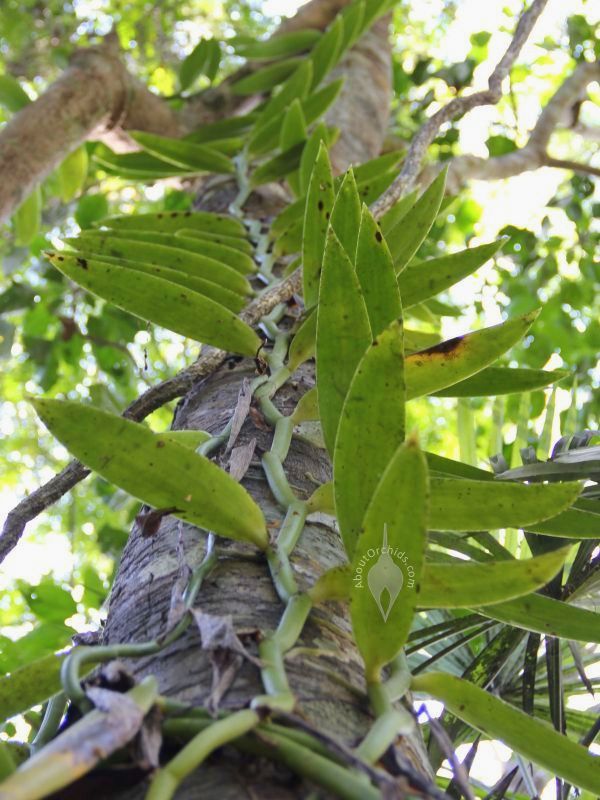
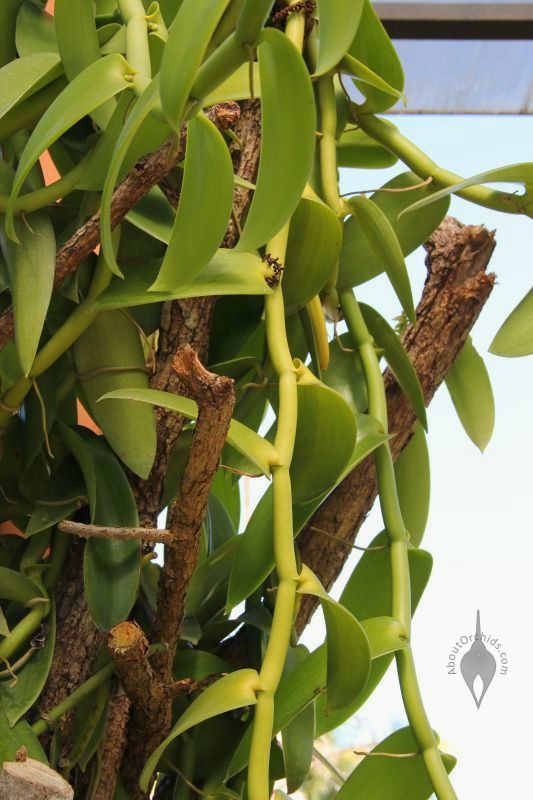
Want to buy your valentine an orchid? Try vanilla! Don’t get me wrong; I’m not suggesting you buy a vanilla plant. As you can see from the healthy specimens at Vallarta Botanical Gardens, these heavy vines are best left to climb up tropical trees or hang in greenhouses.

Vanilla vine growing up a treeLooking up at a Vanilla vine growing up a tree trunkVanilla pompona vine

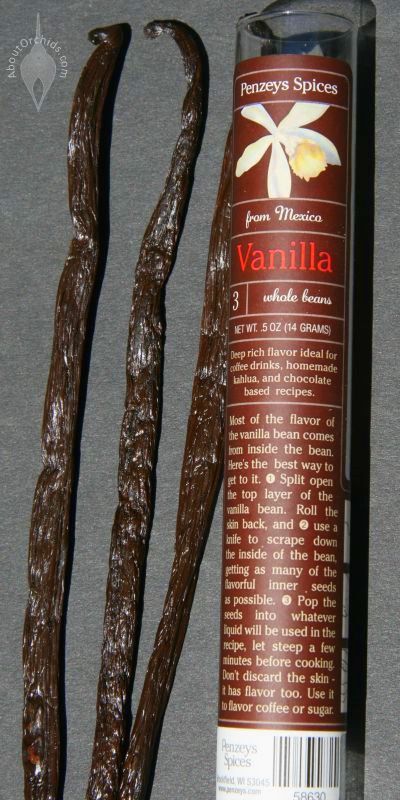
However, it is easy to buy a gift made with vanilla. As the world’s most delicious orchid, vanilla finds its way into many valentine’s essentials. Cakes, candies, cookies, perfumes, and scented lotions often contain it. Thousands of years ago, the native peoples of Mexico first used it as a flavoring for cooking, especially with chocolate. They created the process to dry and cure the seedpods, and bring out the vanilla beans’ distinct flavor.

Vanilla beansVanilla flowerYoung Vanilla plants under cultivation in Hawaii

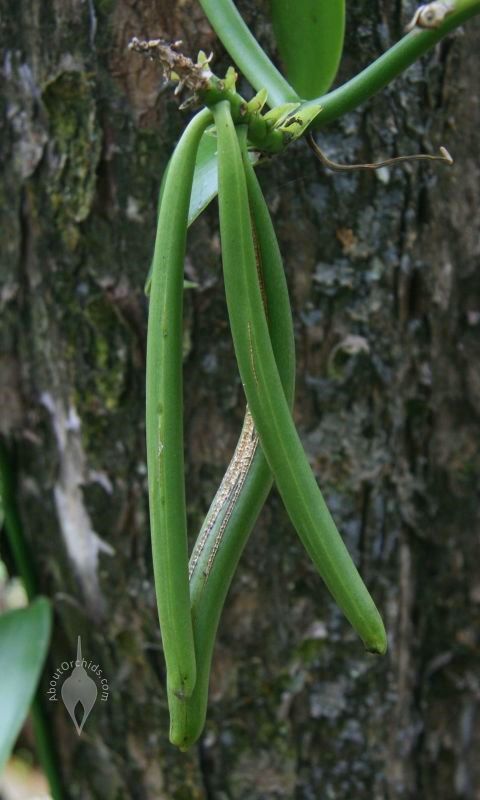
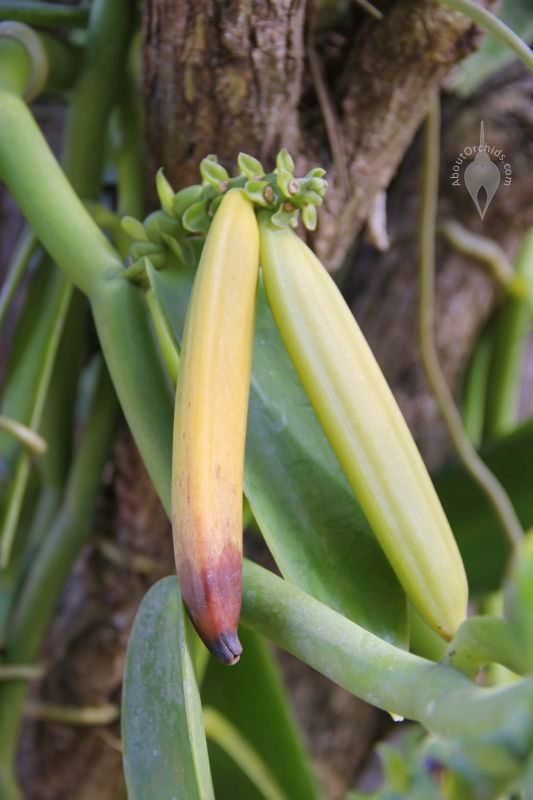
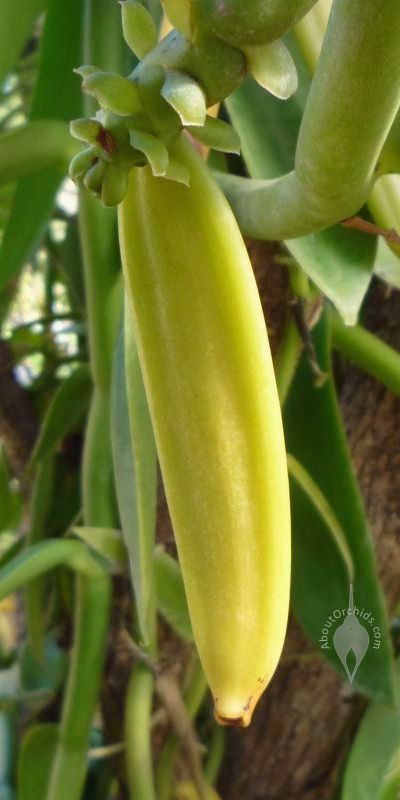
Vanilla planifolia is the most common source for the natural flavoring. Shown in the next photo, it has the long, skinny seedpods familiar to cooks. Vanilla pompona is a less common source, native to Central America from Mexico to Panama. Its seedpods in the last 2 photos look like small bananas. Even if you don’t consider yourself much of a cook, it’s easy to use the beans to make vanilla sugar, vanilla brown sugar syrup, or your own vanilla vodka.

Vanilla planifolia seedpodsVanilla pompona seedpods Vanilla pompona seedpod

Vanilla’s tastiness and versatility keep it in the top ranks of valentine gifts. Of course, regular-size orchids with flowers also make excellent presents. Start by checking out these buying tips to find the right Phal, Paph, or Cattleya. You can always have vanilla with your valentine dessert.

February Orchid Shows

Posted January 31st, 2011 by Marc Cohen
Categories: Botanical Gardens, Events

North America, Europe, and Asia offer a multitude of shows this month. Many are perfectly timed to shop for Valentine’s gifts. Starting February 19th, Tokyo hosts the largest orchid show in the world, the Japan Grand Prix International Orchid Festival. It fills Tokyo’s biggest baseball stadium with orchids for 9 days, and attracts hundreds of thousands of visitors. Around the globe, from Vancouver to Boca Raton to Aachen, smaller shows inspire plenty of their own awe and astonishment.

February 2 – 6
Asociacion Guatemalateca de Orquideologia Show, Cerveceria Centroamericana, Salon, Jose Arzu Castillo, 3a Ave. 17-16, Zona 2, Guatemala City, Guatemala
February 3 – 6
Ponce Orchid Show, Plaza del Caribe Mall, Ponce, Puerto Rico
February 4 – 6
Grand International Orchid Show, Stadtgartnerei Aachen, Krefelder Str. 294, Aachen, Germany
February 4 – 6
Chiang Mai Flower Festival, Buak Haad Park, Chiang Mai, Thailand
February 5 – 6
Orchid Quest, Alliant Energy Center, 1919 Alliant Energy Center Way, Madison, Wisconsin
February 5 – 6
Venice Orchid Show & Sale, Venice Community Center, 326 S. Nokomis Ave., Venice, Florida
February 5 – 6
Sonoma County Orchid Society Show, Santa Rosa Veterans Building, 1351 Maple Ave., Santa Rosa, California
February 5 – 13
Okinawa International Orchid Show, Tropical Dream Center, 424 Ishikawa, Ocean Expo Park, Motobu Town, Okinawa, Japan
February 10 – 13
Deep Cut Orchid Society Show, Dearborn Market, 2170 Rte. 35 S., Holmdel, New Jersey
February 11 – 13
New Hampshire Orchid Society Show, Radisson Hotel, 11 Tara Blvd., Nashua, New Hampshire

Read the rest of this post »

Orchid Exhibits

Posted January 28th, 2011 by Marc Cohen
Categories: Botanical Gardens, Events

Five of the most prominent botanical gardens in the USA are offering tropical respites from winter’s chill. These orchid exhibits run for months, so you can recharge your botanical batteries through spring.

January 15 – March 13
As a remedy to Pittsburgh’s freezing temperatures, Phipps Conservatory invites you to take in their Orchid and Tropical Bonsai Show. Phals, Oncidiums, Dendrobiums, and Paphs sit among the ferns and palms in the Palm Court and the Sunken Garden.

January 22 – March 27
In Philadelphia, the Longwood Gardens Orchid Extravaganza beckons visitors to the warmth of Longwood’s 4 acre (1.6 hectare) conservatory. Filled with over 4000 orchids, there are Phals, Cattleyas, Cymbidiums, Dendrobiums, Oncidiums, and Paphs in a variety of displays.

January 29 – April 24
In Washington DC, the Smithsonian presents Orchids: A View from the East. This exhibit highlights centuries of orchids in Chinese art, culture, and medicine. From ancient Confucian ideals to Taiwan’s modern horticulture industry, orchids have deep roots in China. The exhibit includes hundreds of orchids and 15 paintings celebrating Chinese Cymbidiums.
January 29 – March 27
In St. Louis, Missouri Botanical Garden hosts its 2011 Orchid Show with a Mayan theme. Over 800 blooming orchids create a lush, tropical display alongside Mayan headpieces, sculptures, and textiles.
February 5 – April 10
Atlanta Botanical Garden presents Orchid Daze – Liquid Landscapes. Thousands of orchids grace fascinating water features. Orchid sights and scents join the tranquility of water walls, fountains, jets, and beads.

¡Que belleza!

Posted January 25th, 2011 by Marc Cohen
Categories: Botanical Gardens, Conservation, Fragrant Orchids, Photos, Warm Growers

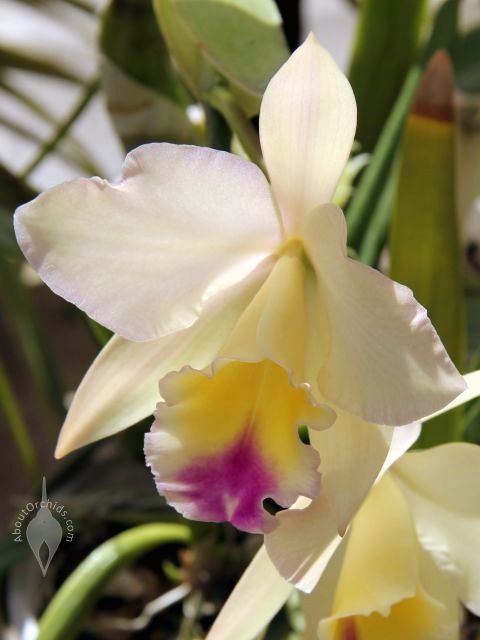
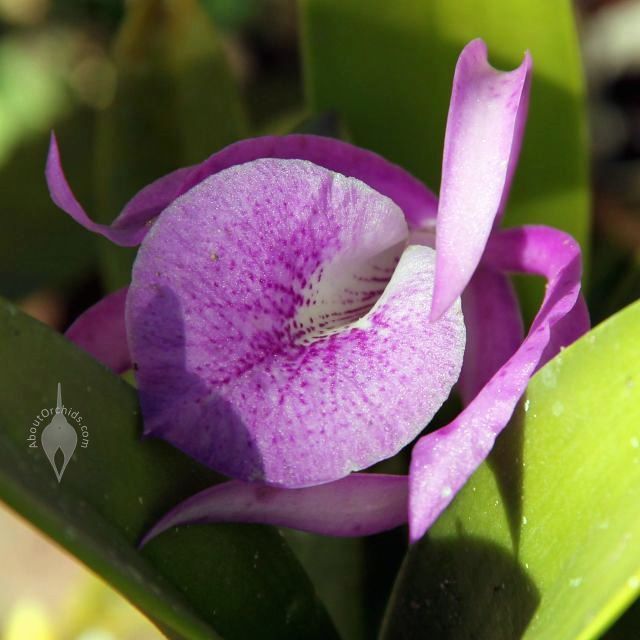
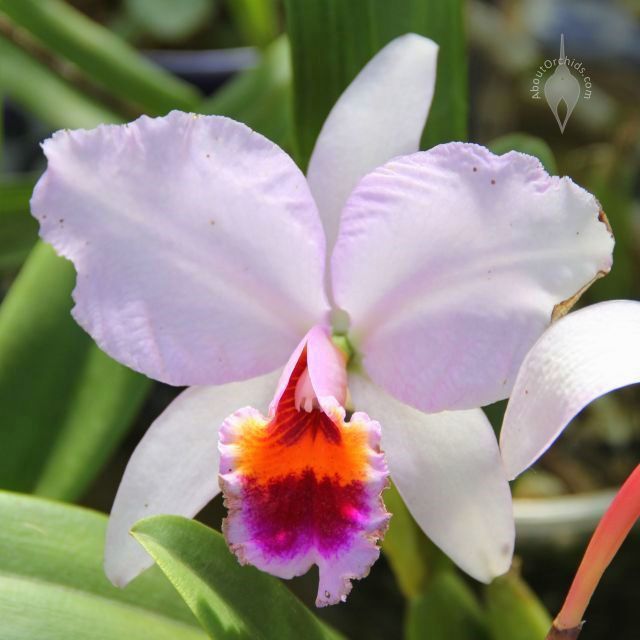
That’s Spanish for “How beautiful!” It’s a frequently heard exclamation at Puerto Vallarta Botanical Gardens. These three members of the Cattleya family certainly inspire the thought.

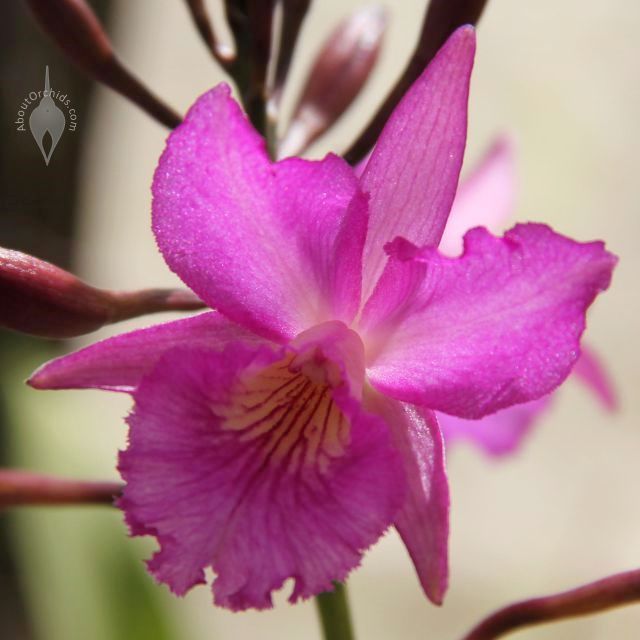
Broughtonia flowerCattleya flowerBrassavola flower

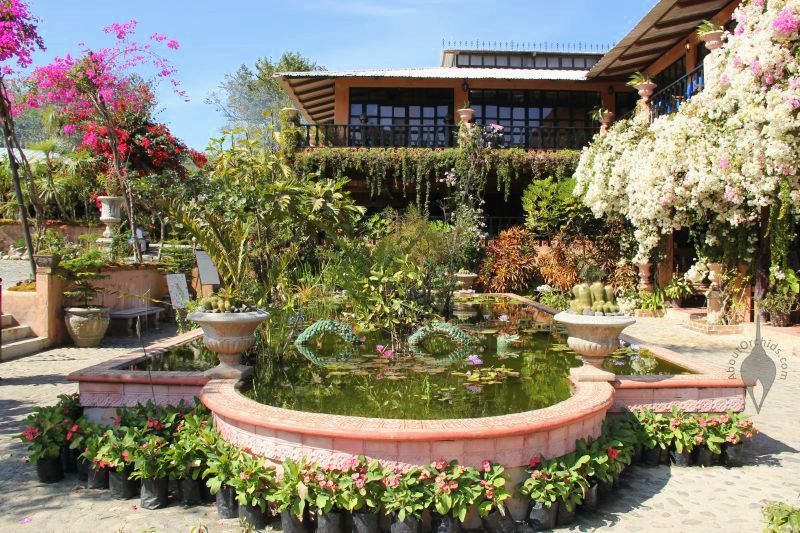
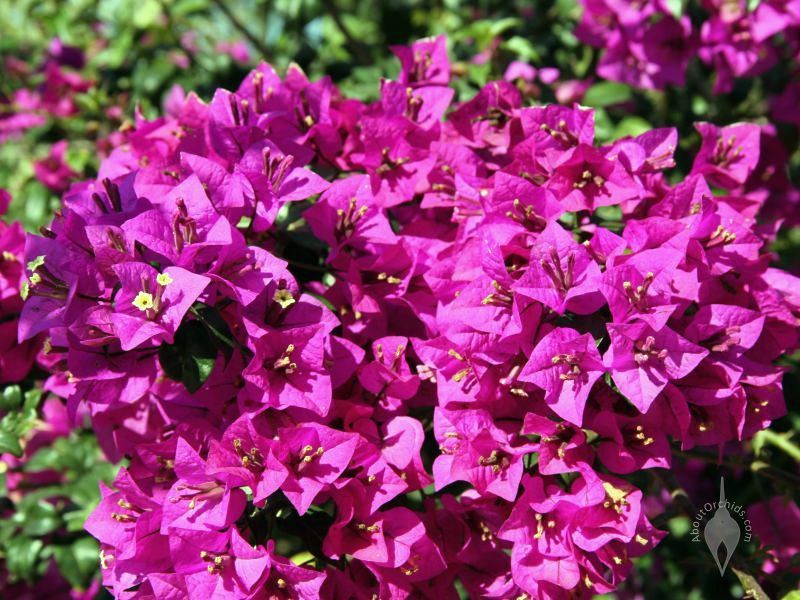
Vallarta Botanical Gardens contains jungle trails and a clear mountain river where you can cool off (don’t forget your bathing suit!) Surrounded by bougainvilleas of every hue, exotic palms, and countless tropical flowers, it can be easy to miss the orchids. Some hide in the foliage; some are in pots or hanging in trees. Since we visited during the winter dry season, most were not flowering. Fortunately, the orchid conservatory had more than enough blooms for our cameras.

Lily pond and Hacienda de Oro Visitor CenterBougainvilleaHolstein Orchid Conservatory

You can donate online to the gardens, and support their mission for “the propagation, promotion, study, enjoyment, and discovery of Mexican plants, especially orchids.” If you’re in the area, one visit will show why the gardens were listed as a must-see destination in the travel book Lonely Planet Mexico. In case you need any more convincing, check out these photos showing two orchids and an anthurium. You’ll be saying “¡Que belleza!” before you know it.

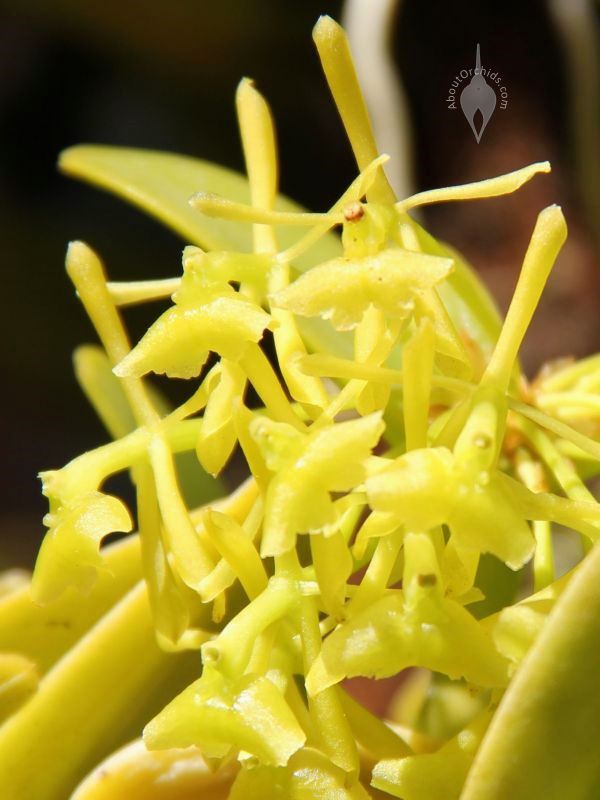
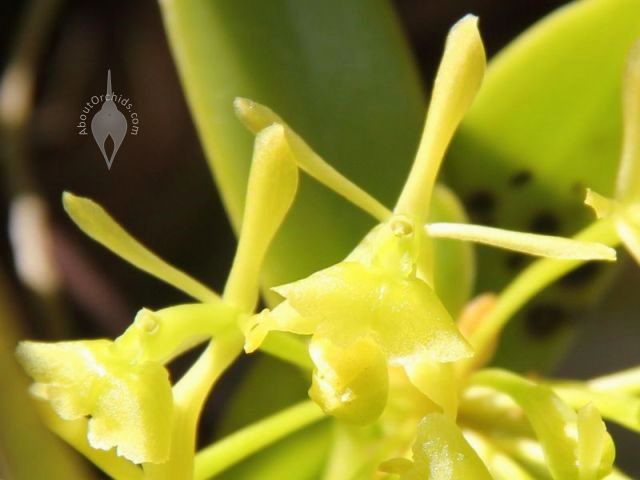
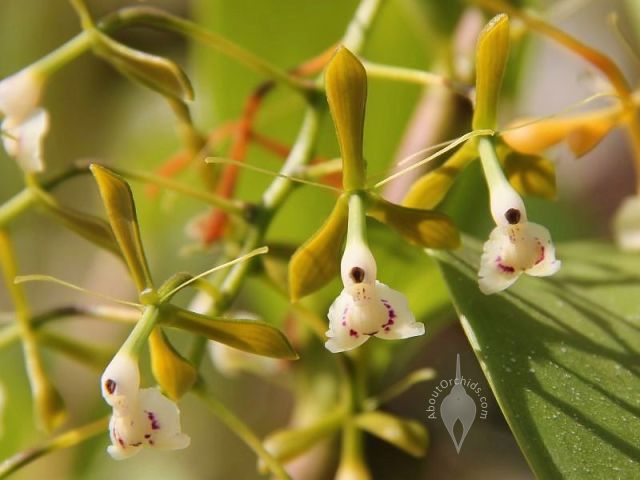
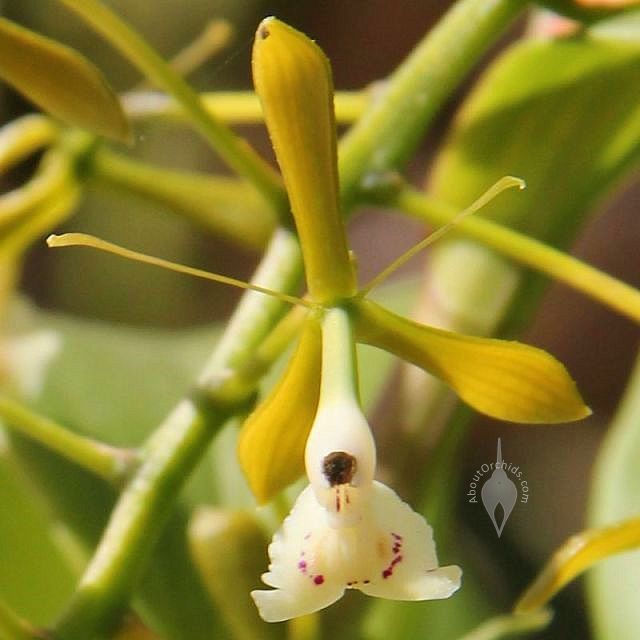
Encyclia flowerWhite anthuriumOrchid flower

Puerto Vallarta Botanical Gardens

Posted January 19th, 2011 by Marc Cohen
Categories: Botanical Gardens, Conservation, Fragrant Orchids, Photos, Warm Growers

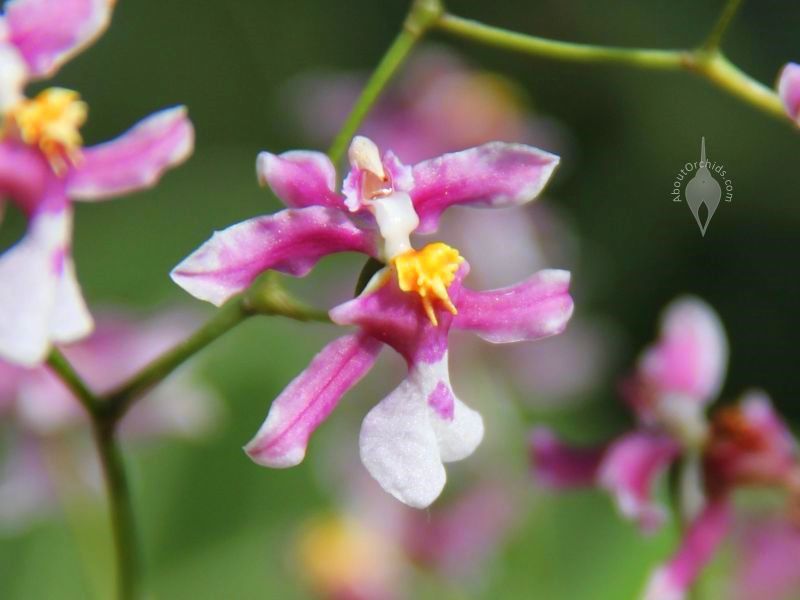
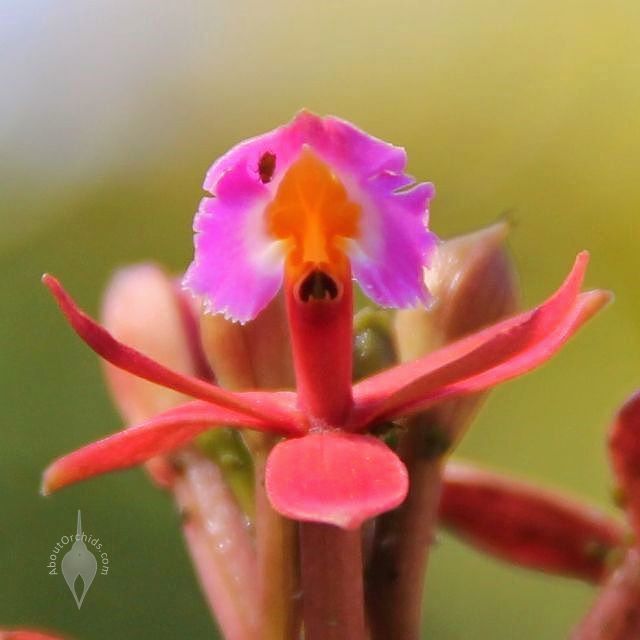
Sunny beaches and tequila aren’t the only reasons to visit Mexico. Vallarta Botanical Gardens shows off the region’s wonderful biodiversity. It’s an easy bus or taxi ride from downtown Puerto Vallarta. Dave and I just returned from a great visit, and we took lots of pictures. First, of course, are the orchids. A sweetly scented Cattleya, an Oncidium, and an Epidendrum are among hundreds of native Mexican orchid species.

Cattleya flowerOncidium flowerEpidendrum flower with aphid

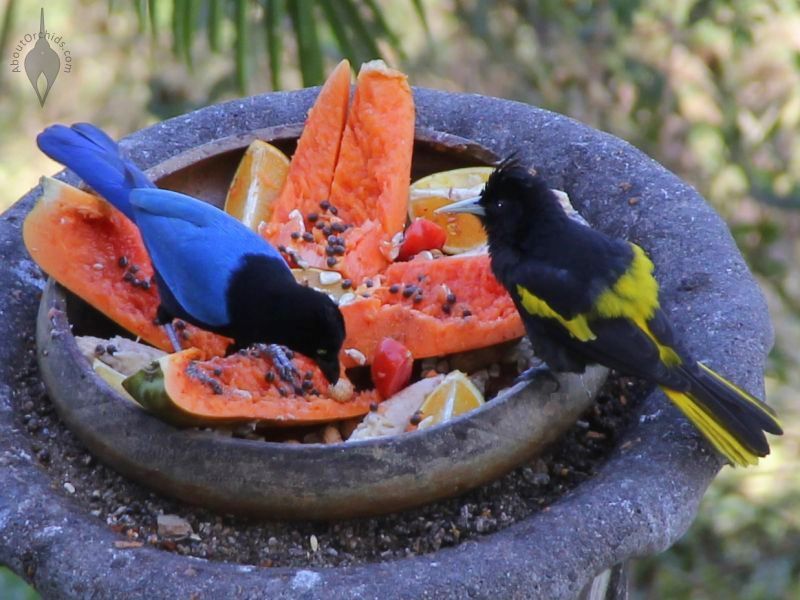
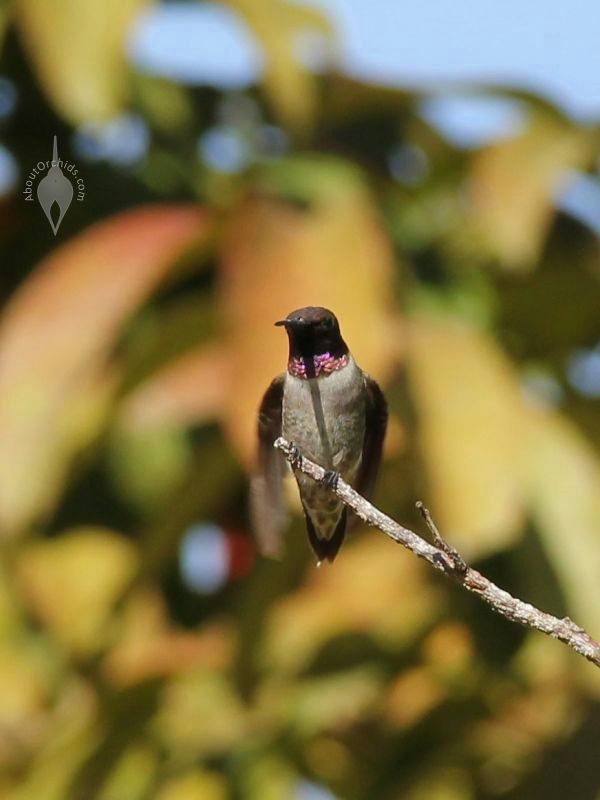
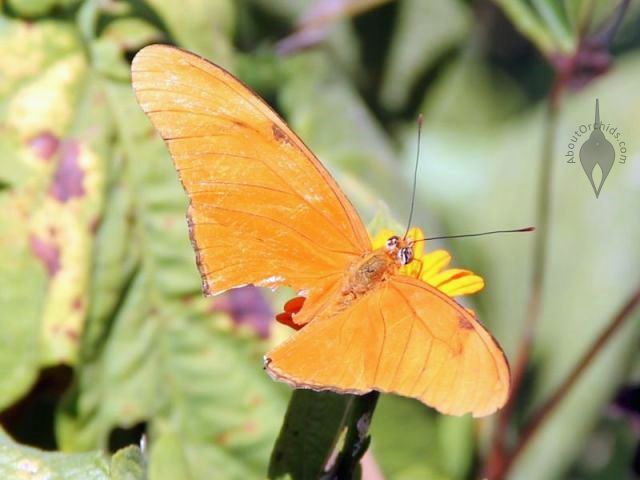
While hiking through the 20 acre (8.1 hectare) garden, we met two ornithologists doing research nearby. They happily pointed out and named several tropical birds for us. A brilliant blue San Blas Jay and bright yellow Cacique share a papaya lunch at a feeding station. A Mexican Hermit Hummingbird flutters its wings on a branch in the sun. Also, a bright orange butterfly feeds from a yellow bloom. Its damaged wing demonstrates the perils of its life in the Sierra Madre Mountains, maybe a close call with a hungry bird.

Colorful tropical birds at a feeding tray in Puerto VallartaMexican Hermit Hummingbird stretching its wingsOrange butterfly

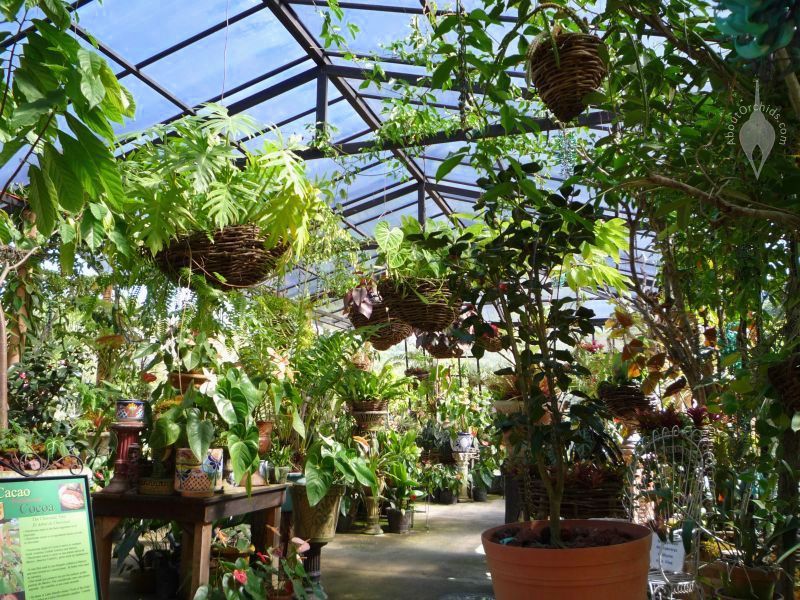
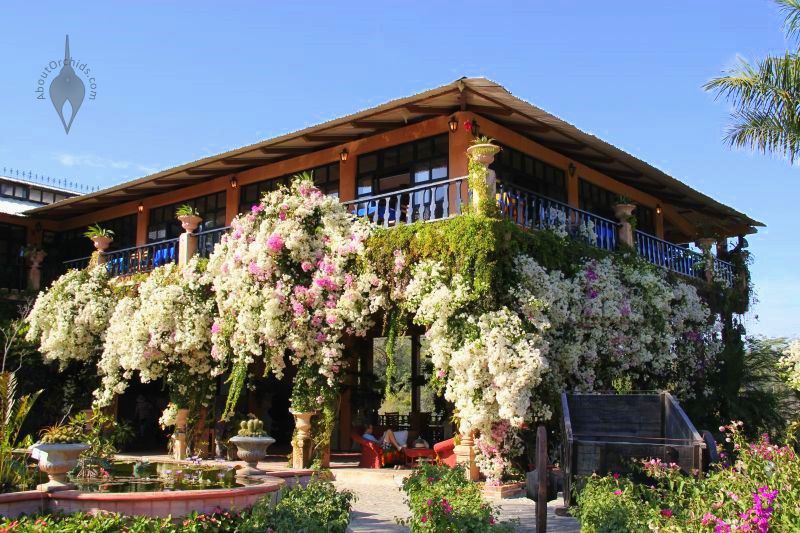
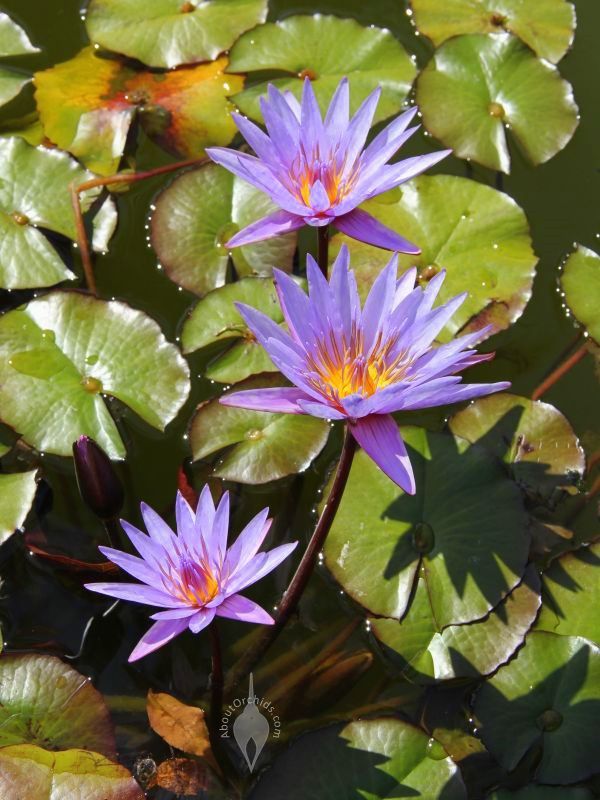
Dedicated to the study and preservation of native Mexican species, Vallarta Botanical Gardens resides in a tropical dry forest ecosystem at 1300 ft. (396 m) elevation. The gardens have more than 3000 plant species, including palms, tropical fruit trees, bromeliads, and succulents. In addition to the Orquideario (orchid greenhouse,) there are countless orchids mounted in trees, and Vanilla vines everywhere. The visitor center and restaurant are draped in white bougainvillea, with a pond of water lilies in front. Enjoy this sample of the floral beauty we saw, and I’ll have more pictures to share soon.

Hacienda de Oro Visitor Center and Restaurant, covered with Bougainvillea, with Water Lily Pond to leftWater liliesGloriosa  Lily

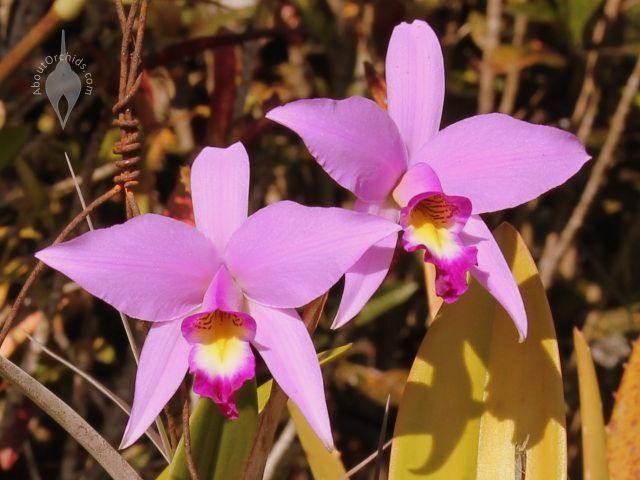
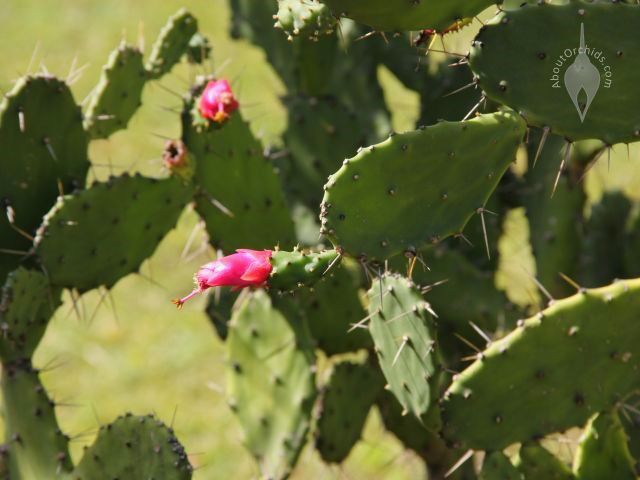
Laelia flowersCactus with flowersDarwinara flowers in orchid greenhouse

Orchid Post Mortem: Polystachya

Posted January 14th, 2011 by Marc Cohen
Categories: Mini Orchids, Photos, Problems, Warm Growers

Orchid pros sometimes say that you’re not an orchid expert until you’ve killed your weight in orchids. Since I started growing them 20 years ago, I believe I’ve passed that benchmark, and here’s another for the scales. This African orchid, a Polystachya, looked fine in these 2006 photos. I bought this unusual specimen years ago at an orchid show, and even though it bloomed for me several times, it recently bit the dust.

Polystachya flowersPolystachya flowerPolystachya flowers and leaves

It’s frustrating enough to kill an orchid, but it’s more frustrating when I can’t figure out what went wrong. Mine started going downhill a couple years ago, when its annual cycle of new leaves pooped out. The old leaves and pseudobulbs stayed green until recently, but then gave out without producing any healthy new growth. Photos show the interesting yellow flowers which face downward.

Polystachya flowersPolystachya flowersPolystachya flowers and buds

Since I’d been able to provide adequate conditions for blooming in the past, I’m left to wonder what changed. It’s possible that it acquired a plant virus during a pest invasion, and declined over time. It may have been that our foggy summers, which have been extra cool for the past couple years, didn’t offer it enough warmth to continue. In its native range from South Africa to Tanzania, it’s undoubtedly used to warm conditions. Maybe some unidentified problem popped up, and some future orchid trivia will jar loose an explanation. Its cause of death may elude me, but at least its photos live on.

Polystachya flowerPolystachya buds and leavesPolystachya flowers

An orchid expert once told me that if I’m not killing

anything, I’m not learning anything. It’s frustrating enough

to kill an orchid, but it can be frustrating when I can’t

figure out what went wrong.

Pruning Orchids

Posted January 8th, 2011 by Marc Cohen
Categories: Growing, Problems

Pruning orchids is easier than pruning roses or hydrangeas, because orchids don’t need shaping. Instead, pruning serves to remove dead or damaged parts of the plant. Dead leaves, flowers, or roots should be removed before they attract pests or disease. Pruning is sometimes necessary when dividing and repotting an orchid.

Start by cleaning sharp garden clippers with rubbing alcohol, dilute bleach solution, or hot water and soap. These methods don’t completely sterilize the blades, but they’re sufficient to prevent the spread of plant infections. Prune away any dead or damaged parts of the plant. Cuts can be made as close as possible, taking care not to harm nearby leaves or roots.

If there’s more than one orchid to prune, clean the blades in between each plant. The idea is to prevent the spread of nasty viruses or bacteria. Tackle each orchid’s pruning needs all at once to minimize the number of times you’ll need to clean your blades.

It’s also possible to prune a Phal’s fading flower spike, and force it to rebloom. Always clean your clippers or scissors before attempting this pruning trick.

Ada

Posted January 4th, 2011 by Marc Cohen
Categories: Cool Growers, Dormancy, Photos, Watering

No long orchid name to battle here! Adas announce themselves with brilliant color. This mass of orange petals contains multiple flowers, and looks somewhat like a mound of shredded carrots. Fortunately, a solitary blossom also stands out for the camera.

Ada flowers and leavesAda flowersAda flower

Related to Odontoglossums and Oncidiums, this Ada species is native to the Andes. It lives as an epiphyte up to 8200 ft. (2500 m) in the mountains of Colombia, Ecuador, and Venezuela,. It’s an easy grower if kept in cool, moist, breezy conditions, and requires a winter dormant period.

Ada flower buds and leavesAda flowersAda flower buds and leaves

These small, tubular flowers open just slightly. Each bloom is about 1 inch (2.5 cm) long. While they may not readily reveal themselves to human eyes, they’re each perfectly shaped to fit a  hummingbird bill. They share their beauty and hardiness, but not their short name, with Ada hybrids like Brassada, Adaglossum, and Kriegerara.

Ada flowerAda flowersAda flowers

January Orchid Shows

Posted December 31st, 2010 by Marc Cohen
Categories: Botanical Gardens, Events

Welcome the new year with orchids! The globally televised Tournament of Roses Parade features plenty of Phals, Cymbidiums, Dendrobiums, and Vandas alongside the countless roses. For the rest of the month, orchid shows provide opportunities to celebrate around the planet.

January 1
Pasadena Tournament of Roses Parade, Pasadena, California, 8 AM PST (check local TV listings)
January 4
Orchid Society of Coral Gables Judging Seminar, Fairchild Botanical Garden, Garden Room, Coral Gables, Florida
January 8
North of England Orchid Society Show, Community Hall, Manchester Rd., Rixton with Glazebrook, Warrington, Cheshire, UK
January 8
Orchid Society of Great Britain Meeting & Extended Table Show, Gatton Park, Reigate, Surrey, UK
January 8 – 9
Sarasota Orchid Society Show, Sarasota Municipal Auditorium, 801 N. Tamiami Tr., US #41, Sarasota, Florida
January 8 – 14
Fifth China International Orchid Show, Luhuitou Square, Yuya Rd., Sanya, Hainan, China
January 9
Taiping Orchid Show, Taiping Lake Garden, Taiping, Perak, Malaysia
January 14 – 16
North Carolina Piedmont Orchid Society Show, Daniel Stowe Botanical Garden, 6500 S. New Hope Rd., Belmont, North Carolina
January 14 – 16
Ft. Lauderdale Orchid Society Show, War Memorial Auditorium, 800 NE 8th St., Ft. Lauderdale, Florida
January 14 – 16
Taranaki Orchid Society Summer Show, Highlands Intermediate School, 260A Coronation Ave., New Plymouth, New Zealand

Read the rest of this post »

Winter Challenges

Posted December 27th, 2010 by Marc Cohen
Categories: Growing, Problems

Growing orchids in cold northern climates brings extra challenges in winter. First, cold temps mean that heaters run frequently, drying the air in the process. Low humidity can cause lots of problems for orchids, such as wilting blooms, pests, and disease. Tried-and-true methods to raise humidity include:

  • Grouping plants together
  • Placing orchids in humid areas of the house, like a bathroom or kitchen
  • Using a cool mist humidifier
  • Putting flowerpots on top of a tray of pebbles with water (keep the pots above the water level!)
  • Spraying regularly with a mister

Another winter challenge is insufficient light. Most commonly grown orchids originate in tropical regions of the world, where the sun is strong all year. Low winter sun and short daylight hours leave plants in a light deficit. Growers who see little sunlight during the winter should move orchids into brighter light, or consider adding some artificial light for the season. In time, your orchids will reward your extra winter care with strong new growth and blooms.