Little Birds

Posted October 18th, 2009 by Marc Cohen
Categories: Fragrant Orchids, Intermediate Growers, Mini Orchids, Photos

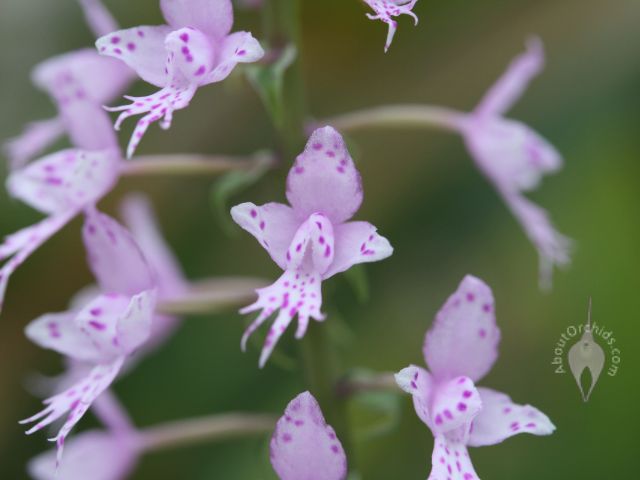
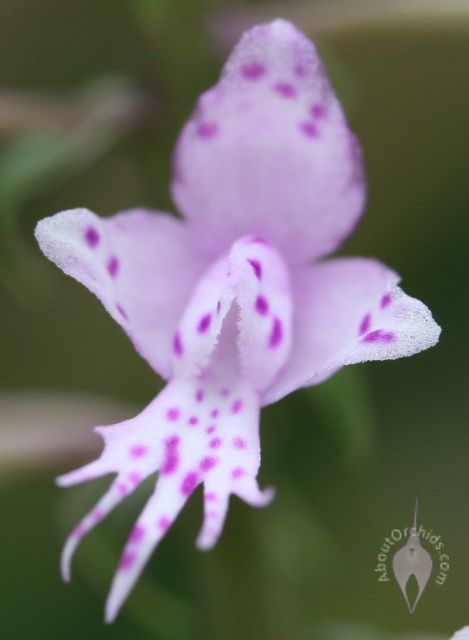
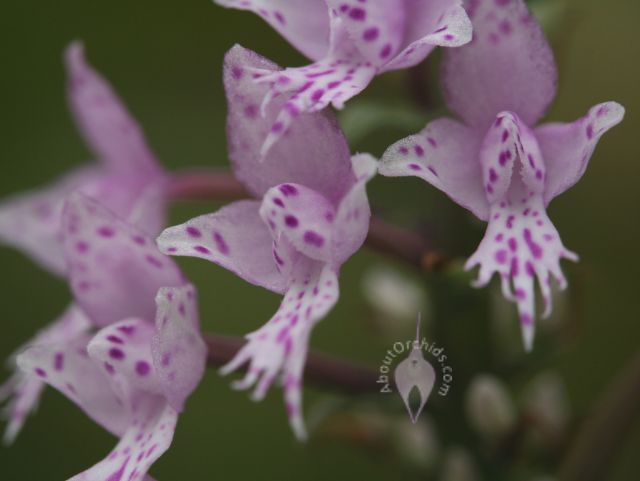
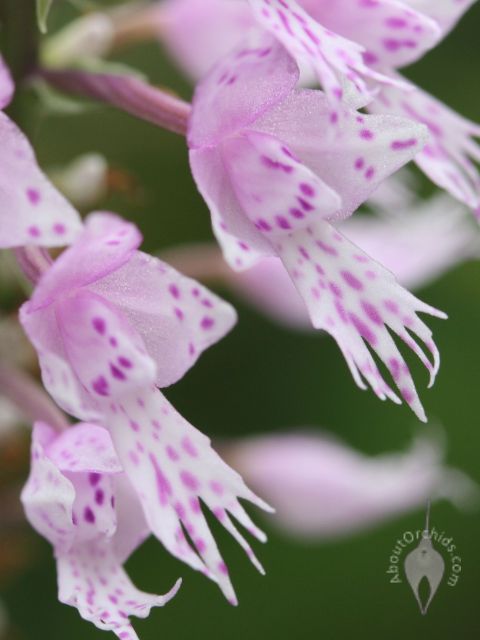
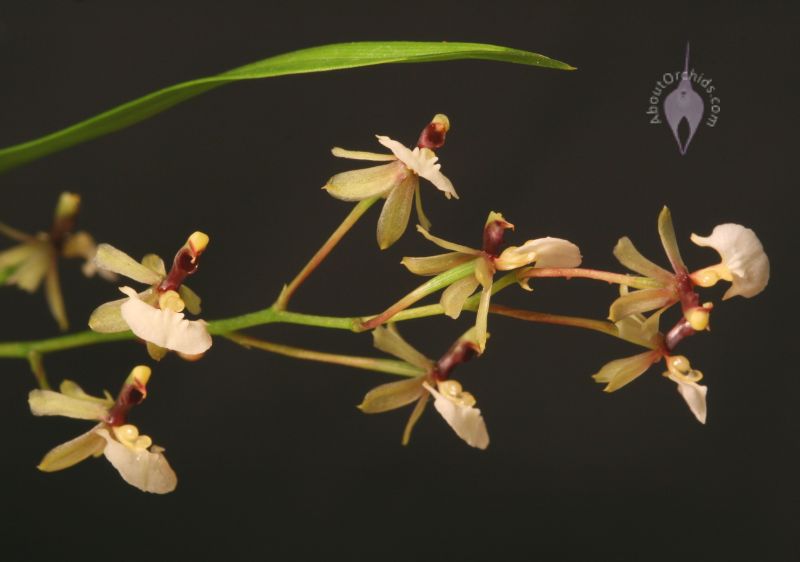
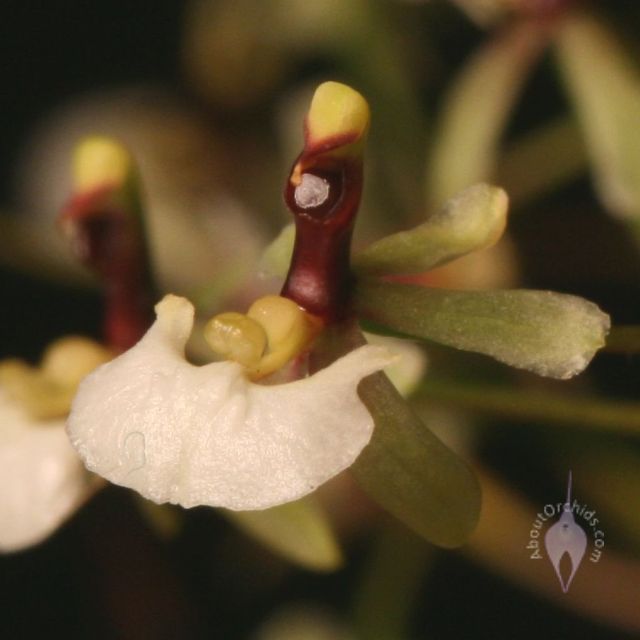
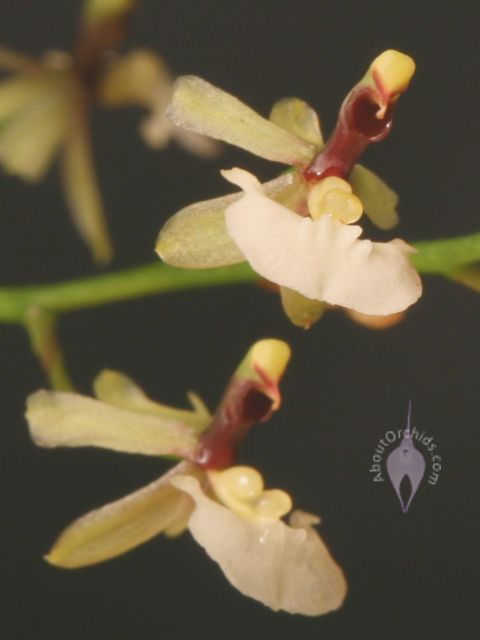
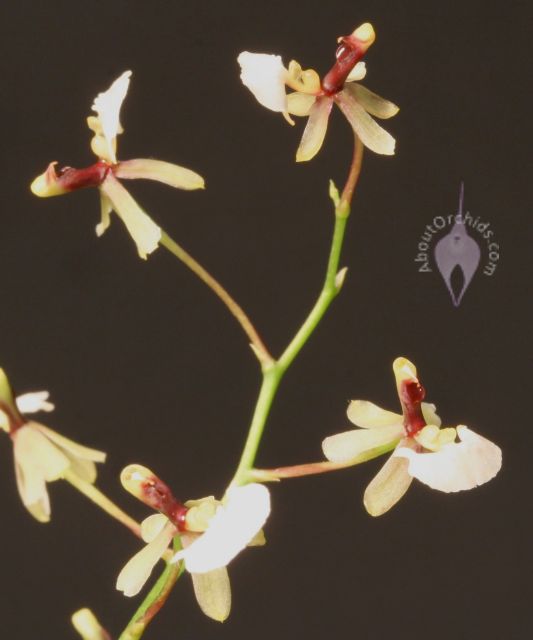
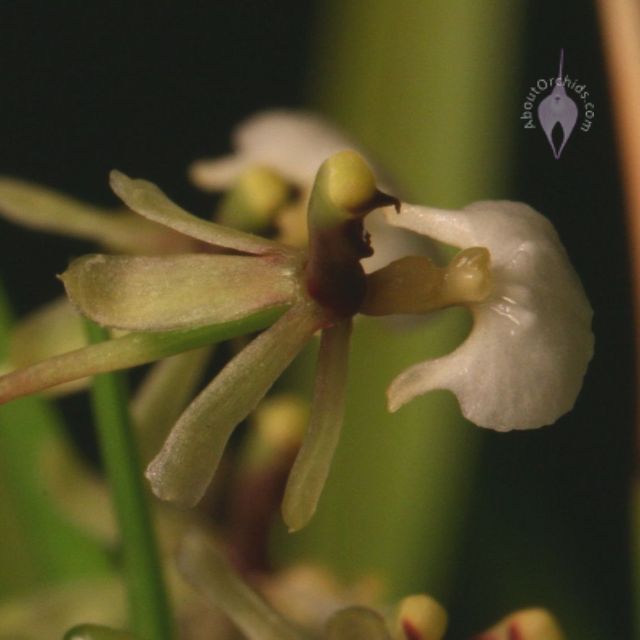
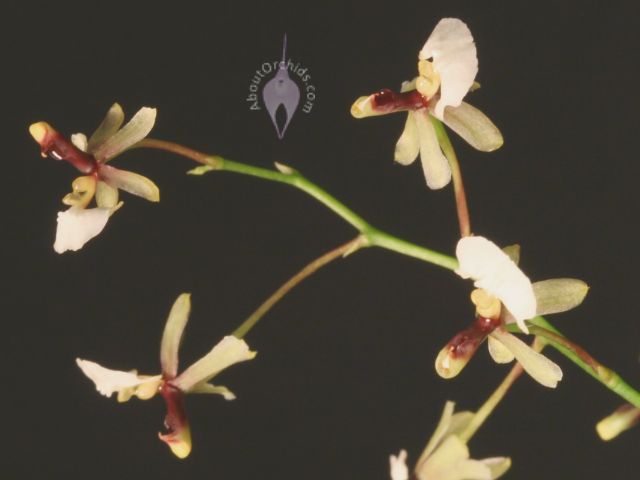
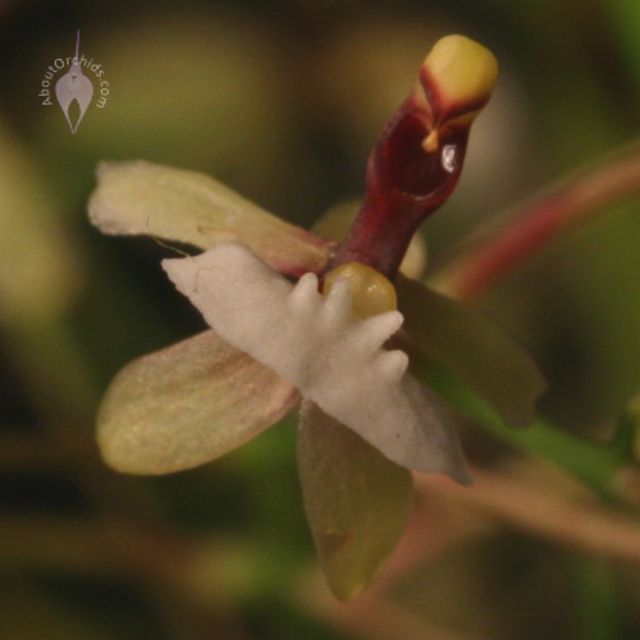
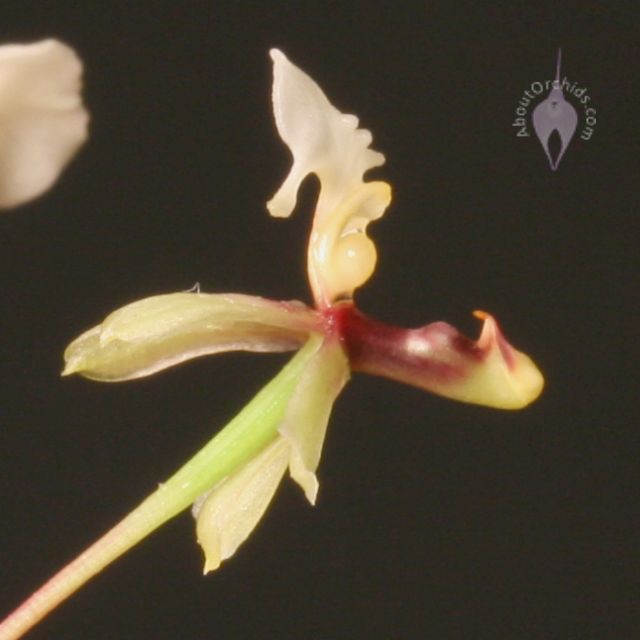
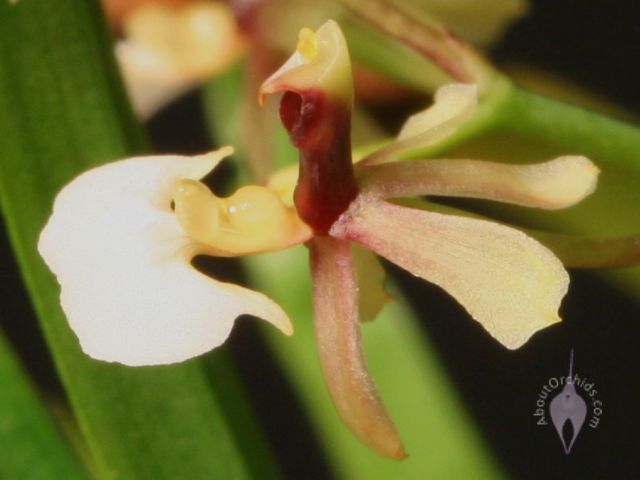
If you’d enjoy having a pet bird, but don’t want the noise, smell, and mess, this little orchid may be your solution. Named Ornithophora, its flowers look like little birds with head, beak, long neck, and wings spread out behind. As an added bonus, it has a light, sweet scent. I’ve been growing this reliable species from Brazil for years, and it’s been a regular bloomer. When Dave zooms in with the camera, you can really admire its intricate flowers.

Ornithophora flowers and leafOrnithophora flower close upOrnithophora flowers

This Oncidium relative takes up much less space than an aviary. It’s a mini orchid with flowers just 0.4 inches (1 cm) high. The blooms may be small, but there are lots of them, with each spike carrying a dozen or more. They can last as long as 2 months with regular water and high humidity.

Ornithophora flowersOrnithophora flower close upOrnithophora flowers

Some orchids are undergoing name changes as scientists use DNA analysis to better understand the massive orchid family. This species used to be named Sigmatostalix, but is now called Ornithophora. No matter the name, this easy grower is a great alternative to changing the newspaper in a birdcage.

Ornithophora flower close upOrnithophora flower side viewOrnithophora flower close up

Royal News

Posted October 15th, 2009 by Marc Cohen
Categories: Conservation, In the News

Britain’s Prince Charles has called for urgent protection for British wildflowers, including native British orchids. His call comes after release of a report by the conservation charity Plantlife, titled “The Ghost Orchid Declaration.” (By the way, the ghost orchid in Britain shares a common name with the ghost orchid I’ve written about in Florida, but they’re actually very different species.) The report raises an alarm that hundreds of species of wildflowers are in danger, and worries that the government neglects wildflowers in its environmental policies. Existing British laws haven’t stopped the loss of native wildflowers from intensive farming, climate change, and habitat destruction. As a result, British orchids such as lady slippers are in danger of dying out. With no time to lose, at least the wildflowers have royalty in their corner.

Orchid Conservation International

Posted October 11th, 2009 by Marc Cohen
Categories: Conservation, Events

Orchid Conservation International (OCI) is an independent, non-profit organization that promotes preservation of rare and endangered orchids and their habitats. Orchids have not had a central conservation organization like many endangered animal groups have. OCI was established in the UK to provide a base for worldwide orchid conservation activities. These efforts include public education about orchids, such as this Saturday’s upcoming talk in London. On Saturday, October 17, orchid expert Professor Mark Chase will speak about “Why Orchids Were So Important to Darwin” at Kew Royal Botanic Gardens. OCI has a website redesign underway, but you can still support this worthwhile organization by joining as a member, attending their talks, making a donation, or purchasing their posters.

Epidendrum

Posted October 7th, 2009 by Marc Cohen
Categories: Cool Growers, Intermediate Growers, Photos

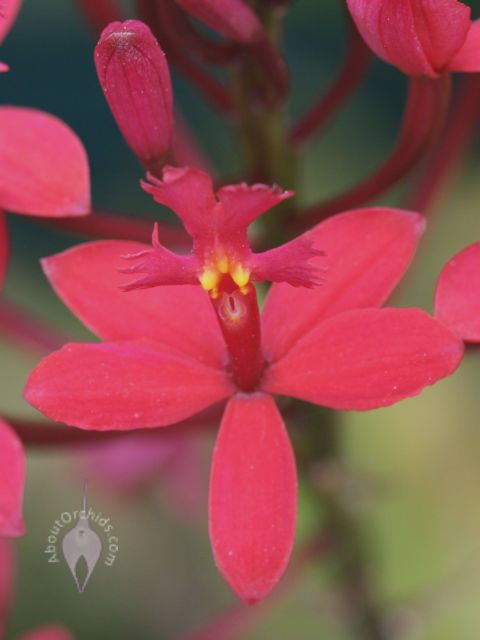
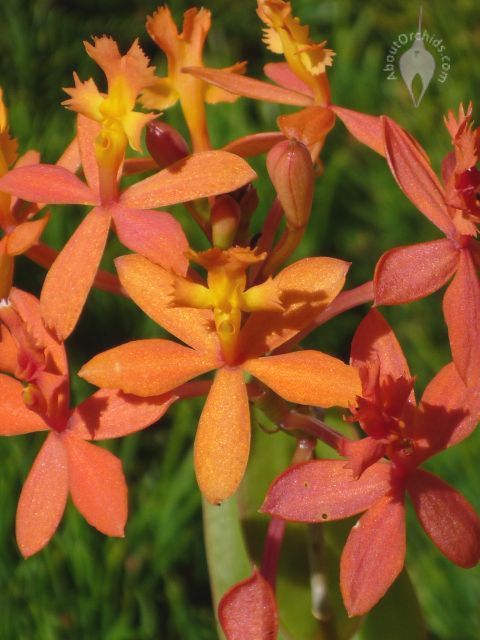
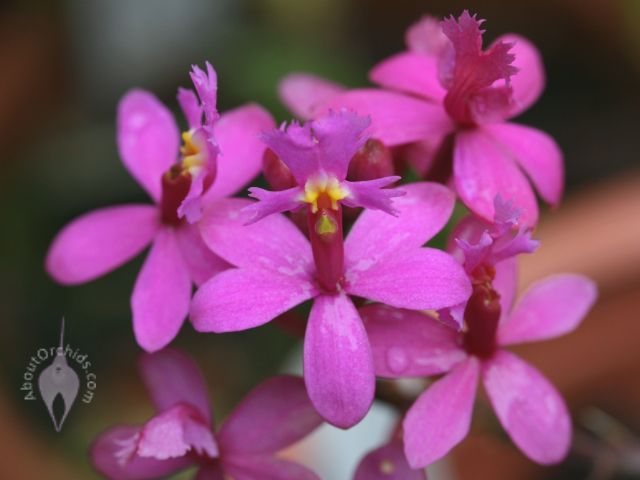
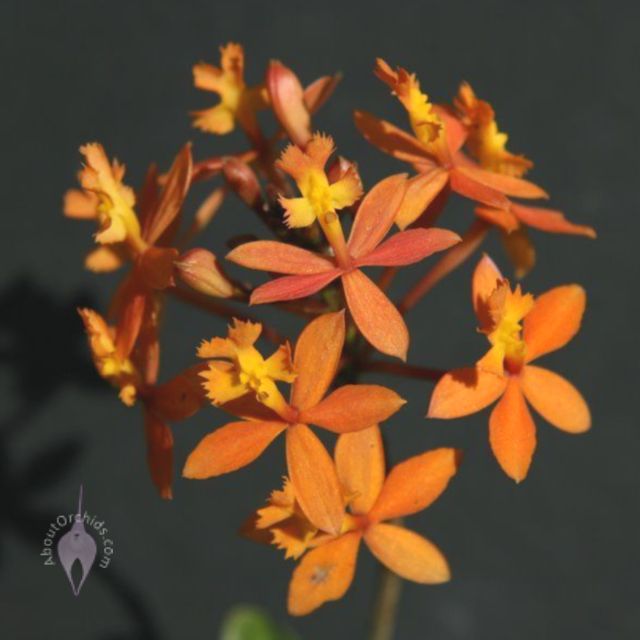
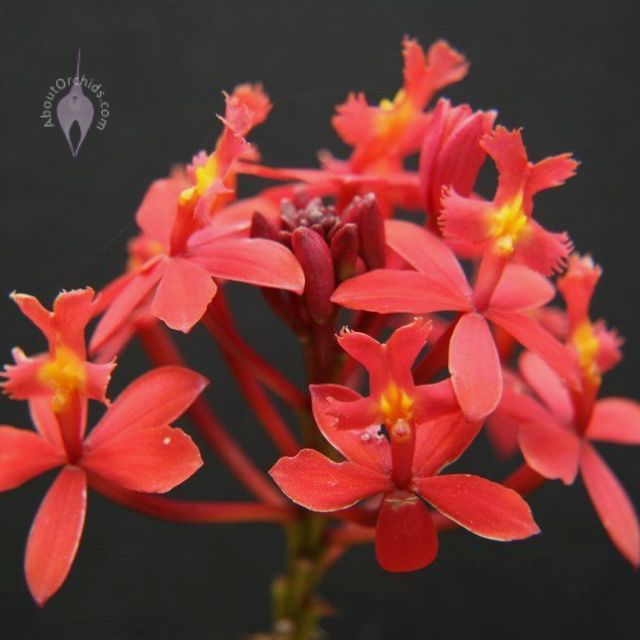
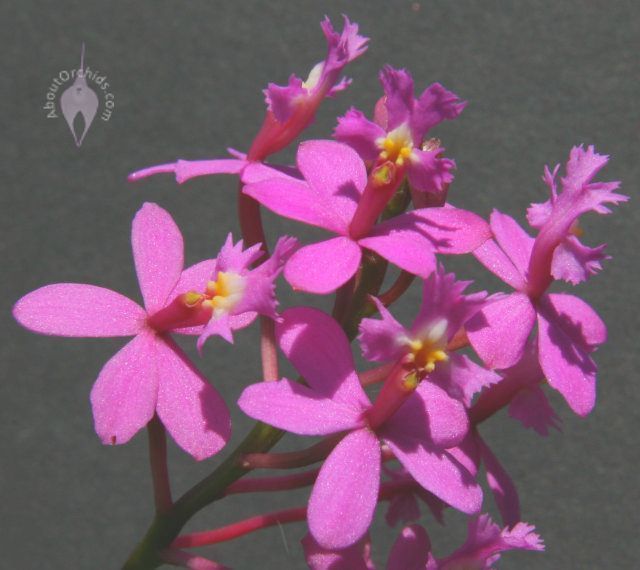
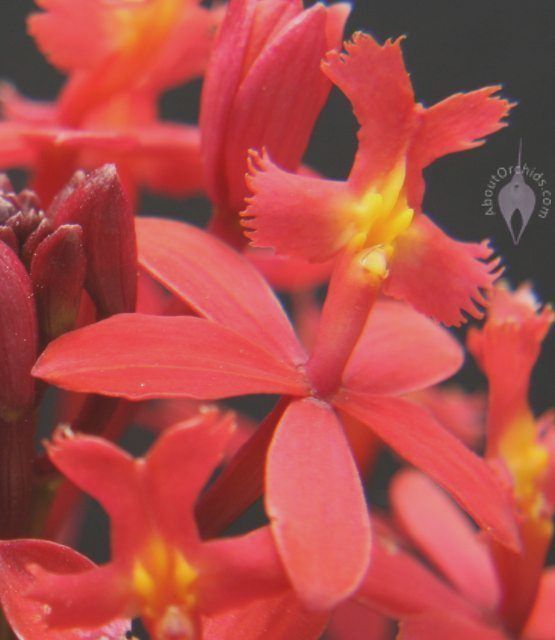
When it comes to the all-time record holders for blooming orchids, look no further than the Epidendrum family. The 3 varieties pictured here share the admirable distinction of staying in bloom all year in our garden. The red ones have been blooming continuously for over 6 years, persisting even in our cool, gray winters. They were growing wild in the backyard of a student of mine in San Francisco’s Twin Peaks neighborhood, and she gave me some cuttings. Much to my delight, they have proven virtually indestructible. The orange and purple varieties are later additions.

Red Epidendrum flowerOrange Epidendrum flowersPurple Epidendrum flowers

These Epidendrums have tall, reed-like stems and stiff leaves that have survived strong winds, rains, heat waves, and even hailstorms. Their durability extends to their ability to grow in a variety of potting media, and they can thrive in regular soil. They’re a favorite lunch stop for hummingbirds and butterflies, too.

Orange Epidendrum flowersRed Epidendrum flowersPurple Epidendrum flowers

Not all varieties of Epidendrum can handle full sun or chilly temperatures, so if you want to find permanent bloomers for your own neck of the woods, it may take some research and experimentation. Since all 3 of these color varieties came to me as cuttings without name tags, I’m left to marvel at their tenacity, but cannot give them due credit. I believe the red variety is Epidendrum radicans, but no matter where they live in the Epidendrum family tree, they’ll always have a home in our garden.

Red Epidendrum flowersRed Epidendrum flowers

October Orchid Shows

Posted October 1st, 2009 by Marc Cohen
Categories: Botanical Gardens, Events

This month there are dozens of orchid shows throughout the world, in cities from Honolulu to Montreal to Lima. There are also large shows in Washington, Dallas, San Diego, and all over Florida.

October 1 – 4
Maui Orchid Society Show, Maui County Fairgrounds, 211 Kanaloa Ave., Wailuku, Maui, Hawaii
October 2 – 4
San Diego International Orchid Fair, Quail Botanical Gardens, Ecke Building, 230 Quail Gardens Dr., Encinitas, California
October 2 – 4
Magalies Orchid Society Spring Show, Hexrivier Garden Center, Rustenburg, North West, South Africa
October 3 – 4
Sacramento Orchid Forum Fall Show, Shepard Garden and Art Center, 3330 McKinley Blvd., Sacramento, California
October 3 – 4
Trinidad and Tobago Orchid Society Show, Ambassador Hotel, Long Circular Rd., Port of Spain, Trinidad & Tobago
October 3 – 4
Central New York Orchid Society Show, Beaver Lake Nature Center, E. Mud Lake Rd., Baldwinsville, New York
October 7 – 18
Central California Orchid Society Show, Fresno Fairgrounds Floriculture Dept., 1120 S. Chance Ave., Fresno, California
October 9 – 11
Southern Orchid Spectacular, Sharkies, 461 Captain Cook Dr., Woolooware, New South Wales, Australia
October 10
East Midlands Orchid Society Show, Priory City of Lincoln Academy, Skellingthorpe Road, Lincoln, UK
October 10
Wessex Orchid Society Show, Portchester Community School, Whitehart Lane, Portchester, UK
October 10 – 12
National Capital Orchid Society Show, US National Arboretum, 24th and R Streets, NE, Washington DC
October 9 – 11
Honolulu Orchid Society Show, McKinley High School Cafeteria, 1039 S. King St., Honolulu, Hawaii
October 9 – 11
Greater North Texas Orchid Society Show, North Haven Gardens, 7700 Northaven Rd., Dallas, Texas
October 10 – 11
Gainesville Orchid Society Show, Kanapaha Botanical Gardens, 4700 SW 58th Dr., Gainsville, Florida
October 10 – 11
Denver Orchid Society Show, Echter’s Garden Center, 9170 W 52nd Ave., Arvada, Colorado
October 10 – 11
Illinois Orchid Show, Chicago Botanic Garden, 1000 Lake Cook Rd., Glencoe, Illinois
October 10 – 11
South Bay Orchid Society Fall Show, South Coast Botanic Garden, 26300 Crenshaw Blvd., Palos Verdes Peninsula, California
October 10 – 11
Niagara Frontier Orchid Society Show, Buffalo and Erie County Botanical Garden, 2655 S Park Ave., Buffalo, New York
October 16 – 18
Fraser Valley Orchid Society Show, George Preston Recreation Centre, 20699 42nd Ave., Langley, British Columbia, Canada
October 16 – 18
Southland Orchid Show and AOS Members Meeting, Huntington Botanical Gardends, 11511 Oxford Rd., San Marino, California
October 17 – 18
Orchid Society of Western Pennsylvania Fall Festival, Phipps Garden Center, 1059 Shady Ave., Pittsburgh, Pennsylvania
October 23 – 25
Susquehanna Orchid Society Show, Stauffer’s Garden Center, 301 Rohrerstown Rd., Lancaster, Pennsylvania
October 23 – 25
East Everglades Orchid Society Show, RF Orchids, 28100 SW 182 Ave., Homestead, Florida
October 24 – 25
Eastern Canada Orchid Society Orchidfête, Days Hotel, 1005 Rue Guy, Montreal, Quebec, Canada
October 30 – November 1
Massachusetts Orchid Society Show, Tower Hill Botanic Garden, 11 French Dr., Boylston, Massachusetts
October 30 – November 1
Orchid Society of Jefferson Show, Clearview Shopping Mall, 4436 Veterans Memorial Blvd., Metairie, Louisiana
October 30 – November 1
Delray Beach Orchid Society Show, Old School Square Gymnasium, 51 N. Swinton Ave., Delray Beach, Florida
October 30 – November 1
Club Peruano de Orquideas Show, Parque de la Amistad, Caminos del Inca s/n Surco, Lima, Peru
October 31 – November 1
Tampa Orchid Club Show, University of South Florida Botanical Gardens, 12210 USF Pine Dr., Tampa, Florida
October 31 – November 1
Desert Valley Orchid Society Show, Baker’s Nursery, 3414 N. 40th St., Phoenix, Arizona

Up A Tree

Posted September 29th, 2009 by Marc Cohen
Categories: Books, In the News

For orchid lovers who live in tropical areas like Hawaii, and subtropical areas like Florida or the California Coast, attaching orchids to a tree can be a fascinating way to see how they really grow. While it’s true that “Mother Nature intended for orchids to grow in trees,” there are some pitfalls to tying a treasured plant to a branch. Master Gardener Christine Winter Juneau explains the ups and downs of going natural in an article on SunSentinel.com. If you live in a suitable climate and want to try, her article will get you started with the basics. She also suggests creative alternatives and half-measures that can provide some of that air-plant experience. If you want to get serious, though, you need to read Growing Orchids in Your Garden by Robert Friend, which gives helpful and thorough info on growing orchids up a tree.

Autumn Orchid Chores

Posted September 26th, 2009 by Marc Cohen
Categories: Dormancy, Fertilizing, Growing, Problems, Watering

Depending on your local climate, autumn brings shorter days, cool temperatures, and some corresponding autumn chores. As temperatures dip, you’ll need to bring warm growing orchids inside.  Take the opportunity to clean off dead leaves and weeds. Check for pests, paying attention to the undersides of leaves and the potting media. Although I try to keep pesticide use to a minimum, a little prevention now can save a lot of headaches later. I give my orchids a dose of mild insecticidal soap before they come inside.

If you fertilize with a high nitrogen fertilizer, like 30-10-10, its time to switch to a low nitrogen variety, such as 10-30-30. No matter what kind of fertilizer you use, start to taper off with weaker solution and less frequent doses. Many orchids are beginning to enter a dormant stage. Start to reduce watering for Cattleyas, Cymbidiums, Dendrobiums, Epidendrums, Miltonias, Odontoglossums, Oncidiums, and Vandas. This mimics the start of the dry season in their jungle homes, and it’s part of the annual cycle they need to bloom. Maintain good humidity as always, and compensate for the dry air of home and office heating.

If a few lower leaves yellow or drop, don’t panic. Some Dendrobium varieties completely shed their leaves, but they’re just dormant, not dead. Continue to give them good light and humidity, and they’ll spring back to life in a few months.

If your Phals aren’t blooming right now, give them a few weeks of cooler nighttime temperatures. This can cause them to start growing a flower spike. Then you’ll really have some fall color to enjoy.

Autumnal Equinox

Posted September 22nd, 2009 by Marc Cohen
Categories: General Gardening, Photos

From the equator to the poles, today the entire planet has 12 hours of light and 12 hours of darkness. As the seasons cycle on, our garden is still in full swing. We’re enjoying these sunflowers, passionflowers, and amaryllis. The amaryllis originally came from Dave’s garden in New Orleans, where it bloomed during the summer heat in July. With lots of warm days typical of California in September, it’s now blooming on a West Coast schedule.

SunflowerPassionflowerSummer amaryllis

Masses of blooms multiply the beauty in these groups of flowers. Clusters of Lantana, Iochroma, and Hesperanthes attract butterflies and hummingbirds into our urban garden.

Lantana flowersIochroma flowersHesperanthes flowers

In the first shot below, Mediterranean hibiscus is a bumblebee favorite. You can see how they’ve knocked orange pollen onto the white petals. Next, the tiny Sweet Alyssum flowers give off a sweet scent, and lots of little seeds guarantee that this annual returns each year. Finally, the Epipactis seedpod I mentioned at the beginning of the summer split open on a hot day. With thousands of microscopic seeds blown by the wind, a few may land in good spots and start to grow. Since this orchid is a San Francisco native, it’ll be right at home.

Flower-of-an-HourAlyssum flowersEpipactis seedpod split open

Flower Power

Posted September 20th, 2009 by Marc Cohen
Categories: Events, In the News

Flower Power is the story of an orchid skeptic. In the article published in a New Zealand paper, the writer ventures from disinterest in orchids to finally falling under their spell. On the way, he wonders if orchids are a form of higher intelligence, worries about their possible sinister intentions, and marvels at their evolutionary prowess. It’s an enjoyable cautionary tale that “be it love or lunacy, [orchids] seem to enslave their fanciers.” If you’re in New Zealand, don’t miss the Auckland Museum’s Mystery of the Orchid exhibition that inspired the article.

Stiff Upper Lip

Posted September 16th, 2009 by Marc Cohen
Categories: Cool Growers, Dormancy, Orchids in the Wild, Photos

The phrase “stiff upper lip” usually describes the resolve of the British people, but it’s also an apt description for this Cyrtochilum. This orchid is an Oncidium relative from high-elevation cloud forests in the South American Andes, and it looks like it has teeth. The white “teeth” are actually part of the flower’s lip. It may appear delicate, but the lip is quite sturdy, and feels stiff to the touch.

Cyrtochilum flower budsCyrtochilum flower opening

The 3 inch (7.6 cm) flowers show off beautiful shades of yellow and purple, and the fascinating 3-D lip really gives the Brits some competition. Dave took photos at a variety of angles, so you can better appreciate the strange flower structure.

Cyrtochilum flowersCyrtochilum flowerCyrtochilum flower side viewCyrtochilum flowers

As proof of its fortitude, in the wild this species can handle freezes down to 25F (-4C.) However, if you have one in your collection, try to avoid letting the plant freeze. It should survive, but it may suffer some damage or not bloom as well. This plant lives outdoors all year here in San Francisco, and I try to keep it on the dry side during its winter dormancy.

Cyrtochilum flower close upCyrtochilum flower close upCyrtochilum flowerCyrtochilum flower