Orchid Sirens

Posted June 19th, 2011 by Marc Cohen
Categories: Cool Growers, In the News, Orchids in the Wild

San Francisco Bay Area orchids highlight an article in the Los Gatos Patch. Numerous native species grow in the Santa Cruz Mountains south of San Francisco, and they call to longtime orchid lover Ed Nazzal like sirens. He braves poison oak and rattlesnakes to find lovely locals like the Steam Orchid, Epipactis gigantea, and the beautiful purple Calypso bulbosa. The article includes good photos so you can enjoy the flowers without the hiking hazards.

Urban Garden

Posted June 15th, 2011 by Marc Cohen
Categories: General Gardening, Photos

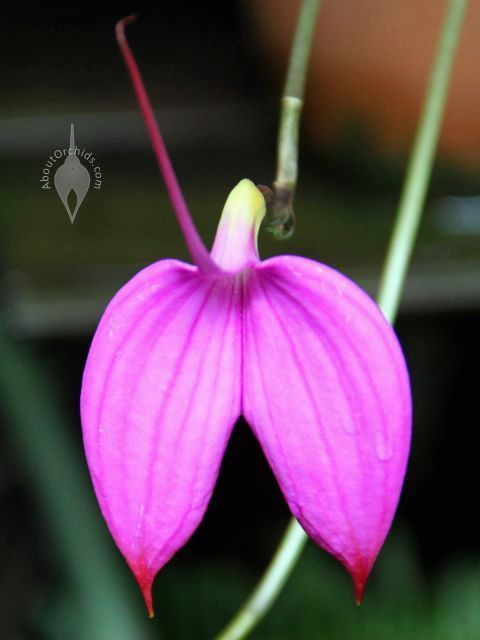
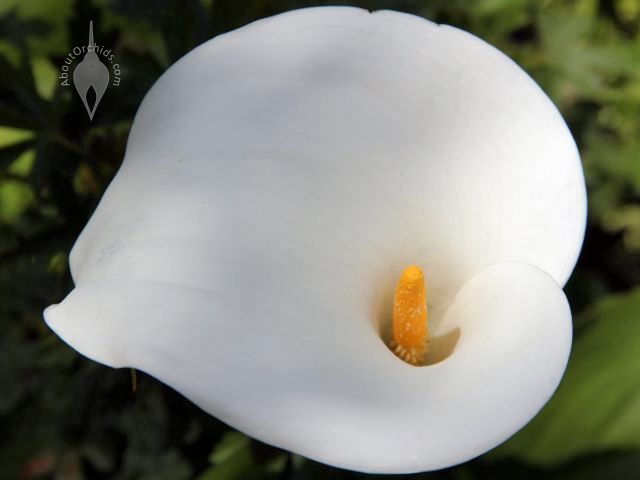
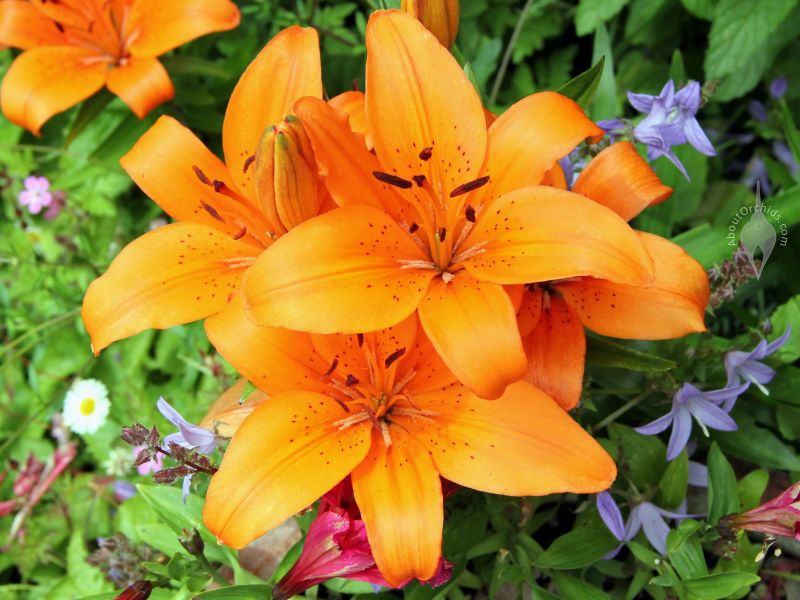
Urban gardens are more popular than ever, and our little patch of San Francisco exemplifies the trend. In the back yard, this great Masdevallia species has been blooming for 6 weeks. This flower has faded from its most brilliant, but it’s still a vivid pink. The next photos show a white calla lily and a mass of orange lilies, all enjoying our mild Mediterranean climate.

Masdevallia coccinea bloomCalla lilyOrange lillies with blue Campanula

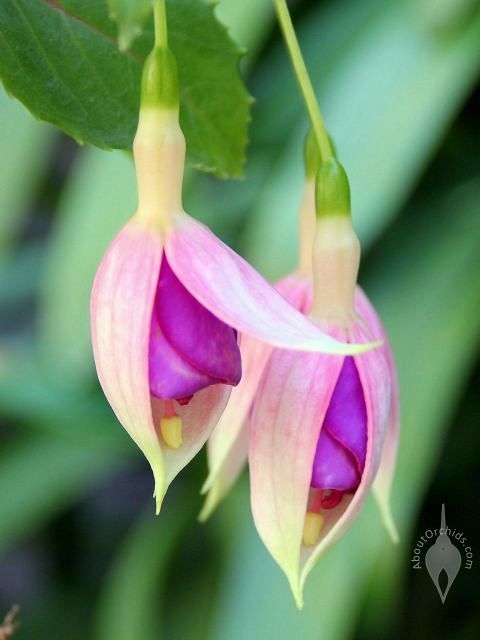
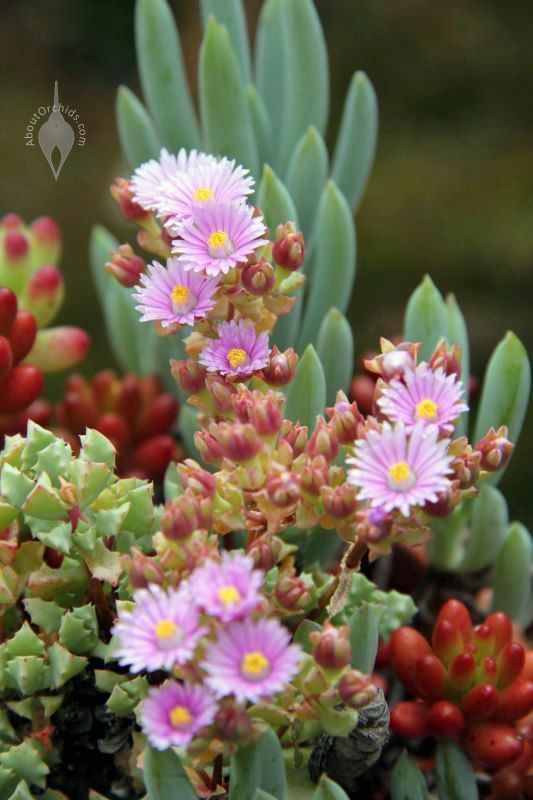
Fuchsias are a San Francisco standard, and these flowers buds are just peeking open. In the middle photo, delicate flowers interrupt the geometry in a pot of succulents. Bright yellow pollen in the center lights up the paper-thin petals. They’re all part of the action in our urban garden.

Fuchsia flowersSucculents with bloomsSucculent flower close up

Orchid Names

Posted June 12th, 2011 by Marc Cohen
Categories: Orchid Names, Photos

OK, I admit it — as a website and blog about orchid basics, it’s past time that I tackled understanding orchid names. Whether reading a plant tag, researching care info, or talking to a fellow orchid grower, we all encounter those long names. So I’ve created a new category, Orchid Names, and this is the first post to help unravel this complex topic. Whether you’ve just bought your first orchid or you’re an experienced grower, consider this as a primer that I’ll build upon.

Swedish scientist Carl Linnaeus established biology’s system of binomial nomenclature in the 1700’s. Using Latin names, it allows everyone on the planet to have the same name for the same plant or animal. The International Code of Botanical Nomenclature currently governs the system for all plant species and hybrids, and the names that we see most often are the genus and species.

Let’s start by deciphering the name tags for these 3 orchid varieties:
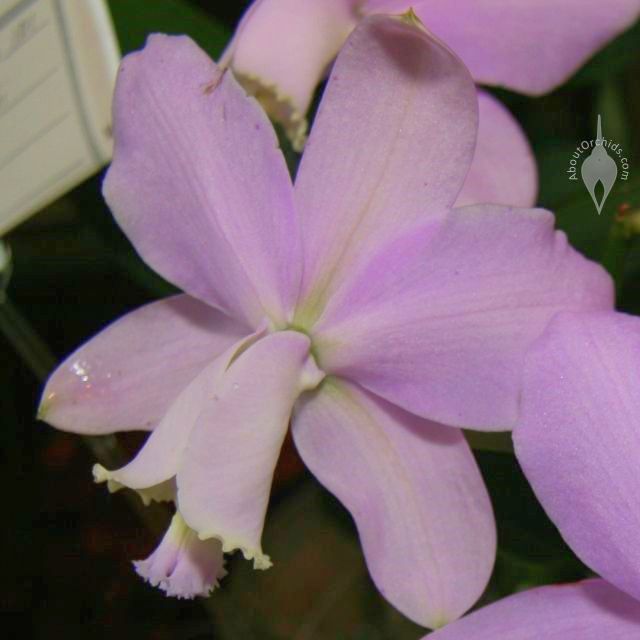
Cattleya loddigesiiPhalaenopsis Maki WatanabePaphiopedilum Dollgoldi

The first photo is Cattleya loddigesii, an orchid species. The genus name is Cattleya, and the species name is loddigesii. The discoverer of this orchid named it for George Loddiges, an English orchid grower in the 1800’s. Written properly, the genus name is capitalized, and the species name is lowercase: Cattleya loddigesii.

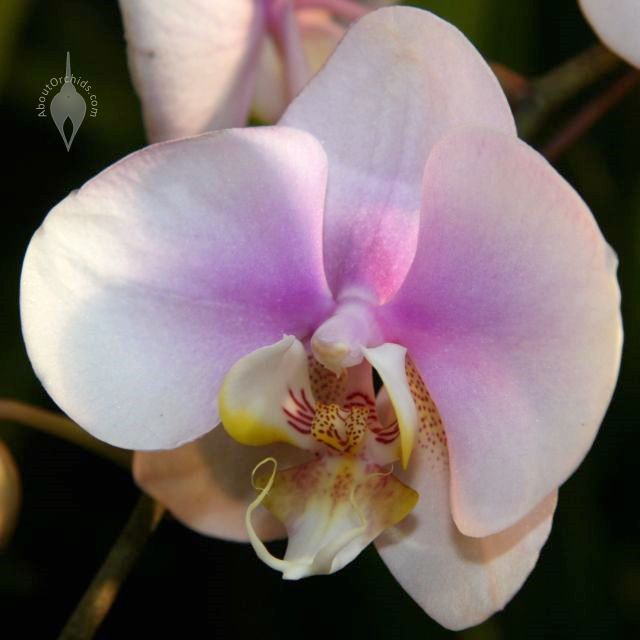
The second is Phalaenopsis Maki Watanabe. It’s a hybrid in the Phal family, named by its creator for someone called Maki Watanabe. The fact that Maki Watanabe is capitalized shows that it’s a hybrid, not a species. This variety is a cross between 2 other hybrids, Phal. Romance Miki and Phal. Otohime. Sometimes a name tag lists a hybrid’s parents with an “x” between them to show the cross: Phal. Romance Miki x Phal. Otohime.

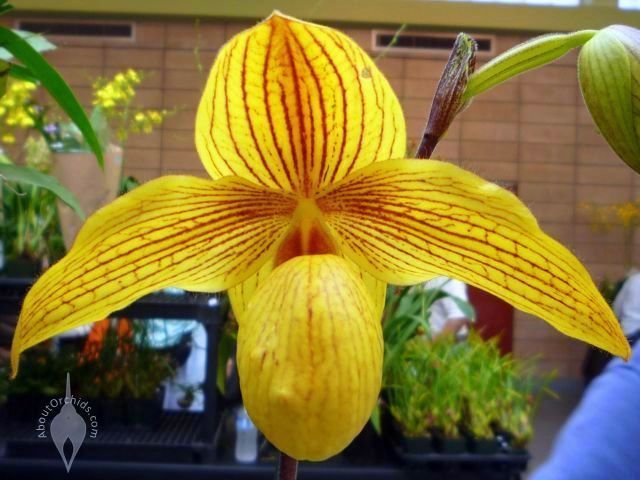
The third is Paphiopedilum Dollgoldi AM/AOS.  This hybrid is a cross between 2 species, Paph. rothschildianum and Paph. armeniacum. The capitalized Dollgoldi shows that it’s a hybrid, not a species, and I’d guess that it’s a reference to the bright yellow flower.  The initials after that, AM/AOS, indicate that this cross has earned an Award of Merit from the American Orchid Society. The AOS grants the AM and other awards to recognize excellence in orchid breeding and cultivation.

The award systems used by orchid societies and the horticulture industry vary in different countries. Besides the AOS, Britain’s Royal Horticultural Society uses the initials RHS in its award system, such as Paphiopedilum Rosy Dawn AGM/RHS. AGM stands for Award of Garden Merit.
The Orchid in Chinese Painting

Posted June 8th, 2011 by Marc Cohen
Categories: Events

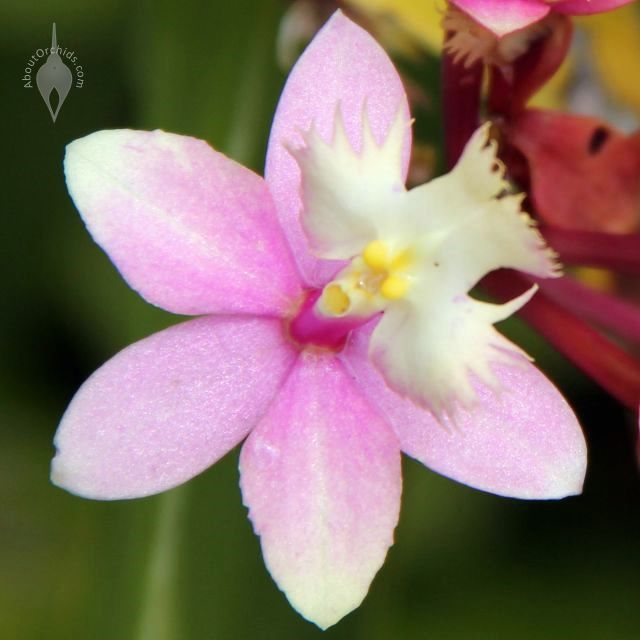
The Smithsonian presents “The Orchid in Chinese Painting” at the Arthur M. Sackler Gallery in Washington DC. With 20 works dating from the 15th to the 19th centuries, the exhibit shows the long history of Cymbidiums in Chinese art and culture. For thousands of years in East Asia, orchids have been symbols of beauty and elegance. They have also represented moral character, friendship, loyalty, and patriotism. The display runs until July 17th.

The Charming Lady Slipper

Posted June 4th, 2011 by Marc Cohen
Categories: Dormancy, Growing, Intermediate Growers, Photos, Watering

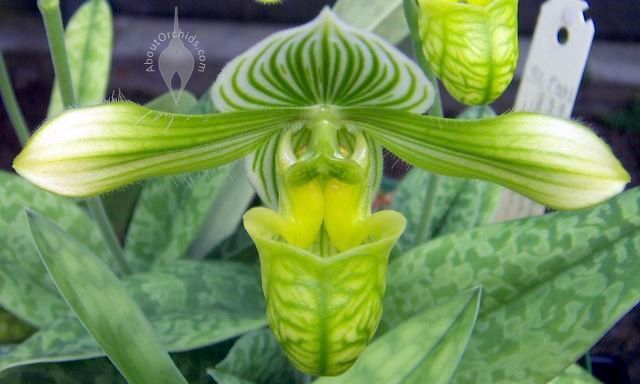
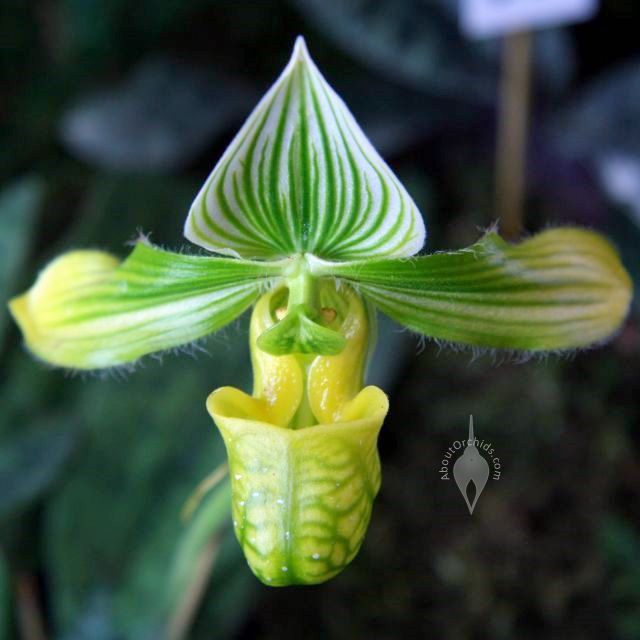
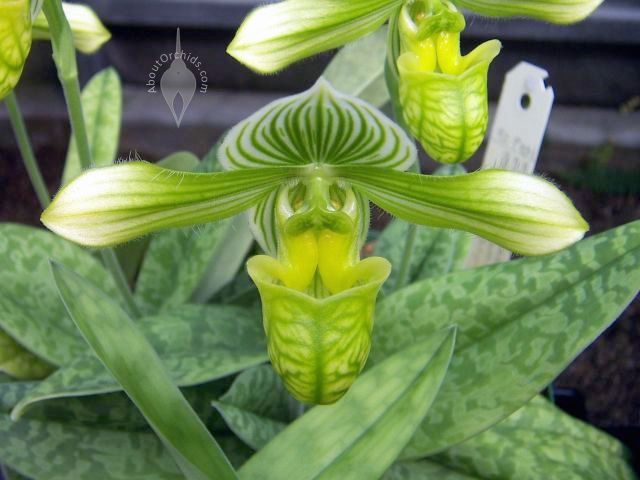
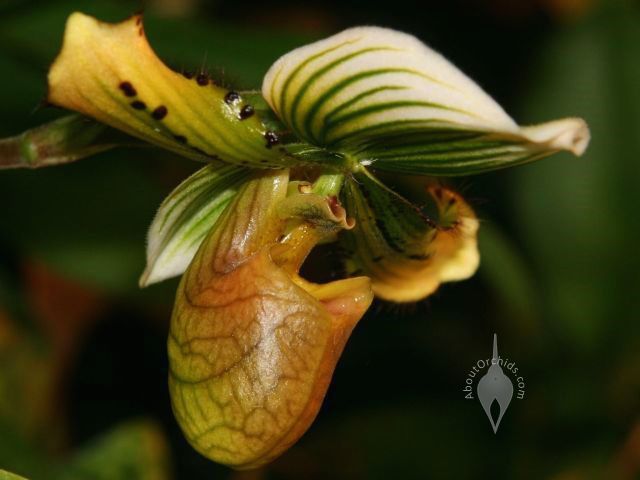
An intimidating Latin name, Paphiopedilum venustum, threatens to distract from this beautiful Paph. Fortunately, that translates to the very pronounceable “Charming Lady Slipper.” The Latin for “Stunning Lady Slipper” might fit better, but perhaps that name was already taken. Indeed, “charming” seems an understatement for this wonderful species from the southern slopes of the Himalayas. It grows in the shade of dense bamboo jungles in northeastern India, Bangladesh, Bhutan, and Nepal.

Paphiopedilum venustum flower and mottled leavesPaph venustumClose up of flower lip, Paph venustum

Besides the name Charming Lady Slipper, it’s also known as the Snakeskin Orchid. That’s not inspired by the fascinating veins on the flower pouch, but by the blue and green patterning on the leaves. In the wild, it grows as a terrestrial, and enjoys the monsoon rains, which have just started in southern India. In cultivation, this orchid requires daily watering, and can handle cooler temps during winter dormancy. Several color variations exist. Along with yellow color forms, many have red and maroon hues.

Flowers and variegated leaves of Paph venustumPaph venustum flowerPaph venustum flower with red coloration

June Orchid Shows

Posted May 31st, 2011 by Marc Cohen
Categories: Botanical Gardens, Events, Orchids in the Wild

Shows wind down in the Northern Hemisphere as summer approaches, but orchid lovers down under have lots of choices. In Canada, the Bruce Peninsula Orchid Festival is not a show, but a chance to enjoy Ontario’s native orchids blooming in the wild. It includes presentations and tours with orchid experts (reservations required.)

June 1 – 5
Latvian Orchid Show, Natural History Museum of Latvia, 4 K.Barona str., Riga, Latvia
June 2 – 4
Cumberland Orchid Circle, Carlingford Court Shopping Centre, Carlingford & Pennant Hills Rds., Carlingford, NSW, Australia
June 3 – 4
Bruce Peninsula Orchid Festival, Park Visitor Centre, Chi-Sintib’dek Rd. off Highway 6, Tobermory, Ontario, Canada
June 3 – 5
New Orleans Orchid Society Annual Show, Lakeside Shopping Center, 3301 Veterans Hwy., Metairie, Louisiana
June 3 – 5
San Jose Orchid Society Exposition, Miraido Club House, 550 N. 6th St., San Jose, California
June 4
Jamaica Orchid Society Judging Seminar, Jamaica Confederation of Trade Unions Building, Hope Pastures, Kingston, Jamaica
June 4 – 5
Tag Der Offenen Tur, Floessweg 11, 33758 Schloss Holte, Stukenbrock, Germany
June 5
Tatton Park Orchid Show and Festival, Tenants Hall, Tatton Park, Knutsford, Cheshire, UK
June 10 – 12
Acadian Orchid Society Show, Ira Nelson Ag Center, 2206 Johnson St., Lafayette, Louisiana
June 10 – 12
Shore Orchid Festival, Silva Orchids, 635 Wayside Rd., Neptune, New Jersey

Read the rest of this post »

Spring Orchid Checklist

Posted May 28th, 2011 by Marc Cohen
Categories: Dormancy, Fertilizing, Growing, Photos, Watering

Rhynchostylis speciesMasdevallia hybridOncidium hybrid

By the end of May, San Francisco’s rainy season has usually given way to the dry season, but this year’s weather seems anything but typical. Fortunately we’ve had nothing like the violent storms in other parts of the country. Instead, a cool, wet spring is keeping the garden well hydrated. The light rains and mild temps have eased my watering duties, allowing me to concentrate on other seasonal chores:

Ten New Orchid Species Found in Costa Rica

Posted May 22nd, 2011 by Marc Cohen
Categories: Botanical Gardens, In the News

Costa Rica has added even more orchids to its remarkable biodiversity. Near the border with Panama, in a previously unexplored region of La Amistad International Park, scientists from Lankester Botanical Garden have discovered 10 new species. Finding new orchids isn’t unusual, but it’s astounding that researchers found so many in a small area during a single 4-hour expedition.

Costa Rica is home to over 1300 orchid species. For comparison, the country is smaller than West Virginia, which has 35 native orchid species. Costa Rica’s national flower is a variety of Cattleya, the beautiful purple Guaria morada.

Invasion of the Orchid Snatchers

Posted May 20th, 2011 by Marc Cohen
Categories: Conservation, In the News

The story’s been told many times before, e.g. The Orchid Thief, but tragically, it never dies. The BBC has an update on the “Invasion of the orchid snatchers,” collectors who illegally take orchids from the wild. The article includes info about several orchids, including Phrag kovachii, the giant purple lady slipper discovered in Peru in 2001. That tale is one of many which illustrates the sad history of irresponsible orchid collectors, whose greed and selfishness endanger the survival of rare species. Dr. Richard Thomas of Traffic International, a group that monitors wildlife trade, explains “The loss of any one species is a tragedy – the world needs rich biological diversity to survive. Species have taken millennia to evolve, but can be lost in days.” Responsible growers should never take orchids from the wild, or buy wild-collected plants. Purchase only from reputable vendors to enjoy orchids without endangering them. If you’re not sure, ask.

Stanhopea

Posted May 16th, 2011 by Marc Cohen
Categories: Fragrant Orchids, Growing, Intermediate Growers, Photos, Watering

Over the years, I’ve looked at lots of pictures of Stanhopeas to try to figure them out. It’s easy to see that the blossoms are large, showy, and unusual. It’s harder to make sense of their incredible shapes. They could be fantastic birds, weird bugs, or strange humanoids. So if these photos leave you somewhat mystified, you’re not alone.

Stanhopea flower, side viewStanhopea flower from frontStanhopea flower, looking down at column and lip

These flowers don’t last long, only 2 or 3 days. They have a strong, sweet fragrance. Blooms descend from the bottom of the plant. That’s not a problem when growing as epiphytes, but in cultivation, Stanhopeas require a basket or mount. They need fairly bright light, heavy water, regular fertilizer, and winter dormancy. I haven’t been able to grow them myself (the first 6 photos are from the Conservatory of Flowers, 2 are from local orchid shows, and the last one is from Phipps Conservatory.)  Most are large plants, and they’re best suited for growers with a greenhouse, or those who can keep them outdoors in tropical areas.

Close up of Stanhopea column and lipStanhopea flower side viewStanhopea flower side view

Different Stanhopea varieties below show more diversity in the family. They’re native to Central and South American rainforests, from Mexico south to Brazil. Most types want intermediate temps, but there are also warm and cool growers. If these flowers have left you a little befuddled, explore more Stanhopea photos online, and maybe you can figure them out.

Stanhopea flower buds emerging from bottom of plantStanhopea flower, partially openStanhopea flowers at Phipps Conservatory