Volunteers and Other Arrivals

Posted April 25th, 2010 by Marc Cohen
Categories: General Gardening, Photos

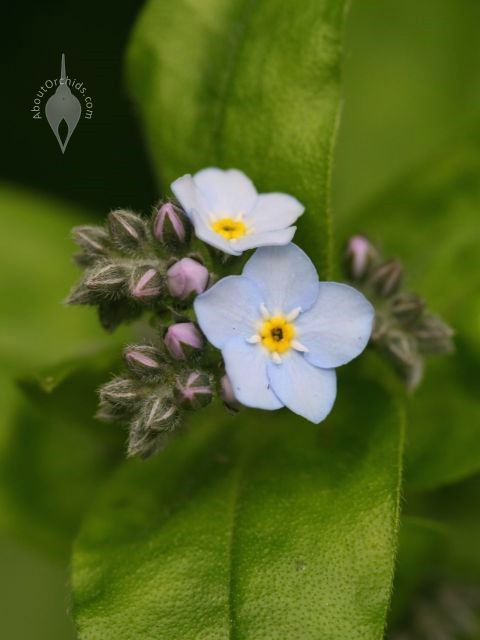
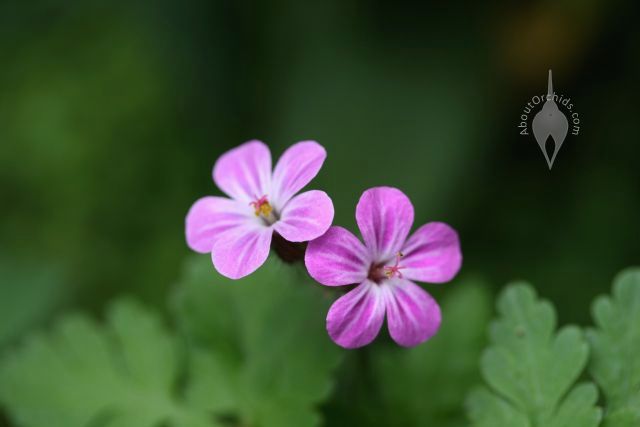
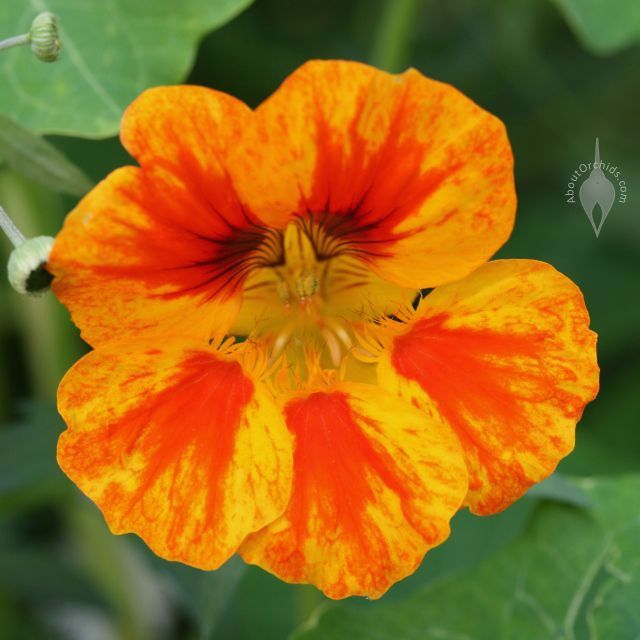
If you’ve ever decided that a weed was pretty, you’ll understand the botanical definition of “volunteer.” A volunteer is a plant that arrives in a garden, usually as seed, blown by wind or carried by bird. It’s a weed if you don’t want to keep it; it’s a volunteer if you do. My rule of thumb is that if it has nice flowers, and isn’t too invasive, it can stay. Most are annuals that re-seed, and are very low maintenance. For example, here are three volunteers which have arrived in our garden over the years: a Forget-Me-Not, a Geranium, and a Nasturtium.
Forget-me-not flowers and budsGeranium flowers and leavesNasturtium flower

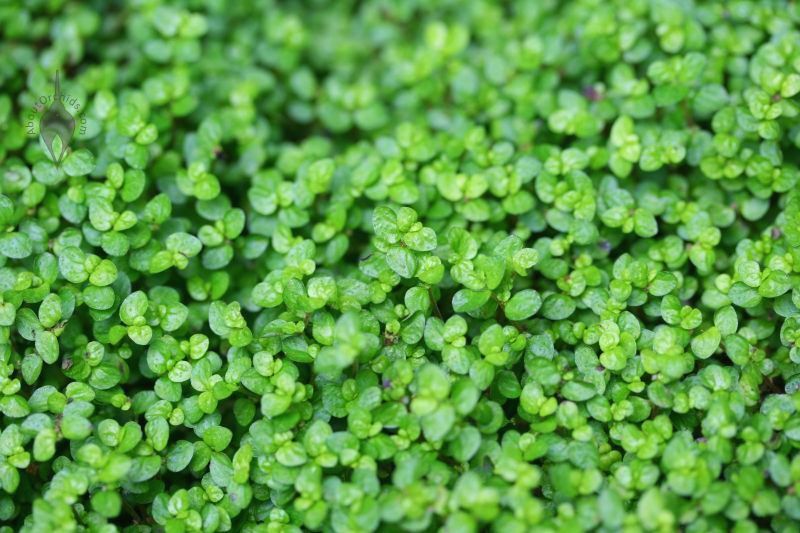
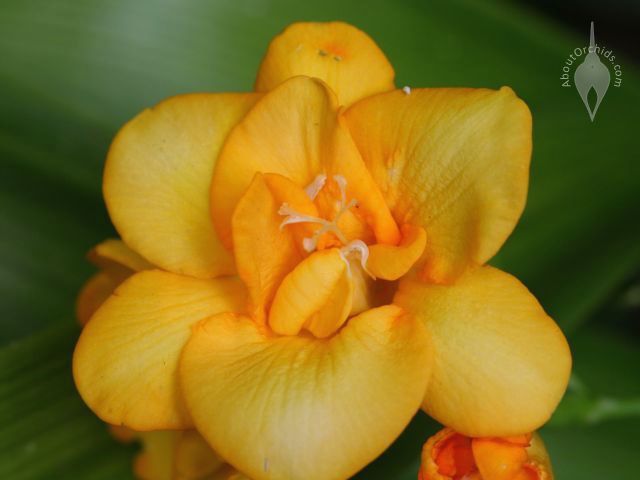
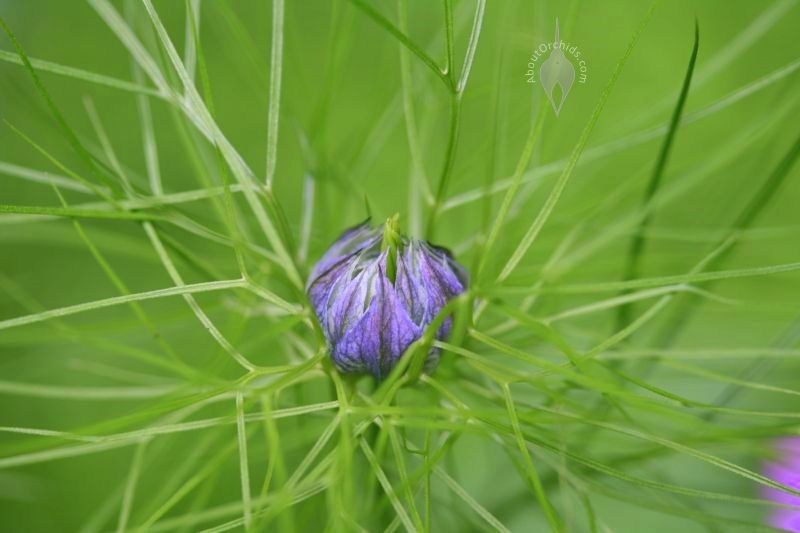
Of course, most plants in our garden are deliberate introductions, not accidental arrivals. Native to Italy, tiny green leaves of Baby’s Tears arrived as decoration in a bonsai pot. They loved San Francisco’s Mediterranean climate, and were easy to propagate. Now they form great ground-covering masses wherever they find regular moisture, and add green to garden nooks. The next photo shows a yellow Freesia bloom, but a photo can’t capture its great fragrance. Native to South Africa, Freesias do well in our mild climate. The third photo shows a blue Love-in-the-Mist flower bud among lacy leaves.

Baby's TearsFreesia flowerLove-in-the-Mist flower bud and leaves

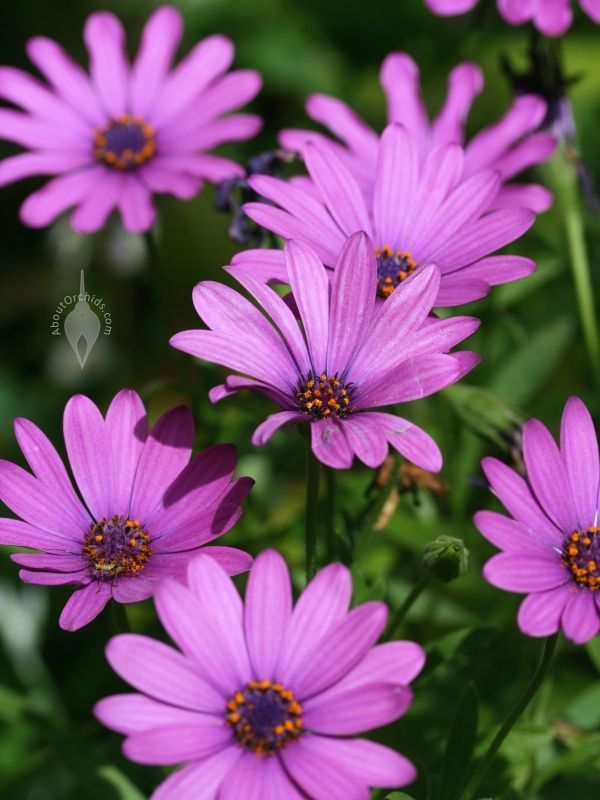
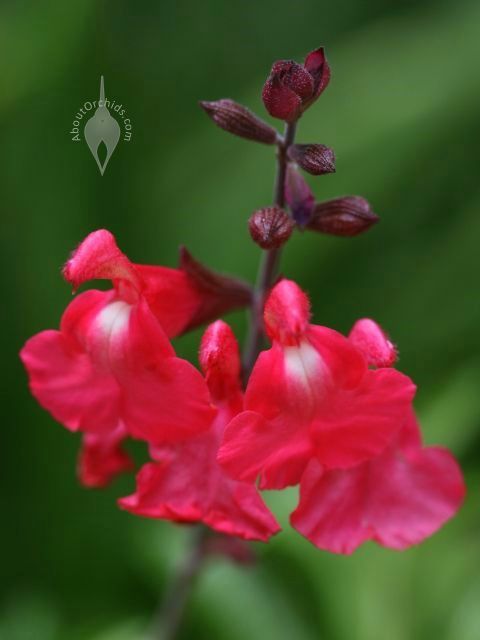
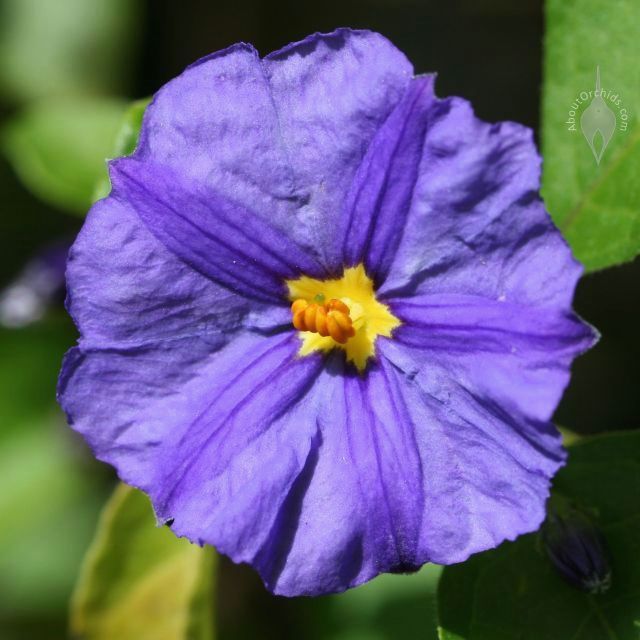
Our April garden also includes perennials, like purple African Daisies, a brilliant red Sage, and a bright blue Solanum. Also known as the Blue Potato Bush, Solanum is in the Nightshade family, and a relative of potatoes, tomatoes, and eggplants. Ours came to us when we rescued a neighbor’s discarded plant, and nursed it back to health. No matter how they’ve found their way to our backyard, they’re all putting up a great spring show.

Purple daisiesSage flowers and budsSolanum flower

Earth Day

Posted April 22nd, 2010 by Marc Cohen
Categories: Conservation, In the News

It’s true that orchids and volcanoes have coexisted for eons, but this tale of troubles for the Dutch orchid industry adds a new angle (the news story starts with similar woes in the salmon industry, and the orchids are a few paragraphs down.) With air traffic backlogged in Northern Europe, Cymbidiums grown in Holland may not make it to North America in time for May weddings. New Zealand’s orchid growers are happy to pick up the slack, so the bouquets and corsages are safe.

Whether or not you needed an Icelandic volcano to remind you that Mother Nature is fully in control of things, Earth Day gains urgency with each passing year. We can’t stop a volcano, but we can take action against human-caused threats to orchids, like habitat destruction, climate change, pollution, and theft of wild plants. Many orchid species go extinct every year, some completely unknown to science. Other may survive in cultivation, but disappear from the wild, more broken strands in the web of rainforest life. In honor of Earth Day, take action to save orchids. A few good places to start include:

To become involved locally, find a nearby orchid society or botanical garden. They’ll welcome any time, energy, or donation you can offer.

Jewel Orchid

Posted April 19th, 2010 by Marc Cohen
Categories: Fragrant Orchids, Growing, Photos, Warm Growers, Watering

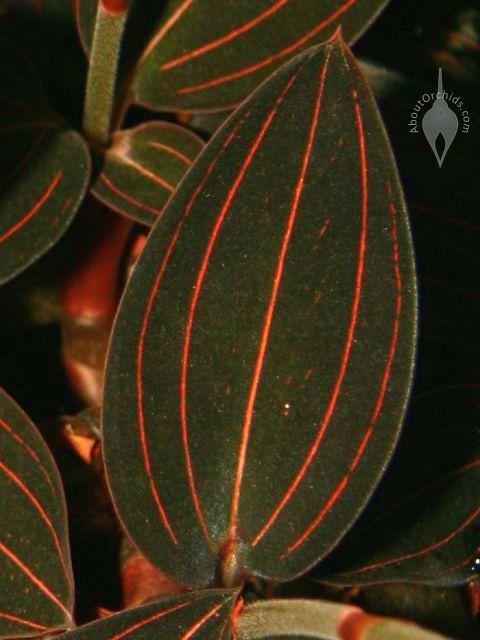
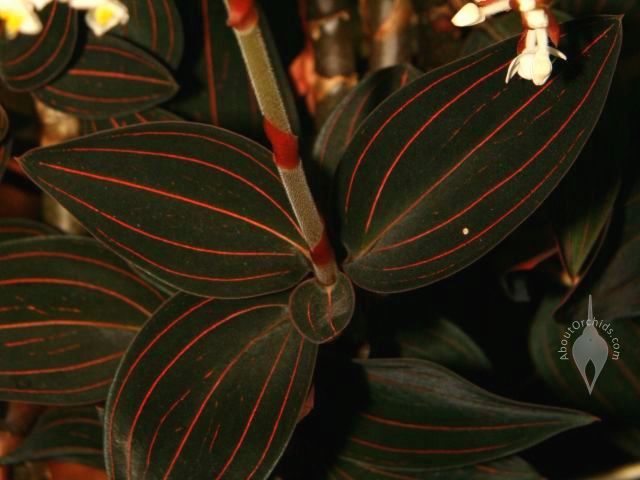
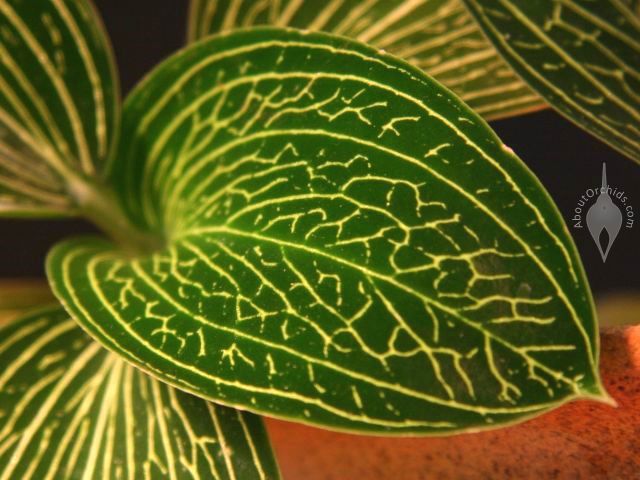
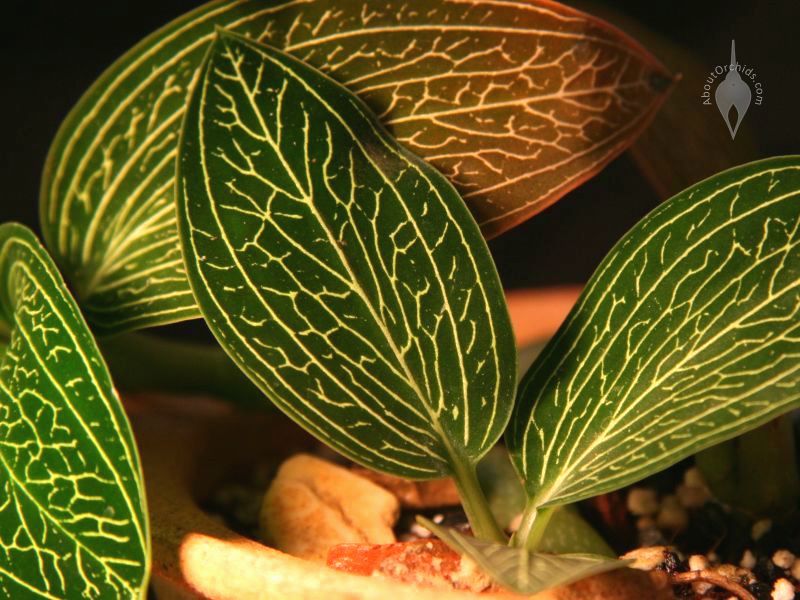
With such spectacular flowers, orchid leaves usually don’t capture too much attention. However, Jewel Orchids have foliage that steals the show. Many Jewel Orchid varieties are best suited for experienced orchid growers, but Ludisias are easy to grow. The American Orchid Society calls Ludisia “A Foolproof Orchid.” link no longer works They sport dark green leaves with bright pink stripes.
Jewel Orchid leafJewel Orchid leaves and flower spikeJewel Orchid

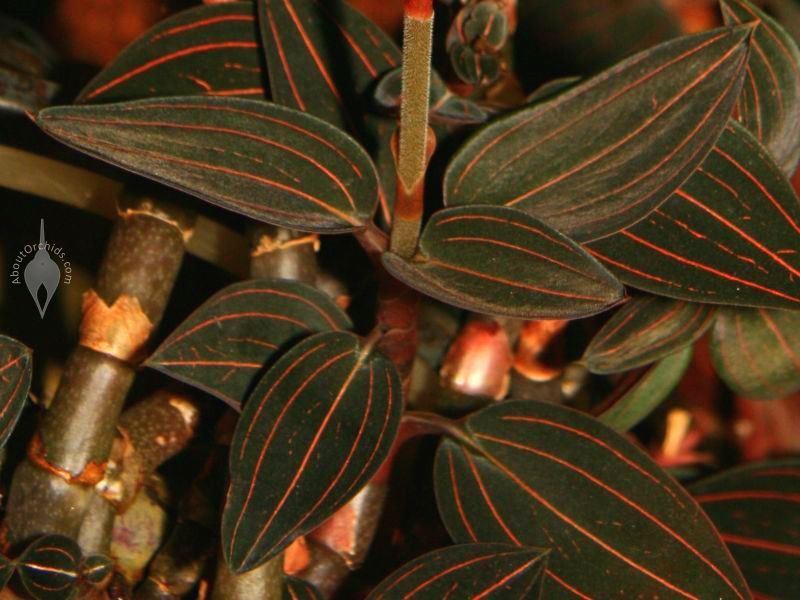
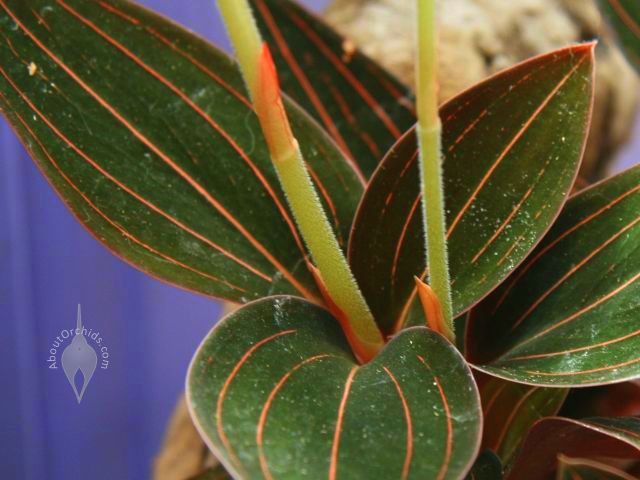
In some parts of their native range in Southeast Asia, they’re so common that they’re considered weeds. Ludisias live in rainforests from India to Indonesia, and grow as terrestrials in sandy soil. They’re easy to root by placing cuttings of their thick stems into moss or water. Jewel Orchids enjoy the same conditions as African Violets: regular waterings, warm temps, high humidity, and shade. They’ll also grow under artificial lights.

Ludisia leaves and stemsLudisia leavesLudisia leaves and bottom part of flower spike

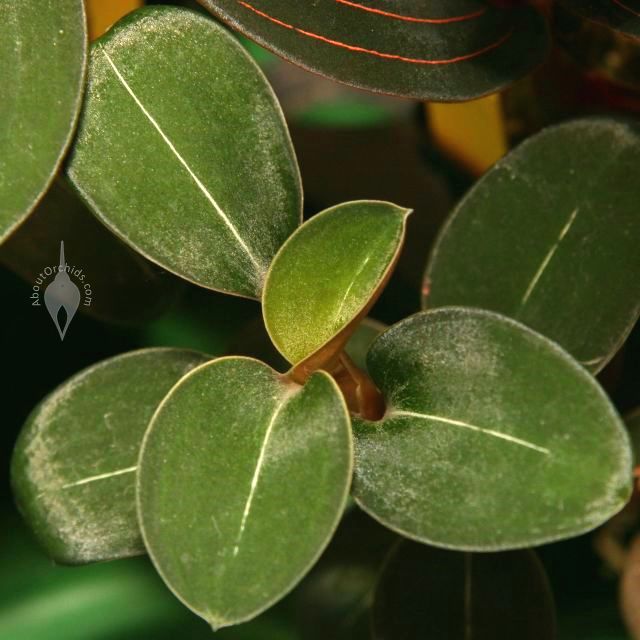
In the past few years, new Ludisia colors and leaf patterns have appeared on the market. They’re also easy to grow. For all varieties, watch out for mealybug and scale, which may be a symptom of low humidity.

Ludisia discolor alba leafLudisia discolor alba leavesLudisia discolor nigrescens leaves

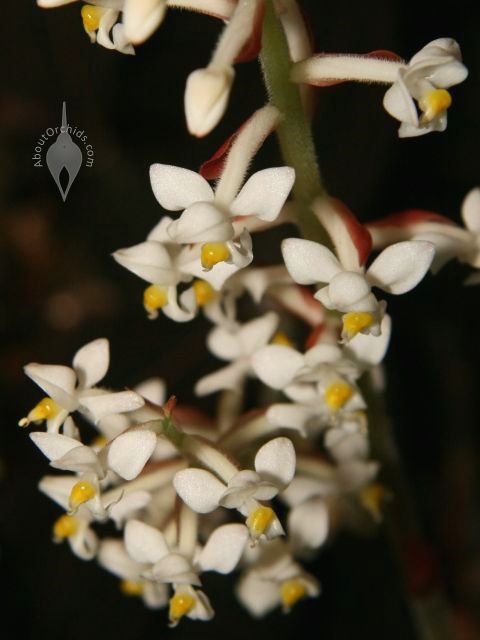
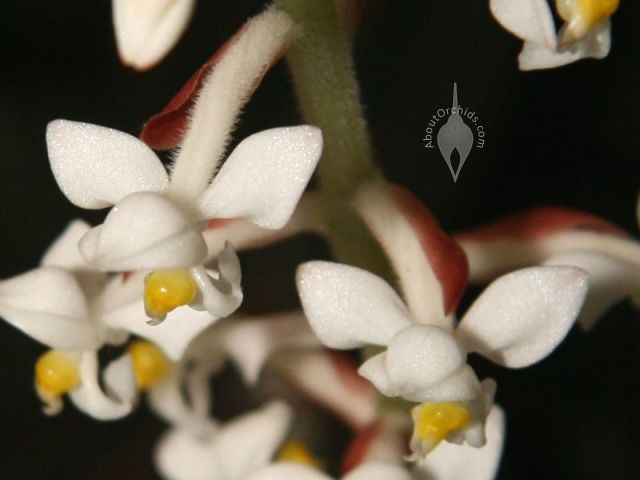
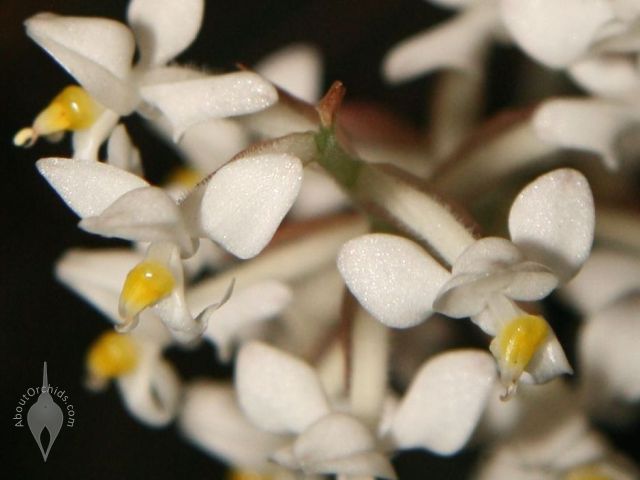
Their small, white flowers, standing on tall, fuzzy spikes above the foliage, are easier to appreciate with the benefit of Dave’s photography skills. They have a light, sweet scent. Of course, even when the flowers fade, the Jewel Orchid’s leaves continue the show.

Ludisia flowersLudisia flowers close upLudisia flowers close up

Repotting

Posted April 14th, 2010 by Marc Cohen
Categories: Growing, Problems

As the days grow longer with spring, the season brings some orchid chores, including repotting. Orchid repotting can be intimidating for beginning growers, so in addition to the basics, I have a few more hints to help:

  • Orchids that have just finished blooming often enter a cycle of new leaf and root growth. This is an ideal time to repot so the new roots can grow into fresh potting material.
  • If the orchid is potted in bark, repot once every 2-3 years. To test if your orchid is due, dig out a piece of bark and squeeze it between your fingers. Bark that remains solid is still in good shape; bark that squishes or crumbles is rotted. This means that the roots cannot get enough air flow, and it’s time to repot.
  • If the orchid is in moss, repot every year, or whenever the moss becomes moldy or slimy.
  • If new leaves start to rot, the cause may be that corresponding new roots need better air flow. Those new roots may be out of sight underneath, but they are essential for the plant’s health. Remove the orchid from the pot and repot it.
  • If excess water is slow to drain out of the bottom of the pot, then it’s time to repot.
  • When repotting, keep in mind how orchids grow in the wild as epiphytes, or air plants. In pots, they need good drainage, which means that water and air flow freely through the potting material and out the drainage holes.
  • Check out these helpful videos showing an orchid pro repotting an orchid in moss, and repotting one in bark.

Jumellea

Posted April 9th, 2010 by Marc Cohen
Categories: Fertilizing, Fragrant Orchids, Intermediate Growers, Photos, Watering

Native to the Comoros Islands near Madagascar, this species of Jumellea is an easy grower with delightful flowers. It holds crystal white blooms on long stems, giving the appearance that they’re floating around the plant.

Jumellea flowerJumellea flowerJumellea flowers

Nectar spurs are long, narrow tubes with a drop of nectar at the bottom, and they’re good clues that this orchid is fragrant. One arcs down behind each flower. During daytime, it has little scent, but starting in the evening, it puts out a strong fragrance that reminds me of tuberose.

Jumellea flower with nectar spurJumellea flowers and plantJumellea flowers

Related to Darwin’s Orchid and Oeoniella, Jumelleas can grow into large, attractive plants. The leaves form a fan pattern, and healthy specimens can grow 2 ft. (0.6 m) tall. Jumelleas enjoy conditions like Dendrobiums, with bright light, regular water and fertilizer, and winter dormancy.

Jumellea flowerJumellea flowersJumellea plant with flowers at orchid show

Spring News

Posted April 4th, 2010 by Marc Cohen
Categories: In the News, Watering

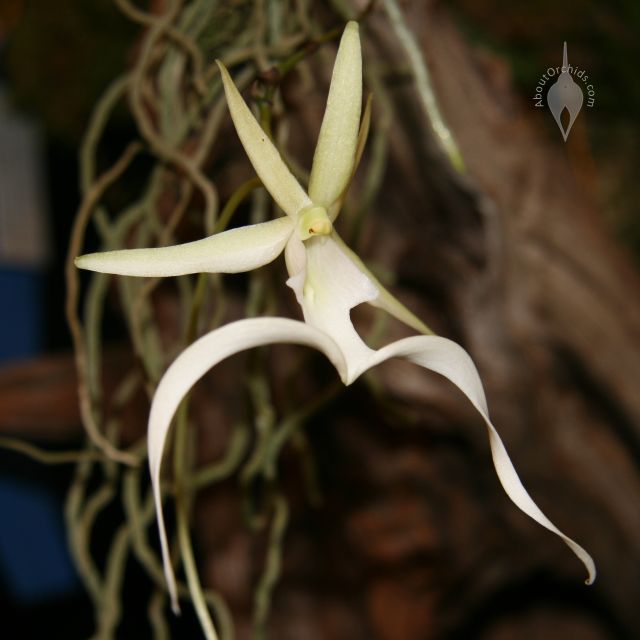
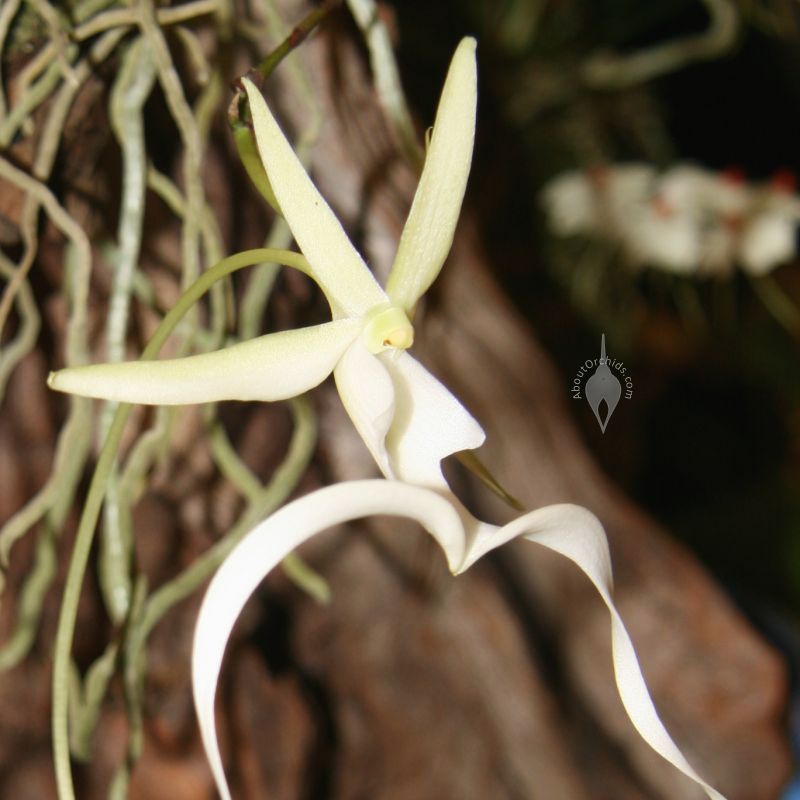
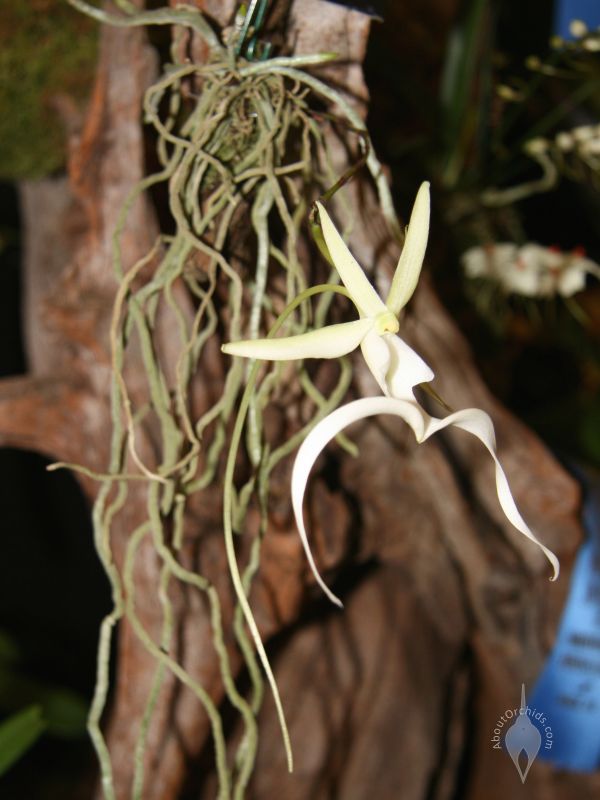
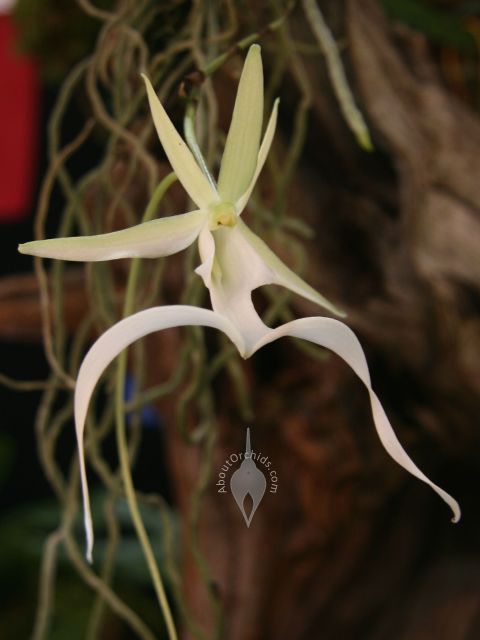
Ghost Orchids have been making news on both sides of the pond, and this time, it’s Florida’s turn. The same Ghost Orchid that I blogged about last year is up to it again. It’s bloomed unexpectedly early in the season, but that should be no surprise considering its other quirks. This particular Ghost Orchid grows unusually high off the ground, and it blooms profusely. Typically, they have just 1 or 2 flowers at a time, but this plant had 12 during last summer’s peak. Corkscrew Swamp Sanctuary Director Ed Carlson said that cold winter weather may have caused the early bloom, but I wouldn’t rule out that this plant just really enjoys the attention.

In other news, a New York Times column on indoor gardening agrees with my opinion not to use ice cubes to water orchids:

Q: Someone who claimed he was a botanist, advised me to water my orchids by tossing a few ice cubes in them once a week. I am dubious — what do you think?
— Posted by Anna

A: The average temperature in the rain forest is about 77 degrees F. all year around. Dripping ice water on your orchid is not advisable, as is hanging around with a bartender who claims to be a botanist.

I’ll concede that some tough hybrids can handle ice water, but most orchid varieties cannot. Stick with room temperature water for indoor plants. The bartender can find a better use for the ice cubes.

April Orchid Shows

Posted April 1st, 2010 by Marc Cohen
Categories: Botanical Gardens, Events

With shows on every continent this month, it’s a great time to check one out. You’ll see lots of gorgeous flowers and meet local experts, growers, and vendors. You’ll bring home memories, photos, or plants, or maybe all three.

April 2 – 3
Charlottesville Orchid Society Show, Fashion Square Mall, Rt. 29 North, Charlottesville, Virginia
April 2 – 4
Tampa Bay Orchid Society Show, Egypt Shrine Center, 4050 Dana Shores Dr., Tampa, Florida
April 3
Solihull and District Orchid Society Spring Show, Arden School, Station Rd., Knowle, Solihull, West Midlands, UK
April 3 – 4
Heart O’Texas Orchid Society Show, Zilker Botanical Gardens Center, 2220 Barton Spring Rd., Austin, Texas
April 3 – 4
Utah Orchid Society Show, Red Butte Garden, 300 Wakara Way, Salt Lake City, Utah
April 4
West Cornwall Orchid Society Annual Show, Blaythorne, Holman Sports Club, Camborne, Cornwall, UK
April 8 – 11
Genesee Region Orchid Society Show, RSMC Eisenhart Auditorium, 657 East Ave., Rochester, New York
April 10
Eastern Maine Orchid Society Plant Sale, Univ. of Maine, Clapp Greenhouses, Orono, Maine
April 10
Orchid Society of Great Britain Essex Group Spring Show, South Green Memorial Hall, Billericay, Essex, UK
April 10 – 11
Annual Orchid Fair, National Botanic Gardens, Glasnevin, Dublin 9, Ireland
Read the rest of this post »

Mmmm … Coconut

Posted March 28th, 2010 by Marc Cohen
Categories: Fertilizing, Fragrant Orchids, Intermediate Growers, Photos, Watering

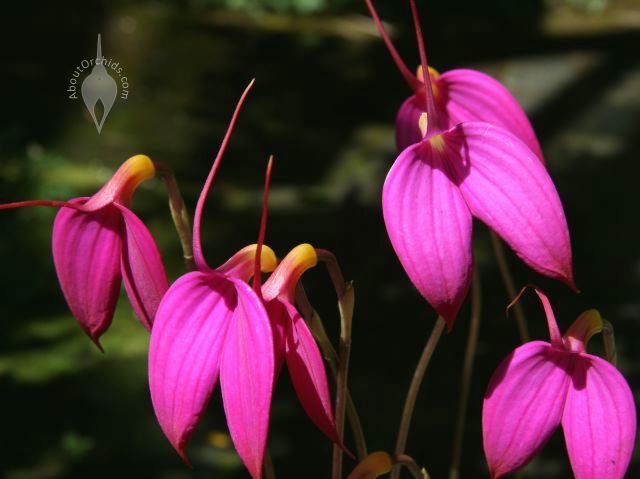
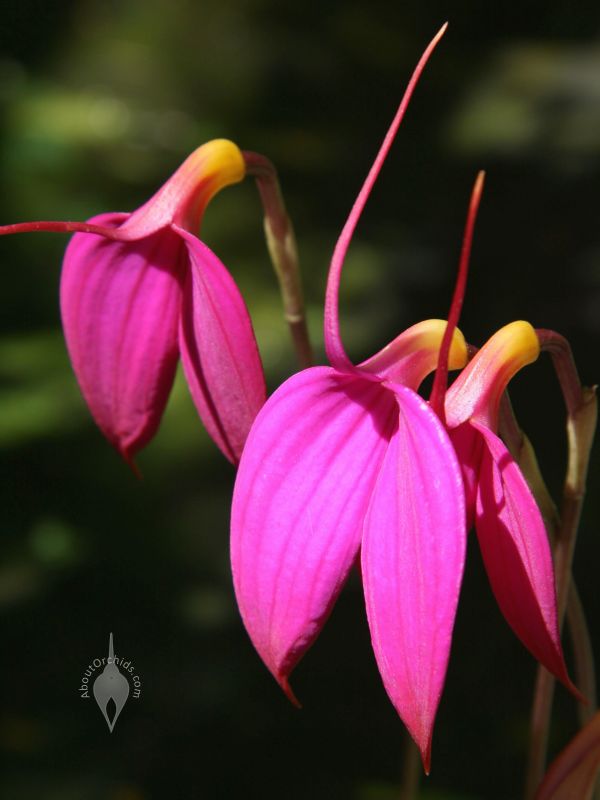
Even if you don’t see the flowers of this Maxillaria species, you’re definitely going to smell them. Maxillaria tenuifolia earns the nickname “Coconut Orchid” from its delicious scent. It’s native to tropical rainforests from Mexico south to Costa Rica.

Maxillaria flowersMaxillaria flowerMaxillaria flower

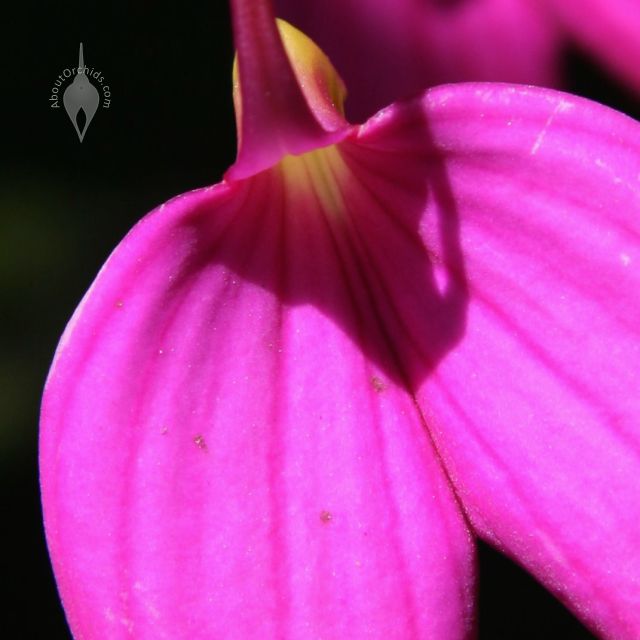
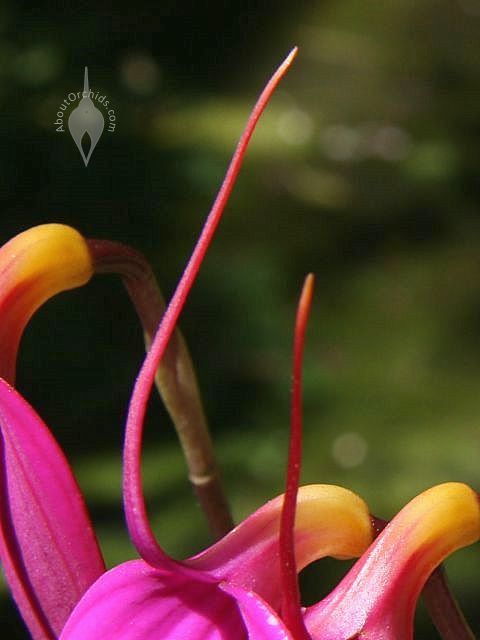
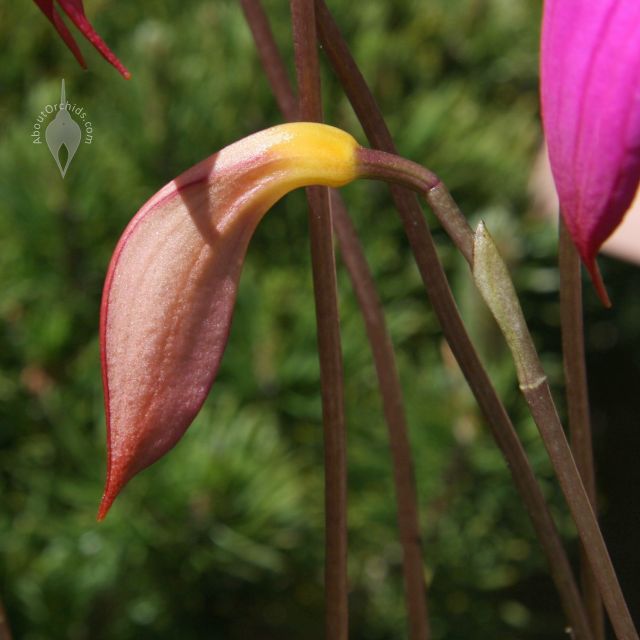
Orchid beginners often grow easier hybrids instead of fussier species, but this species is easy to maintain and a reliable bloomer. Coconut Orchids are great transition orchids for beginners who may want to try their hand with some more advanced growing skills. Care for them like Cattleyas, with bright light, regular water & fertilizer, good humidity, and winter dormancy. Their rich red flowers, up to 2 inches (5.1 cm) wide, can last more than 2 months.

Maxillaria flowerMaxillaria flower close upMaxillaria flower

This orchid sports long, skinny, grass-like leaves that are deceptively sturdy. Maxillaria flowers bloom on short stems, so they’re often hidden in the foliage, but their fragrance gives them away. The final photo shows another plant with a color variation that’s more orange than red. No matter the hue, they smell just as sweet. Just don’t be surprised if they inspire cravings for Coconut Cream Pie.

Maxillaria flowers and leavesMaxillaria flower hidden in its long, skinny leavesOrange color form of Maxillaria

Early Spring Garden

Posted March 24th, 2010 by Marc Cohen
Categories: Botanical Gardens, General Gardening, Photos

As temperatures have warmed, and heavy winter rains have given way to light spring showers, our garden is coming alive. First, this bloom on an Abutilon, or Flowering Maple, looks like a brilliant red bell announcing the season. Next, this Iris is a California native we bought years ago at a Strybing Arboretum plant sale. The third photo shows purple blooms atop the variegated foliage of a Hebe. Named for the ancient Greek goddess of youth, the Hebe genus originates in New Zealand.

Flowering MapleIris flowerVariegated Hebe with flowers

When I first moved into this apartment in the mid-90’s, I found a flower pot with a nearly-dead Cymbidium abandoned under the stairs of the back deck. I managed to save it, and for many years since, I’ve been rewarded with big, beautiful red blooms. As a terrestrial orchid, it’s growing in the ground very close to where I found it. Nearby there’s a great Sage with fuzzy, hot-pink flowers, and soft, pineapple-scented leaves.

Red Cymbidium flowerCymbidium flowersScented pink sage

Calla Lillies thrive here on the California coast. They’re native to South Africa. After these waist-high blooms fade, the plants will die back to dormant rootstocks for our summer dry season. Lastly, this tiny bloom descends from some Geraniums that drifted into the yard as weeds several years ago. Their charming light purple flowers earned them a place to stay. They’ve proven quite prolific, and they pop up in every shady spot and crevice at this time of year.

Calla lilyCalla lilliesGeranium

Spring Equinox

Posted March 20th, 2010 by Marc Cohen
Categories: Books, Conservation, Fragrant Orchids, In the News, Misc, Photos

I’ll start today’s celebration of spring with a few nice photos. The first is a sweetly scented Iwanagara, a Cattleya hybrid. Next is a Paph species native to China, and then a Jasmine that’s bursting into bloom in our back garden.

Iwanagara flowersLady Slipper flowerJasmine

Here in San Francisco, we set a record high of 80F (27C) yesterday, and although today is a more seasonal 65F (18C,) spring is definitely here. But even if winter is not releasing its grip in your neck of the woods, there’s one more reason to celebrate. This news article in The Independent of London describes the exciting rediscovery of the bizarre Ghost Orchid, long believed to be extinct in Great Britain.

Britain’s Ghost Orchid shares the same common name with the famous Ghost Orchid of Florida’s swamps in The Orchid Thief, but they’re two completely different species. However, Britain’s Ghost Orchid may be even more peculiar than Florida’s. Neither species has leaves, but the British species “behaves more like a fungus than a flower, according to the naturalist Peter Marren, author of Britain’s Rare Flowers.” It lives underground, and doesn’t depend on sunlight. Instead, it makes food in its roots with the help of a fungus. It only comes into view with small, ghostly white flowers when conditions are right. As the holy grail of British botany, it’s rediscovery certainly adds a boost to any spring celebration.