Don’t Overwater

Posted November 3rd, 2008 by Marc Cohen
Categories: Dormancy, Fertilizing, Photos, Problems, Watering

More people kill their orchids through overwatering than any other cause. Fall is particularly perilous time for overwatering, as plants start to go dormant, but people unwittingly continue the same watering regimen as they did in the growing season. With too much water, orchid roots will rot, and the leaves will follow. So this is the time of year to start to cut back. You may feel like you’re stressing the plant, but you’re actually just allowing it to rest. Maintain good humidity and air movement as always. Also start to cut back on fertilizer use.
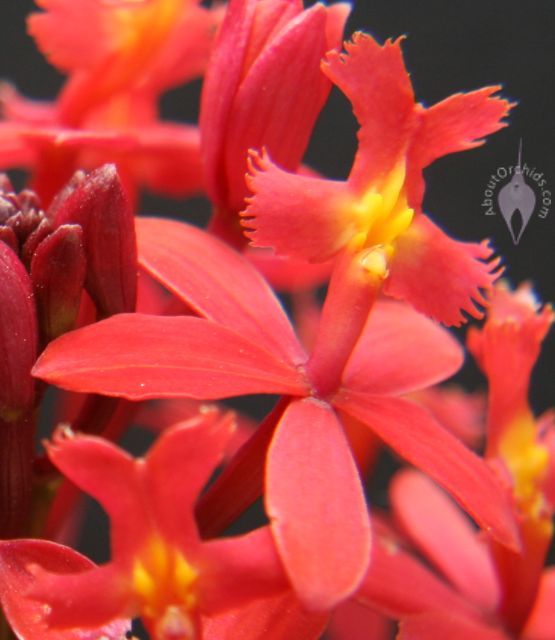
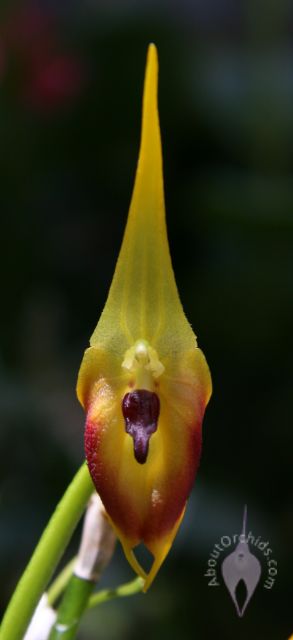
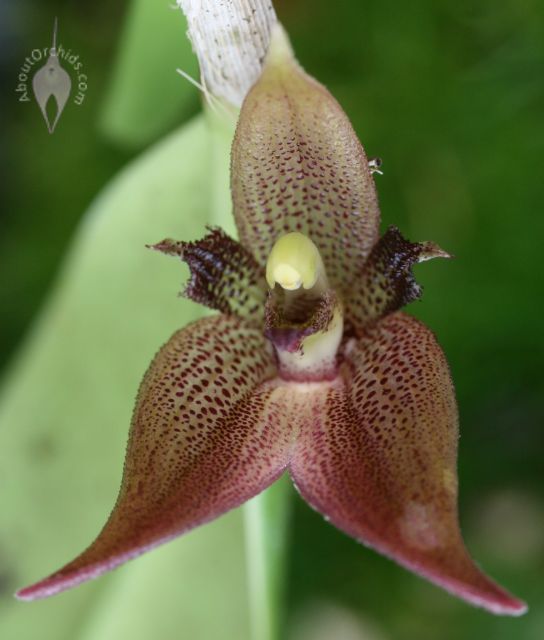
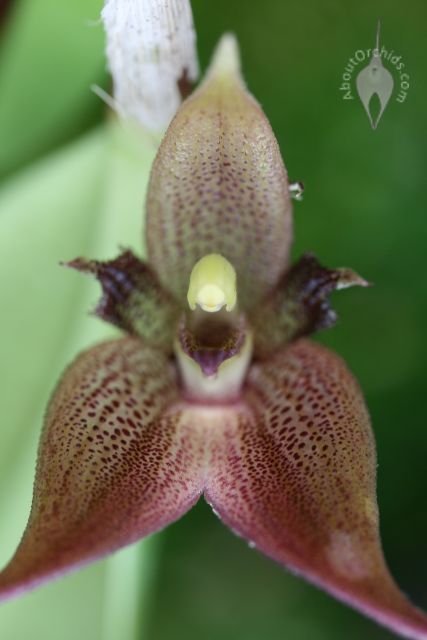
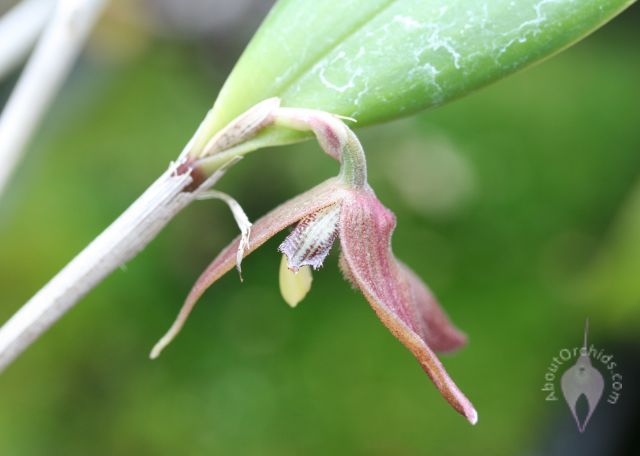
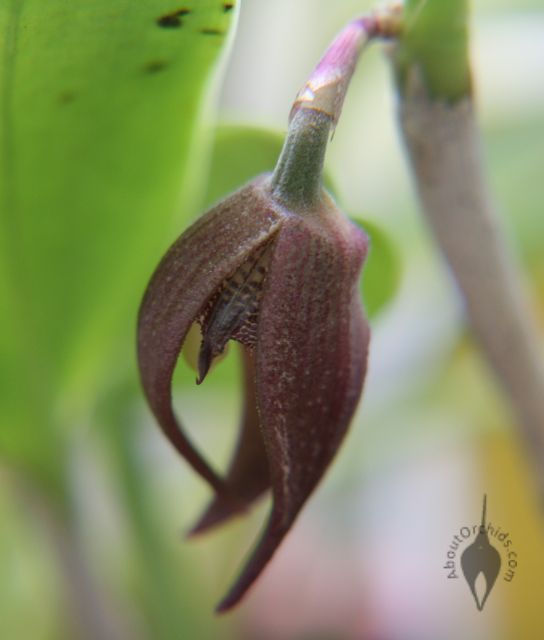
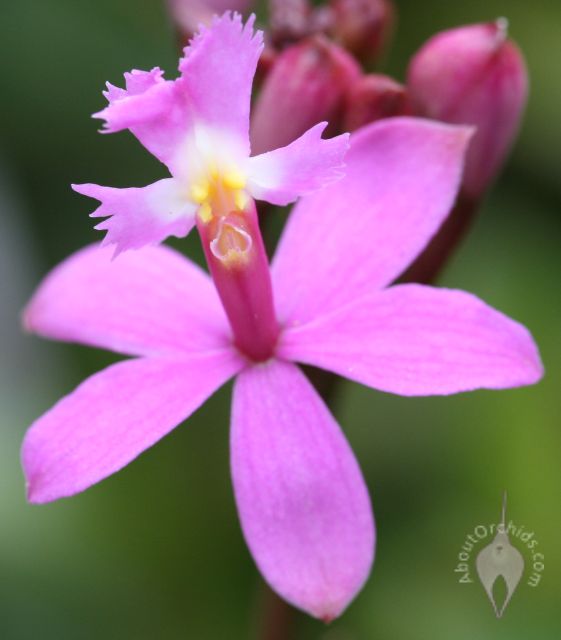
Epidendrum flowersMasdevallia flower

Many kinds of orchids need this dormant period in the fall and winter. With a proper rest, they’ll awaken in spring with new flowers.

Not all orchids go through dormant periods. For these varieties, you can still cut back slightly on water and fertilizer as temperatures drop and days shorten in the fall.

It’s best to water early in day, so plants have a chance to dry off before evening. If orchid leaves remain wet at night, they may rot.
November Orchid Shows

Posted October 31st, 2008 by Marc Cohen
Categories: Botanical Gardens, Events

If an autumn chill already has you feeling blue, there is no better pick-me-up than lots of tropical and exotic orchid flowers. I suggest a visit to a local orchid show. Here is a sampling of November shows.

November 1 – 2
Kansas Orchid Society Show, Botanica, the Wichita Gardens, 701 Amidon, Wichita, Kansas
November 8
North of England Orchid Show, Barton Community Hall, on the A6 at Barton just North of Preston, UK
November 8 – 9
Niagara Region Orchid Society Show, CAW Hall, 124 Bunting Rd., St. Catharines, Ontario, Canada
November 8 – 9
Orchid Society of California Show, Lakeside Park Garden Center, 666 Bellevue Ave., Oakland, California
November 8 – 9
Orchid Society of Arizona Show, Encanto Park Clubhouse, 2605 N. 15th Ave., Phoenix, Arizona
November 12 – 16
Agrem. Joinvillense Amarores de Orquideas Show, Parque de Expoville, Rua 15 de Novembro, s/n, Joinville SC, Brazil, 55-47-9974-4307
November 19 – 23
Asociacion Vallecaucana de Orquideologia Show, Orquideorama, Av. 2 N # 2-48, Cali, Colombia, 572-664-3256
November 21 – 23
American Orchid Society Fall Show, American Orchid Society, 16700 AOS Lane, Delray Beach, Florida
November 22 – 23
Orchid Society of Santa Barbara Fall Show, SB Museum of Natural History, 2599 Puesta del Sol Road, Santa Barbara, California
November 26 – 30
Asosciacion Altaverapacense de Orquideologia Show, Convent Santo Domingo, Coban, Guatemala
November 29 – 30
Saginaw Valley Orchid Society Show, Midland Holiday Inn, 1500 W. Wackerly St., Midland, Michigan

Ionocidium

Posted October 27th, 2008 by Marc Cohen
Categories: Mini Orchids, Photos, Warm Growers

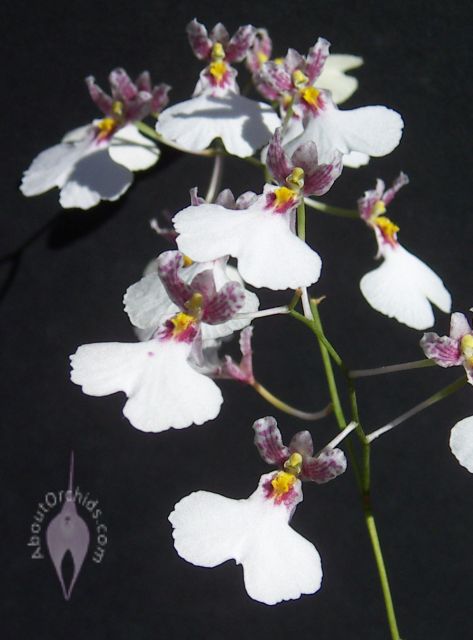
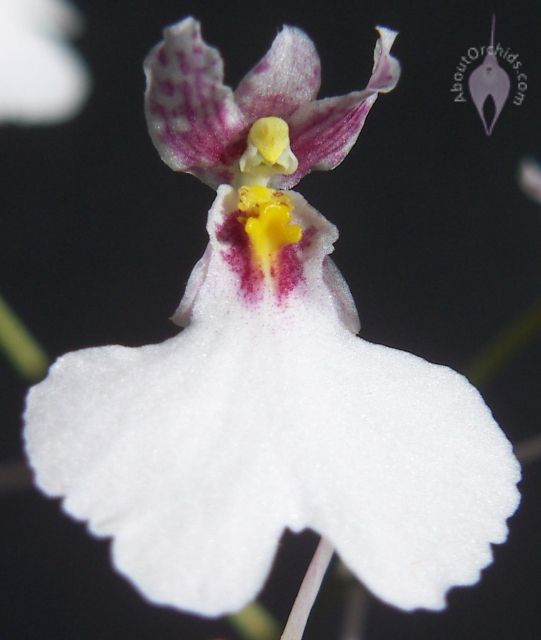
I’m  not quite sure what I did right to coax this Ionocidium into bloom, but I’m not complaining. This hybrid is a cross between 2 kinds of closely related orchids, an Ionopsis and an Oncidium.

Ionocidium flowersIonocidium flowerIonocidium flowers

The lip of the flower is light yellow when it starts to open, and then turns white after a couple days. On the uppermost part of the flower, a yellow cap covers small waxy balls of pollen.

Ionocidium flowerIochroma flowersIonocidium flower

World Land Trust

Posted October 24th, 2008 by Marc Cohen
Categories: Conservation

Founded in 1989 in England, the World Land Trust (WLT) has been working to preserve the world’s most biologically important and threatened lands. So far, the WLT has saved over 375,000 acres (1518 square km) of wildlife habitats, including tropical forests, coastal steppes, and wetlands. Many of these habitats are orchid hot-spots, such as rainforests in Belize, Costa Rica, Ecuador, and the Philippines. With their “Save an Acre of Rainforest” campaign, WLT has also been able to protect valuable orchid habitats in Brazil, India, Malaysia, and Mexico.

The WLT contributes to educational projects, providing conservation materials to students and field guides that are essential for research. WLT’s work benefits us all, not only by saving endangered species, but also by regenerating important wildlife habitat that removes greenhouse gases from the atmosphere.

Myoxanthus

Posted October 20th, 2008 by Marc Cohen
Categories: Cool Growers, Fragrant Orchids, Mini Orchids, Orchids in the Wild, Photos

Say what? You don’t need to be able to pronounce Myoxanthus to enjoy its funky flowers. If you do want to pronounce it, say “MY-oh-zan-this,” rhymes with “try go Kansas.”

Myoxanthus serripetalus flowerMyoxanthus serripetalus flower

This orchid is a relative of Masdevallias, and enjoys high humidity, cool temperatures, and constant air circulation. Its native home is Peru and Ecuador on the eastern slopes of the Andes, where it survives at elevations as high as 10,000 feet (3100 m.)

Just because it’s scented, don’t assume that you’d like the smell. This orchid has a funky scent, like rotting food. Fortunately it’s faint, and since I keep it outside all year, it’s not bothersome. Although we humans may not like the stinky scent, I’m sure it works perfectly to lure some fly or wasp to help pollinate it. A single flower emerges from the base of a leaf, and hangs upside down.

Myoxanthus serripetalus flowerMyoxanthus serripetalus flowerClosing Myoxanthus flower

Warm October Days

Posted October 16th, 2008 by Marc Cohen
Categories: General Gardening, Misc, Photos

San Francisco is often covered in chilly fog in the spring and summer, but warms up when the fog disappears in the fall. True to form, we’ve been having warm October days. Today the backyard thermometer reads 86 F (30 C.) The garden is enjoying this latest warm spell, and there are lots of orchids and other flowers open.

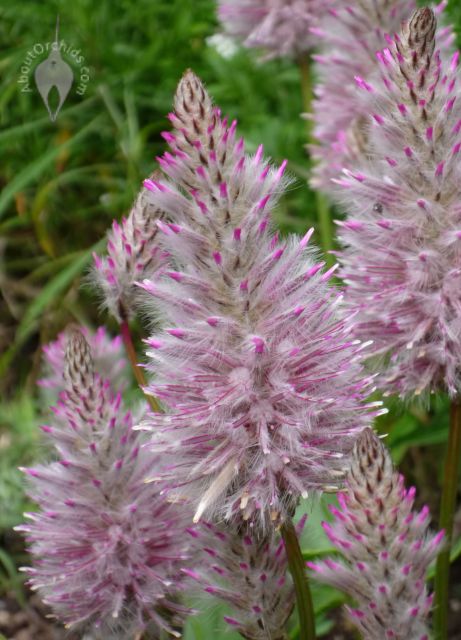
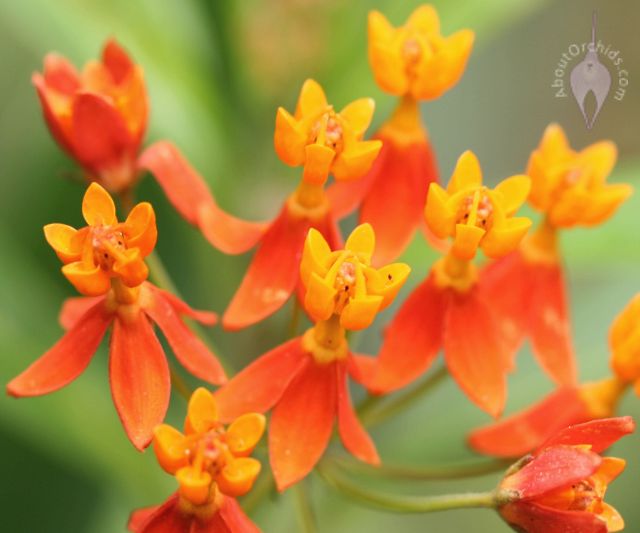
We just added this unusual Ptilotus to the garden. It’s a drought-tolerant Australian perennial with feathery flowers. On the right, Asclepias flowers look like colorful shooting stars. Asclepias are better known as milkweeds, and are the preferred food of monarch butterfly caterpillars.

Ptilotus flowersAsclepias flowers

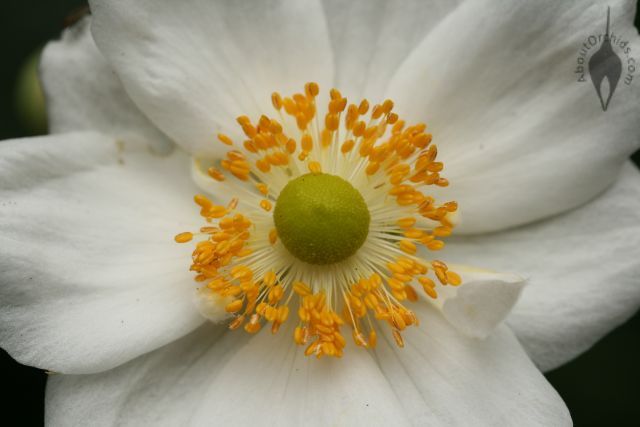
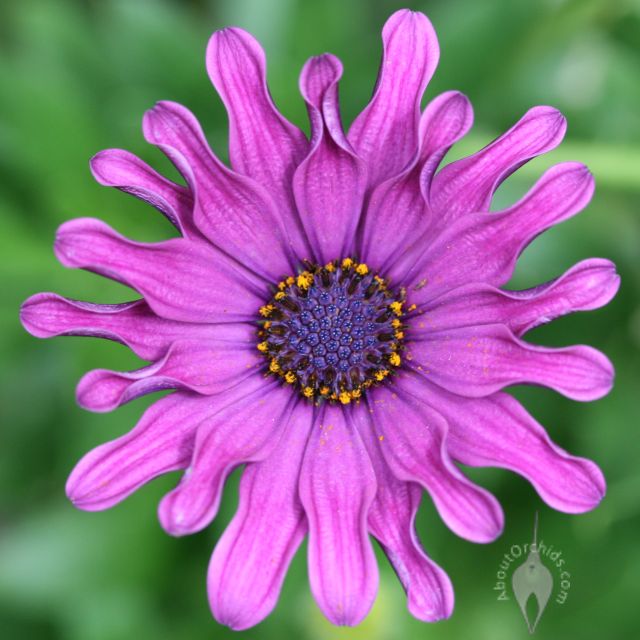
A white Japanese Anemone and a purple African Daisy show contrasting beauty.

Anemone flower close-upAfrican daisy

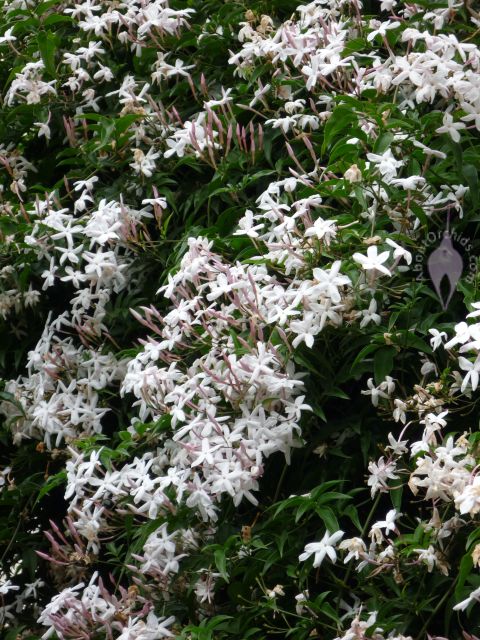
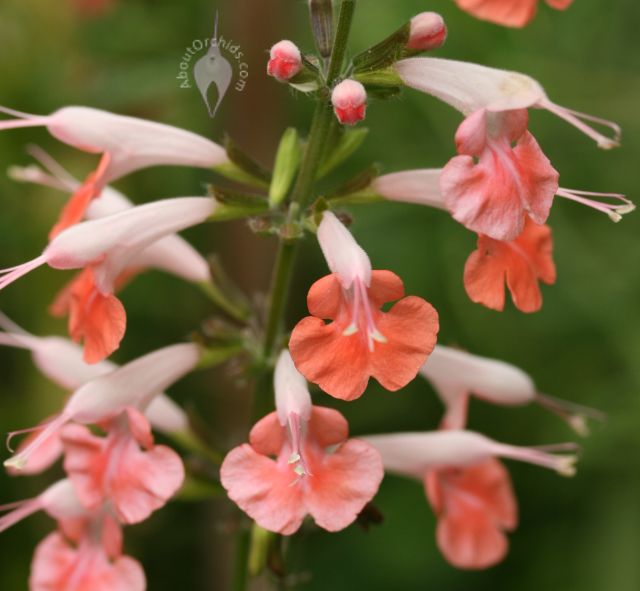
This jasmine is the size of a small tree, and grows up a support pole for our back stairs. Dave and I routinely debate whether it’s supporting the stairs, or will someday pull them down. Several times a year, it bursts into bloom with honey-scented flowers. In the middle, a purple Epidendrum flower looks like it could fly away. On the right, Pink Sage flowers have graced our garden for years, thanks to seeds Dave brought from his home in New Orleans.

Jasmine flowersEpidendrum flowerPink Salvia flowers

Orchid Housekeeping

Posted October 13th, 2008 by Marc Cohen
Categories: Problems

It feels like an embarrassment of riches to say that some of my orchid flowers last so long that they get dusty. Under ideal conditions, Phalaenopsis, Paphiopedilum, Epidendrum, and Cymbidium flowers can last for months, and dust can be a problem. Most orchid flowers can handle a gentle touch with clean hands or a clean cloth, but there is the risk of damaging a flower, so instead I usually use a hands-off approach. I prefer to clean them with a few gentle breaths, or by washing them with the spray mister filled with room-temperature, good-quality water. Cleaning is best done early in the day so the flowers can dry, since flowers that remain wet overnight can rot.

Don’t be offended if I wish you the problem of dusty orchid flowers – it’s a great problem to have!

South African Orchid

Posted October 9th, 2008 by Marc Cohen
Categories: Dormancy, Fertilizing, Intermediate Growers, Orchids in the Wild, Photos, Watering

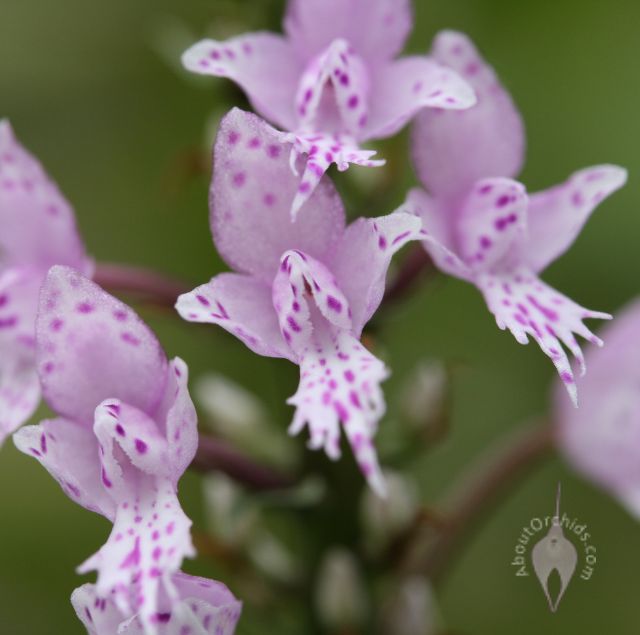
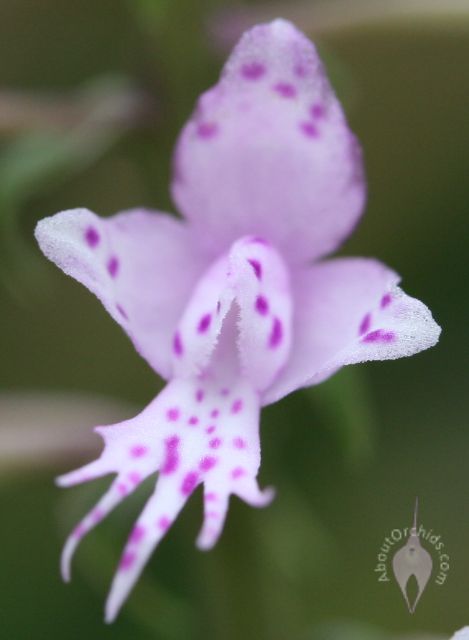
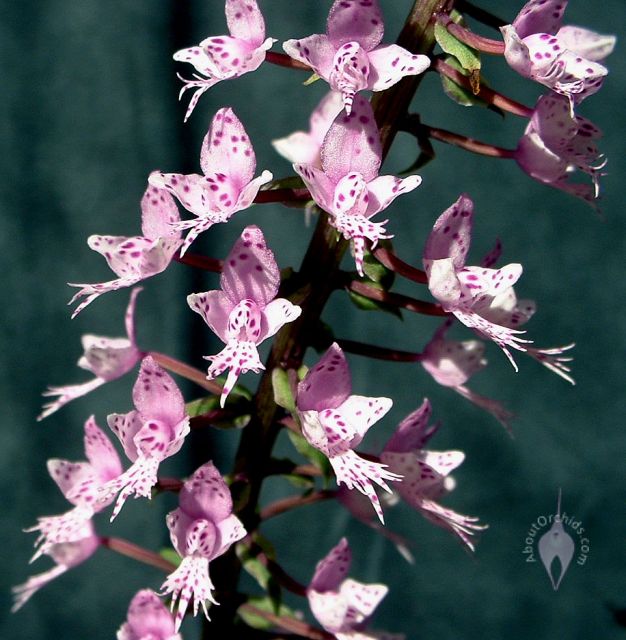
If you saw this unusual Stenoglottis orchid growing in its native home in South Africa, and it wasn’t in bloom, you would probably think it was an ugly weed. If you saw it in bloom, though, I’d bet you would be amazed at its masses of dainty purple polka-dotted flowers with fringed lips.

Stenoglottis flowersStenoglottis flower

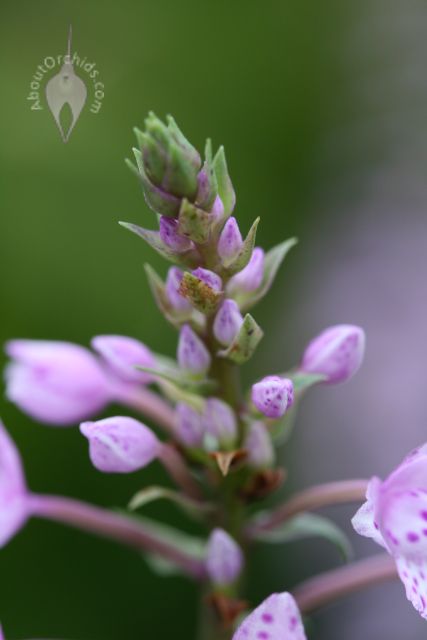
Stenoglottis longifolia grows as a terrestrial orchid, with deciduous leaves and underground tubers that go dormant in winter. While it’s growing, it requires regular water and fertilizer. Flower spikes start to grow in late summer, and continue to grow for a few months, opening tiny flowers along the way.

Stenoglottis flowersStenoglottis flower buds

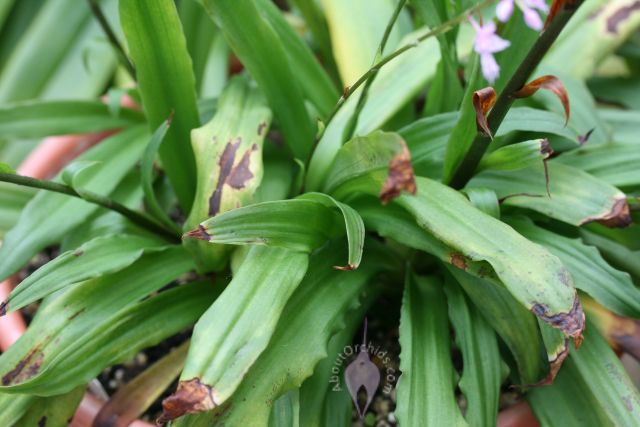
The thin, soft leaves don’t look like those of most other orchids. This picture shows a Stenoglottis orchid at the end of summer, with some leaf tips that turned brown during a heat wave, and flower spikes emerging from the base of the plant. The leaves completely die back in the winter to be replaced by fresh ones in the spring.

Stenoglottis leaves

Healthy Orchid Roots

Posted October 7th, 2008 by Marc Cohen
Categories: Growing, Misc, Photos, Problems

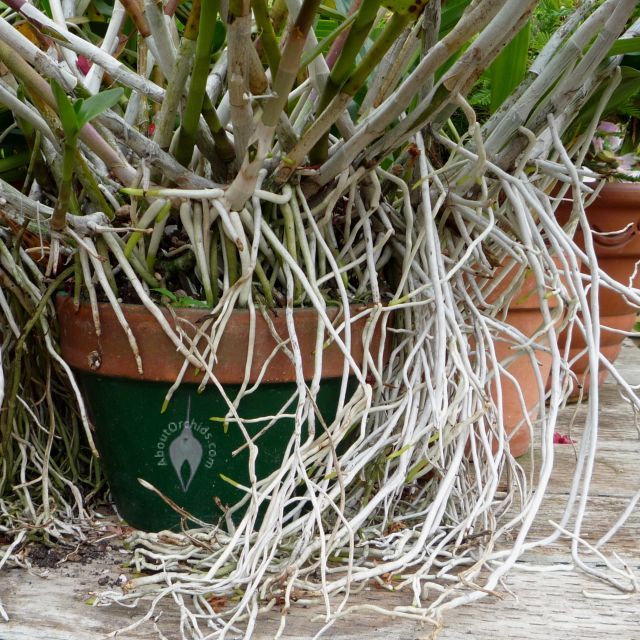
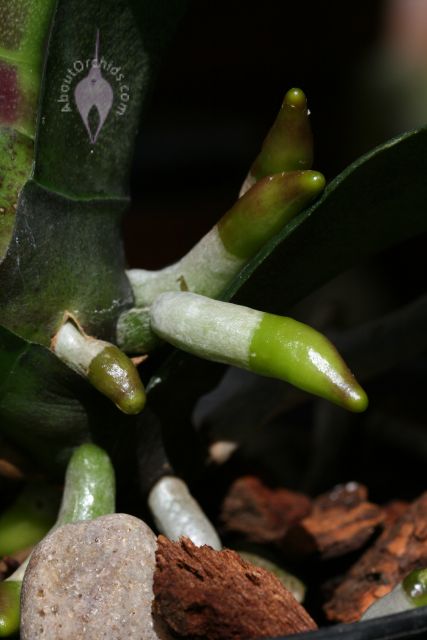
Like all plants, orchids need a healthy root system to survive and thrive. At least once a year, orchids enter a growth cycle when they generate new roots. These new roots are light green at the tips, and turn white with time. As they age over several months, they may turn brown.

Orchid rootsOrchid roots growing outside of pot

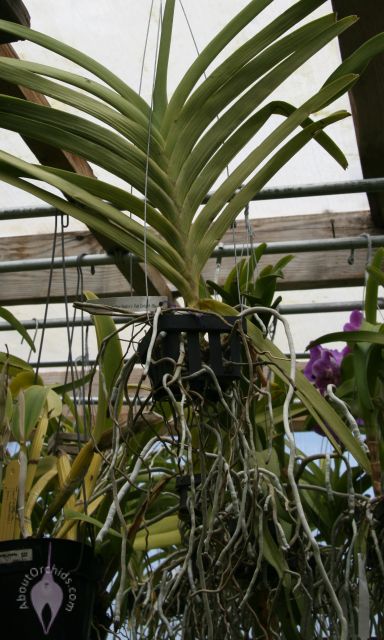
Since orchids are epiphytes, or air plants, they don’t mind growing with their roots sticking out in the air. As long as there is adequate humidity, many orchids prefer to keep their roots exposed. Some varieties, such as Vandas and their relatives, dislike having their roots in a potting mix, and insist on growing with their roots in the open air.

New orchid rootsVanda roots exposed to the air

With inadequate humidity, over-watering, or old age, orchid roots die. Any roots that feel mushy or squishy are dead. They should be removed immediately, since they can spread rot and disease to the rest of the plant. If your orchid is losing lots of its roots, it may need to be repotted.

Easy Orchids

Posted October 3rd, 2008 by Marc Cohen
Categories: Books

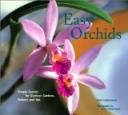
When people ask me to recommend a good book for basic orchid care, I usually suggest Easy Orchids: Simple Secrets for Glorious Gardens–Indoors and Out by Mimi Luebbermann. With clear writing, the author demystifies orchid care, explaining what you need, how to buy, and essential details for some common orchids. Her aim is to prove that many orchids “grow as easily as daffodils.”

It’s got some beautiful photographs, and provides basic orchid info in clear, non-technical terms. Luebbermann has authored numerous other gardening books, and it shows in her straightforward style. She concisely summarizes orchid care for about 2 dozen commonly grown types. If you’re looking for help growing beautiful tropical flowers, give this book a try.