If an orchid refuses to bloom over the course of a year, one of the most common culprits is insufficient light. Here are a few tips to keep in mind:
• Light green or medium green leaves are a good indication that an orchid is receiving sufficient light. Dark green leaves may look attractive, but they usually mean that the plant is not getting enough light to bloom. New leaf growth that is soft, floppy, or more spindly than the old leaves can also indicate insufficient light.
• Distance from the light source greatly affects light strength. For an orchid, being placed more than a foot away (30 cm) from a window or light bulb can be equivalent to living in a dark cave. Many growers discover that repositioning a plant closer to a window brings it into bloom. Move it closer to the light source gradually, so as to prevent it from burning with a sudden increase in light or heat.
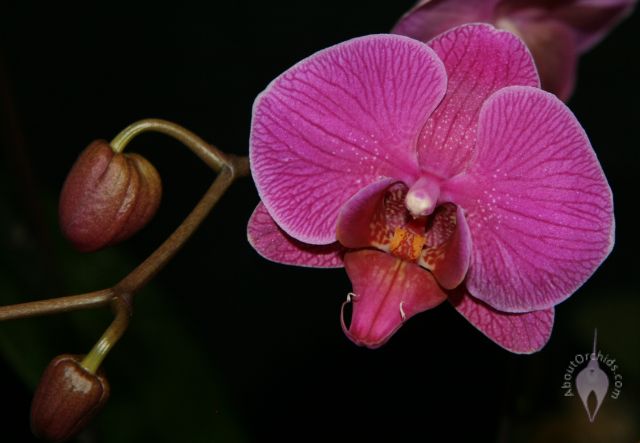
• Artificial light is fine for some orchids, such as Phalaenopsis and Paphiopedilum. Fluorescent lights work well since they last a long time, use little electricity, and don’t get very hot. Light bulbs should be close to the leaves, just 6-8 inches (15-20 cm) away, but not so close that leaves can burn.
• For orchids that want some direct sun, such as Vandas, Dendrobiums, and Cattleyas, morning sun is best. Direct sun at mid-day can burn leaves, and full sun in the afternoon can be too hot and drying.
• Unless you live in the tropics, winter brings shorter days and a weaker sun. To help compensate, orchids grown in natural light can be gradually moved into brighter light in the fall, and moved back into lower light in the spring.