Offshore Flow

Posted June 12th, 2010 by Marc Cohen
Categories: Growing, Growing Orchids in San Francisco, Problems

When local meteorologists use the phrase “offshore flow,” it’s going to heat up here in the San Francisco Bay Area. Orchid growers on the coast, like me, normally take advantage of the cool fog flowing off the Northern Pacific to maintain good humidity. Those moderate conditions allow many orchid varieties to grow outdoors all year. But when conditions change to offshore flow, the typical marine influence disappears. Instead of cool, moist breezes blowing from the ocean, hot, dry air flows from inland. For example, today it’s 83F (28C) in the shade, 92F (33C) on the back deck, and a desert-like 13% humidity.

Since I don’t have any automatic watering systems, that means I have my work cut out for me. With my mister bottle for indoor orchids and a hose for outdoor orchids, I spray down the plants numerous times during the day. It’s more about wetting the leaves and roots than watering the potting material. In addition, I wet down any surfaces, like the wood surface of our deck, so the evaporating water can supplement the meager humidity.

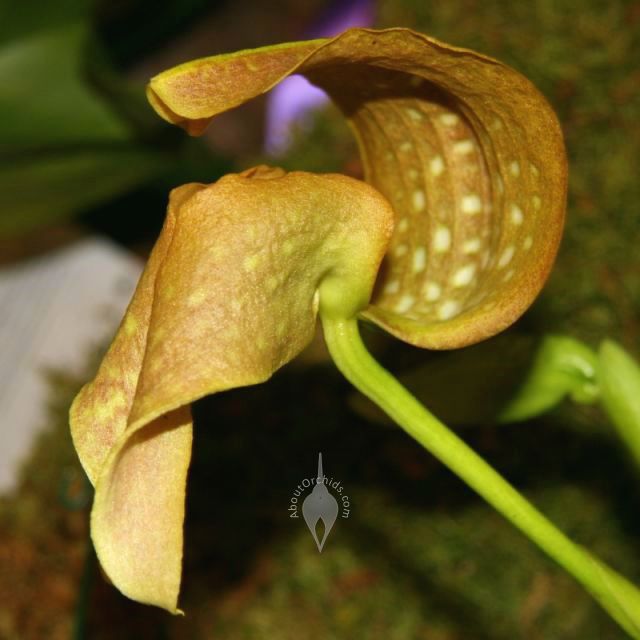
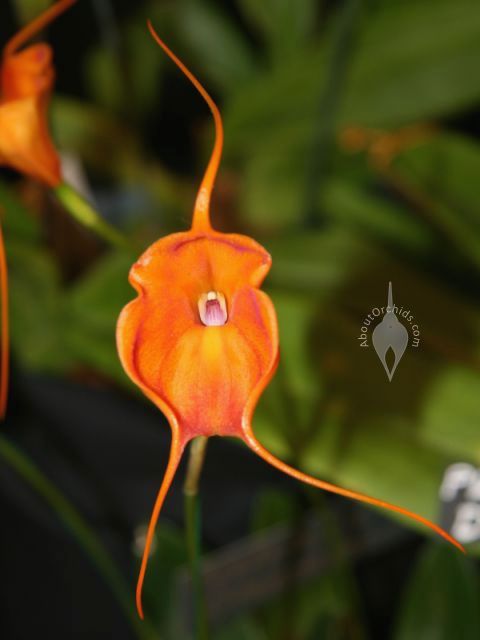
Even some delicate orchid varieties, like this Masdevallia which likes to stay below 75F (24C) all year, can handle the heat as long as there’s good humidity. Fortunately, this hot spell is only forecast to last for the weekend, so the fog can take over again soon. But for now, I have to grab my mister bottle and go…
Q&A

Posted June 9th, 2010 by Marc Cohen
Categories: Q&A

UPDATE: The spammers have made it impossible to keep comments open here. Instead, please check the guidelines below, and then go to any recent blog post where the comments are still open. You can ask your question anywhere. Thanks!

Do you have an orchid question? Post questions or comments here, and find an answer from the AboutOrchids community.

Q&A Guidelines:

  • Orchid questions and comments only, please.
  • If you have an orchid problem, it helps if you’re descriptive. Different orchid varieties vary greatly in their care needs, so start with what kind of orchid you have. When relevant, describe your growing conditions, like light, water, temps, fertilizer, or humidity.
  • Check AboutOrchids for basics. You may find the answer you’re looking for.
  • Questions are usually answered by me or another person in the AboutOrchids community within a day or two. Please be patient.
  • No spam. Links that are not relevant to the conversation will be removed.

Stream Orchid

Posted June 5th, 2010 by Marc Cohen
Categories: Cool Growers, Dormancy, Fertilizing, Growing, Growing Orchids in San Francisco, Photos

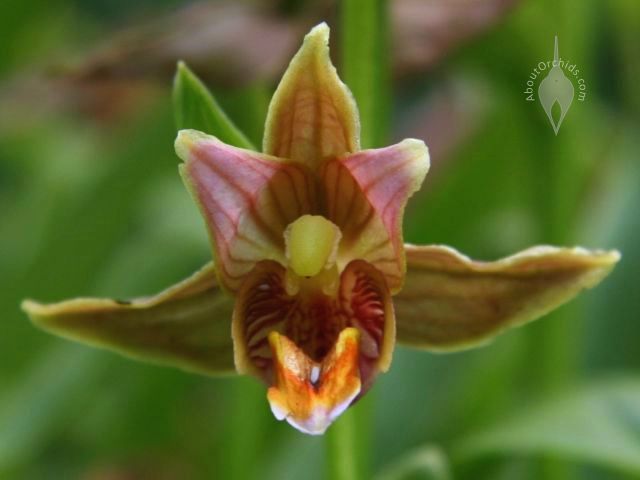
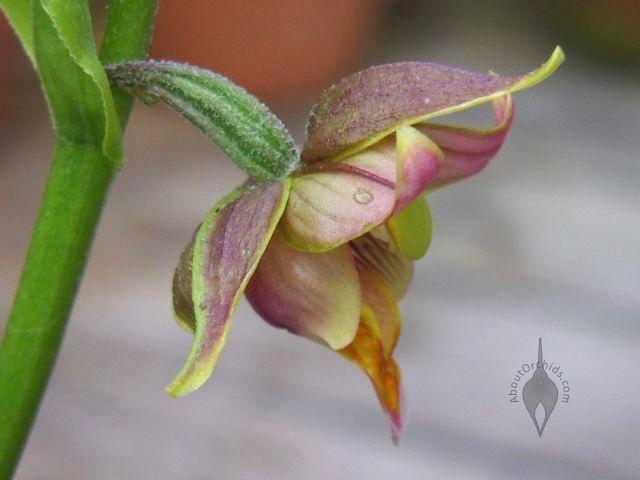
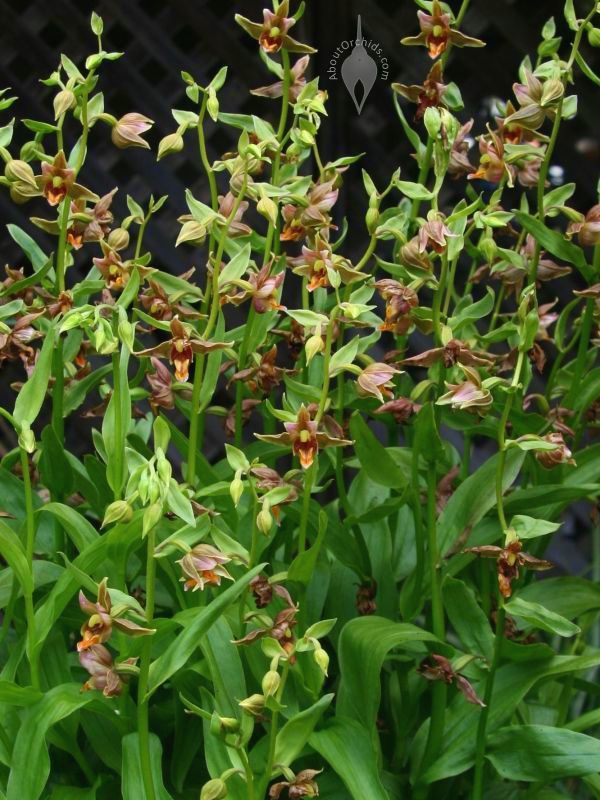
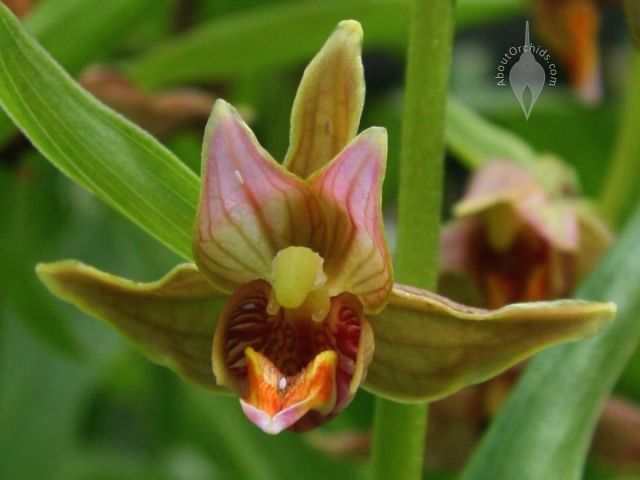
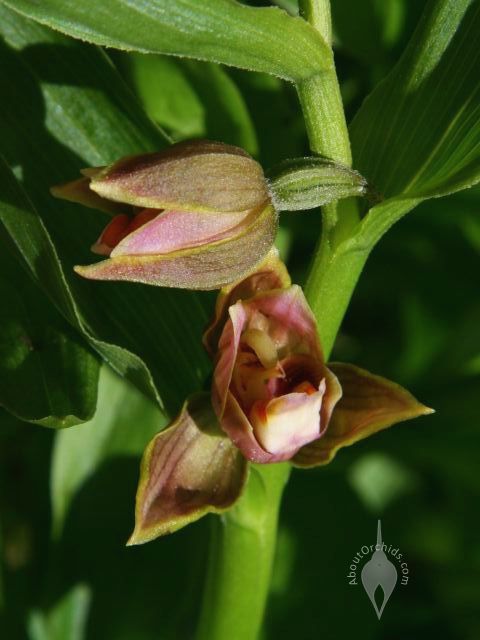
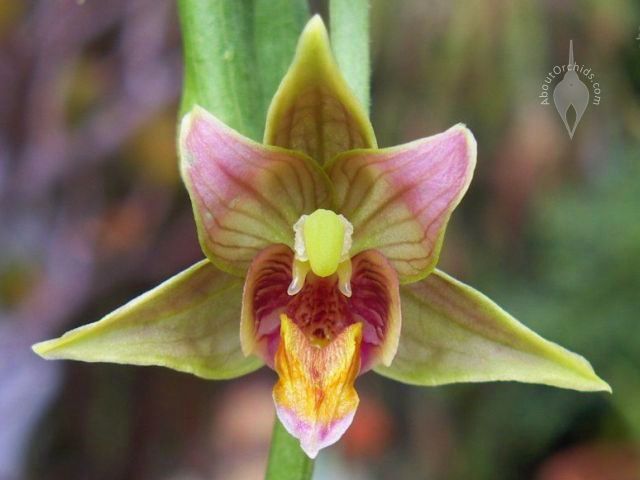
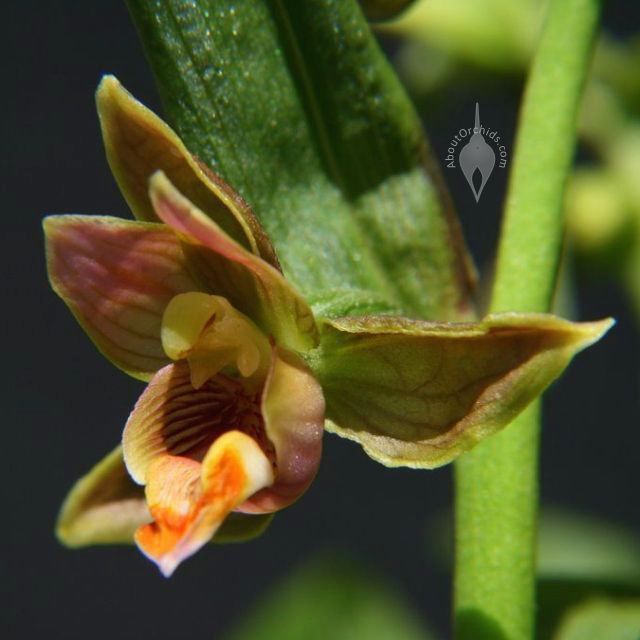
My own orchid collection has species and hybrids from all over the world, but only one that’s native to San Francisco. It may be less glamorous than its tropical relatives, but this Epipactis, or Stream Orchid, really enjoys the local climate. This species has a large range over western North America, spanning from Canada south to Mexico, and from California east to Texas.

Epipactis flowerEpipactis flowerEpipactis flowers and leaves

Also known as the False Ladyslipper, the Stream Orchid is not an air plant. It’s a terrestrial orchid that lives in moist soils along streams, on cliff faces, and in mountain bogs. The plant dies back during winter, and re-emerges from underground tubers the next spring.

Epipactis flowerEpipactis flower close upEpipactis flower side view

Many terrestrial orchids are difficult to grow, requiring highly specialized conditions (yet another reason why you should NEVER remove wild orchids from their natural homes.) However, Epipactis gigantea is relatively easy to cultivate, and adapts to a wide range of conditions. I keep mine in regular potting soil, and keep the pot in a tray of water so it never dries out. It loves a good dose of compost fertilizer, which has helped my plant grow into a vigorous specimen. Certainly it seems right at home.

Epipactis plant with dozens of flowersEpipactis flowerEpipactis flower buds opening

June Orchid Shows

Posted June 1st, 2010 by Marc Cohen
Categories: Botanical Gardens, Events

Orchid shows wind down in the Northern Hemisphere, as summer heat complicates orchid logistics. The Native Orchid Conference in Edmonton, Canada is a notable exception. Starting June 12th, the conference includes perfectly timed field-trips to see North American native orchids at peak blooming times. Meanwhile, as winter begins Down Under, Australian orchid lovers can find plenty of shows.

June 4 – 6
New Orleans Orchid Society Show, Lakeside Mall, 3301 Veterans Hwy., Metairie, Louisiana
June 5 – 6
North of England Orchid Society Annual Show, The Tennants Hall, Tatton Park, Knutsford, Cheshire, UK
June 5 – 6
Natal Orchid Society Winter Show, Durban Botanic Gardens Visitor Centre, 70 St Thomas Rd., Durban, KwaZulu Natal, South Africa
June 11 – 13
Aiea Orchid Show, Aiea Elementary School Cafeteria, 99-370 Moanalua Rd., Aiea, Oahu, Hawaii
June 11 – 13
Tropical Queensland Orchid Council Conference and Show, Townsville Orchid Society Hall, Charles St., Kirwan, Townsville, Queensland, Australia
June 12 – 13
Blacktown Orchid Society Show, Centro Shopping Centre, Prospect Highway and Federal Rds., Seven Hills, NSW, Australia
June 12 – 15
Native Orchid Conference, Lister Centre, Univ. of Alberta, Edmonton, Alberta, Canada
June 17 – 20
The Orchid Society of NSW Annual Winter Orchid Show, St. Ives Shopping Village, Mona Vale Rd., St. Ives, NSW, Australia
June 17 – 20
Sutherland Shire Orchid Society Winter Show, Swanes Nursery, 80 Port Hacking Rd., Sylvania, NSW, Australia
June 18 – 19
Conejo Orchid Society Show and Sale, Grant Brimhall/Thousand Oaks Library, 1401 E. Janss Rd. Thousand Oaks, California
June 18 – 20
Peterborough International Orchid Show, Peterborough Show Ground, Peterborough, Cambridgeshire, UK

Read the rest of this post »

Orchid Bonanza at the Chelsea Flower Show

Posted May 28th, 2010 by Marc Cohen
Categories: Conservation, Events, In the News

If you’re in London, there’s still one more day to catch the Chelsea Flower Show. It’s not an orchid show, but it is the most famous flower show in the world. Among the roses and royals, there are lots of orchids. In fact, the Royal Horticultural Society has proclaimed an “Orchid Bonanza” at this year’s show. There are more orchid displays than ever, and a Lady Slipper species, Cypripedium flavum, won third place for Best Flower in Show.

If, like me, you’re very unlikely to make it to London in time, you can still enjoy this article about the show in The Baltimore Sun. They have a nice photo gallery that includes 4 pictures of Phals.

This BBC article features an award-winning Miltonia display. There’s a good photo gallery there, too.

AsiaOne News has a story about Queen Elizabeth admiring some Taiwanese orchids during her visit to the show.

Also check out this article from the Telegraph, “Guns and chainsaws highlight plight of the rainforests” about an award-winning display that pleads for conservation. It’s an essential message, even among all those dazzling flowers.

Angraecum

Posted May 26th, 2010 by Marc Cohen
Categories: Fragrant Orchids, Photos, Warm Growers

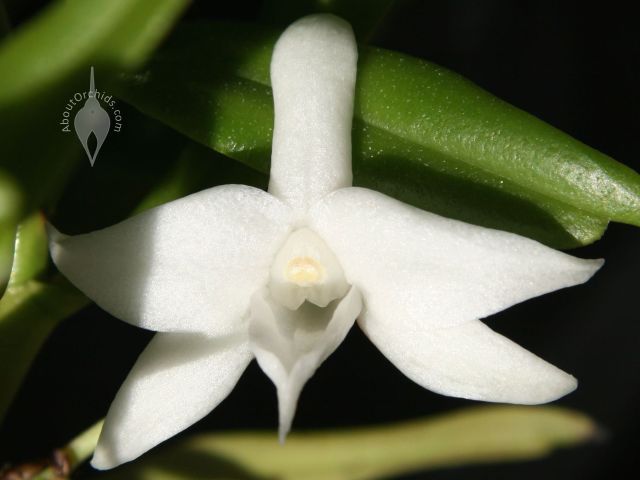
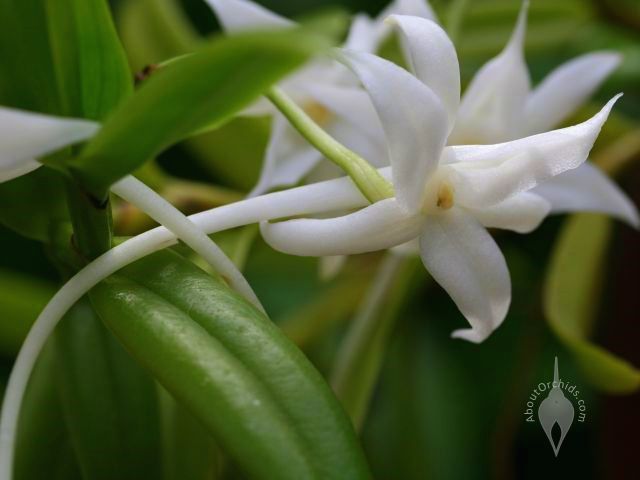
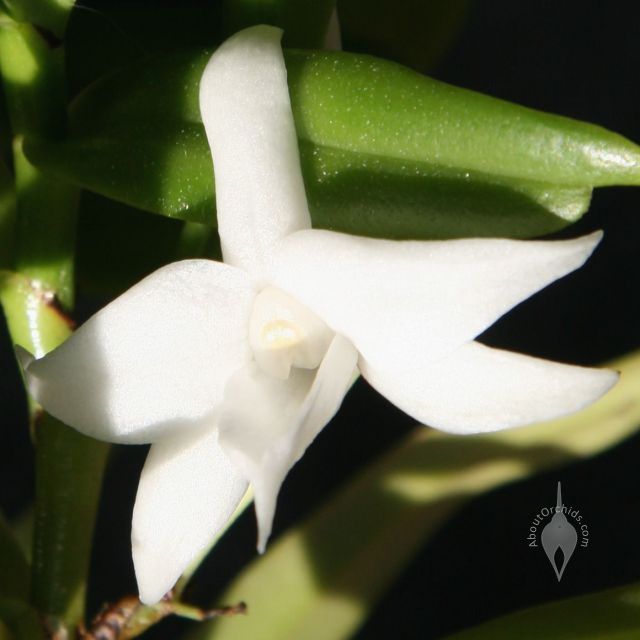
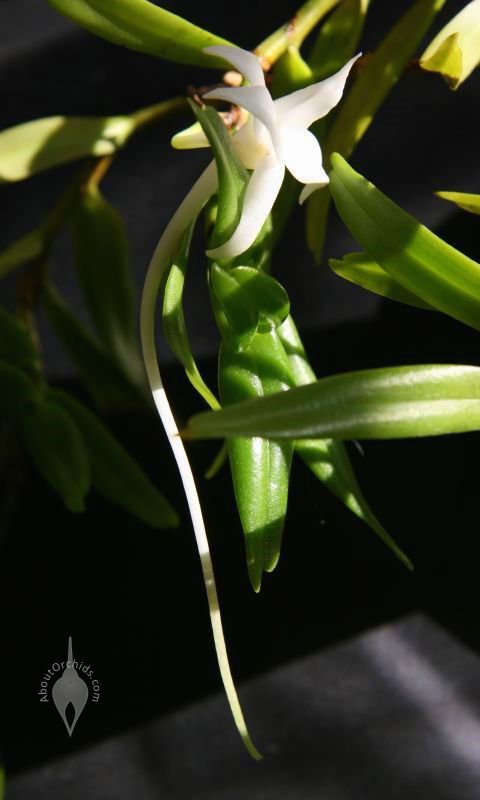
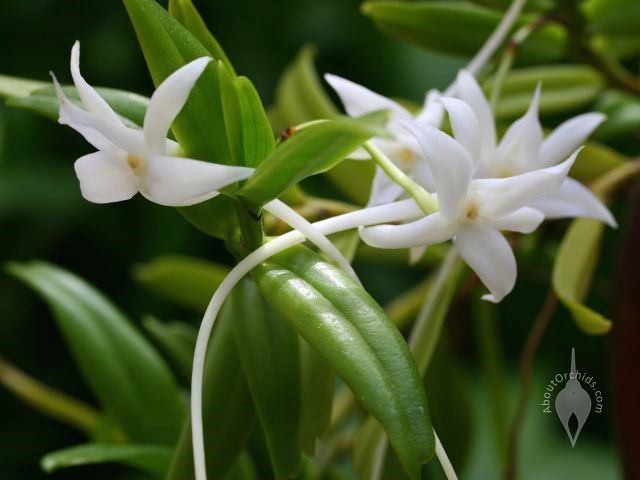
With spectacular white blooms and a sweet scent, this Angraecum offers an elegant display. This species is native to the Comoros Islands and Madagascar. It’s easy to see its similarities with orchid relatives like Darwin’s Orchid, Jumellea, and Oeoniella. All have star-shaped white flowers, and produce rich fragrances at night to attract moth pollinators.

Angraecum flowerAngraecum flowers and plantAngraecum flower

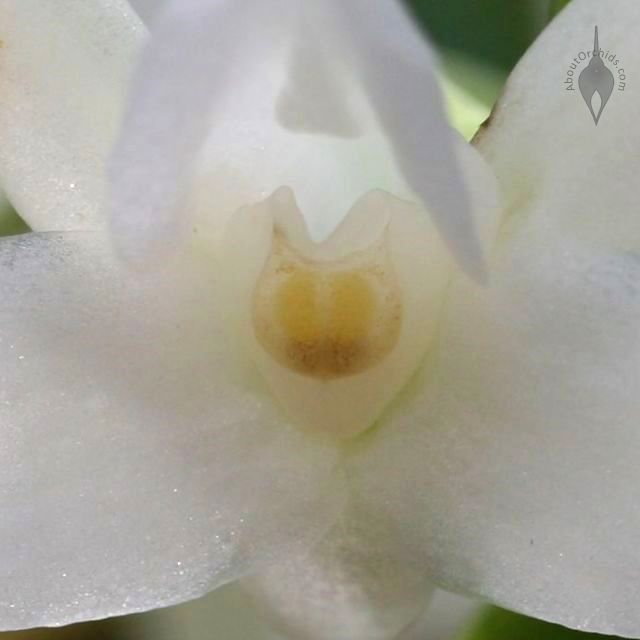
Those moth pollinators have long tongues, so the orchid completes its lure with a drop of nectar at the bottom of a narrow tube called a nectar spur. The flowers have evolved to entice the moth perfectly into position against the sticky yellow pollen. While the moth reaches to receive a nectar reward, it picks up or deposits pollen, and helps the orchid to reproduce.

Angraecum flowersAngraecum flower close upAngraecum flower

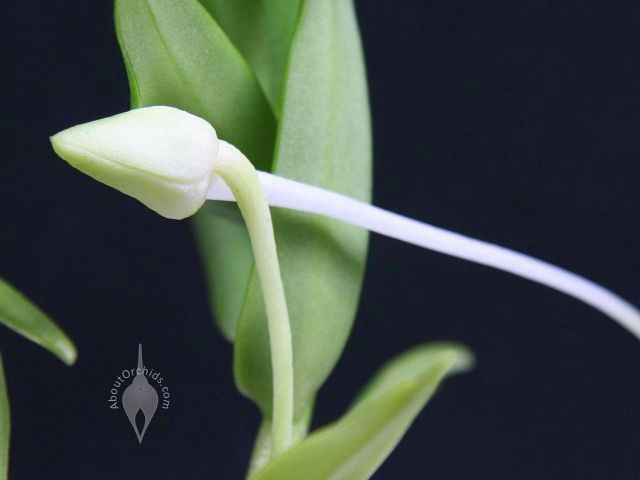
This Angraecum has a graceful nectar spur up to 4 inches (10 cm) long, more than twice the size of the flower itself. As they develop, the unopened flower buds are dwarfed by their lengthening spurs. Blooms can last a month or more. Like most of its tropical African relatives, this species requires bright light, warm temps, regular water, and high humidity.

Angraecum flower with long nectar spurAngraecum flowers and leavesAngraecum flower bud with nectar spur

Morning Sun

Posted May 22nd, 2010 by Marc Cohen
Categories: Growing

Some varieties of orchids need direct morning sun to grow well and bloom. Morning sun is better than afternoon sun because the afternoon sun is usually hotter, and also dries the air more. Dry air can stress orchid plants. They can make better use of the cooler morning sun for photosynthesis. For the same reason, if it’s an unusually hot or dry day, it’s a good idea to shade the orchid from any direct sunlight, and pay extra attention to maintaining good humidity. Common varieties that enjoy morning sun include:

Move plants into brighter light gradually. To prevent sunburn, slowly introduce plants to morning sun over 2 weeks.

Orchid Cops

Posted May 19th, 2010 by Marc Cohen
Categories: Conservation, In the News

No, it’s not a sequel to The Orchid Thief, just some encouraging news that a “Rare British orchid gets police protection from overzealous collectors.” The rare orchid is a Lady Slipper species which still exists in other parts of Europe, but this is the last wild specimen of its kind in Britain. It’s under police protection to prevent irresponsible and selfish orchid collectors from trying to steal it again. Last year, thieves stole part of the plant, but this year, regular police patrols should ensure its safety. Take the legal threat as one of many good reasons why you should never remove an orchid from the wild or cut its flowers.

Of course, orchid conservation doesn’t require a badge. Illinois College students are hoping to return a rare Hawaiian orchid to the wild. Although it’s home to innumerable orchids today, Hawaii’s remoteness meant that only 3 orchid species existed in the islands before humans arrived. Now all 3 native species are seriously endangered, and there are only 36 Platanthera holochila plants remaining in the wild. Hope is coming from an Illinois lab, where hundreds of this species’ seedlings are slowly growing, destined for reintroduction to native habitats in Hawaii. If all goes well, the Illinois College students and their biology professor are hoping to bring the first batch home next March. From colleges to cops, orchids can use everybody’s help in their struggle for survival.

More Orchids in an Ice Rink

Posted May 15th, 2010 by Marc Cohen
Categories: Events, Photos

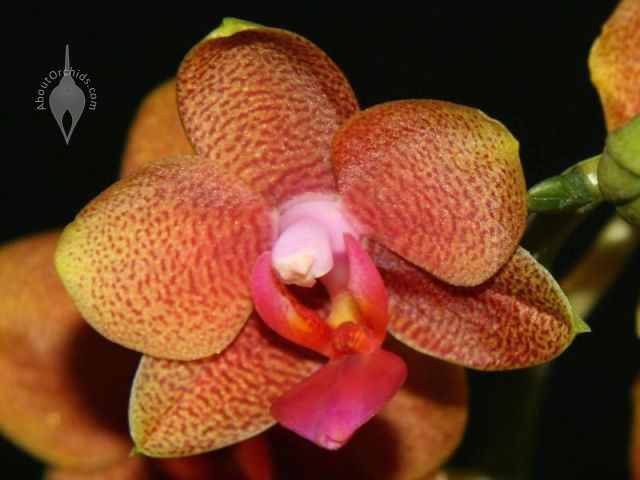
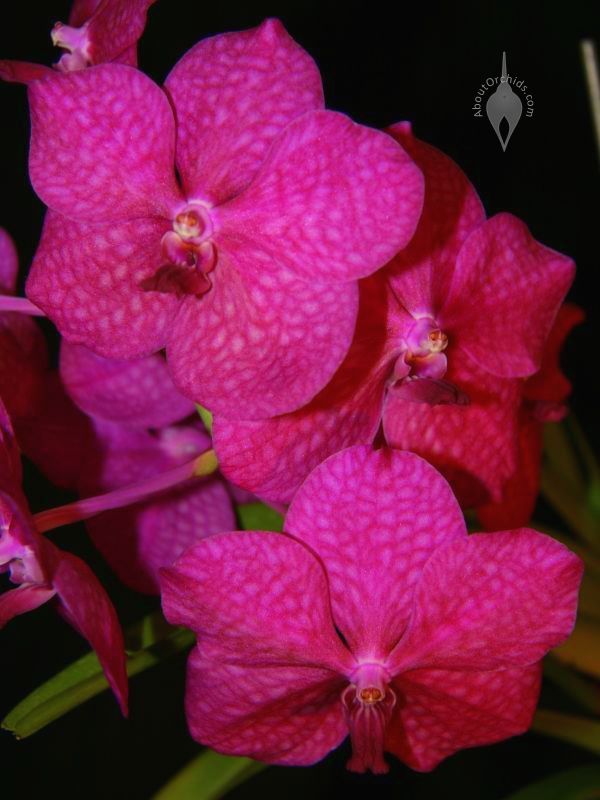
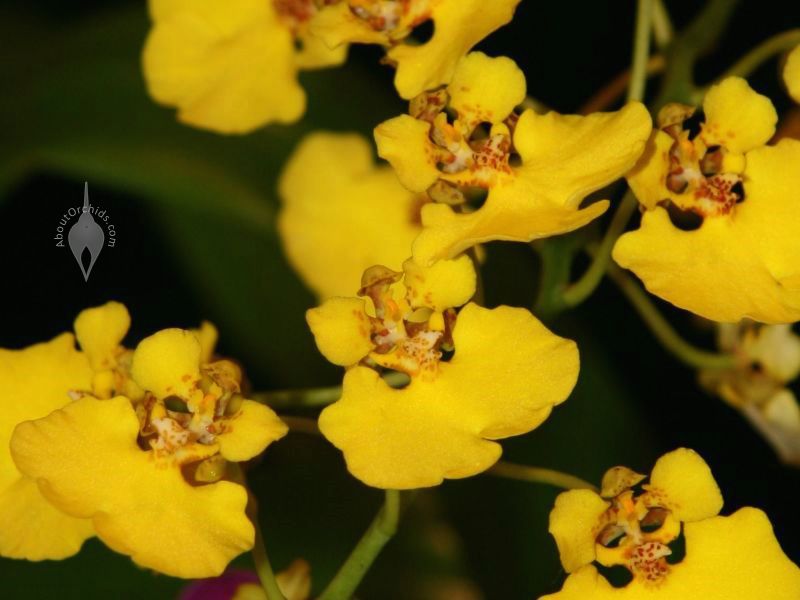
Along with a striking Ghost Orchid, there were some wonderful blooms at last weekend’s Orchid Society of Northwestern Pennsylvania Show in an Erie ice rink. Since I advise against mixing orchids with ice, you’ll be happy to know that the skating ice was covered, and the ice rink was room temperature. Orchids on display, like this Phal, Vanda, and Oncidium, were perfectly comfortable.

Phalaenopsis flowerAscocenda flowersOncidium flowers

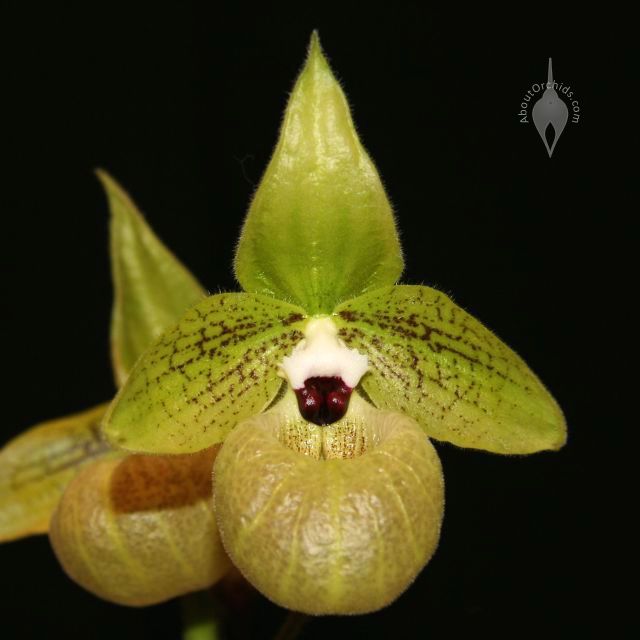
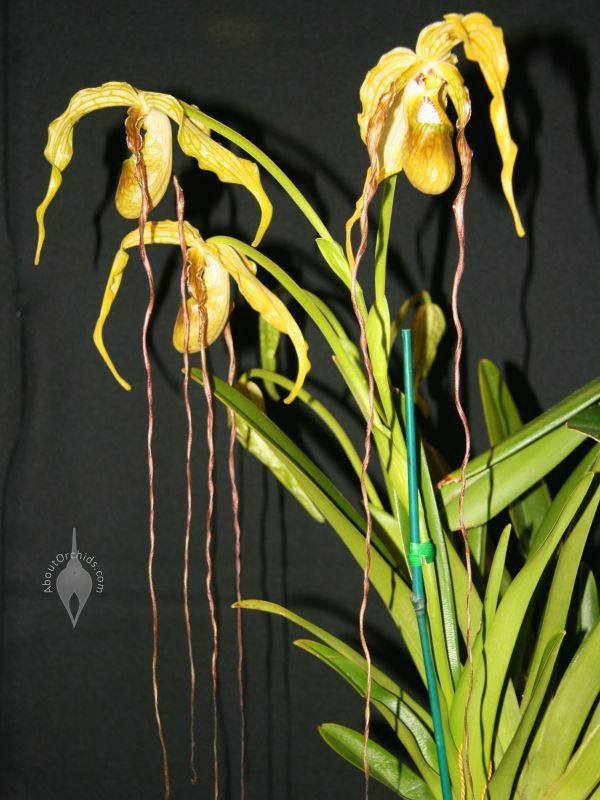
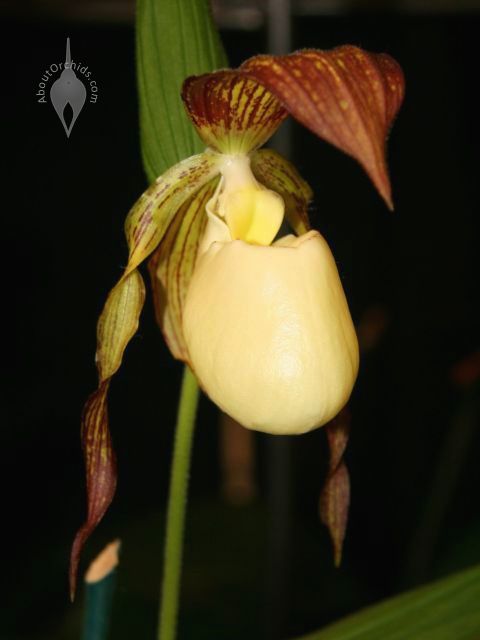
There were lots of Lady Slippers on display, too. The next photo shows a Paphiopedilum, or Paph, with the pouch that gives it a classic Lady Slipper shape. The second photo shows a Phragmipedium, or Phrag (pronounced “frag,”) another genus that falls in the Lady Slipper family. This species’ petals can hang down 2.5 feet (76 cm,) making them some of the largest flowers in the world. The third photo shows a Cypripedium, or Cyp (pronouced “sip.”) This species is commonly called the Kentucky Lady Slipper, and has a native range that stretches from Louisiana and Texas north to Ohio.

Paphiopedilum flowersPhragmipedium plant and flowers with very long petalsCypripedium flower

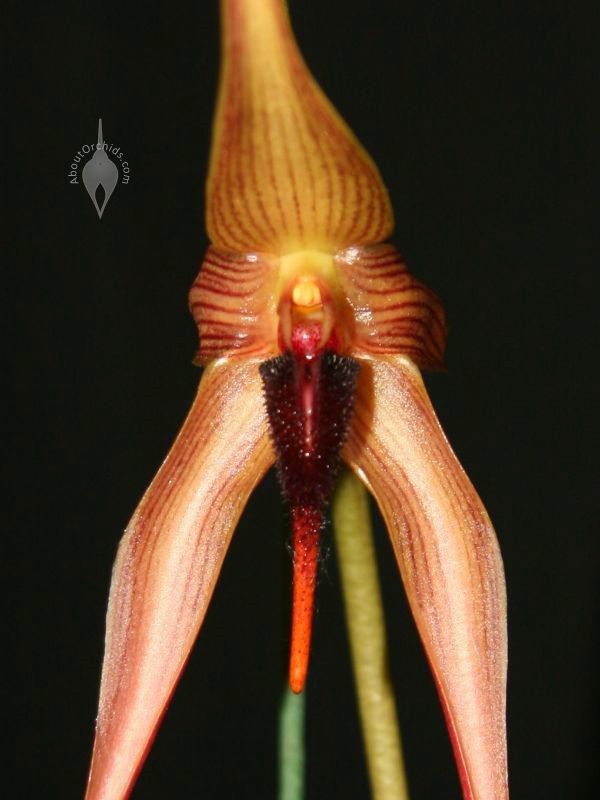
A few members of the bizarre Bulbophyllum family were also on display. Many flowers from this genus have unusual shapes and moving parts. Some species have foul scents to attract pollinating flies. Admire the flowers, but stick your nose in at your own risk!

Bulbophyllum flower close upBulbophyllum flowerBulbophyllum flowers

Of course, most of the orchids smelled just fine. Other varieties on display included a Laelia, a Masdevallia, and another Vanda. Maybe I’ll need to rethink this orchids-with-ice thing after all.

Laelia flowersMasdevallia flowerVanda flowers

Ghost Orchid in an Ice Rink

Posted May 12th, 2010 by Marc Cohen
Categories: Books, Events, Fragrant Orchids, Photos, Warm Growers

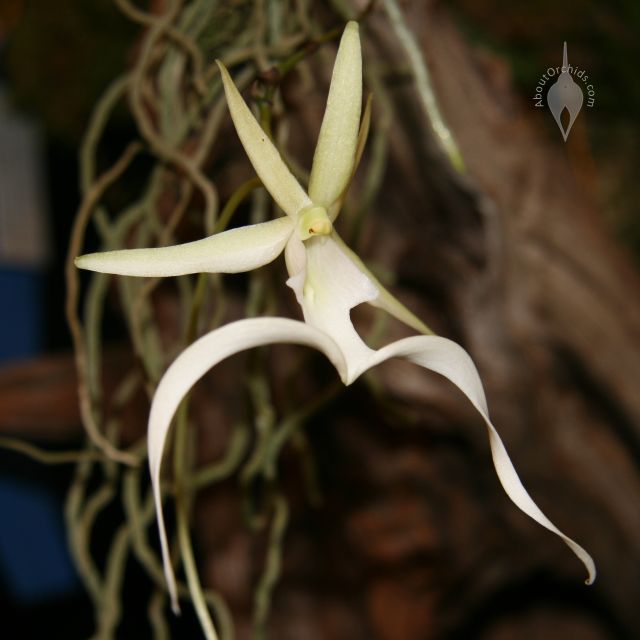
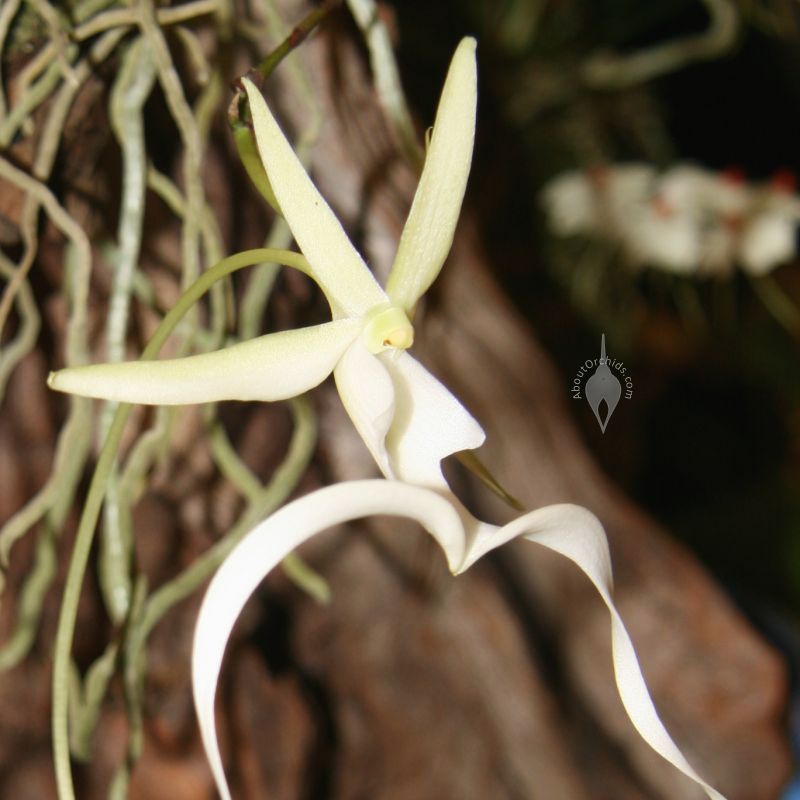
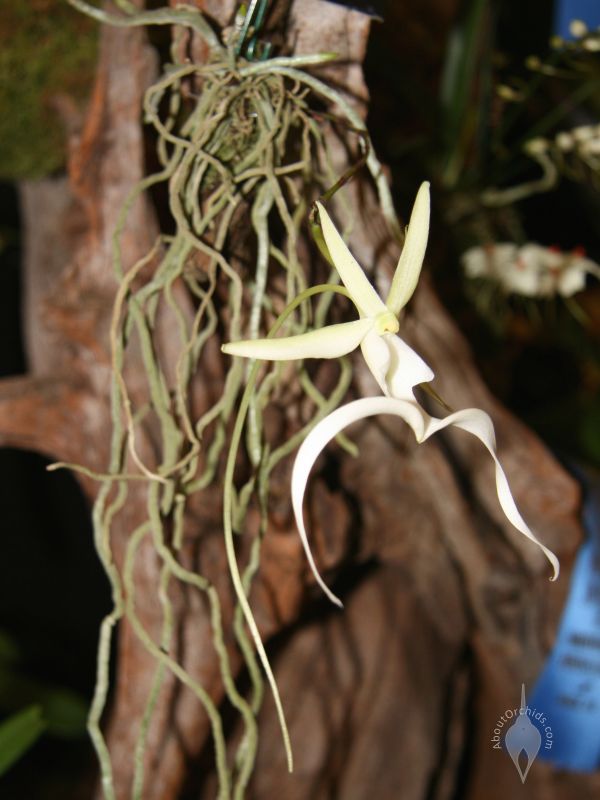
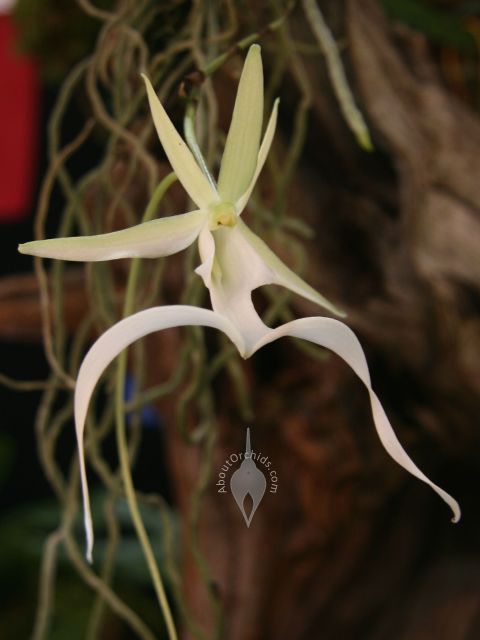
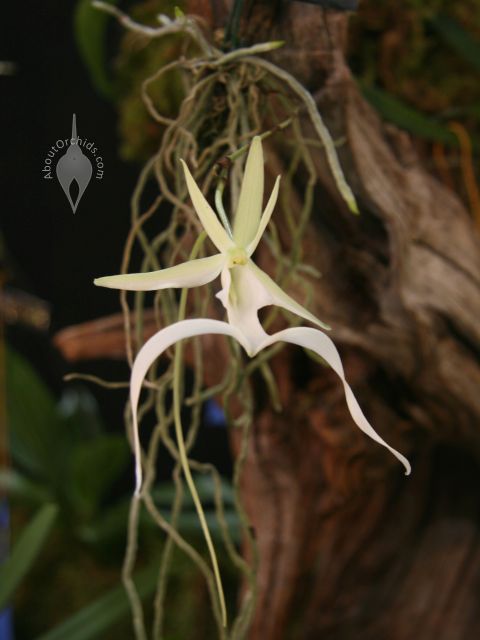
A blooming Ghost Orchid is a very rare sight, so imagine my surprise when I spotted this beautiful specimen in an ice rink. Made famous with the bestselling book The Orchid Thief and the movie Adaptation, Ghost Orchids are rare in the wild, tough to grow, and uncommon in cultivation. It’s the holy grail for orchid geeks like me. I’d never seen one in bloom at any orchid show, botanical garden, or greenhouse, so it was quite an unexpected discovery last weekend at the Orchid Society of Northwestern Pennsylvania Show in Erie.

Ghost Orchid flower with roots in backgroundGhost Orchid flower close upGhost Orchid flower with roots in background

This Ghost Orchid was part of an exhibit by Kim and Edgar Stehli of Windswept in Time Orchids. They’re located in Broadview Heights, Ohio, and can be reached by phone for sales at 440-838-5757. Ghost Orchids amaze with their stunning, fragrant white flowers and lack of leaves. They grow by using chlorophyll in their roots. Some of these photos show the greenish-white tangle of roots dangling behind the exotic flower. Ghost Orchids are native to swamps and coastal forests in South Florida, the Bahamas, and Cuba.

Ghost Orchid flower and rootsGhost Orchid flower and rootsGhost Orchid flower and roots

I’ll post more photos from Erie soon, but this remarkable bloom is my choice as the highlight of the show held in an ice rink. Even if I’m lucky enough to see another Ghost Orchid flower again, I’ll bet it won’t be so close to a Zamboni.