Posted September 30th, 2008 by Marc Cohen
Categories: Botanical Gardens, Events
Warning! If you visit an orchid show, you may leave with newly-purchased plants in hand and a giddy feeling, like you don’t know what you just got yourself into. I’m just saying.
October 3 – 5
Foothills Orchid Society Show, Triwood Community Association, 2244 Chicoutimi Dr. NW, Calgary, Alberta, Canada, 403-278-7360
October 3 – 5
Gothenberg International Orchid Show, Performance Hall at Kviberg, Gothenberg, Sweden, http://www.vsos.se/gios.htm
October 3 – 5
San Diego International Orchid Fair, Quail Botanical Gardens, 230 Quail Garden Dr., Encinitas, California, 760-943-2333
October 4 – 5
Orchid Society of Canberra Annual Spring Show, CIT Campus, Constitution Avenue, Reid, Australia
October 4 – 5
Central New York Orchid Society Show, Beaver Lake Nature Center, 8477 East Mud Lake Road, Baldwinsville, New York, 315-638-4741
October 5
Central California Orchid Society Show, Floriculture Pavilion, 1121 S. Chance Ave, Fresno, California, 559-696-7397
October 10 – 12
Honolulu Orchid Society Show, Lanakila Elementary School Cafetorium, 717 North Kuakini Street, Honolulu, Hawaii
October 11 – 12
Illinois Orchid Society Show, Chicago Botanic Garden, 1000 Lake Cook Rd, Glencoe, Illinois, 847-977-5842
October 11 – 12
Denver Orchid Society Show, Echter’s Garden Center, 9170 W. 52nd Ave, Arvada, Colorado, 303-234-9290
October 18
American Orchid Society Fall Members Meeting, Longwood Gardens, Kennett Square, Pennsylvania, 610-212-6927
October 18 – 19
Diablo View Orchid Society Show, Pleasant Hill Community Center, Pleasant Hill, California, 925-370-6131
October 18 – 19
Orchid Society of Western Pennsylvania Festival, Phipps Garden Center, 1059 Shady Ave, Pittsburgh, Pennsylvania, 412-963-9790
October 24 – 26
Coastal Carolina Orchid Society Show, Knights of Pythias Hall, 1820 Belgrade Ave., Charleston, South Carolina, 843-881-1200
October 24 – 26
Northeast Louisiana Orchid Society Show, Pecanland Mall, 4700 Millhaven Rd., Monroe, Louisiana, 318-723-4737
October 25 – 26
Eastern Canada Orchid Society Show, Days Hotel and Conference Centre, 1005 Rue Guy, Montreal, Quebec, Canada, 450-467-4795
Comments: Comments Off on October Orchid Shows
Posted September 27th, 2008 by Marc Cohen
Categories: Growing, Orchids in the Wild, Photos, Warm Growers
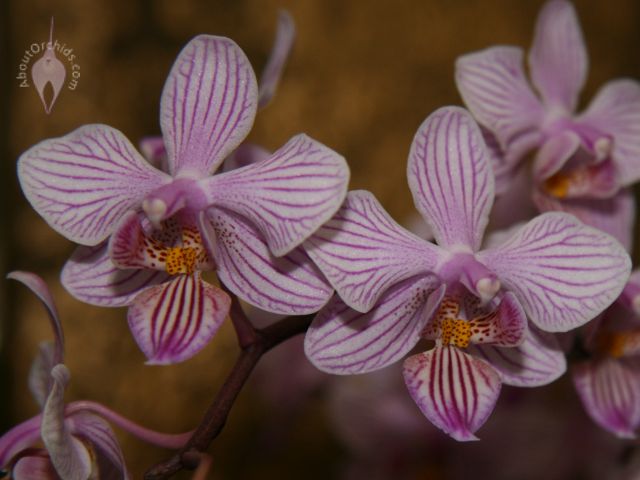
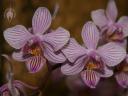
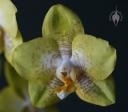
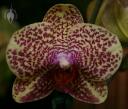
Moth orchids, or Phalaenopsis, love warm temperatures. But one trick used by orchid experts is to give Phals a few weeks of cool nights in the fall. This can trigger the Phals to start growing a flower spike within a month. Normally their nighttime minimum temperatures should be about 65 F (18 C.) By giving them a nightly drop to 60 F (16 C) for a period of 2 – 4 weeks, you can mimic natural changes in their native homes in Southeast Asia. Don’t let Phals drop below 60 F (16 C,) since that can harm them.
If you have an orchid someplace where you can’t control the temperature directly, there are a few tricks to try. If your Phal is on your office desk, place it on the floor before you punch out at the end of the day. Remember that heat rises, so the floor will be cooler than the desk. If your Phal is near a window, push it a bit closer in the evening, where it can feel some of the coolness from outdoors (this trick may not work if your windows are well insulated.) In either case, remember in the morning to move the Phal back on top of your office desk, or away from the cool window, so that it can enjoy daytime warmth. Once a flower spike starts to grow, stop giving your Phal the nightly cool treatment.
Comments: 2 Comments
Posted September 22nd, 2008 by Marc Cohen
Categories: General Gardening, Misc, Photos
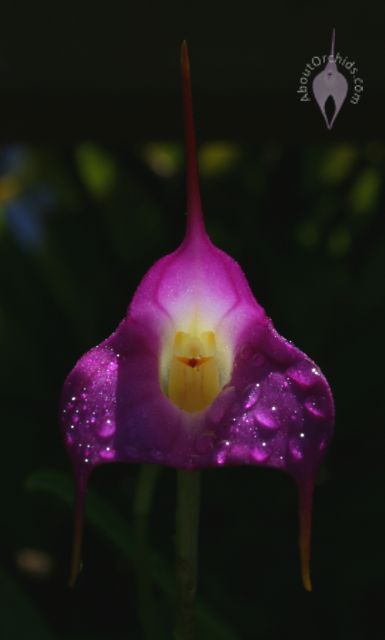
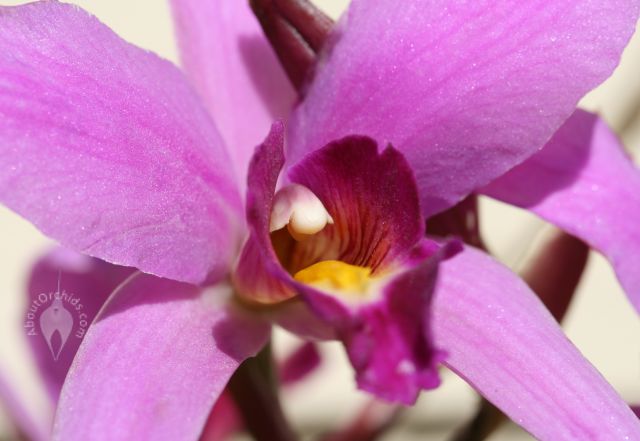
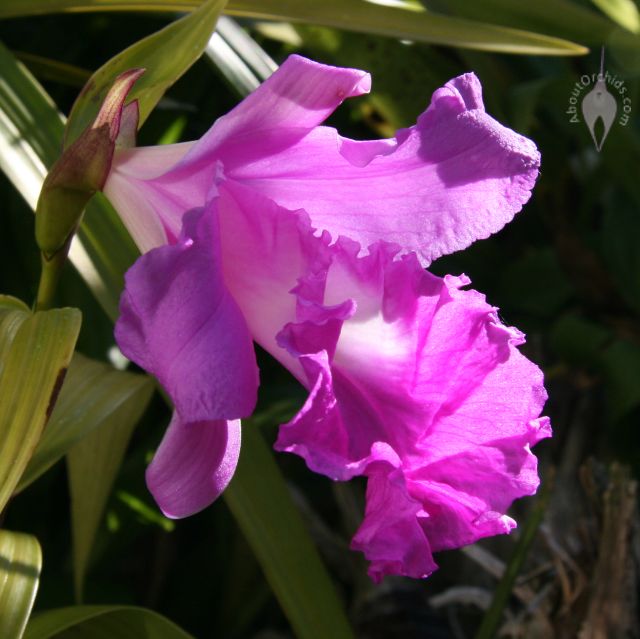
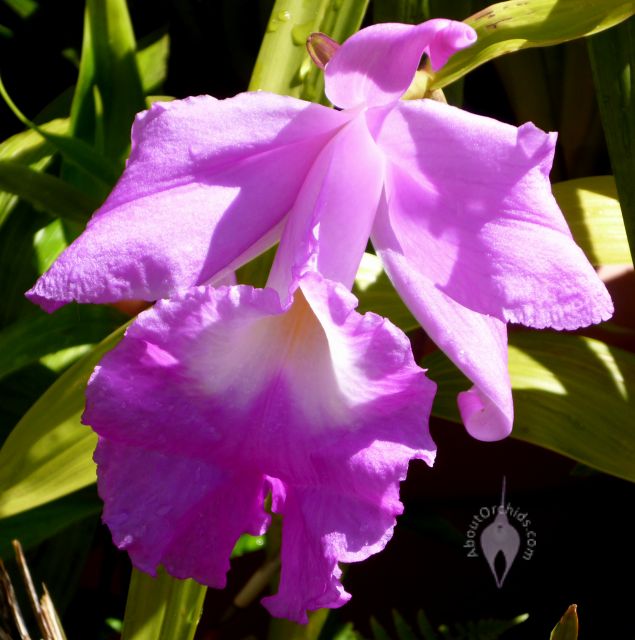
That always seems like a fun word to say — equinox. Equal day, equal night. On this day, everywhere in the world has about 12 hours of daylight and 12 hours of night. The north of the planet moves into fall, and the south of the planet into spring. No matter which direction you’re headed, feel free to enjoy some of Dave’s wonderful photography. Here are pictures of a Masdevallia and a Laelia that were both frequent bloomers for us over the summer.


With warm weather forecast for this week in San Francisco, the garden is still blooming and buzzing, and doesn’t seem to notice the calendar. But of course change is in the air, and plants respond accordingly, just as they have for millions of years. Plants from tropical regions of the world, including many orchids, undergo seasonal cycles as well. Many orchids are finishing their cycles of growth and moving towards winter dormancy. In the meantime, I’m going to enjoy the garden while the weather still permits.


Comments: Comments Off on Equinox
Posted September 19th, 2008 by Marc Cohen
Categories: Botanical Gardens, Conservation
As a regular visitor to Puerto Vallarta over the years, it’s exciting for me to learn about Vallarta Botanical Gardens. About 1/2 -hour drive south of Puerto Vallarta, the gardens were opened in 2005 in the coastal mountains of the Mexican state of Jalisco. Their mission is “the propagation, promotion, study, enjoyment and discovery of Mexican plants, especially orchids.” With more than 3000 plant species to enjoy, there are orchids, palms, ferns, bromeliads, and cactus. Among the orchids are Mexican natives such as Laelias, Sobralias, and Vanillas.
The Vallarta Botanical Garden is a non-profit organization working to fight habitat destruction, counter over-collection of native orchids, and preserve Mexico’s greatest botanical treasures. Visitors can enjoy orchid conservatories, tropical gardens, birdwatching, hiking trails, and the Plantation House Restaurant and Visitors’ Center. We’ll definitely visit on our next trip to Mexico, but for now we’ll have to just enjoy visiting online.
Comments: 2 Comments
Posted September 16th, 2008 by Marc Cohen
Categories: Growing, Mini Orchids, Photos, Warm Growers
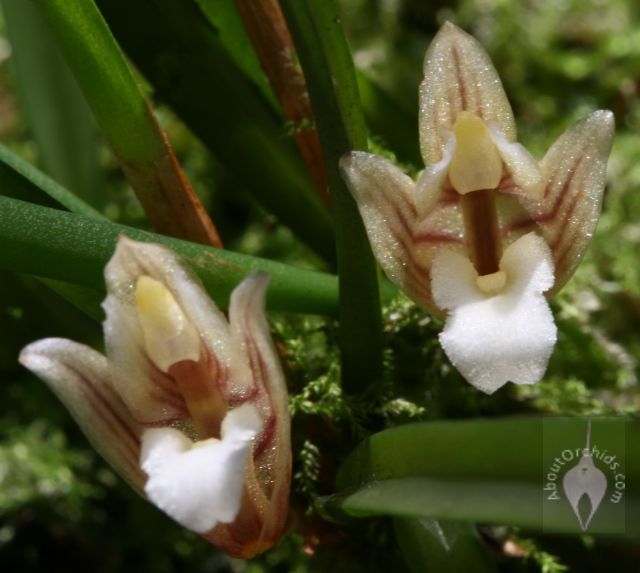
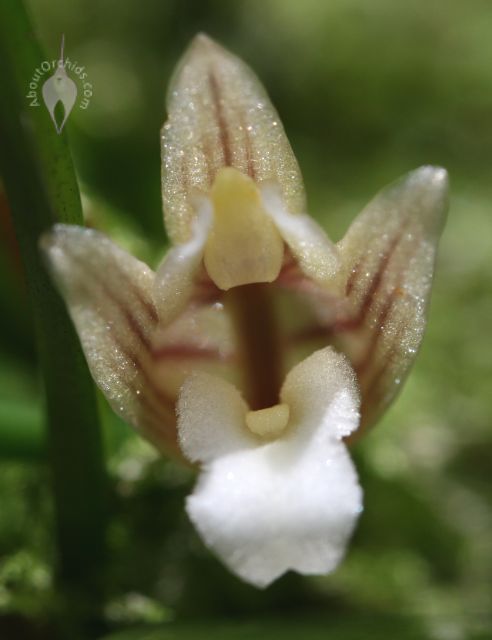
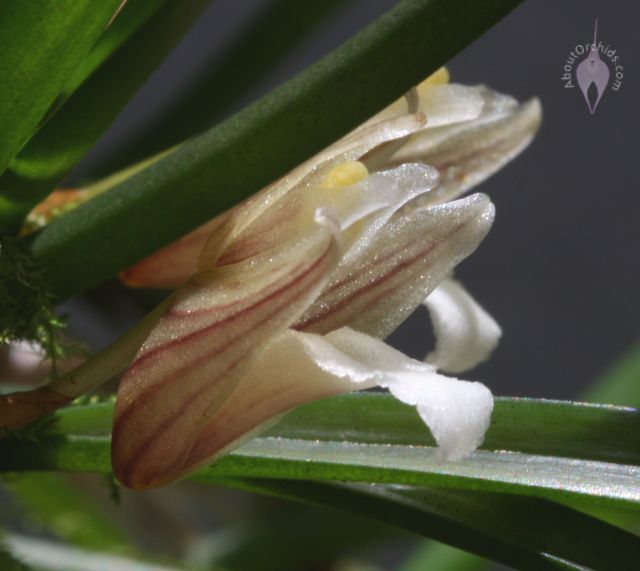
Think small for these Maxillaria uncata flowers, which are only 1/2 inch (1.2 cm) long. With reddish-purple stripes, yellow petals, and a white flower lip, these little tropical beauties appear translucent.
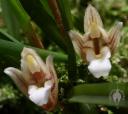
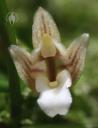
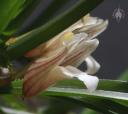
This Maxillaria species is widespread from Mexico south to Brazil and Peru, where it survives in a wide variety of conditions. It’s a tough little orchid that produces flowers for months at a time when given warm, moist conditions.
Maxillaria is pronounced “Max ill air ee ah,” sounds like “Max’ll carry ya” without the “c.”
Comments: 2 Comments
Posted September 13th, 2008 by Marc Cohen
Categories: Dormancy, Fertilizing, Warm Growers, Watering
Orchid care changes with the seasons. As fall approaches, it’s time to adjust water, fertilizer, light, and temperature.
If warm growing orchids have been kept outside for the summer, it’s time to bring them indoors. Phals, Cattleyas, and Vandas should be checked for pests, and then brought inside before nighttime temperature become too cold.
Orchids that go through winter dormancy, such as Dendrobiums, Cattleyas, and Odontoglossums, need slightly less water and fertilizer in the fall.
Day length shortens and the sun drops lower in the sky in the fall. Many orchids enjoy being moved into brighter light to compensate for a weaker sun. Slowly transition plants into brighter light over several weeks.
Here in San Francisco, we usually have warm weather through September and early October. I’ll spend the next few weeks paying attention to weather forecasts, especially nighttime lows, to decide when to start bringing plants indoors. In the meantime, I need to figure out how I’m going to find room for them inside. Let’s see, which is easier, housecleaning or buying more shelves?
Comments: Comments Off on Preparing for Fall
Posted September 9th, 2008 by Marc Cohen
Categories: Fertilizing, Fragrant Orchids, Intermediate Growers, Orchids in the Wild, Watering
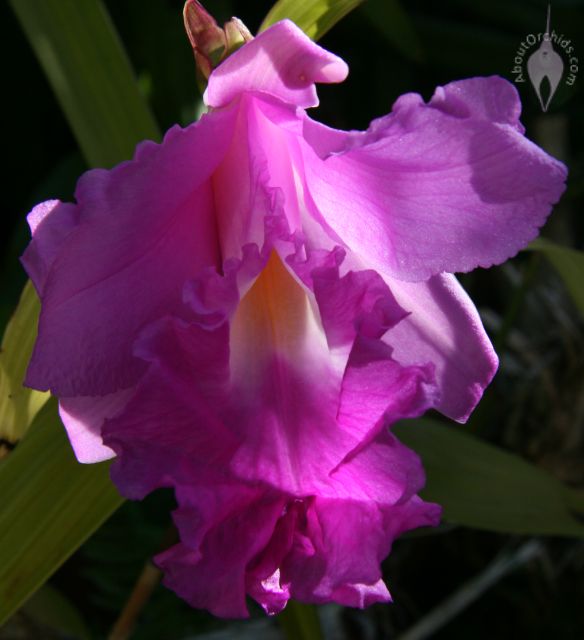
The title pretty much says it all. The scientific name of this orchid, Sobralia macrantha, translates as “big flower,” and it doesn’t disappoint. This easy-to-grow orchid puts on a great show with flowers that can be as large as 6-10 inches (15-25 cm.) It’s native to a variety of habitats from Mexico to Costa Rica, where it lives at elevations as high as 11,000 feet (3400 m.) That helps explain why it can tolerate a wide range of temperatures.

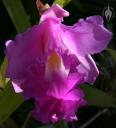
The flowers are reminiscent of Cattleyas, but the similarities end there. Unlike Cattleyas, this Sobralia likes very heavy water and fertilizer, and doesn’t mind cold temperatures.
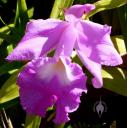
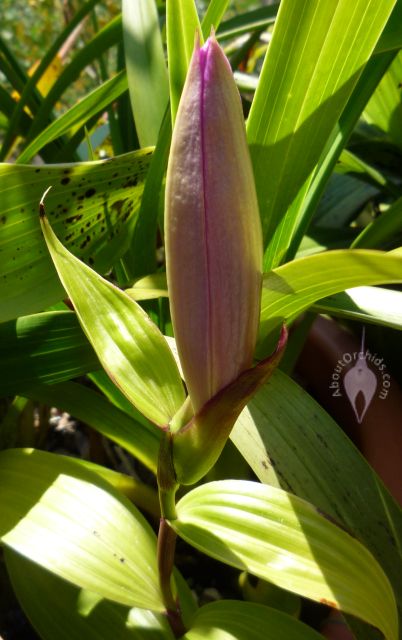
Although the flowers only last a few days, these orchids are frequent bloomers. The photo below shows a flower bud ready to open.

Comments: 3 Comments
Posted September 4th, 2008 by Marc Cohen
Categories: General Gardening, Photos
Since Labor Day seems to make everybody fret over summer’s impending end, I’ll offer that there are still a few weeks of summer on the calendar, so seize the day. Here in San Francisco, the weather has warmed up, and the garden is full of life. So if your blooms are fading, please enjoy some of ours.
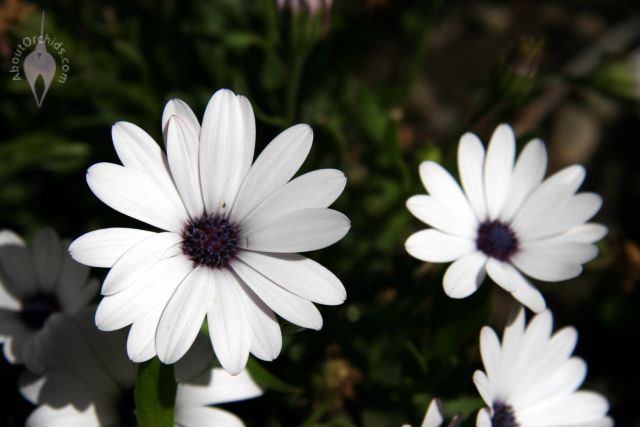
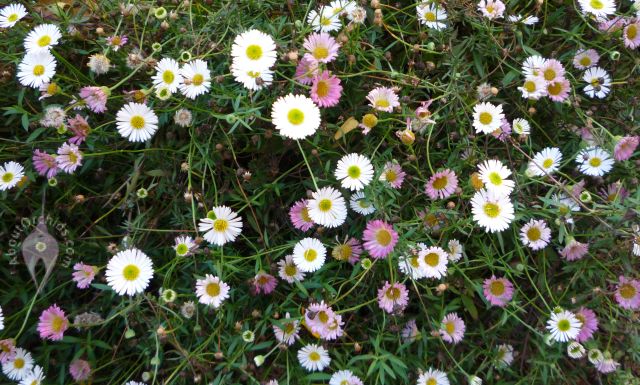
The dainty flowers on these Santa Barbara Daisies (also called Mexican Daisies, scientific name Erigeron karvinskianus) bely the toughness of the plant. I planted one of these years ago, and its seeds spread so that we’ve had plenty in the garden ever since. The young flowers start with pink petals that fade to white as they open, and the plants stay in bloom all year long.

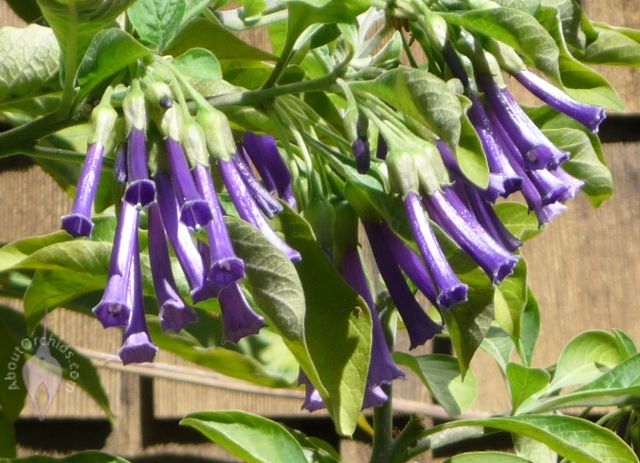
Tubular purple flowers hanging from an Iochroma cyaneum shrub are hummingbird favorites.

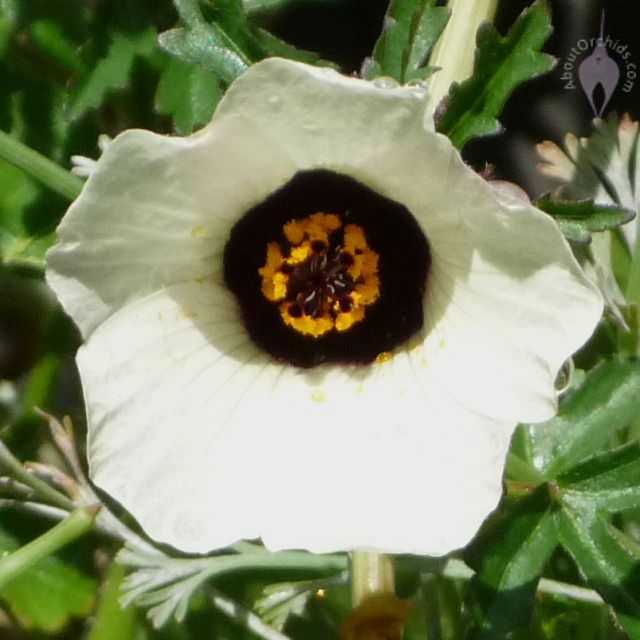
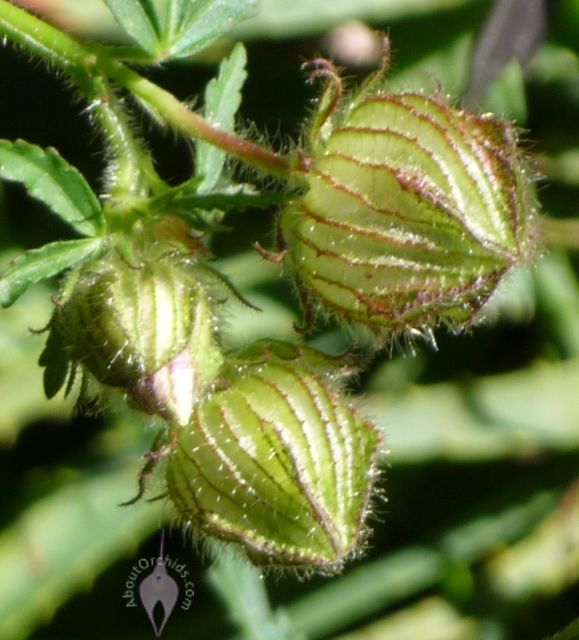
Hibiscus trionum is a Mediterranean native, making it perfectly suited for the California coast. Some consider it an invasive weed, but I enjoy its white flowers with dark centers. The translucent flower buds have their own charm also, looking like small glass lanterns.


Quite a few orchids are coming into bloom with the warm weather, so I’ll definitely have more pictures to share soon.
Comments: 2 Comments
Posted August 30th, 2008 by Marc Cohen
Categories: Botanical Gardens, Events
This list is just a small sampling of orchid shows taking place all over the world in September. If you’ve never been to a show before, prepare yourself for a jaw-dropping experience. Besides seeing lots of amazing flowers, you’ll have the opportunity to learn a lot about orchid care from experts and experienced growers.
September 6 – September 7
Greater Cincinnati and Miami Valley Orchid Societies/MAOC Show, Kings Island Resort Park, 5691 Kings Island Drive, Mason, Ohio, 513-265-2074
September 11 – September 14
Associacao Orquidofila de Sao Paulo Show, Sociedade Brasileira de Cultura Japonesa, Rua Sao Joaquim 381, Liberdade, Sao Paulo, Brazil, 55-11-3207-5703
September 13 – September 14
Sacramento Orchid Forum Show, Shepard Garden and Art Center, 3330 McKinley Blvd., Sacramento, California, 916-455-4292
September 19 – September 21
New Zealand Orchid Society 60th Anniversary Spring Show, Mt. Albert War Memorial Hall, New North Rd., Mt. Albert, Auckland, New Zealand
September 20 – September 21
Wisconsin Orchid Society Show, Mitchell Park Domes, 924 S. Layton Blvd., Milwaukee, Wisconsin, 414-672-6446
September 26 – September 29
Western Australia Orchid Spectacular and Conference 2008, Belmont Oasis Leisure Centre, Abernethy Rd. and Alexander St., Belmont, Western Australia
September 27 – September 28
Central Ontario Orchid Society Show, Cambridge Hespler Arena, 640 Ellis Rd, Cambridge, Ontario, Canada, 519-745-3815
September 27 – September 28
Ridge Orchid Society Show, 2240 Banana Rd, Lakeland, Florida
September 27 – September 28
South Bay Orchid Society Show, South Coast Botanic Garden, 26300 Crenshaw Blvd., Palos Verdes Peninsula, California, 310-833-1918
Comments: 3 Comments
Posted August 27th, 2008 by Marc Cohen
Categories: Dormancy, Misc, Orchids in the Wild, Photos
It’s pronounced like “epic fight” without the “c,” and it means “air plant.” Rather than growing in soil, epiphytic plants grow with their roots attached to tree branches and tree trunks. Many orchids, ferns, bromeliads, and mosses grow as air plants, taking advantage of brighter light above the shaded forest floor.
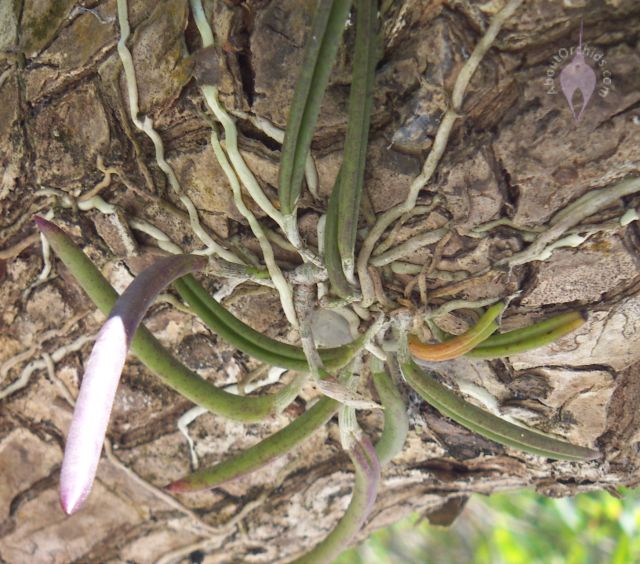
Firmly attached to a tree branch in a Costa Rican jungle, a Brassavola nodosa orchid, a relative of Cattleyas, grows as an epiphyte. It only uses the tree for support, and is not a parasite, so it does not harm the host tree. The orchid’s roots are exposed to the elements, but they can withstand strong storms and high winds.
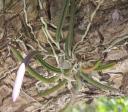
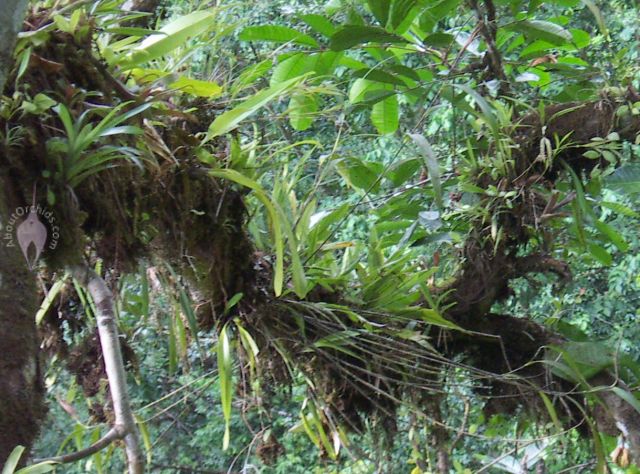
A variety of orchids, mosses, and bromeliads live as epiphytes, crowded on a curved branch high above the ground. Here in a jungle near the Pacific coast of Costa Rica, constant high humidity provides moisture, even when there is little rain in the dormant season.

In the home or office, epiphytic orchids are grown with their roots in bark or moss, which simulates humid rainforest conditions.
Comments: 1 Comment