An ‘Orchid Thief’ Sequel in Coral Gables

Posted August 3rd, 2020 by Marc Cohen
Categories: In the News, Misc

Chalk this one up to the fact that some orchid lovers behave poorly. The Miami Herald reports on orchid thefts in Coral Gables. Somebody stole $4,000 worth of orchids that residents had attached to trees. Several years ago, a few people started planting Moth Orchids and Dendrobiums to beautify their neighborhood. They were stolen in early June, so locals invested thousands of dollars to replace them. This time, they hung them higher in the trees to discourage theft. The culprit returned and stole them again, anyway. Fortunately, the crook was arrested after being caught on surveillance video. It doesn’t involve the high drama and endangered species of the bestselling book The Orchid Thief, or subsequent movie Adaptation, but it’s another reminder that not all orchid lovers are well behaved.

Taiwan’s Conservationists Trying to Save Its Orchid Species

Posted July 28th, 2020 by Marc Cohen
Categories: Conservation, In the News, Warm Growers

Taiwan is trying to save its native Moth Orchids. The tropical island nation has two Moth Orchid species, Phalaenopsis aphrodite, with white flowers, and Phalaenopsis equestris, with pink or red flowers. Taiwan also has one of the biggest orchid industries in the world. The mass-grown hybrids which begin life in Taiwanese greenhouses are sold around the globe. Unfortunately, indigenous species in the wild have been “mercilessly picked” and over-collected, and they’re close to extinction. “Bringing Moth Orchids Back Home” is a conservation program launched by the Dr. Cecilia Koo Botanic Conservation Center. Scientists there are hoping to use their plant expertise to rescue the endangered species. Their goal is to grow enough of them to replenish wild populations, and also meet commercial demands.

Summer Orchid Blooms

Posted July 22nd, 2020 by Marc Cohen
Categories: Cool Growers, Fragrant Orchids, Mini Orchids, Photos

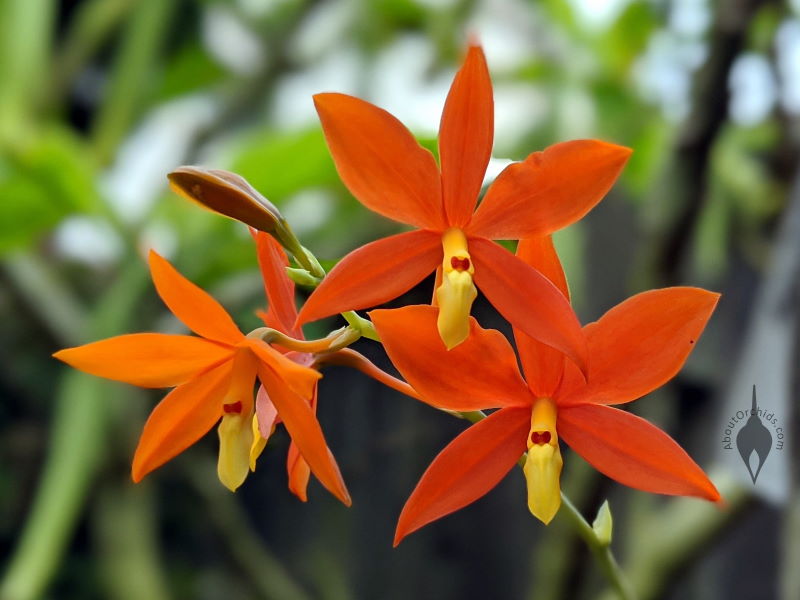
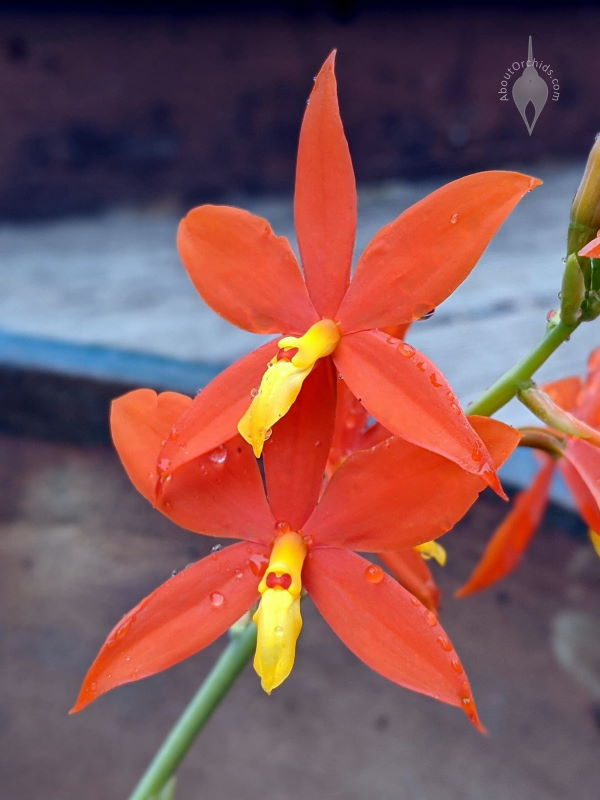
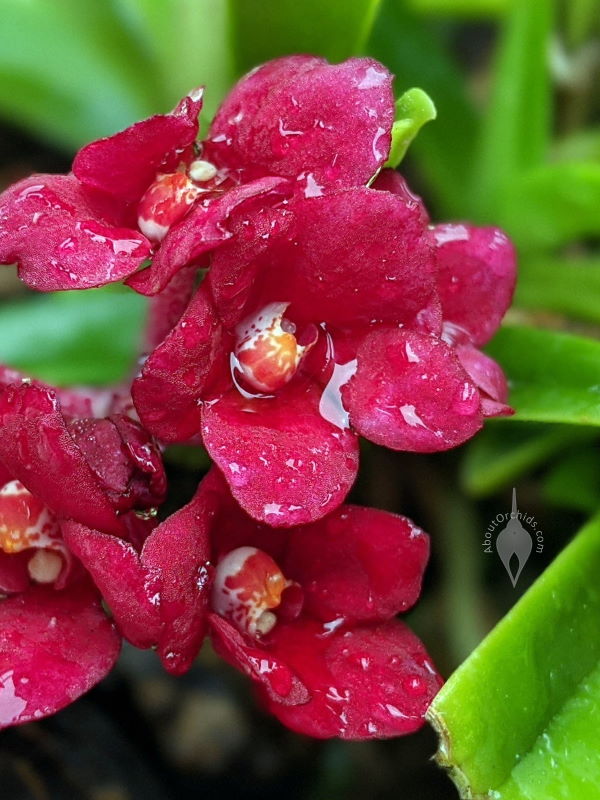
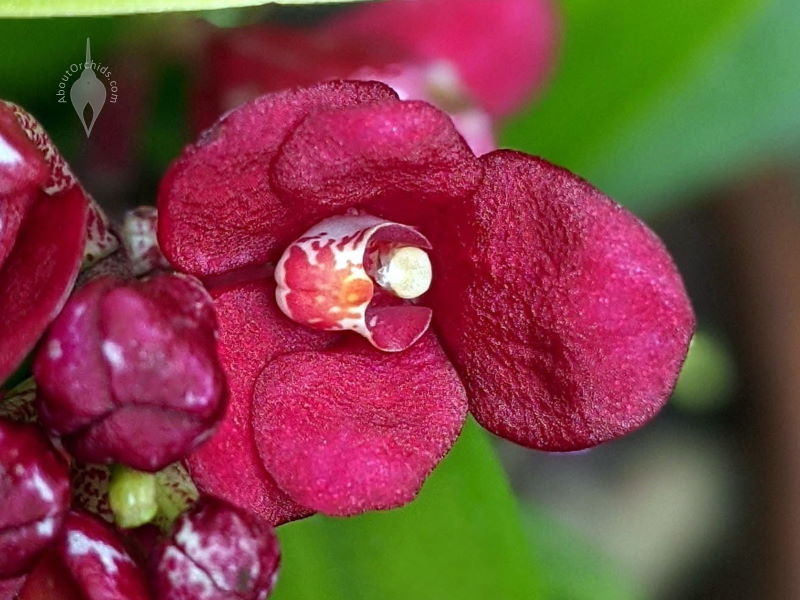
Sarcochilus Kulnura Spice x Fairy, orchid hybrid flowers, red flowers, miniature orchid, Australian orchid, grown outdoors in Pacifica, CaliforniaSarcochilus Kulnura Spice x Fairy, orchid hybrid flowers, red flowers with water drops, miniature orchid, Australian orchid, grown outdoors in Pacifica, CaliforniaSarcochilus Kulnura Spice x Fairy, orchid hybrid flower, red flower, miniature orchid, Australian orchid, grown outdoors in Pacifica, California

Summer brings plenty of blooms, including these four orchids which live outside in our back garden. In the first row of photos, there’s a mini Sarcochilus hybrid with deep red flowers. Hybrids like these have been popular in Australia for years, and lately I’ve been seeing more of them available in the USA. It’s less vigorous than Sarcochilus hartmannii, which is in its ancestry. I suspect it’s not as fond of our windy, coastal climate as that species.

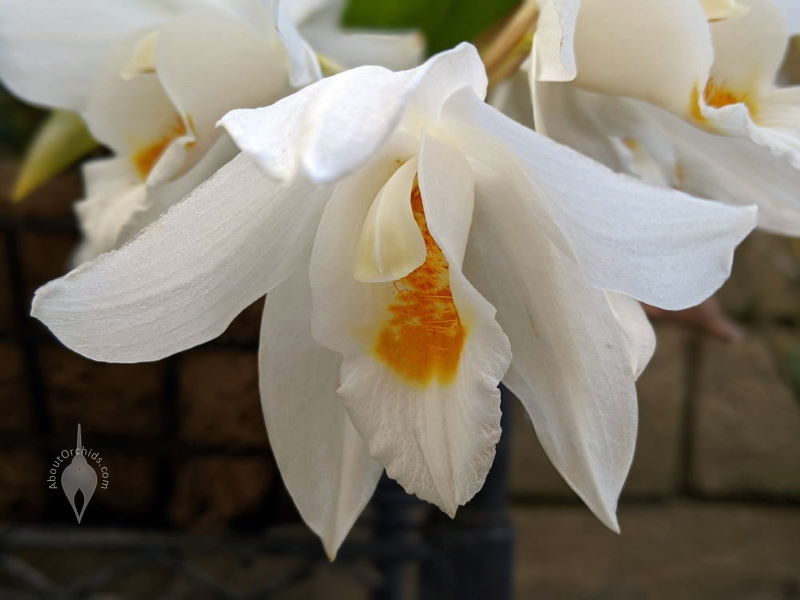
Coelogyne mooreana, orchid species flower, white and yellow flower, grown outdoors in Pacifica, CaliforniaCoelogyne mooreana, orchid species flowers, white and yellow flowers, grown outdoors in Pacifica, CaliforniaCoelogyne mooreana, orchid species flower and bud, white and yellow flower, grown outdoors in Pacifica, California

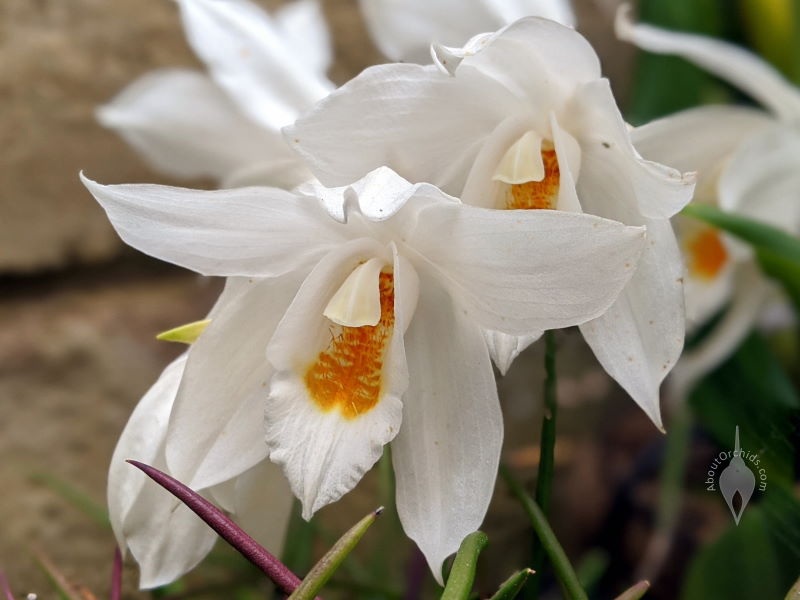
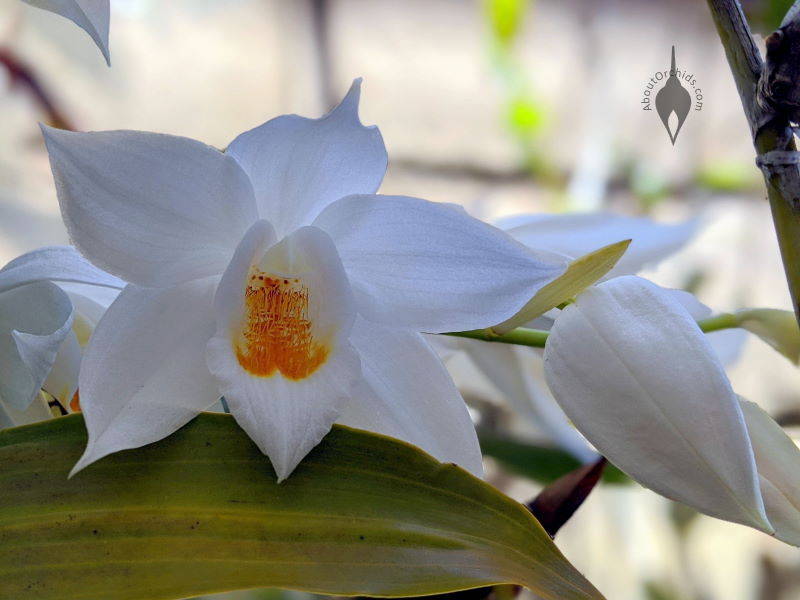
The second row of photos shows an elegant, fragrant Coelogyne species. Coelogyne mooreana blooms like crazy for me every year. It’s already been flowering for two months, and more fresh buds continue to open. Native to the mountains of Vietnam, it has a light, pleasant scent.

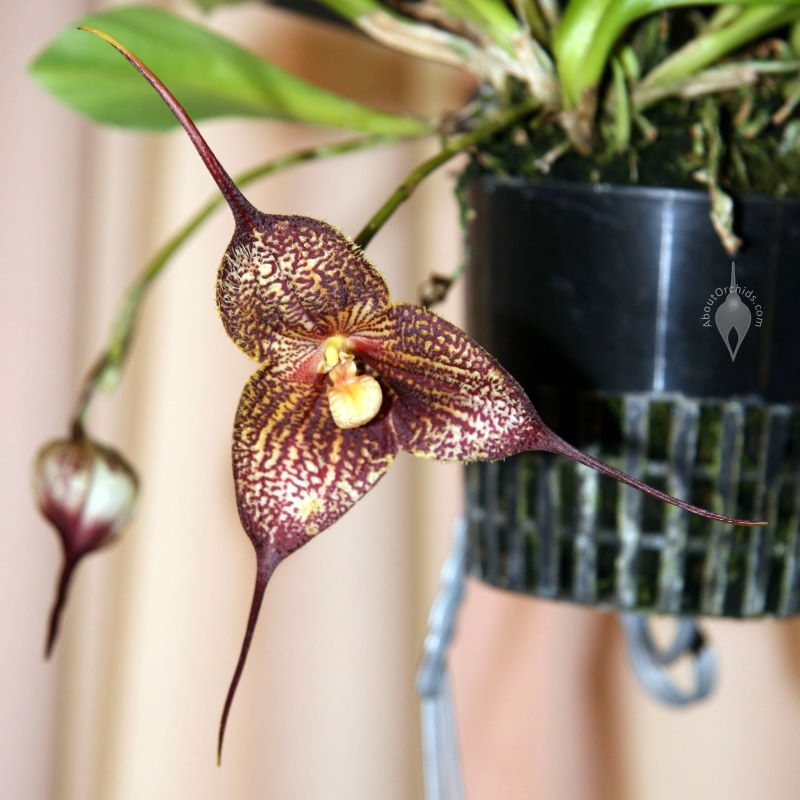
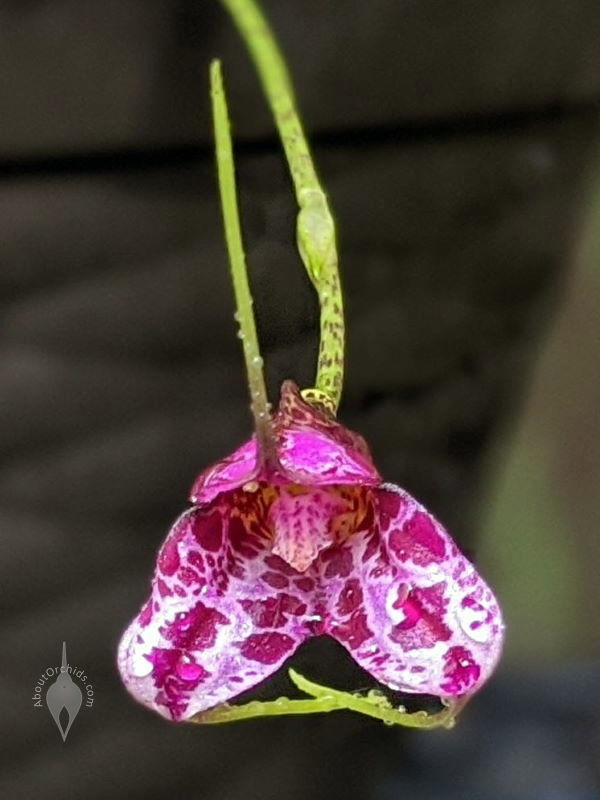
Masdevallia chaparensis, orchid species flower, pleurothallid, grown outdoors in Pacifica, CaliforniaMasdevallia chaparensis, orchid species flower with water drops, pleurothallid, grown outdoors in Pacifica, CaliforniaMasdevallia chaparensis, orchid species flower with water drops, pleurothallid, grown outdoors in Pacifica, California

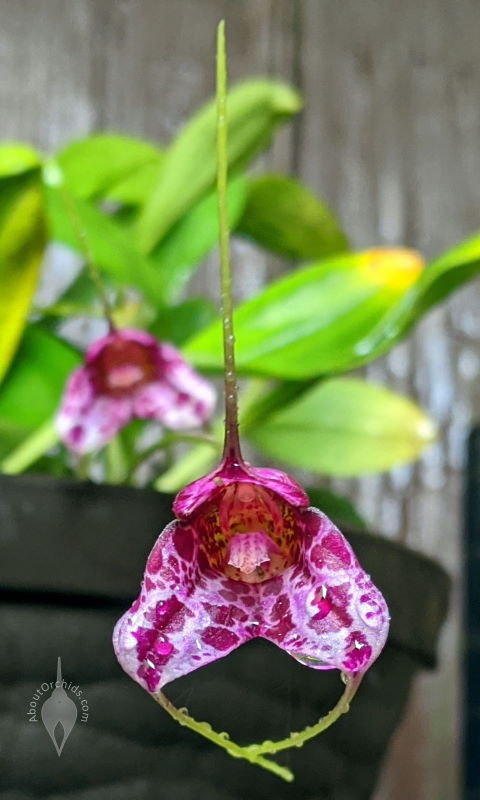
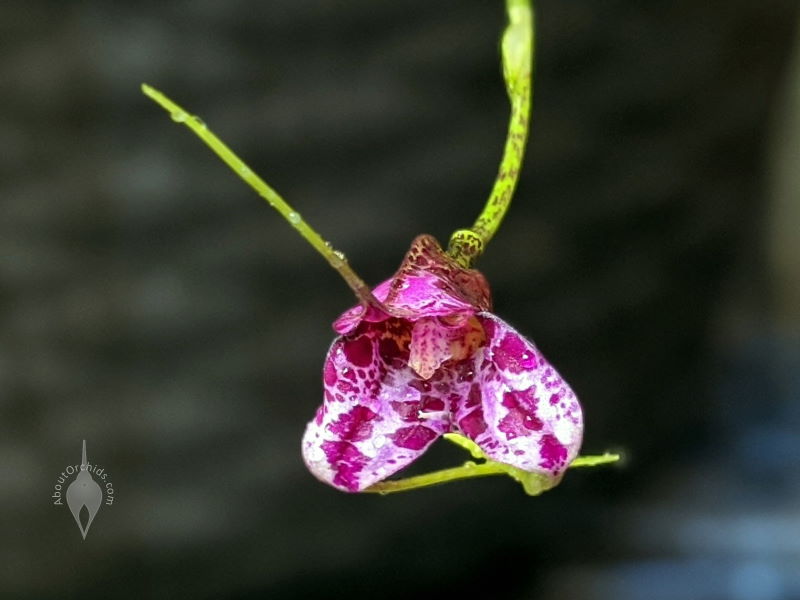
If jaguars had purple spots, they’d be a perfect match for Masdevallia chaparensis in the third row. This species is indigenous to a single valley in Bolivia. This plant was happier when we lived in a warmer area of San Francisco, but it still reliably flowers every year in Pacifica.

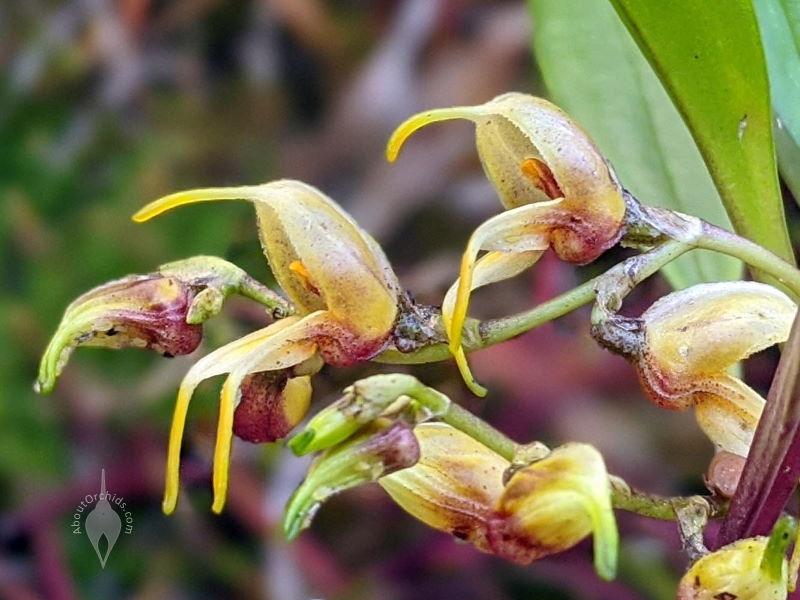
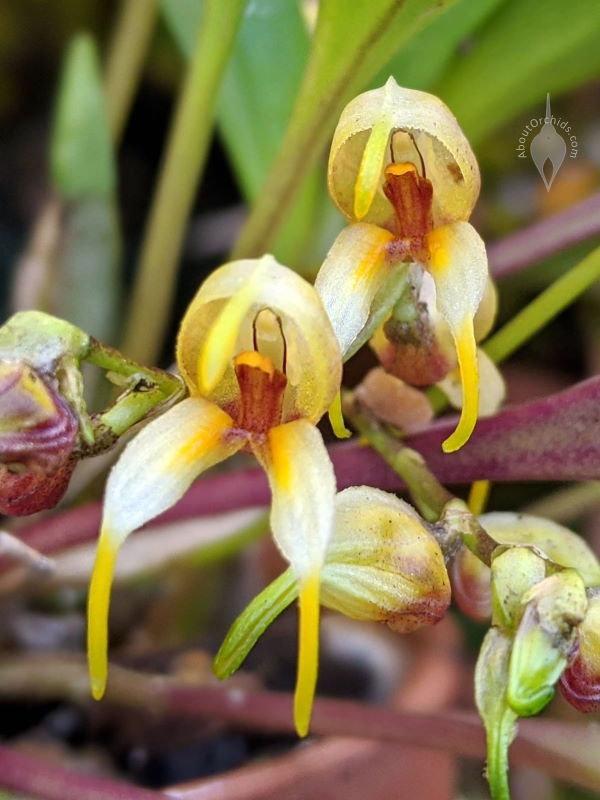
Masdevallia polysticta, orchid species flowers, pleurothallid, miniature orchid, grown outdoors in Pacifica, CaliforniaMasdevallia polysticta, orchid species flowers, pleurothallid, miniature orchid, grown outdoors in Pacifica, CaliforniaMasdevallia polysticta, orchid species flowers, pleurothallid, miniature orchid, grown outdoors in Pacifica, California

The last three pictures show the yellow form of a mini Masdevallia species, Masdevallia polysticta. It’s not the showiest pleurothallid, but its little flowers have charm. Native to the Andes in Ecuador and Peru, it enjoys cool temps and foggy weather like the other orchids in this post.
Scientists Warn That Traders and Traffickers Are Winning the Orchid Battle

Posted July 15th, 2020 by Marc Cohen
Categories: Conservation, In the News

Orchids sell by the billions, and 99% of known sales are legal. They’re usually human-made hybrids, not wild plants. But there’s also a vast illegal trade in wild orchids. The buyers include unscrupulous orchid collectors whose demand can cause extinctions. Newly discovered species can be quickly stripped from the wild. Scientists often find new varieties by spotting them in local markets, already for sale before being identified. It’s likely that many species go extinct before they’re named. Even worse, it’s not just a problem for ornamental orchids. Some types are collected to be eaten, while others are used in traditional medicines. Around the globe, traders and traffickers are beating scientists and conservationists, and orchids are disappearing. Experts are raising the alarm, and taking steps like hiding locations of new discoveries. Orchid lovers can help by supporting conservation groups, like the American Orchid Society, Orchid Conservation Alliance, and other charities. Also, never take orchids from the wild, nor buy from those who harvest wild plants. Ask if you’re not sure, and help win the orchid battle.

Thunia Orchids Grow Fast and Tall

Posted July 9th, 2020 by Marc Cohen
Categories: Dormancy, Fertilizing, Fragrant Orchids, Growing, Intermediate Growers, Photos, Watering

Thunia alba, orchid species flowers, white and yellow flowers, grown indoors/outdoors in Pacifica, CaliforniaThunia alba, orchid species flower, white and yellow flower, grown indoors/outdoors in Pacifica, CaliforniaThunia alba, orchid species flowers, white and yellow flowers, grown indoors/outdoors in Pacifica, California

Thunia alba, orchid species flowers and leaves, white and yellow flowers, grown indoors/outdoors in Pacifica, CaliforniaThunia alba, orchid species flower, white and yellow flower hanging down, grown indoors/outdoors in Pacifica, CaliforniaThunia alba, orchid species flower, white and yellow flower, close up of flower lip, grown indoors/outdoors in Pacifica, California

Thunia flowers may resemble Cattleyas, but they are very different orchids. Thunias grow tall canes that look like cornstalks, and their 5 inch (12.7 cm) blooms hang in clusters from the tops. They may be the fastest growing orchids. New canes can reach up to 4 feet (1.2 m) tall in only a few months.

Thunia alba, orchid species flower, white and yellow flower, close up of flower lip, grown indoors/outdoors in Pacifica, CaliforniaThunia alba, orchid species flowers and leaves, white and yellow flowers, grown indoors/outdoors in Pacifica, CaliforniaThunia alba, orchid species flower, white and yellow flower, grown indoors/outdoors in Pacifica, California

Thunia alba, orchid species flowers and leaves, white and yellow flowers, grown indoors/outdoors in San Francisco, CaliforniaThunia alba, orchid species flowers and leaves, white and yellow flowers, grown indoors/outdoors in San Francisco, CaliforniaThunia alba, orchid species flower, buds, and leaves, white and yellow flowers, grown indoors/outdoors in San Francisco, California

These terrestrials are native to the slopes of the Himalayas. Their flowers hang down, don’t open widely, and only last a few weeks, but still put on an impressive show. In winter, Thunias drop their leaves and go dormant. In spring, new canes emerge from the bases of old ones. The year-old canes stay green, but don’t grow or bloom. They provide energy for the fresh growth, and should be kept until the following year, when they dry up completely.

Thunia alba, orchid species flower, white and yellow flower, grown indoors/outdoors in Pacifica, CaliforniaThunia alba, orchid species leaves, short young plant resembling corn or bamboo plant, grown indoors/outdoors in San Francisco, CaliforniaThunia Gattonensis, orchid hybrid flower, Orchids in the Park 2017, Golden Gate Park, San Francisco, California

The middle photo in the last row shows a short, young Thunia resembling a cornstalk or bamboo. In order to bloom, new Thunia growth needs full sun in the spring. Too much water can rot the small leaves, so keep humidity high, but water very lightly. When they reach 6 inches (15 cm) tall, plants should moved into shade, watered regularly, and fertilized. As leaves yellow and drop in autumn, reduce water and fertilizer to a minimum. I keep mine cool and dry in winter, watering as seldom as once a month to keep the stalks from shriveling. These pictures feature the Thunia alba plant which I’ve had for many years, except for the final photo, which shows a hybrid relative, Thunia Gattonensis, at an orchid show. If you can manage their large size and care demands, these tall orchids are well worth it.

Orchid Species, Lost and Found

Posted July 3rd, 2020 by Marc Cohen
Categories: Conservation, In the News

Orchids come and go. Scientists frequently find new orchids, and also raise warnings about orchid extinctions. Recent finds include two new Aerides from the Philippines, and a natural Laelia hybrid from Oaxaca, Mexico (article in Spanish.)

In the Philippines, Aerides turma and Aerides turma forma anniversarius are two more orchid species to add to that country’s “luxuriant mega-biodiversity.” One of their discoverers, Dr. Miguel De Leon from the Cootes Orchid Research Group, describes them as “the living jewels of the Archipelago.”

In southern Mexico, Laelia × tlaxiacoensis has been scientifically described as a natural hybrid between Laelia albida and Laelia furfuracea. Although most orchid hybrids are human creations, there are naturally occurring ones, too. Studies of this orchid include examining its trade in markets of the city of Tlaxiaco, and its medicinal uses in local communities.

Bangladesh has been losing orchids. Habitat destruction and the illegal plant trade have resulted in the disappearance of 32 orchid varieties. Some haven’t been seen in the tropical country for over a century. Researchers point out that Bangladesh’s problems mirror what’s happening around the world. They’re now assessing the nation’s 155 remaining orchid species to help prevent any more biodiversity loss.

The Deceptive Ways of the Calypso Orchid

Posted June 27th, 2020 by Marc Cohen
Categories: Cool Growers, Fragrant Orchids, In the News, Mini Orchids, Orchids in the Wild, Photos

In Defense of Plants exposes The Deceptive Ways of the Calypso Orchid. This dainty, charming species grows in northern forests of North America, Europe, and Asia, where it’s pollinated by bumblebees. The bees are attracted by the orchid’s sweet fragrance, yellow hairs on the flower lip which mimic pollen, and nectar spurs. But the yellow hairs have no pollen, and the nectar spurs are empty. Disappointed, the bees quickly learn not to waste time at these blooms. That means Calypsos need naive bees which haven’t been tricked before. And, these insects must be slow learners to get fooled twice: once to pick up pollen, and again to deposit it on another flower. With the Calypso Orchid’s deceptions, it’s a complicated relationship.

Calypso bulbosa, Fairy Slipper flower, North American native orchid species, miniature orchid, growing wild in Southwestern ColoradoCalypso bulbosa, Fairy Slipper flower, North American native orchid species, miniature orchid, growing wild in Southwestern ColoradoCalypso bulbosa var. americana, Fairy Slipper flower, North American native orchid species, miniature orchid, growing wild in Montezuma County, southwestern Colorado, Four Corners region

The photos above show Calypso Orchids growing wild in the mountains of southwest Colorado.

Summer Solstice Orchids

Posted June 20th, 2020 by Marc Cohen
Categories: Cool Growers, Photos

Masdevallia Charisma 'Pink Glow' AM/AOS x Masd uniflora 'Cow Hollow' HCC/AOSMasdevallia Royal Monarch 'Golden Glow' AM/AOS, orchid hybrid flower, yellow flower, pleurothallid, Pacific Orchid Expo 2015, San Francisco, CaliforniaMasdevallia Jaime Posada 'Patriarch' AM/AOS, orchid hybrid flower, pleurothallid, Pacific Orchid Expo 2020, San Francisco, California

Here on the Northern California coast, summers are often cool and foggy. Right on schedule for today’s summer solstice, we were greeted this morning by a heavy fog bank. It’s the perfect weather for Dave’s and my favorite orchids, Masdevallias, which live in high mountain cloud forests. These tropical, triangular beauties feature stunningly brilliant colors. The first photo in this post comes from my garden; the rest are from orchid shows. Have a happy, healthy, and peaceful solstice.

Masdevallia Mandarin Gold 'Orange Crush' HCC/AOS, orchid hybrid flowers, orange flowers, pleurothallid, Pacific Orchid Expo 2020, San Francisco, CaliforniaMasdevallia orchid flowers, pleurothallid, Pacific Orchid Expo 2017, San Francisco, CaliforniaMasdevallia rosea, orchid species flowers, pink and orange flowers, Pacific Orchid Expo 2016, San Francisco, California

Masdevallia Catherine West 'Natasha', orchid hybrid flower, pleurothallid, Pacific Orchid Expo 2020, San Francisco, CaliforniaMasdevallia caudata, orchid species flower, Pacific Orchid Expo 2016, San Francisco, CaliforniaMasdevallia MacInnes Golden Heart 'Isis', orchid hybrid flower, yellow flower, pleurothallid, Pacific Orchid Expo 2017, San Francisco, California

Angraecums, the Shining Stars of the Orchid World

Posted June 17th, 2020 by Marc Cohen
Categories: Conservation, Fragrant Orchids, Growing, Intermediate Growers, Photos, Warm Growers

Angraecum sesquipedale, Darwin's Orchid, Christmas Orchid, Star of Bethlehem Orchid, white orchid species flowers, Angraecoid, fragrant flowers, Hawaii Tropical Botanical Garden, Papaikou, Hawaii Island, Big IslandAngraecum sesquipedale, Darwin's Orchid, Christmas Orchid, Star of Bethlehem Orchid, white orchid species flower, Angraecoid, fragrant flowers, Hawaii Tropical Botanical Garden, Papaikou, Hawaii Island, Big IslandAngraecum sesquipedale, Darwin's Orchid, Christmas Orchid, Star of Bethlehem Orchid, white orchid species flowers with long nectar spurs, Angraecoid, fragrant flowers, Pacific Orchid Expo 2016, San Francisco, California

Sparkling white flowers make Angraecums look like shining stars. This fascinating genus is native to Madagascar, tropical Africa, and islands in the Indian Ocean. They are sometimes called Comet Orchids, because thin nectar tubes hanging from the backs of their flowers inspire thoughts of comet tails. The most famous is Darwin’s Orchid, Angraecum sesquipedale. It’s shown in the first row of photos, and also called the Star of Bethlehem Orchid. Its large, tropical blooms inspired Charles Darwin to predict that a moth with a 12 inch (30 cm) tongue lived hidden in Madagascar’s jungles. This insect species would be able to reach nectar at the bottom of the long nectar spurs, pollinating the flowers in the process. The famous scientist was ridiculed at the time, but the moth was discovered decades later, helping to confirm his ideas about evolution.

Angraecum germinyanum, orchid species flowers, Angraecoid, white fragrant flowers with curvy petals, Orchid Society of California Show, Oakland Orchid Show 2010, Oakland, CaliforniaAngraecum germinyanum, orchid species flower, Angraecoid, white fragrant flowers with curvy petals, Pacific Orchid Expo 2011, San Francisco, CaliforniaAngraecum magdalenae, orchid species flowers, Angraecoid, white fragrant flowers, Orchid in the Park 2016, San Francisco, California

Angraecum florulentum, orchid species flowers and leaves, Angraecoid, white fragrant flowers with long nectar spurs, grown indoors in San Francisco, CaliforniaAngraecum equitans, orchid species flowers, Angraecoid, white fragrant flowers with nectar spurs, Pacific Orchid Expo 2013, San Francisco, CaliforniaAngraecum didieri, orchid species flower, Angraecoid, white fragrant flower with nectar spur, Pacific Orchid Expo 2011, San Francisco, California

There are over 220 Angraecum species and a growing list of hybrids. Sadly, most species are highly endangered and at risk of extinction. Habitat destruction, climate change, and theft of wild plants are the greatest threats to their survival. Some types are large plants, while others are miniatures. They all have flowers with nectar spurs which are fragrant at night. In cultivation, they require regular water, high humidity, good air movement, winter dormancy, and bright light, but no full sun. Most don’t like to be repotted, so they’re usually grown on mounts. That makes these orchids best for advanced growers, or for those in the tropics who can more easily accommodate them outdoors.

Angraecum urschianum, orchid species flower leaves and roots, Angraecoid, white fragrant flower with nectar spur, miniature mounted orchid, Pacific Orchid Expo 2011, San Francisco, CaliforniaAngraecum longiscott, orchid species flower leaves and nectar spur, Angraecoid, white fragrant flower with nectar spur, grown outdoors in Mission District in San Francisco, CaliforniaAngraecum orchid flower, Angraecoid, white fragrant flower, Pacific Orchid Expo 2006, San Francisco, California

Angraecum superbum, orchid species flowers, Angraecoid, white fragrant flowers with nectar spurs, Univ. of California Botanical Garden at BerkeleyAngraecum eburneum, orchid species flower, Angraecoid, white fragrant flower, Princess of Wales Conservatory, Royal Botanic Gardens Kew, London, UKPossibly Angraecum eburneum, orchid species flower, Angraecoid, white and green fragrant flower, Cloud Forest Conservatory, Gardens by the Bay nature park, Singapore

It’s tough to capture the beauty of these white flowers in photos. Some Angraecums boast crystalline white blossoms. Their sparkling petals glisten like a collection of tiny gems reflecting the light. Others sport a cream or light green color. Angraecum relatives with similar traits include Jumellea, Mystacidium, and Oeoniella.

Australian Scientists Finally Unlock Queen of Sheba Orchid’s Secret

Posted June 13th, 2020 by Marc Cohen
Categories: Conservation, In the News

In Australia, a country full of extraordinary plants, the Queen of Sheba Orchids stand out. Their brilliant displays of purples, pinks, and gold make them Australian orchid royalty, and their admirers refer to them simply as “Queens.” The Sydney Morning Herald reports that this rare and endangered native of Western Australia may be making a comeback. After years of difficulties starting them from seed, scientists have finally cracked the tricky formula. In addition to precise soil conditions, the seeds need extra nutrients, unlike most orchids which only draw food from fungal partners. That breakthrough means they can now grow Queens in large numbers, and someday return them to the wild.