Autumn Colors

Posted September 22nd, 2013 by Marc Cohen
Categories: Photos

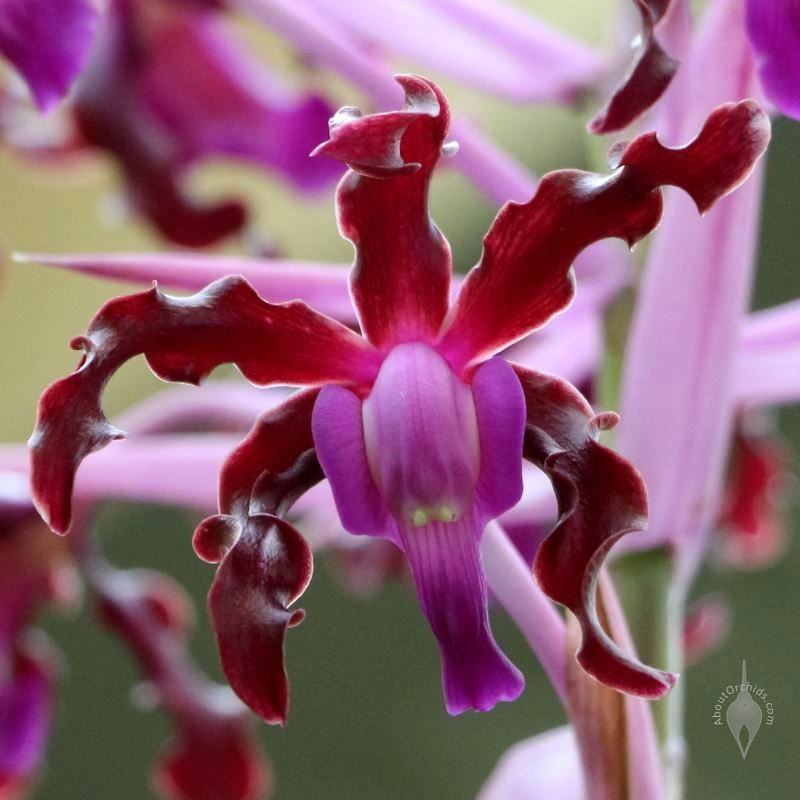
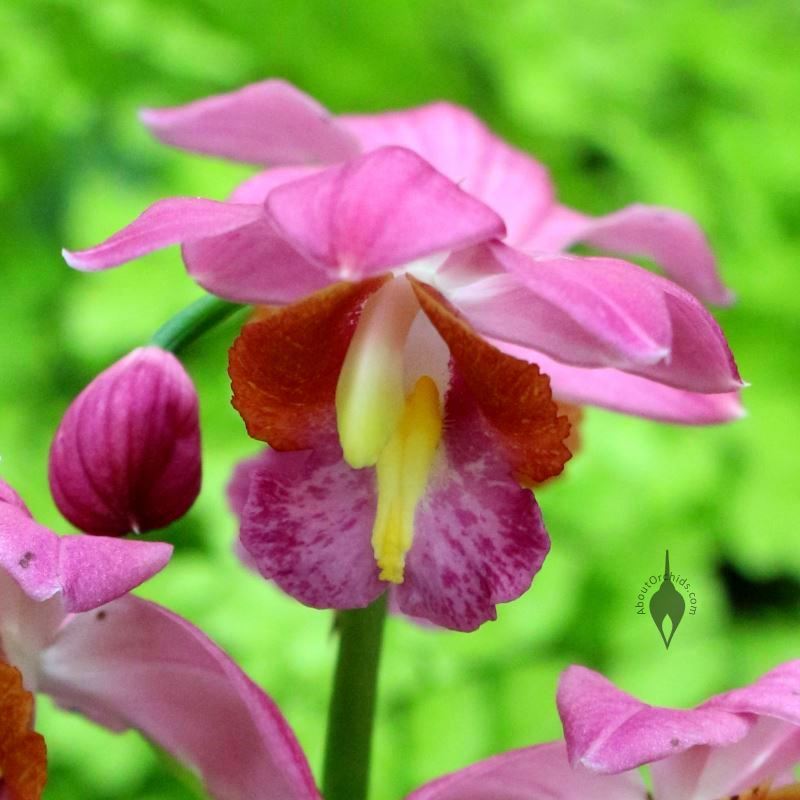
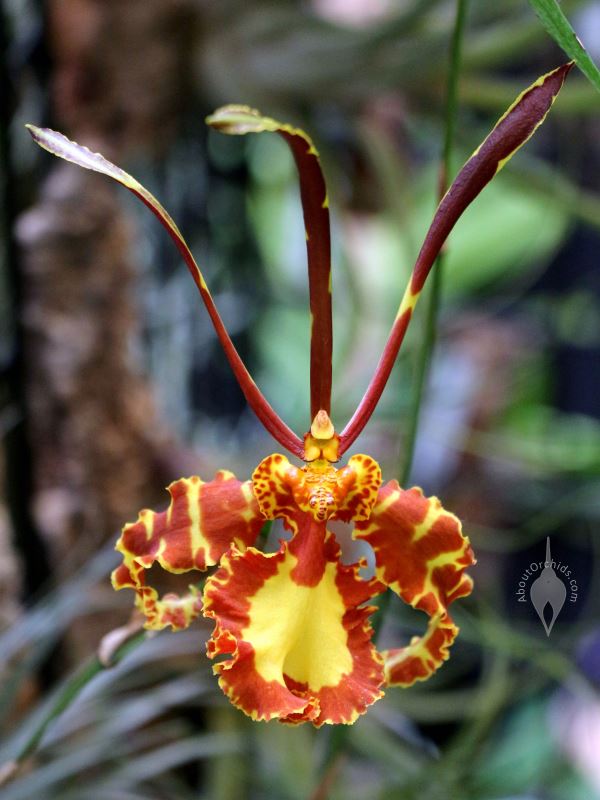
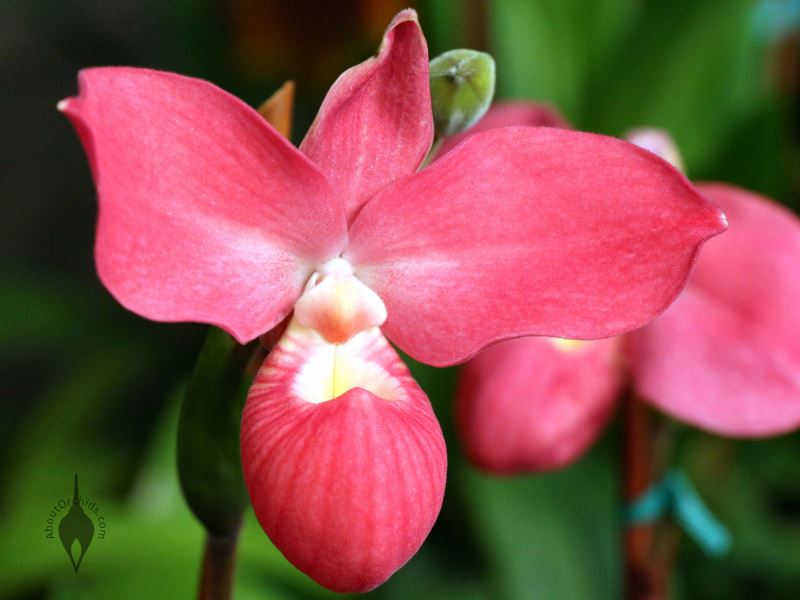
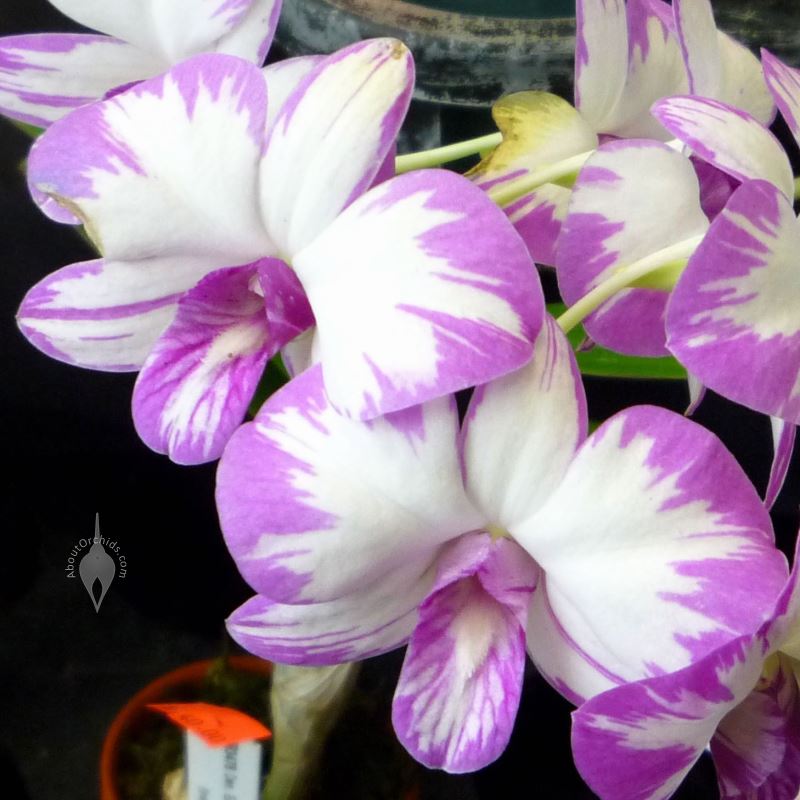
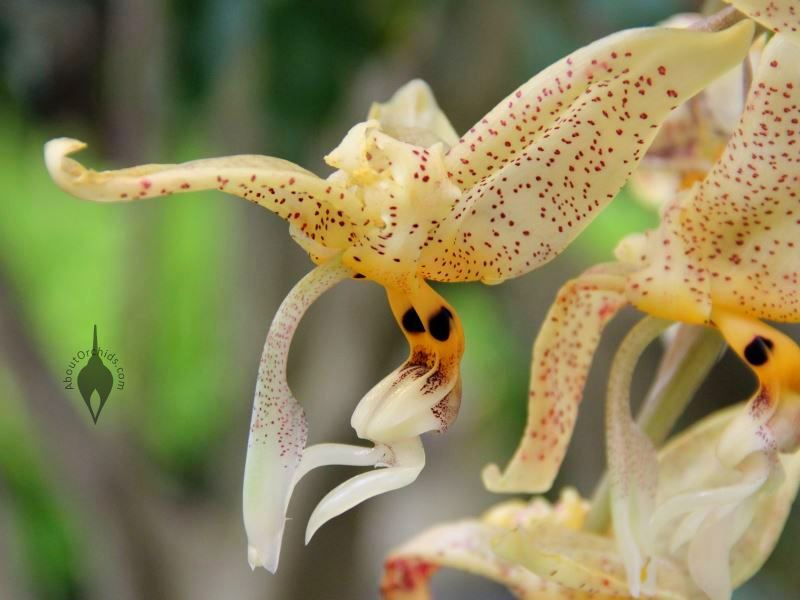
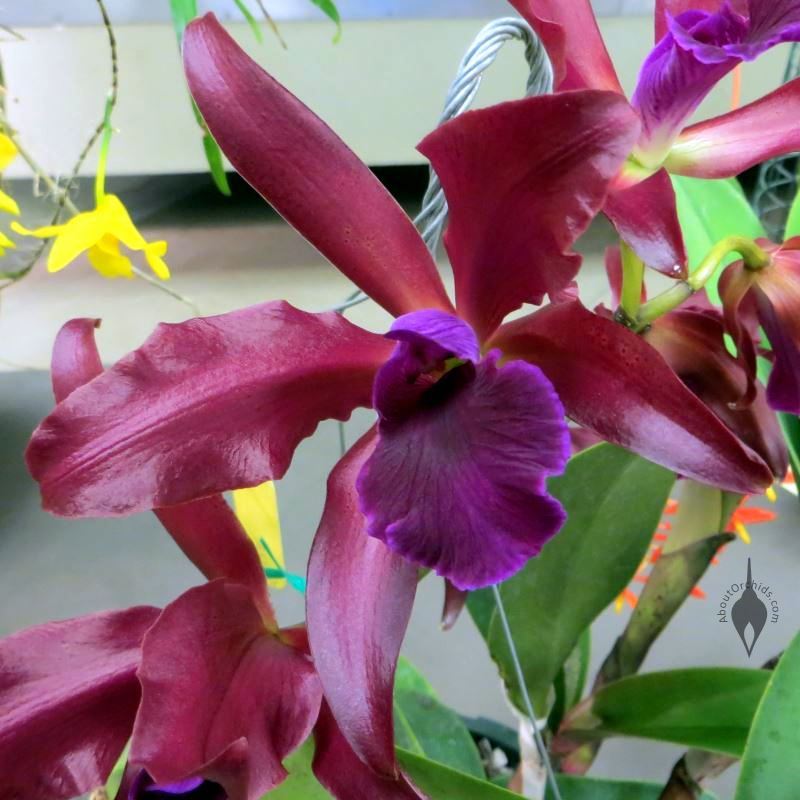
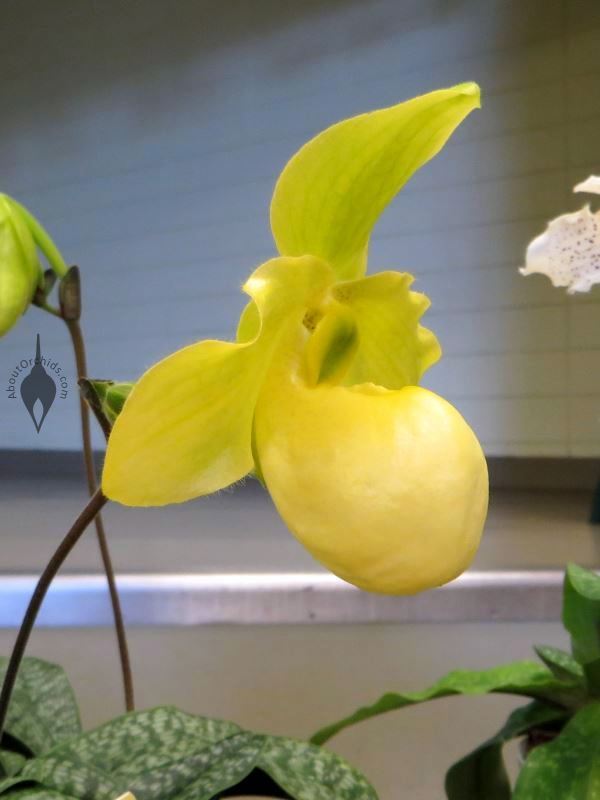
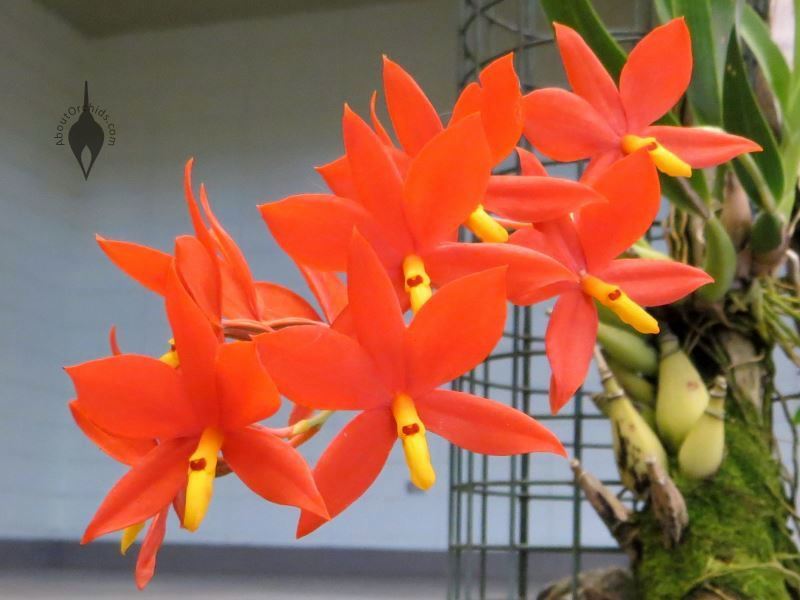
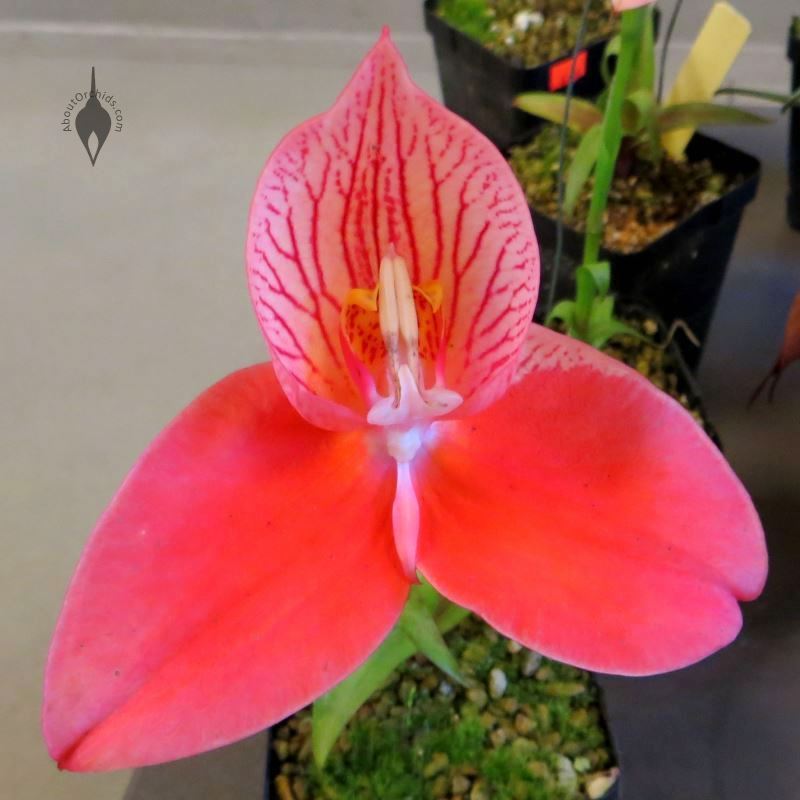
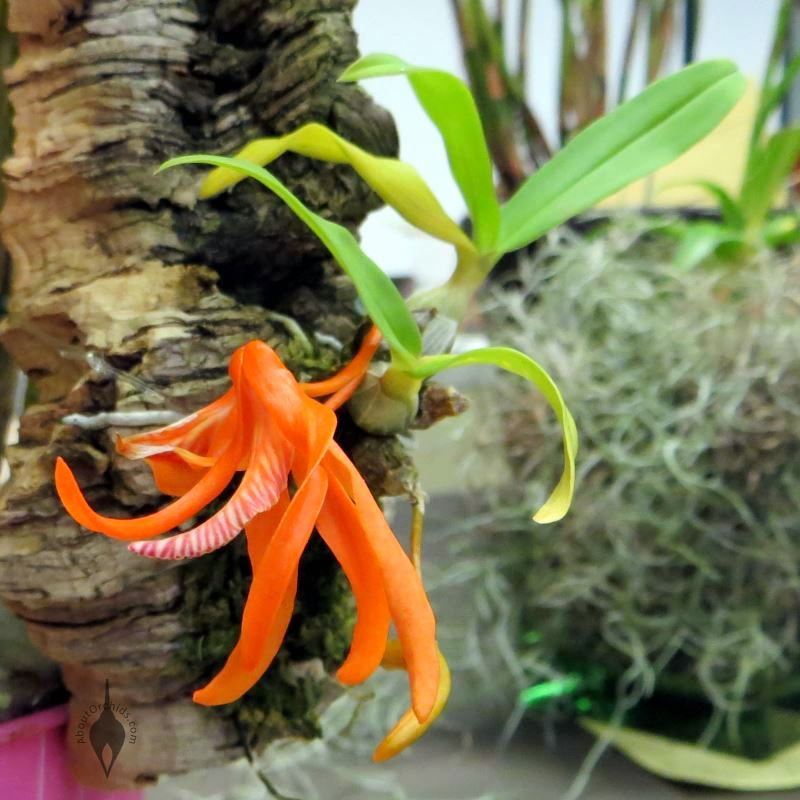
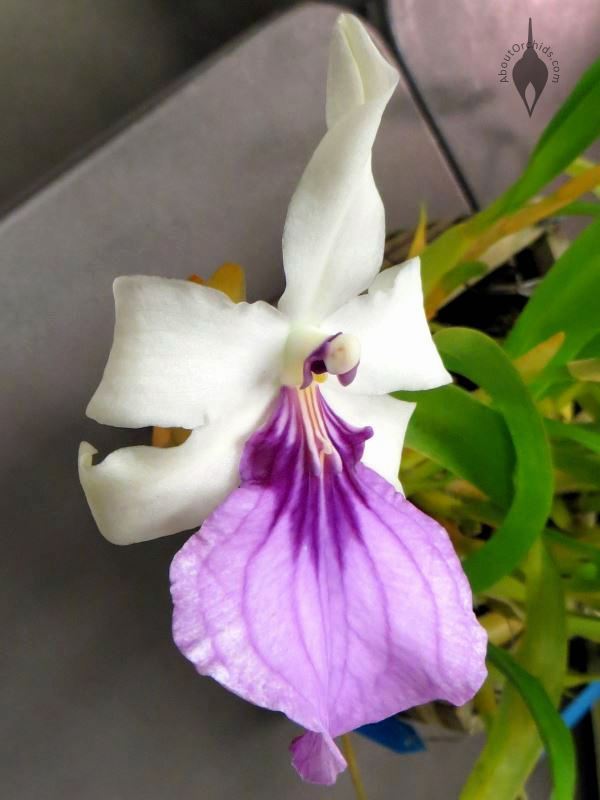
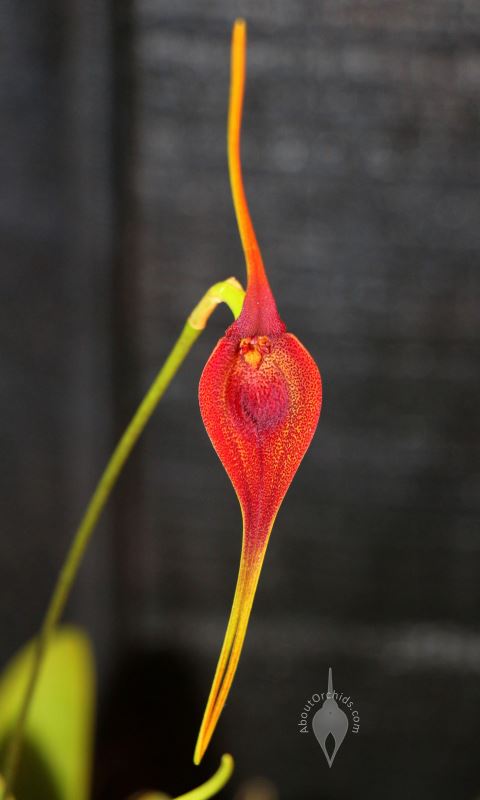
Celebrate today’s equinox with these brilliant orchid colors. Autumn arrives as the northern half of the globe tilts away from the sun, and nights grow longer.

Laelia hybridLady Slipper hybridProsthechea species

These flowers represent only a few of those on display at a recent monthly meeting of the San Francisco Orchid Society. On the first Tuesday evening of every month, everyone is welcome to enjoy blooms like these at the San Francisco County Fair Building. Many local orchid societies feature similar events with impressive displays. If summer’s departure has you yearning for floral fare, check out your local orchid society for some autumn colors.

Disa flowerMini Dendrobium speciesMiltonia flower

Rare Native Orchids Get a Helping Hand

Posted September 20th, 2013 by Marc Cohen
Categories: Conservation, Cool Growers, In the News, Orchids in the Wild

Door County, Wisconsin cares about its native orchids. Starting in the 1930’s, a 40 acre (16 hectare) sanctuary was preserved to save rare wildflowers. Over the decades, the preserve grew to 1500 acres (607 hectares,) and it’s home to 25 of the 40 orchid species native to Wisconsin. Despite the nature sanctuary, orchid populations have declined due to hungry deer, maturing trees blocking sunlight, and selfish orchid collectors who dig up (and kill) the plants. As a result of the decline, the preserve has begun an orchid restoration project. Volunteers have started collecting seeds from Showy Lady Slippers, Yellow Lady Slippers, Ram’s Head Orchids, and Grass Pink Orchids. The seeds will be sent to nearby orchid farmers to germinate, tend the young seedlings, and then return them to the wild in two to four years. “There’s just a handful of people in the nation doing this work because it’s so complicated,” said Melissa Curran, a botanist who is assisting the restoration project. Their hard work should keep this preserve full of flowers for years to come.

Scroll though the article’s photo gallery to see some of the orchids and their minuscule seeds.

Pleurothallids

Posted September 17th, 2013 by Marc Cohen
Categories: Conservation, Cool Growers, Growing, Growing Orchids in San Francisco, Intermediate Growers, Mini Orchids, Photos

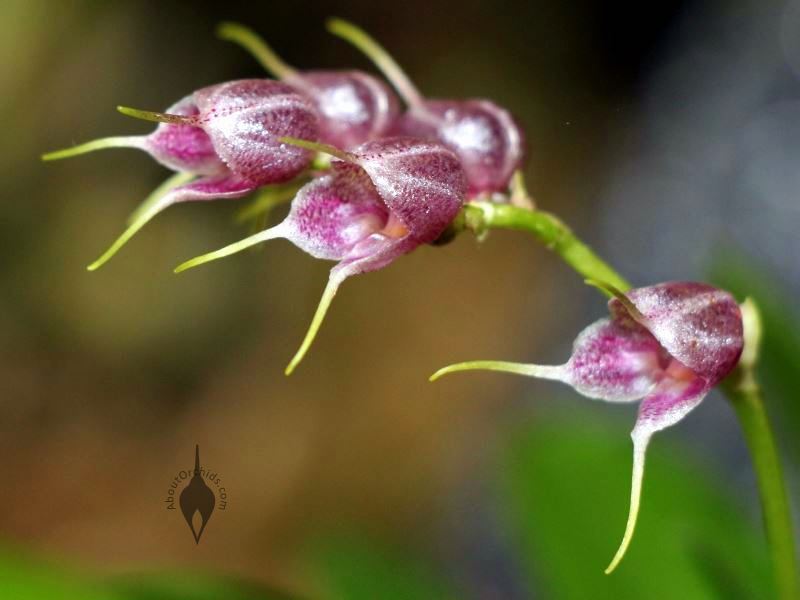
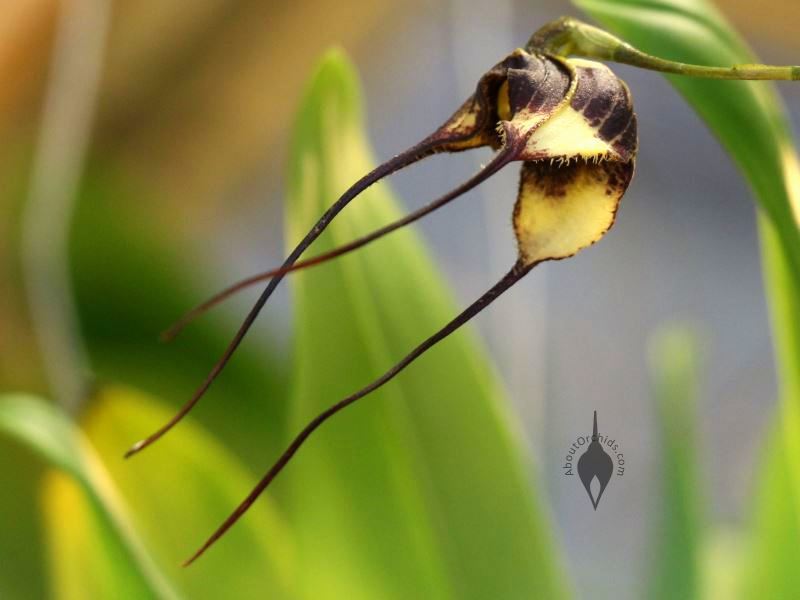
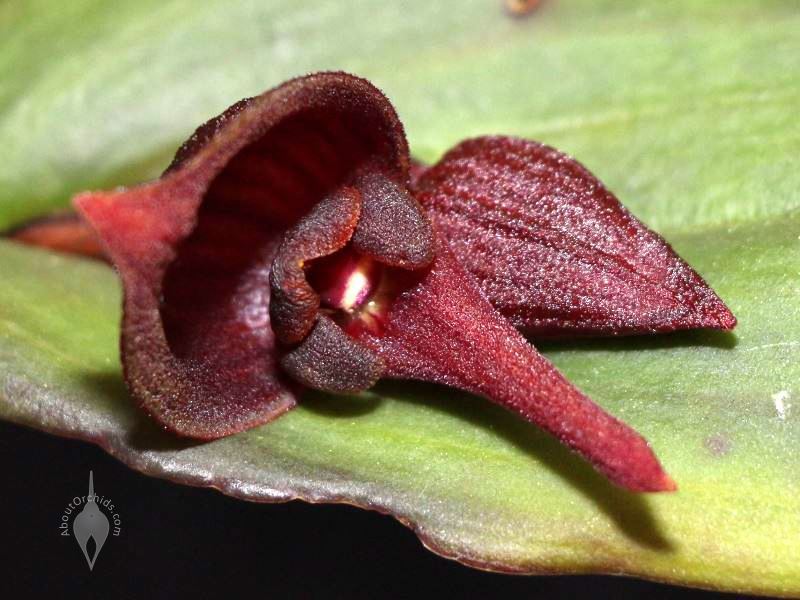
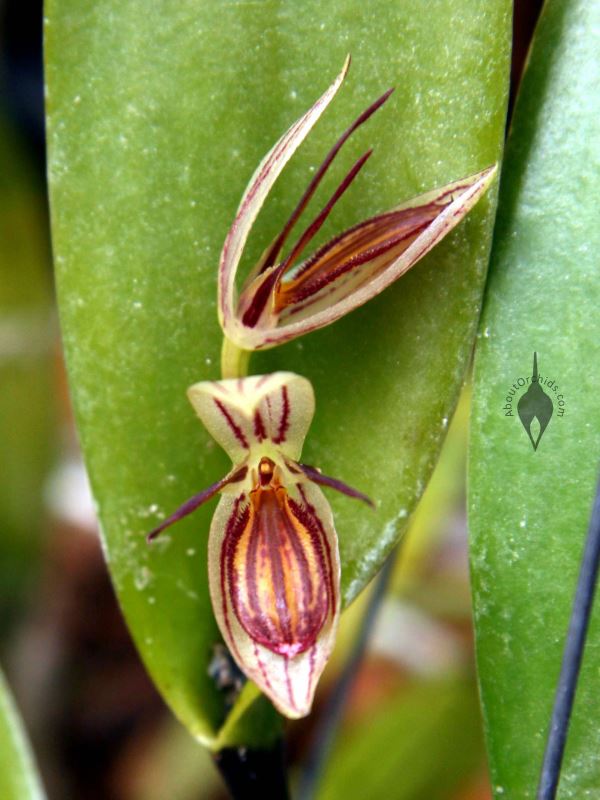
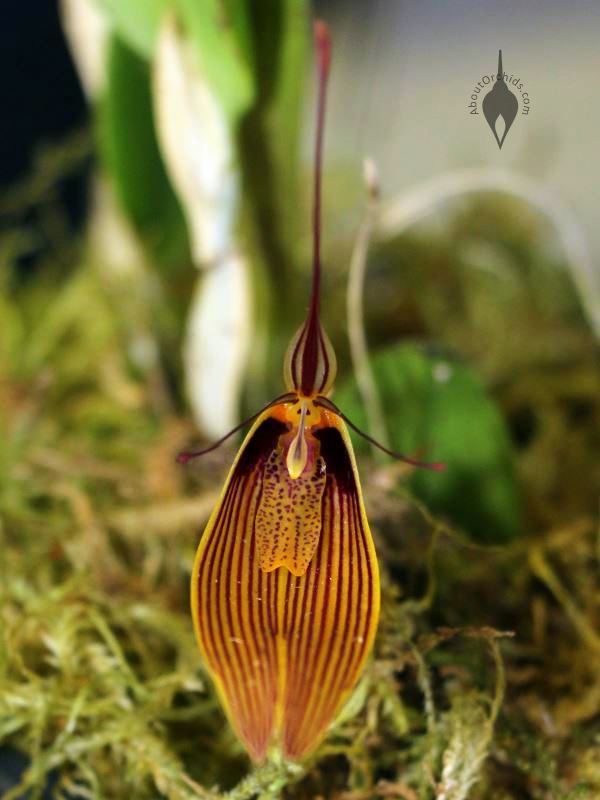
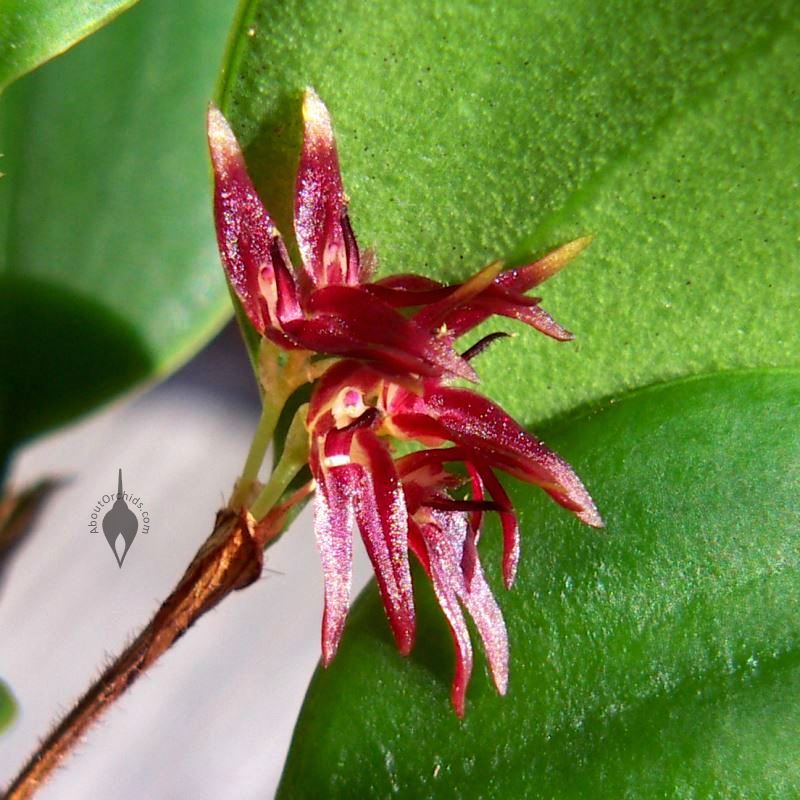
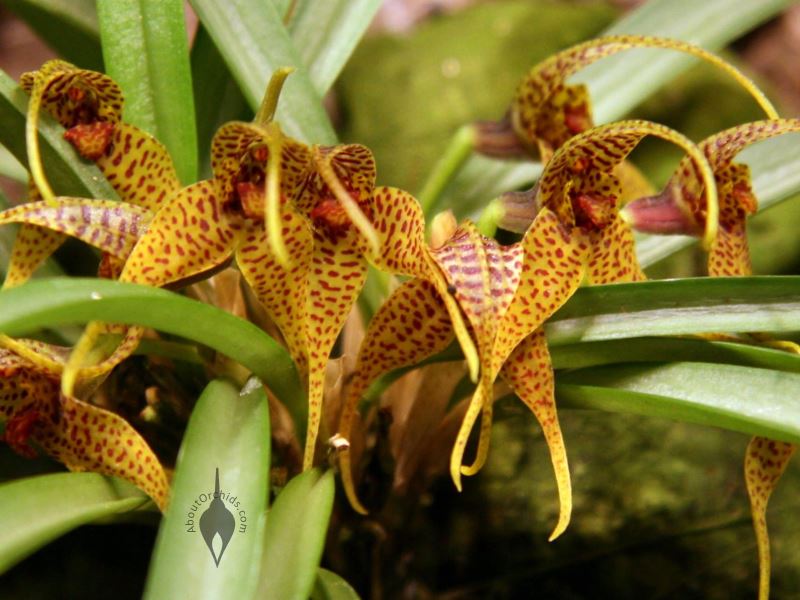
These magical gems are Pleurothallids, a large, diverse orchid family from Central and South America. They’re popular with orchid growers who enjoy their brilliant colors, fantastic shapes, and compact sizes. Many have names which seem larger than the plants themselves. Masdevallias are the best known Pleurothallids. The first row of photos below shows just a few of thousands of available Masdevallia varieties.

Masdevallia hybridMasdevallia speciesMini Masdevallia species

Masdevallias share close family ties with other genera like Dracula, Pleurothallis, Stelis, Restrepia, Scaphosepalum, and Dryadella. In the cloud forests and rainy mountainsides of Central and South America, over 4000 species fill out the Pleurothallid family tree. Despite the incredible variety of their flowers, most have similar care needs. Some types demand consistently cool temps, 40° – 70°F (4° – 21°C,) but many are tolerant of warmer weather, and want nightly drops to 55°F (13°C.) All Pleurothallids need consistent high humidity and constant air movement. They want bright light, but generally don’t need any full sun, and can grow under artificial lights. Many types cannot tolerate chemicals in tap water, and need purified water or rainwater.

Dracula speciesStelis speciesPleurothallis species

PleurothallisScaphosepalumPleurothallis species

Pleurothallids are great outdoor orchids for growers in San Francisco and other cool, moist climates. Foggy breezes provide the perfect humidity and air movement to replicate their airy mountain homes. San Francisco’s clean tap water works for many types, although some kinds, such as Draculas and Stelis, demand purified water.

To learn more, visit the Pleurothallid Alliance, which encourages the cultivation, conservation, and appreciation of Pleurothallids.

Restrepia speciesMini Trichosalpinx speciesDryadella species

Domingoa

Posted September 13th, 2013 by Marc Cohen
Categories: Dormancy, Growing, Intermediate Growers, Mini Orchids, Photos, Watering

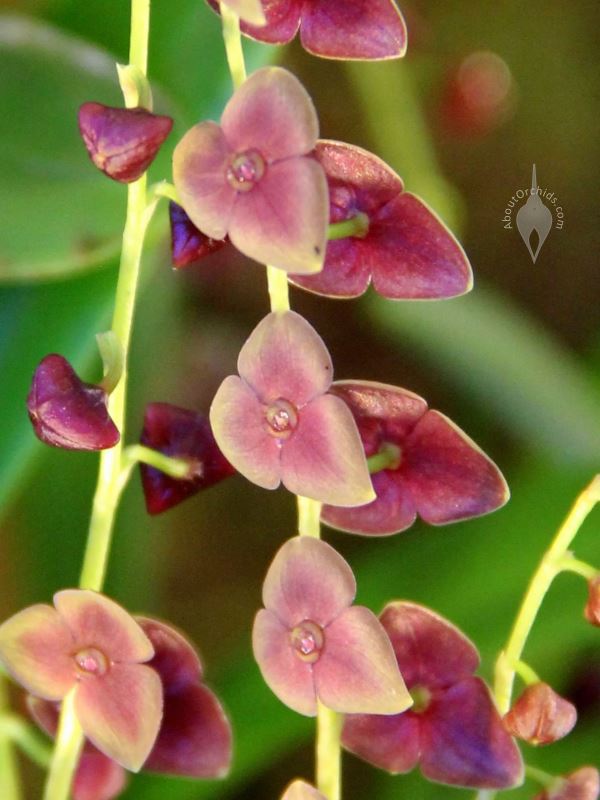
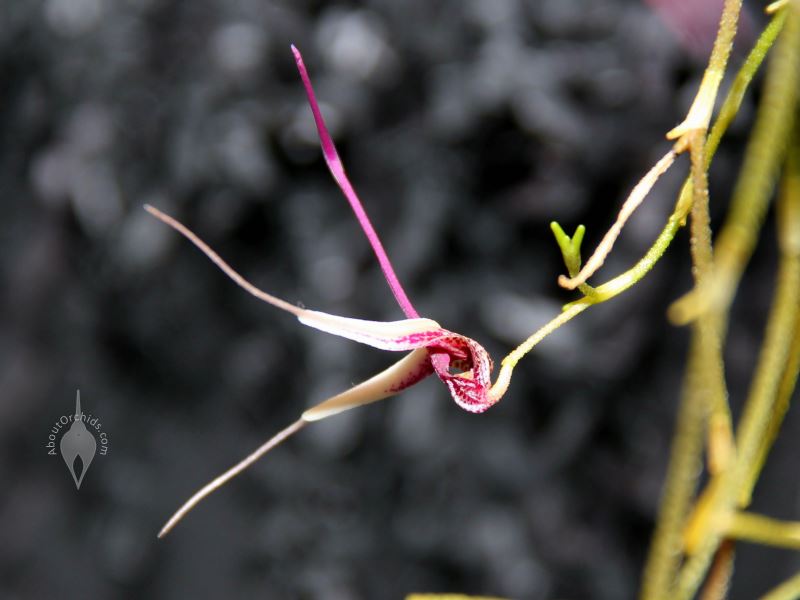
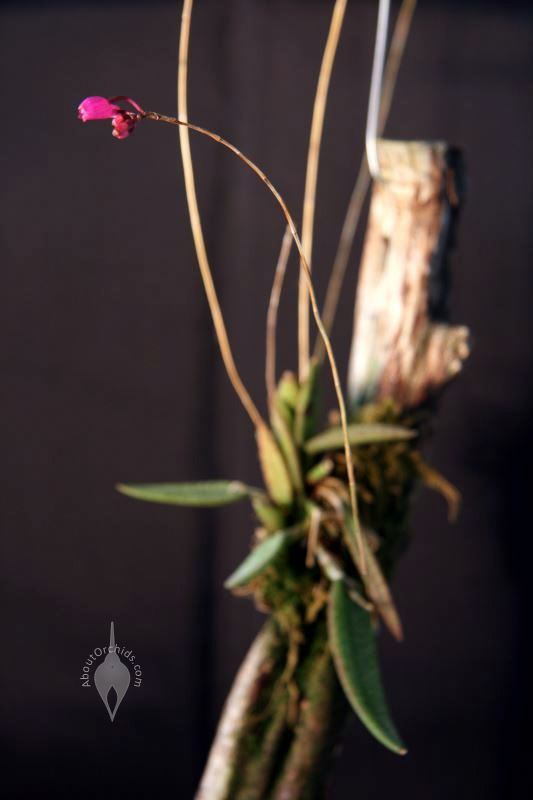
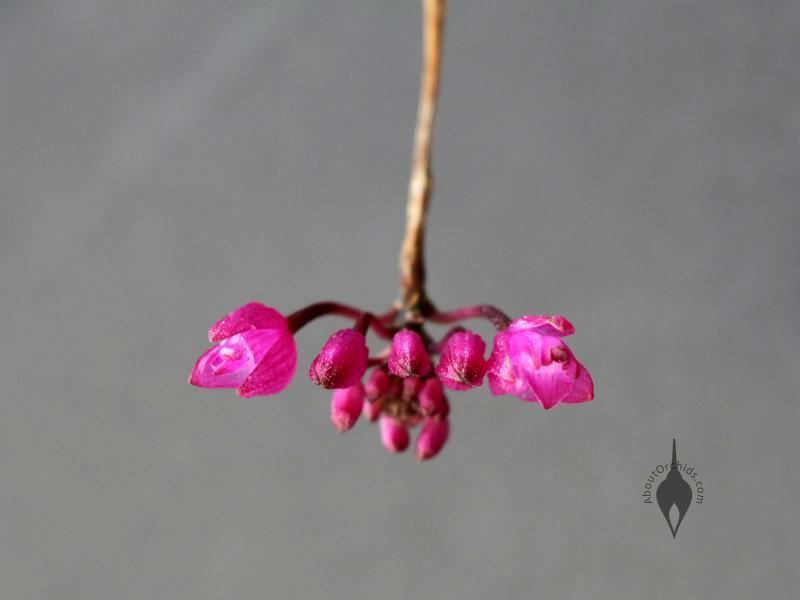
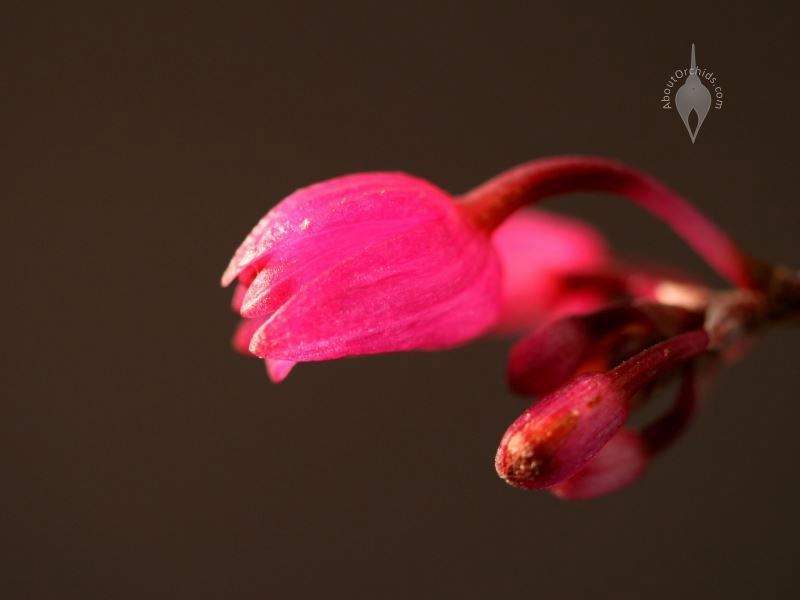
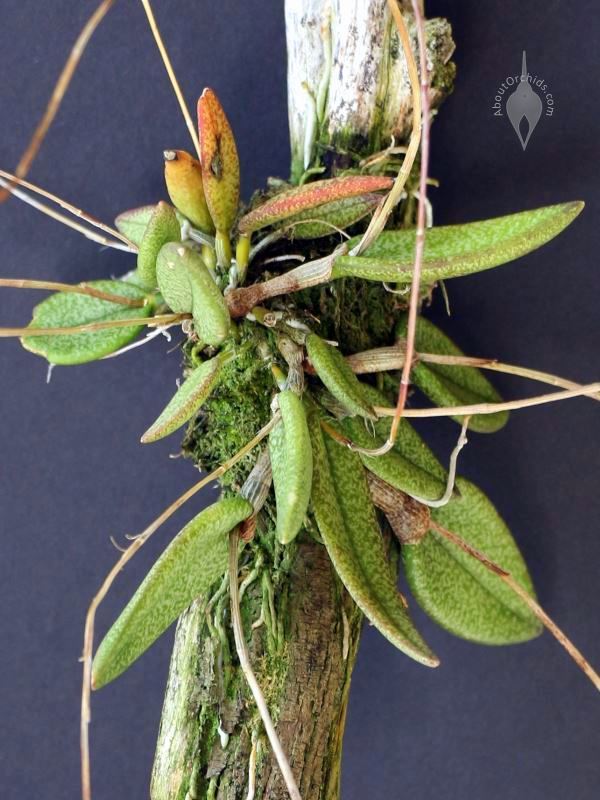
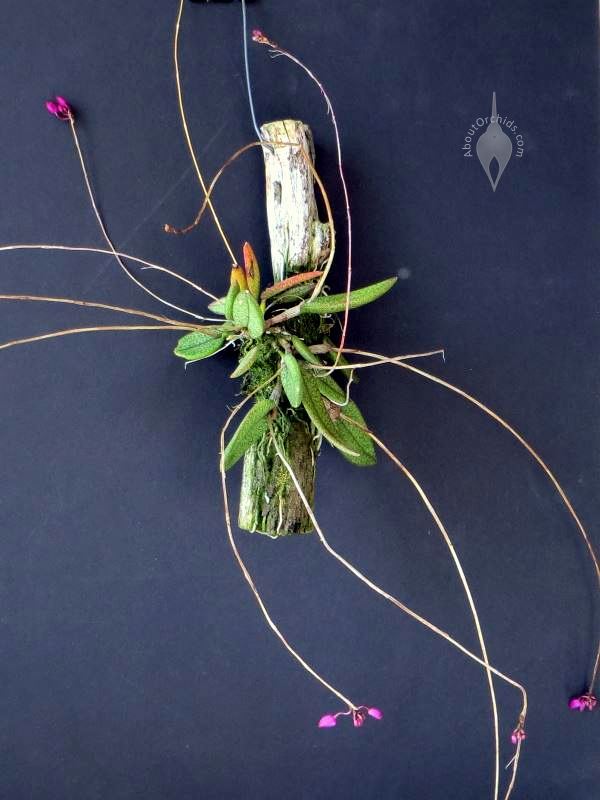
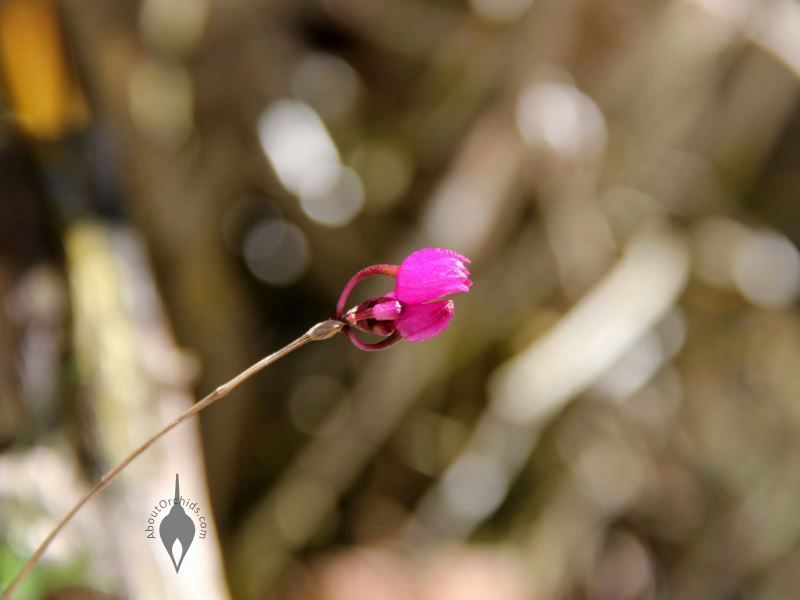
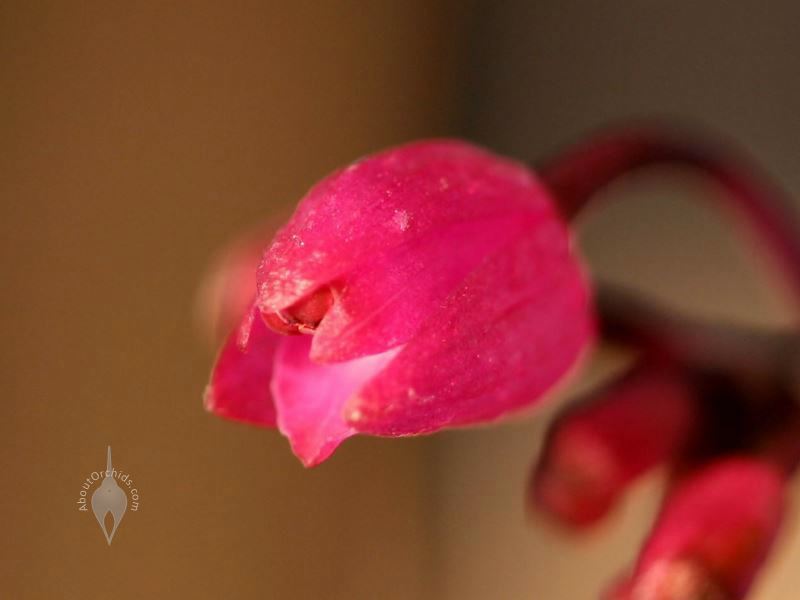
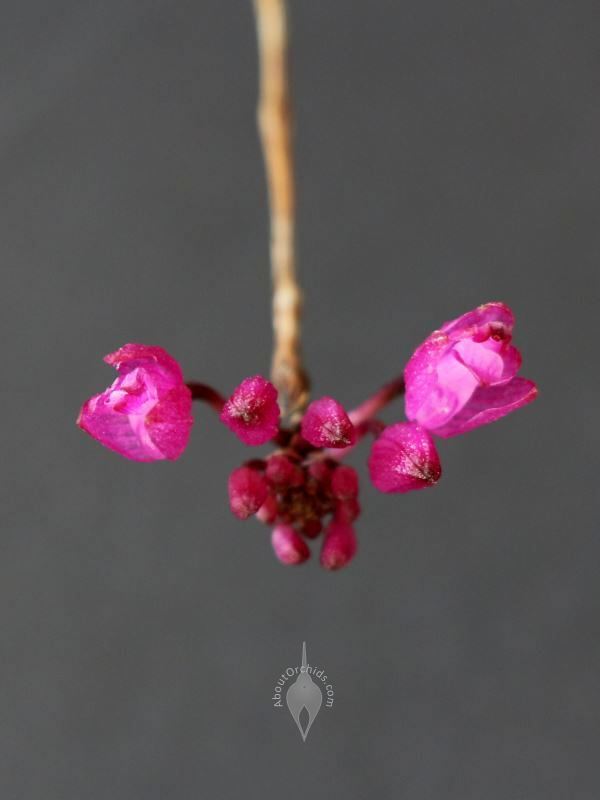
Considering its tiny flowers, this unusual Domingoa can really put on a show. Its thick, speckled leaves produce long stems with tiny purple blossoms. This plant can stay in bloom for more than two months, putting out successive flowers over late summer and early autumn.
Domingoa flower on long stemDomingoa flower close upDomingoa species

I’ve had this Domingoa growing outdoors and blooming well for three years, but the flowers are so small that it’s been tough to take nice photos. Dave took some great shots recently, so I can finally share this little gem. Each flower is about 1/4 inch (6 mm) wide. Small bunches swing at the ends of spikes, or flower stems, which can grow over 1 foot (30 cm) long. The wiry spikes may look dead after blooms finish, but they can rebloom for years.

Domingoa flower close upDomingoa leaves and flower spikesDomingoa leaves and flowers on long spikes

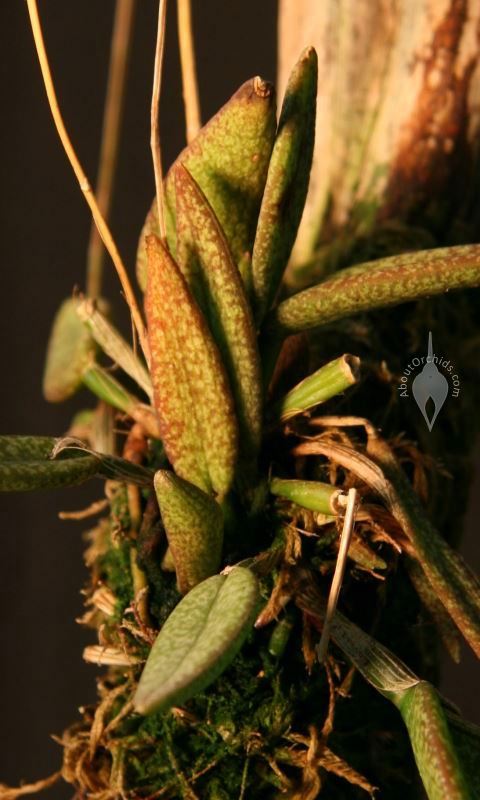
White and red speckles on the thick leaves keep this orchid interesting, even when it’s not flowering. Here on the California coast, it grows outdoors on a mount in partial sun. I keep it well-watered until winter dormancy, when I bring it indoors and cut back watering. It stays in our back room, where winter nighttime temps go down to 50°F (10°C,) until spring.
Native to parts of Mexico and Central America, this species recently underwent a name change from Nageliella to Domingoa. It’s an uncommon orchid to find, and it’s often listed under its old name. No matter what it’s called, it’s easy to find space for this charming mini in any collection.

Domingoa flower and budsThick Domingoa leavesDomingoa flowers and buds

Orchids Require Special Treatment To Look Their Best

Posted September 10th, 2013 by Marc Cohen
Categories: In the News, Misc

In the Richmond Times-Dispatch, orchid expert Arthur Chadwick explains how to make orchids look their best. Whether you want your blooms to win a ribbon or to dazzle in a photo, it helps to know orchid grooming basics. Good presentation enhances orchid beauty. Some of the tips include:

  • Stake flower spikes upright. Add stakes to Phals, Paphs, and Oncidiums while their spikes are still small. Wait to stake Cattleyas until buds are mature. Dendrobium spikes are strong enough that they don’t need staking.
  • Flowers should all face the same direction. Do not turn plants while buds are developing, or they will reorient to the light and be askew. You can turn plants after all flowers are fully open.
  • Plants should look happy and healthy. Remove dead or damaged leaves with sterile blades. Clean any dust or debris from the leaves.

Adjust Your Latitude

Posted September 5th, 2013 by Marc Cohen
Categories: Growing, Problems

Orchids can grow just about anywhere, but growers need to consider their latitude. Degrees of latitude show distance north or south from the equator. Sunlight levels and day length vary greatly at different locations, and knowing your latitude helps you understand how much or how little sunlight is available over the seasons.

Horizontal lines, or parallels, represent latitude on the globe. Starting from 0° at the equator, latitude lines run up to 90° north at the North Pole, and down to 90° south at the South Pole. (On the other hand, longitude lines show distance from the Prime Meridian in the UK, and aren’t related to sunlight levels.)

Here in San Francisco, at approximately 38° north of the equator, we share a parallel with St. Louis, Missouri, Washington DC, Athens, Greece, and Seoul, South Korea. That doesn’t mean that we have the same climates, but we do share sunlight levels and day length. South of the equator, approximately 38° south, Melbourne, Australia and Auckland, New Zealand share similar sunlight levels and day length, but six months apart from their northern counterparts.

Commonly grown orchids come from the tropics, a region centered around the equator. Here, the sun’s strength and daylight hours vary little with the seasons. That’s why orchids prefer consistent light levels all year. Orchid growers in the tropics don’t need to worry about latitude’s effects on their light levels.

Orchid growers in temperate zones of the world experience big variations with the seasons. Just as the tilt of the earth creates the seasons, it also causes big swings in sunlight levels. Summer brings the sun high in the sky, and longer hours of light. In the winter, the sun is lower in the sky, with less hours of light. Orchid growers in temperate areas should supplement sunlight over winter. This simulates the high sunlight levels of the tropics. Temperate regions include most of the USA, Canada, Europe, Australia, and Asia. In these regions, adjusting for your latitude will help keep your orchids happy.

September Orchid Shows

Posted September 1st, 2013 by Marc Cohen
Categories: Botanical Gardens, Events

From Alabama to Zululand, September is a busy month for orchid shows. Australia, New Zealand, and South Africa have packed schedules. There’s plenty in the Northern Hemisphere, too. Here in San Francisco on September 28-29, Orchids in the Park combines a show and sale with seminars and demos.

September 2 – 6
Eastwood and District Orchid Circle Show, Eastwood Shopping Centre, Eastwood, NSW, Australia
September 3 – 7
Tygerberg Orchid Group Spring Show, Durbanville Town Hall, Durbanville, Cape Town, South Africa
September 4
Santa Clara Valley Orchid Society Fall Auction, American Legion Hall, 1504 Minnesota Ave., San Jose, California
September 4 – 7
Maitland and Coalfields District Orchid Society Show, Thornton Shopping Centre, Taylor Ave., Thornton, NSW, Australia
September 4 – 7
Fairfield District Orchid Society Show, Stockland Mall, Polding St., Wetherill Park, NSW, Australia
September 4 – 7
Alstonville Orchid Society Show, Alstonville Shopping Plaza, Alstonville, NSW, Australia
September 5 – 7
Tweed District Orchid Society Show, Jessie McMillan Hall, Wollumbin St., Murwillumbah, NSW, Australia
September 5 – 8
International Orchid Show, DBKU Orchid Park, Kuching, Sarawak, Malaysia
September 5 – 8
Five Dock RSL Orchid Society Show, Rhodes Shopping Centre, Rider Blvd., Rhodes, NSW, Australia
September 6 – 7
Hibiscus Coast Orchid Society Spring Show, Orewa Community Hall, 368 Hibiscus Coast Hwy., Orewa, New Zealand

Read the rest of this post »

A Decade of Epidendrums

Posted August 29th, 2013 by Marc Cohen
Categories: Cool Growers, Photos

We’re celebrating a milestone in our garden: orchids which have been in continuous bloom for over a decade! These brilliant red Epidendrums have thrived outdoors here in San Francisco, surviving 10 years of strong winds, heat waves, grey winters, heavy rains, close to freezing temps, occasional hailstorms, and battles with raccoons. Through it all, they’ve kept their blooms. Typically, each plant boasts more than a dozen flower clusters rising above it.

Epidendrum flowerEpidendrum flowersEpidendrum flower close up

Reed-stem Epidendrums come in a wide palette of brilliant colors, and are well suited for outdoors in tropical and sub-tropical areas. Individual flowers can last for many weeks, and new ones are constantly opening. And I must admit that they’ve bloomed for so long that I take them for granted in the garden scenery. They were originally a gift from an acquaintance living in San Francisco’s Forest Hill neighborhood. She had found them growing wild in her garden many years earlier, when she first moved into her home.

Reed stem Epidendrum flowersEpidendrum flowerEpidendrums in bloom, outdoors in San Francisco

These vigorous plants frequently form seed capsules after pollination by Anna’s Hummingbirds. The capsules take several months to swell up, and then burst open, releasing clouds of minuscule seeds to float in the wind. Seedlings can grow to flower in three years. The mature plants also continually make keikis, so they’re easy to share, and I’ve given many to friends and neighbors over the years. It’s a guarantee that these tough orchids will be around for decades to come.

Reed stem Epidendrum flowersEpidendrum flowers with water dropsEpidendrum seed pod

Brazil Nuts and Orchids

Posted August 24th, 2013 by Marc Cohen
Categories: Conservation, Fragrant Orchids, In the News, Warm Growers

What do Brazil nuts have to do with orchids? Their relationship illustrates the complex links between rainforest residents. The nuts grow on massive trees in the Amazon, and rely on bees to pollinate their flowers. The bees, in turn, rely on orchids. Male bees collect orchid fragrances to lure females. They prefer the sweet scents of the unusual Bucket Orchid, Coryanthes vasquezii, a Stanhopea relative. “The more orchids, the more bees; the more bees, the more Brazil nuts.” This interdependence is one of the reasons why these trees are extremely difficult for farmers to cultivate, and the crop is collected from the wild. Brazil nuts, orchids, and bees link together in the intricate fabric of Amazon life.

Yellow Pine Orchid

Posted August 21st, 2013 by Marc Cohen
Categories: Dormancy, Fragrant Orchids, Growing, Intermediate Growers, Mini Orchids, Photos, Watering

From forests in the mountains of Japan and Taiwan, the Yellow Pine Orchid boasts clusters of colorful flowers. This cute mini orchid is Gastrochilus japonicus, a Vanda relative.

Gastrochilus speciesGastrochilus flowers hanging below plantGastrochilus flower close up

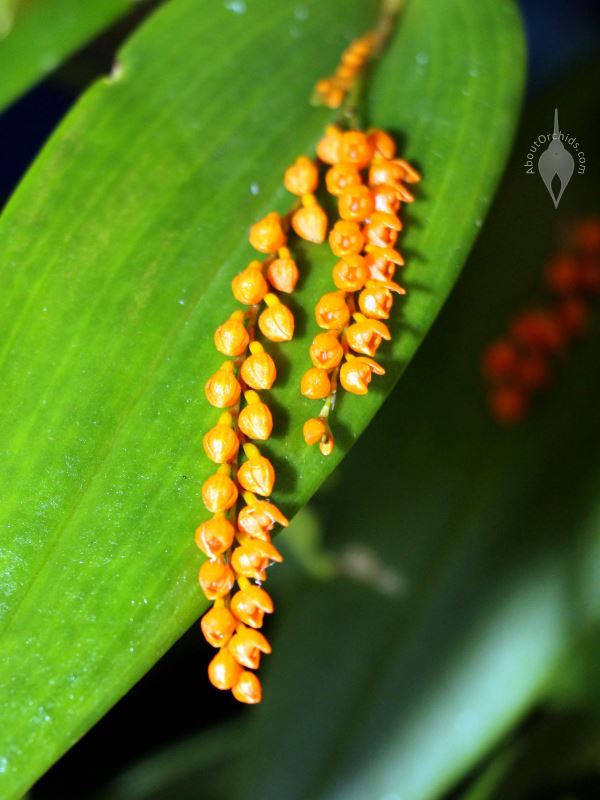
This species blooms with tiny flowers dangling beneath its leaves. The entire flower cluster is only 1.5 inches (3.8 cm) wide. Since the blossoms hang below the plant, it’s best to grow this variety on a mount. The Yellow Pine Orchid needs regular water and high humidity.

Gastrochilus flower clusterGastrochilus flowerGastrochilus flowers

During winter dormancy, water the plant a little less, but don’t let it dry out. I move this specimen to a winter home in the back of our apartment, where it goes down to 50°F (10°C) at night, and receives slightly brighter light. I’ve found that if it doesn’t have a cooler winter, the leaves become covered with pests such as scale.

The next photos show the flowers opening with some buds still developing, and also the open flowers positioned underneath the leaves. They show what makes the Yellow Pine Orchid an unusual and adorable gem.

Gastrochilus flowers and budsGastrochilus flowers, leaves, and rootsGastrochilus species