Wild Orchids

Posted June 28th, 2010 by Marc Cohen
Categories: In the News, Orchids in the Wild

As summer begins, this news article describes wild orchids blooming across Northern California. There are photos of the Stream Orchid, Epipactis gigantea, growing in the wild, and info about other lesser-known, but still fascinating, Golden State species. The article includes a good summary of orchid care basics for more commonly grown varieties.

Wild orchids are also blossoming in the UK, and an article in The Telegraph of London details some fascinating British natives. There’s a list of good locales to explore for wild orchids. No matter what country you’re in, enjoy the orchids, but leave them be; it’s illegal to remove orchids from the wild or cut their flowers.

And finally, it’s back to California for a news story about orchid scholarships in Salinas. Matsui Nursery is the largest commercial orchid nursery in the USA, and many orchids in homes and offices across North America have come from Matsui’s greenhouses. The owner’s Andy Matsui Foundation awards 18 college scholarships every year to deserving Monterey County students. As North Salinas High School Principal August Caresani said, “Mr. Matsui is growing dreams….”

Thunia

Posted June 25th, 2010 by Marc Cohen
Categories: Dormancy, Fragrant Orchids, Growing, Intermediate Growers, Photos, Watering

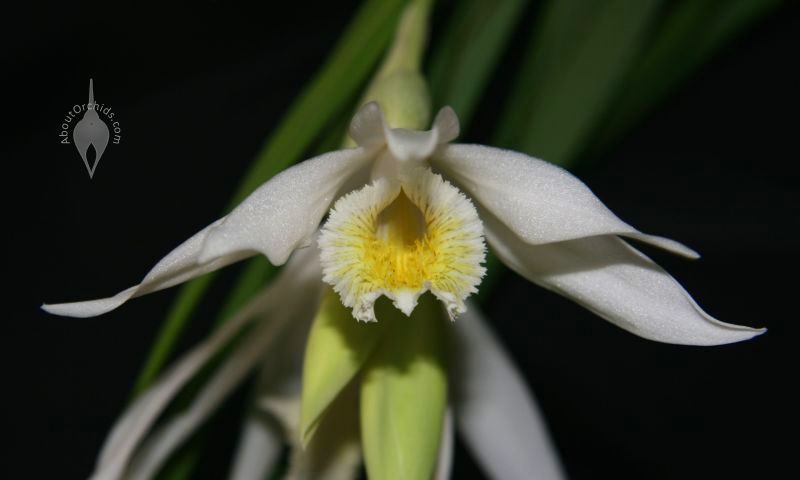
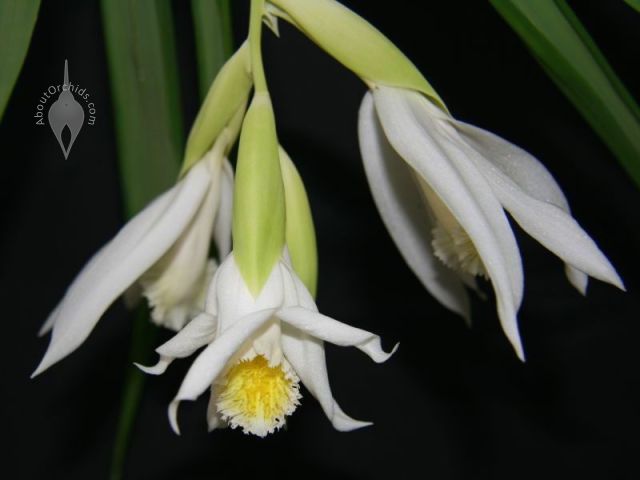
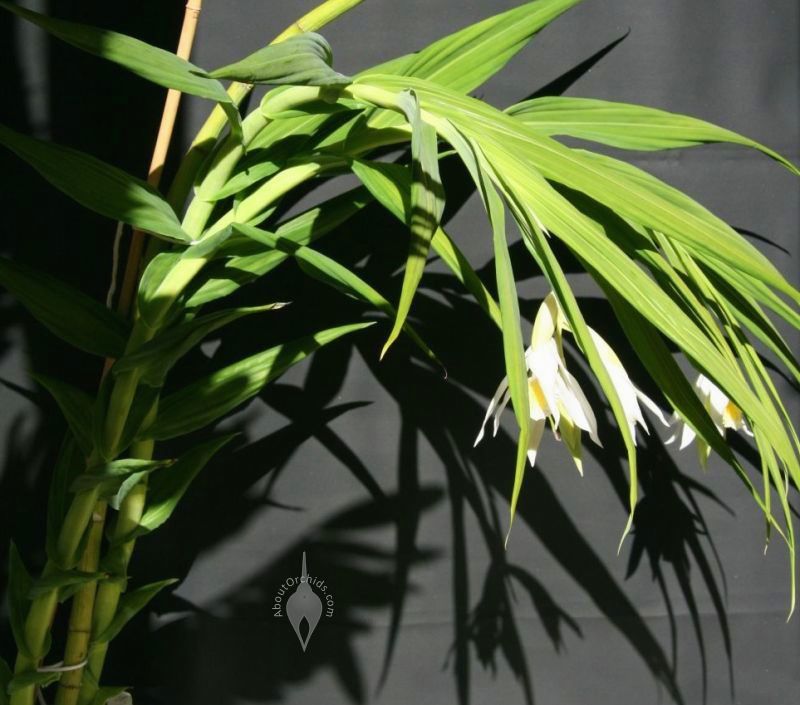
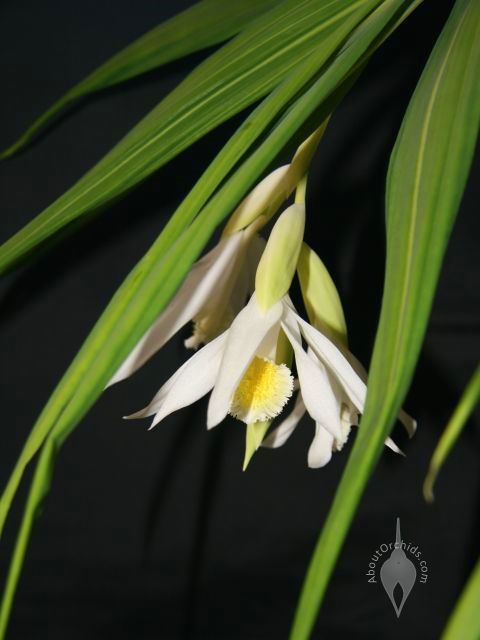
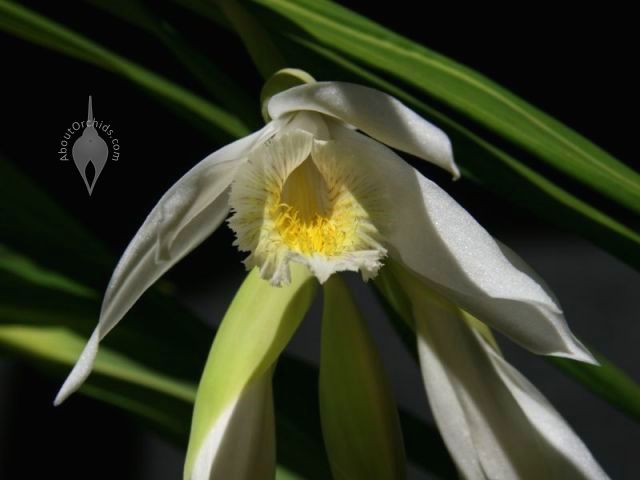
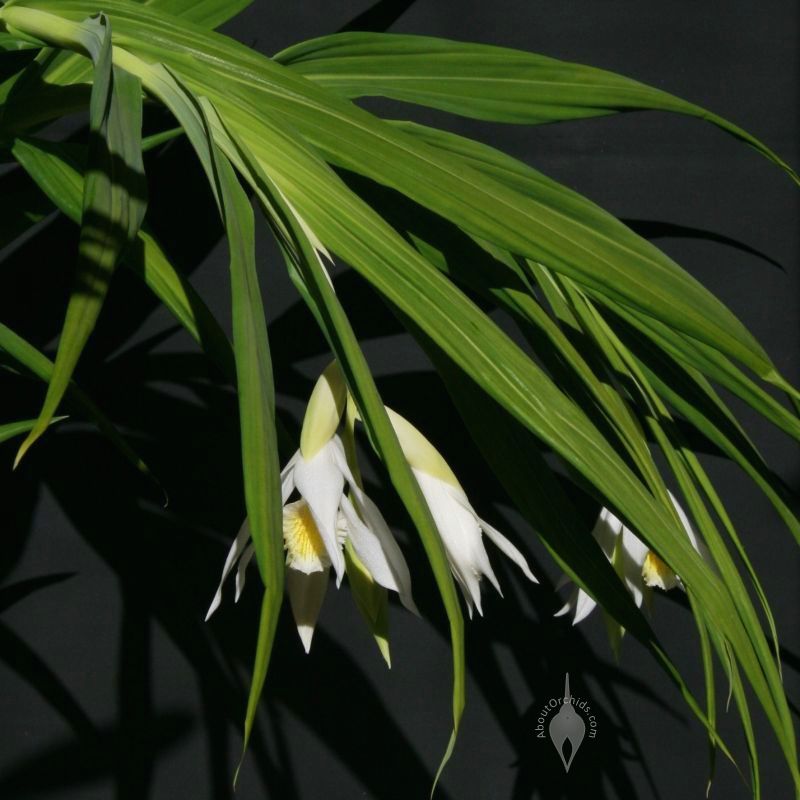
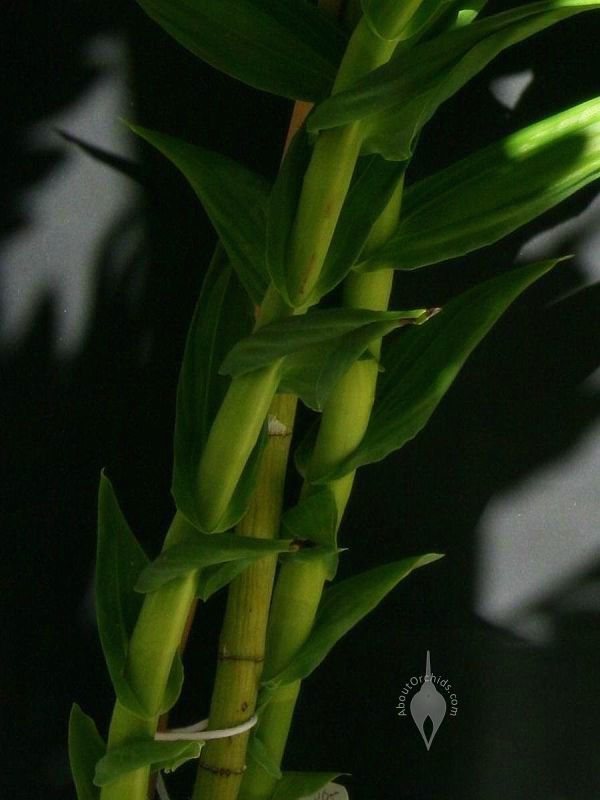
If you saw a Thunia without flowers, you’d be forgiven for thinking it was a cornstalk. When it’s in bloom, however, there’s no doubt that it’s an orchid. Thunia flowers look like Cattleyas that haven’t opened completely. The 5 inch (13 cm) wide blooms hang in clusters, pulling down the tops of their 4 ft. (1.2 m) tall stalks.

Thunia flowerThunia flowersThunia plant with flowers hanging below foliage

Possibly the fastest growing orchid, this terrestrial replaces these tall stalks each year. New leaves emerge from the base of the previous year’s stalk (actually a pseudobulb,) and the new growth shoots up in just a few months. This species is native to the slopes of the Himalayas, and has a wide range from India east to Vietnam and north to China.

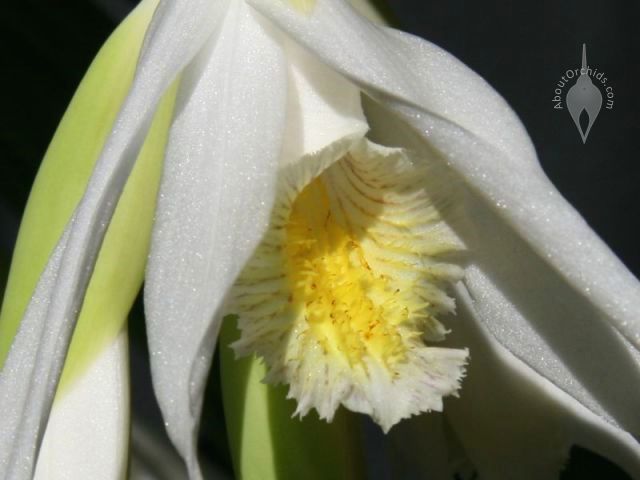
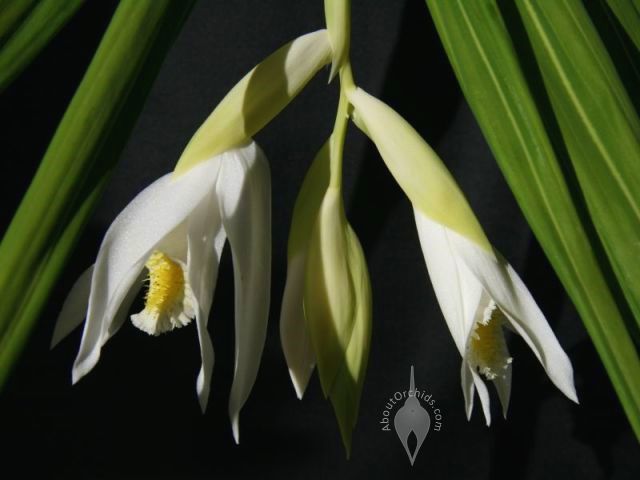
Thunia flower close upThunia flowers and budsThunia flowers and leaves

When new spring growth emerges after winter dormancy, Thunias need light watering and full sun. Too much water can rot new growth. Within a few weeks, the new stalks grow 6 inches (15 cm,) and should be moved into shadier conditions. By late spring, Thunias need heavy water and fertilizer to mimic the Indian Ocean monsoon in their native homes. After blooms that last a couple weeks, leaves turn yellow in the early autumn. At this point, watering and fertilizing should be reduced to a minimum. I keep this specimen cool and dry in winter, watering as seldom as once a month to keep the stalks from shriveling too much. If these varying seasonal care needs seem too daunting, just imagine the reward of seeing these gorgeous flowers hanging off a cornstalk.

Thunia flowerThunia flowers hanging below foliageThick stems of Thunia plants

Summer

Posted June 21st, 2010 by Marc Cohen
Categories: Cool Growers, Mini Orchids, Photos

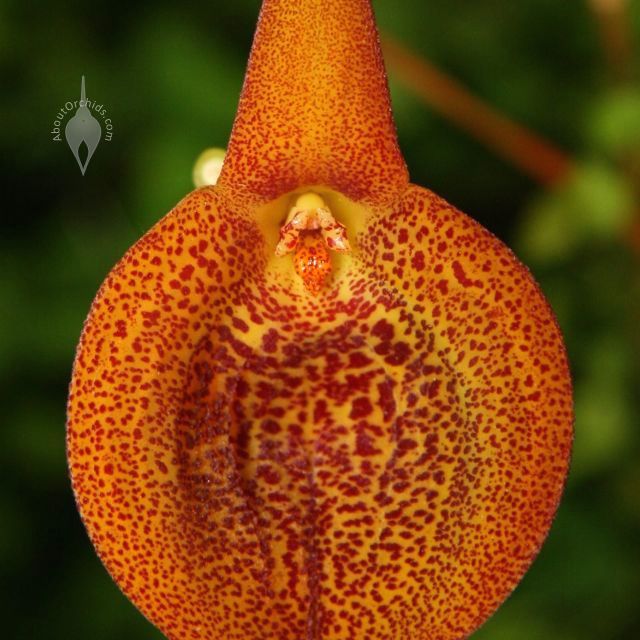
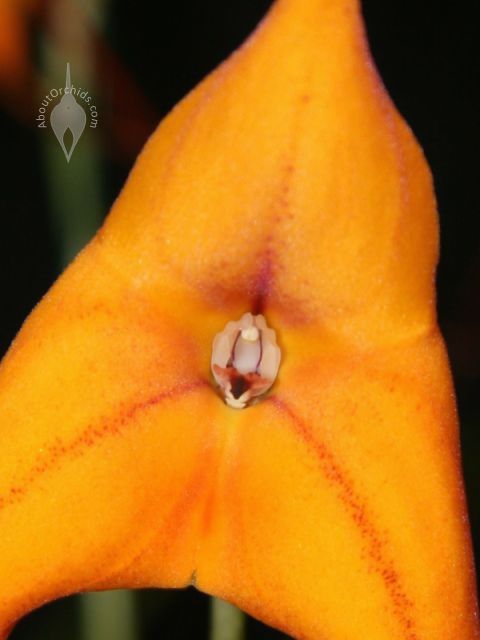
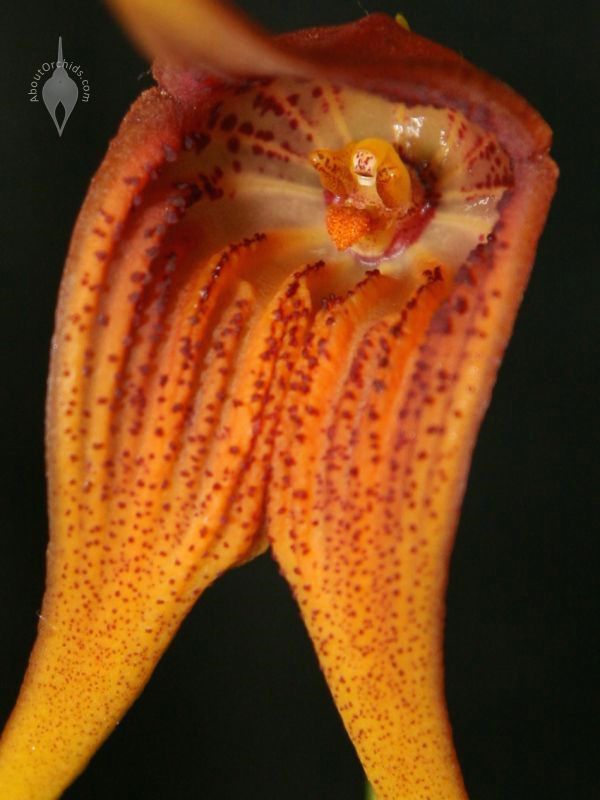
To honor today’s summer solstice, here are a few sunny-looking Masdevallias. While we enjoy long hours of daylight in the northern half of the planet, plants enjoy the ability to photosynthesize a little longer. Incredible flowers like these are the result. Even if you’re having a hectic Monday, I hope you can take a few moments to savor these mini-miracles as promise of the possibilities of summer.

Masdevallia close upMasdevallia close upMasdevallia close up

If you’re wondering why I’m honoring the summer solstice with cool-growing Masdevallias, then you’ve probably never experienced San Francisco’s summer fog. While we often have sunny days and yes, even heat waves, the vast, chilly Northern Pacific is just a few miles away. Our natural air-conditioning makes these orchids some of our local icons. For those of you already sweltering in summer heat, don’t worry — there are lots of sunny-looking Vandas, too.

Garden Conservancy

Posted June 19th, 2010 by Marc Cohen
Categories: Conservation

What does the infamous prison at Alcatraz have to do with conservation? The Garden Conservancy is a non-profit organization that helps to preserve important gardens, including the ones around the former prison on Alcatraz Island in San Francisco Bay. Founded in 1989, the Garden Conservancy has helped Alcatraz and more than 90 gardens in the USA to keep growing. Alcatraz Island is now part of the Golden Gate National Recreation Area, and its exceptional gardens are becoming as popular as the historic prison itself. Other conservation projects include the Ruth Bancroft Garden in Walnut Creek, California, Greenwood Gardens in Short Hills, New Jersey, and the Pearl Fryar Topiary Garden in Bishopville, South Carolina. In addition to preservation projects, the Garden Conservancy sponsors annual Open Days programs at hundreds of private gardens across the country, many of which are not otherwise open to the public. With horticultural and financial support, the Garden Conservancy is saving important botanical landmarks, and helping outstanding gardens to survive and thrive.

Beneficial Insects

Posted June 15th, 2010 by Marc Cohen
Categories: Growing, Photos, Problems

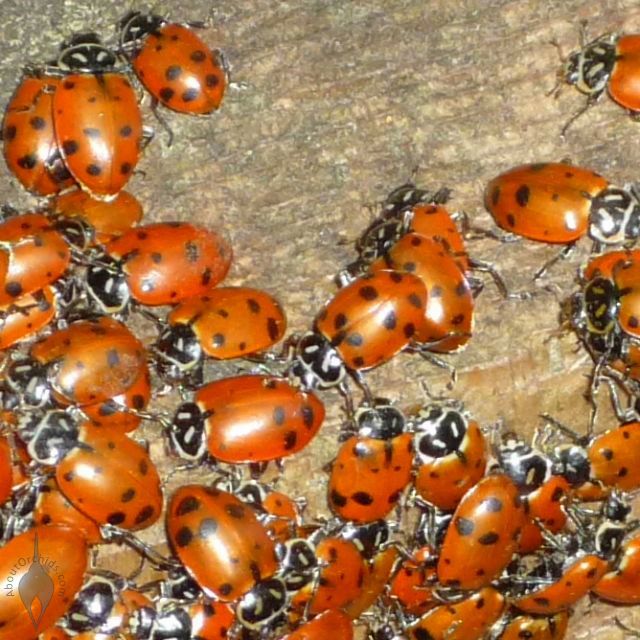
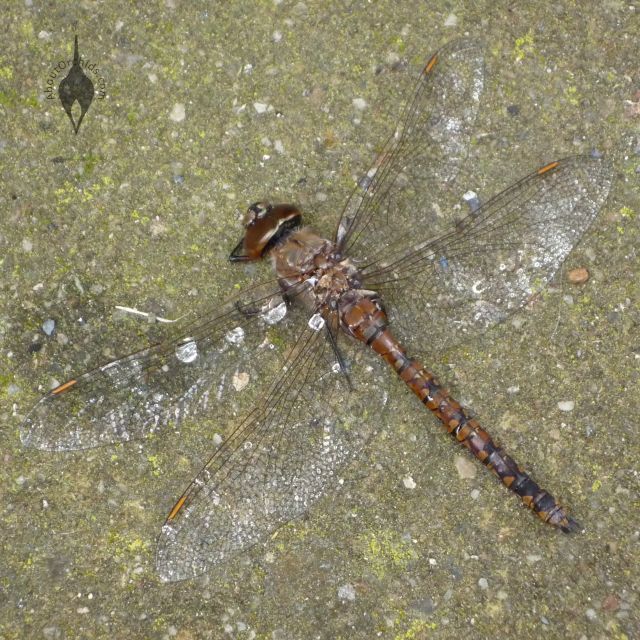
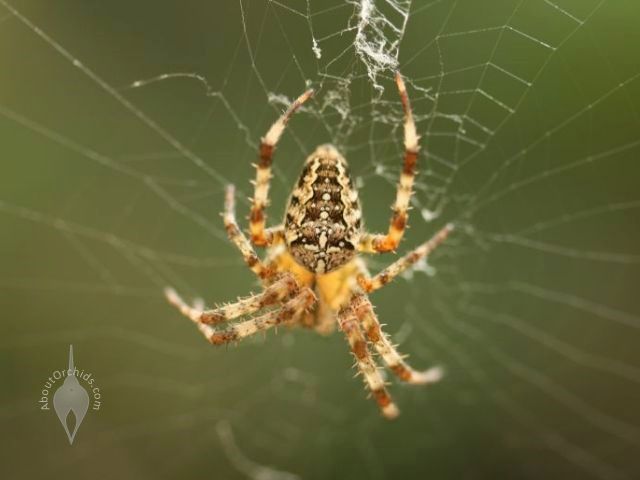
When trying to fight insect pests, remember that some of your best allies are other insects. For every aphid, mite, or beetle munching on a flower bud, there are hungry ladybugs, dragonflies, and spiders looking for lunch. These and many other beneficial insects work for free, have no toxic side effects, and only wish to be left alone to go about their business.

LadybugsDragonflySpider

Orchid growers who keep plants outdoors know that bugs are inevitable. It’s easy to reach for the insecticide, but consider that you’ll kill beneficial insects along with pests. With predators gone, the pest population often returns unimpeded, resulting in an expensive and toxic cycle of chemical use. Without insecticides to interfere, Mother Nature can establish a balanced ecosystem. Beneficial insect predators keep plant eaters in check, and you only need to monitor that your bug-catching workforce is doing the job. In the event of a pest invasion, you can supplement natural predator populations by purchasing ladybugs or beneficial nematodes. If you feel that you need to use chemicals, choose pesticides that only target specific insects, like BT for caterpillars and mosquitoes, so beneficials won’t die with the pests. Let those good bugs stick around, and let Mother Nature work for you.

Offshore Flow

Posted June 12th, 2010 by Marc Cohen
Categories: Growing, Growing Orchids in San Francisco, Problems

When local meteorologists use the phrase “offshore flow,” it’s going to heat up here in the San Francisco Bay Area. Orchid growers on the coast, like me, normally take advantage of the cool fog flowing off the Northern Pacific to maintain good humidity. Those moderate conditions allow many orchid varieties to grow outdoors all year. But when conditions change to offshore flow, the typical marine influence disappears. Instead of cool, moist breezes blowing from the ocean, hot, dry air flows from inland. For example, today it’s 83F (28C) in the shade, 92F (33C) on the back deck, and a desert-like 13% humidity.

Since I don’t have any automatic watering systems, that means I have my work cut out for me. With my mister bottle for indoor orchids and a hose for outdoor orchids, I spray down the plants numerous times during the day. It’s more about wetting the leaves and roots than watering the potting material. In addition, I wet down any surfaces, like the wood surface of our deck, so the evaporating water can supplement the meager humidity.

Even some delicate orchid varieties, like this Masdevallia which likes to stay below 75F (24C) all year, can handle the heat as long as there’s good humidity. Fortunately, this hot spell is only forecast to last for the weekend, so the fog can take over again soon. But for now, I have to grab my mister bottle and go…

Q&A

Posted June 9th, 2010 by Marc Cohen
Categories: Q&A

UPDATE: The spammers have made it impossible to keep comments open here. Instead, please check the guidelines below, and then go to any recent blog post where the comments are still open. You can ask your question anywhere. Thanks!

Do you have an orchid question? Post questions or comments here, and find an answer from the AboutOrchids community.

Q&A Guidelines:

  • Orchid questions and comments only, please.
  • If you have an orchid problem, it helps if you’re descriptive. Different orchid varieties vary greatly in their care needs, so start with what kind of orchid you have. When relevant, describe your growing conditions, like light, water, temps, fertilizer, or humidity.
  • Check AboutOrchids for basics. You may find the answer you’re looking for.
  • Questions are usually answered by me or another person in the AboutOrchids community within a day or two. Please be patient.
  • No spam. Links that are not relevant to the conversation will be removed.

Stream Orchid

Posted June 5th, 2010 by Marc Cohen
Categories: Cool Growers, Dormancy, Fertilizing, Growing, Growing Orchids in San Francisco, Photos

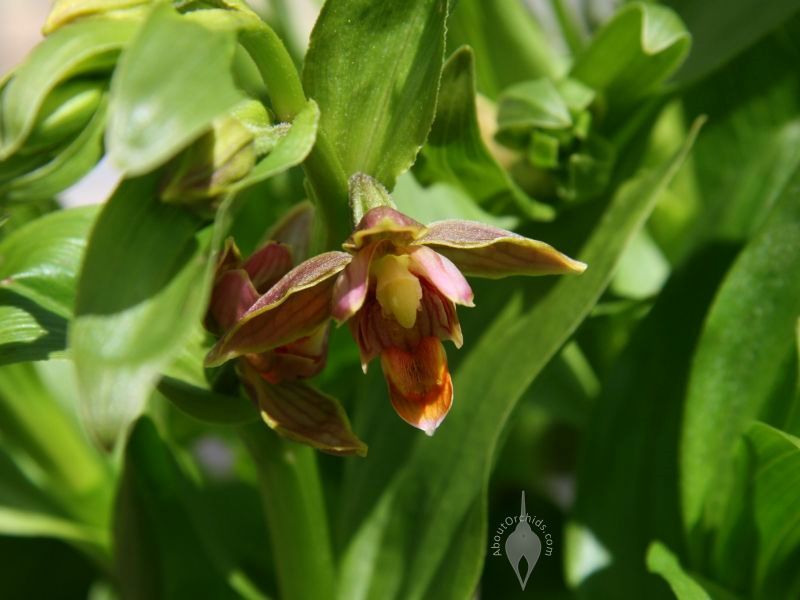
My own orchid collection has species and hybrids from all over the world, but only one that’s native to San Francisco. It may be less glamorous than its tropical relatives, but this Epipactis, or Stream Orchid, really enjoys the local climate. This species has a large range over western North America, spanning from Canada south to Mexico, and from California east to Texas.

Epipactis flowerEpipactis flowerEpipactis flowers and leaves

Also known as the False Ladyslipper, the Stream Orchid is not an air plant. It’s a terrestrial orchid that lives in moist soils along streams, on cliff faces, and in mountain bogs. The plant dies back during winter, and re-emerges from underground tubers the next spring.

Epipactis flowerEpipactis flower close upEpipactis flower side view

Many terrestrial orchids are difficult to grow, requiring highly specialized conditions (yet another reason why you should NEVER remove wild orchids from their natural homes.) However, Epipactis gigantea is relatively easy to cultivate, and adapts to a wide range of conditions. I keep mine in regular potting soil, and keep the pot in a tray of water so it never dries out. It loves a good dose of compost fertilizer, which has helped my plant grow into a vigorous specimen. Certainly it seems right at home.

Epipactis plant with dozens of flowersEpipactis flowerEpipactis flower buds opening

June Orchid Shows

Posted June 1st, 2010 by Marc Cohen
Categories: Botanical Gardens, Events

Orchid shows wind down in the Northern Hemisphere, as summer heat complicates orchid logistics. The Native Orchid Conference in Edmonton, Canada is a notable exception. Starting June 12th, the conference includes perfectly timed field-trips to see North American native orchids at peak blooming times. Meanwhile, as winter begins Down Under, Australian orchid lovers can find plenty of shows.

June 4 – 6
New Orleans Orchid Society Show, Lakeside Mall, 3301 Veterans Hwy., Metairie, Louisiana
June 5 – 6
North of England Orchid Society Annual Show, The Tennants Hall, Tatton Park, Knutsford, Cheshire, UK
June 5 – 6
Natal Orchid Society Winter Show, Durban Botanic Gardens Visitor Centre, 70 St Thomas Rd., Durban, KwaZulu Natal, South Africa
June 11 – 13
Aiea Orchid Show, Aiea Elementary School Cafeteria, 99-370 Moanalua Rd., Aiea, Oahu, Hawaii
June 11 – 13
Tropical Queensland Orchid Council Conference and Show, Townsville Orchid Society Hall, Charles St., Kirwan, Townsville, Queensland, Australia
June 12 – 13
Blacktown Orchid Society Show, Centro Shopping Centre, Prospect Highway and Federal Rds., Seven Hills, NSW, Australia
June 12 – 15
Native Orchid Conference, Lister Centre, Univ. of Alberta, Edmonton, Alberta, Canada
June 17 – 20
The Orchid Society of NSW Annual Winter Orchid Show, St. Ives Shopping Village, Mona Vale Rd., St. Ives, NSW, Australia
June 17 – 20
Sutherland Shire Orchid Society Winter Show, Swanes Nursery, 80 Port Hacking Rd., Sylvania, NSW, Australia
June 18 – 19
Conejo Orchid Society Show and Sale, Grant Brimhall/Thousand Oaks Library, 1401 E. Janss Rd. Thousand Oaks, California
June 18 – 20
Peterborough International Orchid Show, Peterborough Show Ground, Peterborough, Cambridgeshire, UK

Read the rest of this post »

Orchid Bonanza at the Chelsea Flower Show

Posted May 28th, 2010 by Marc Cohen
Categories: Conservation, Events, In the News

If you’re in London, there’s still one more day to catch the Chelsea Flower Show. It’s not an orchid show, but it is the most famous flower show in the world. Among the roses and royals, there are lots of orchids. In fact, the Royal Horticultural Society has proclaimed an “Orchid Bonanza” at this year’s show. There are more orchid displays than ever, and a Lady Slipper species, Cypripedium flavum, won third place for Best Flower in Show.

If, like me, you’re very unlikely to make it to London in time, you can still enjoy this article about the show in The Baltimore Sun. They have a nice photo gallery that includes 4 pictures of Phals.

This BBC article features an award-winning Miltonia display. There’s a good photo gallery there, too.

AsiaOne News has a story about Queen Elizabeth admiring some Taiwanese orchids during her visit to the show.

Also check out this article from the Telegraph, “Guns and chainsaws highlight plight of the rainforests” about an award-winning display that pleads for conservation. It’s an essential message, even among all those dazzling flowers.