Oeoniella

Posted March 17th, 2010 by Marc Cohen
Categories: Fragrant Orchids, Growing, Mini Orchids, Photos, Warm Growers, Watering

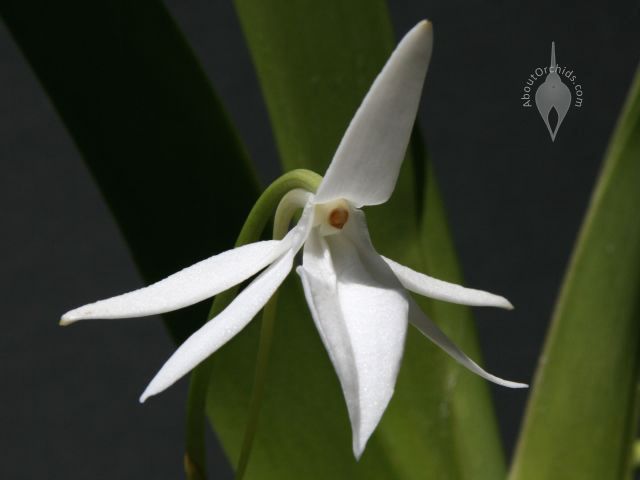
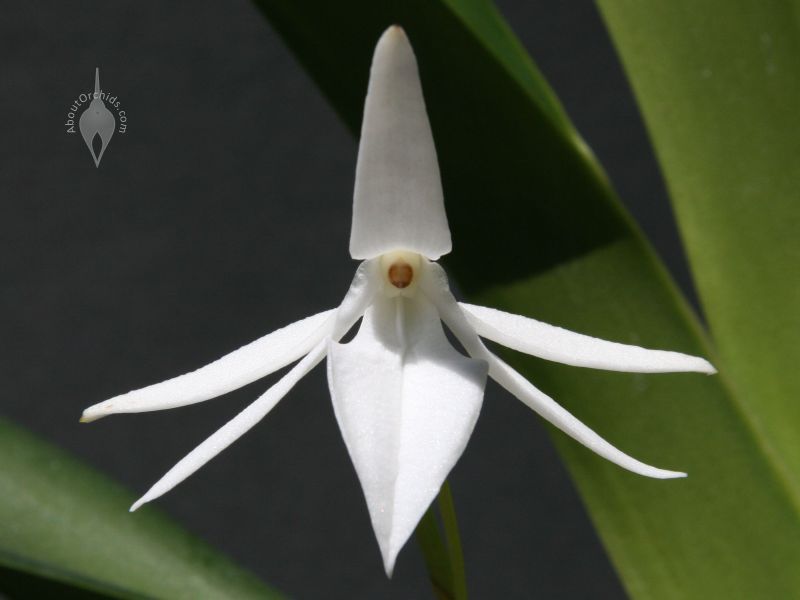
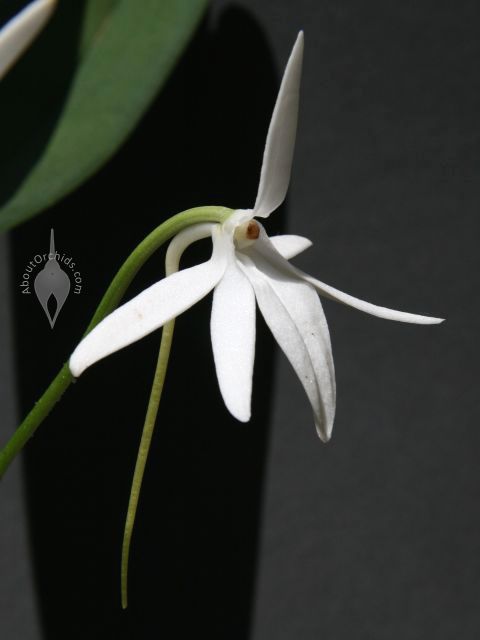
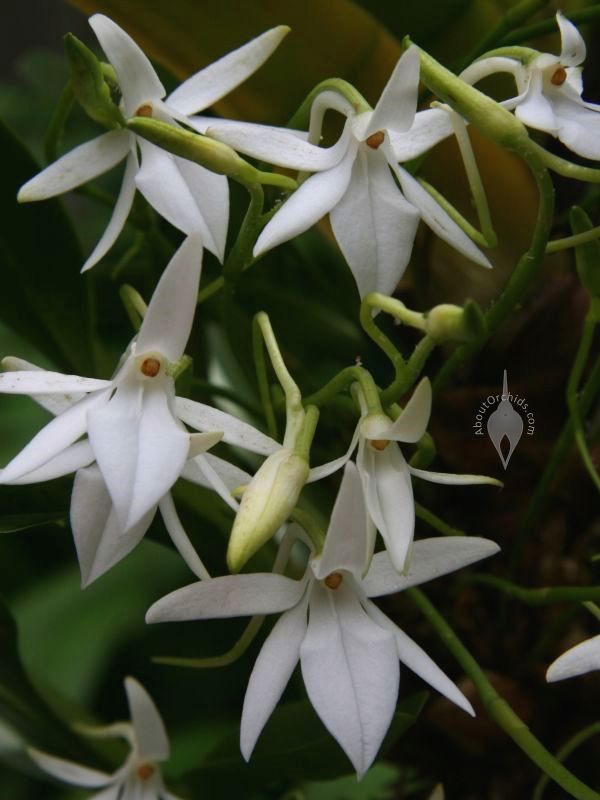
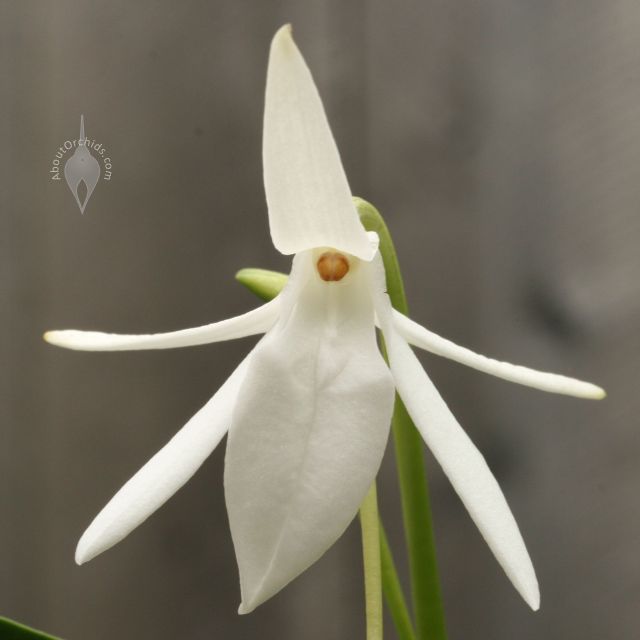
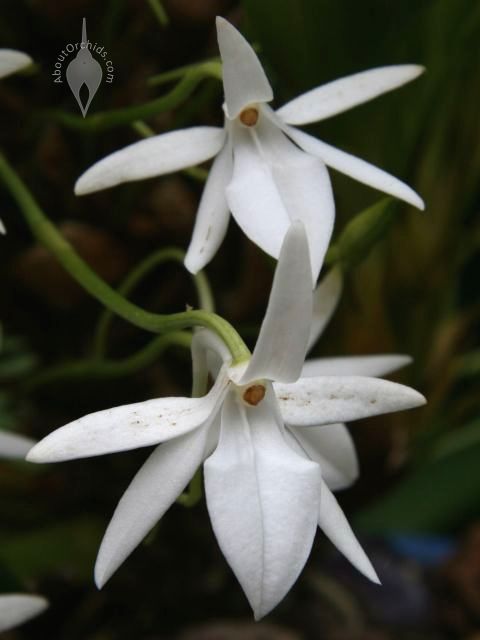
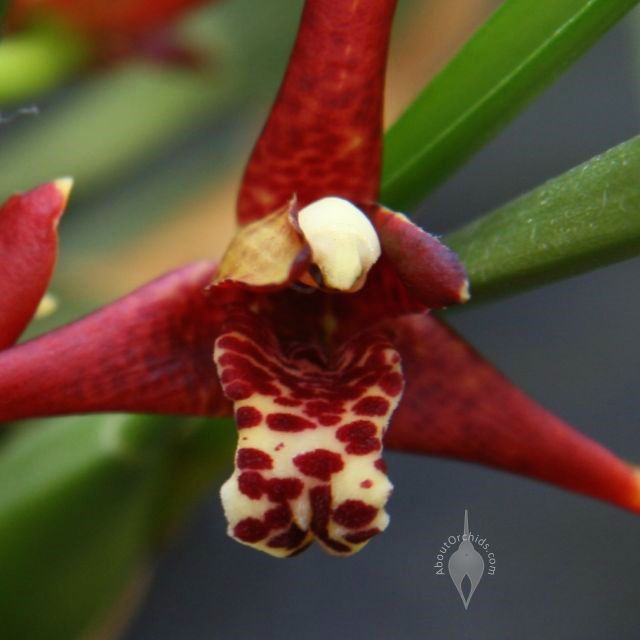
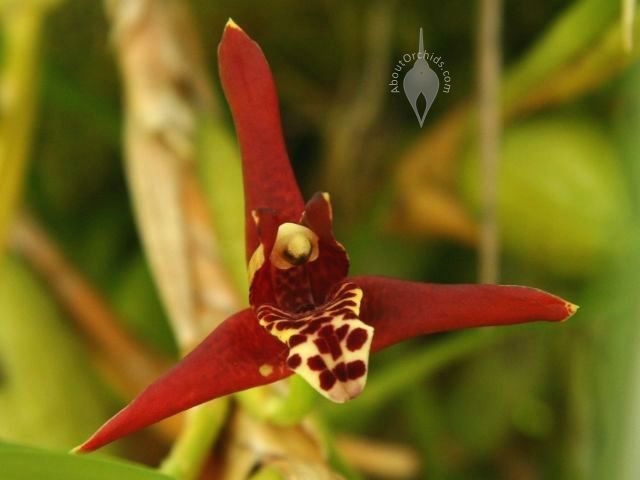
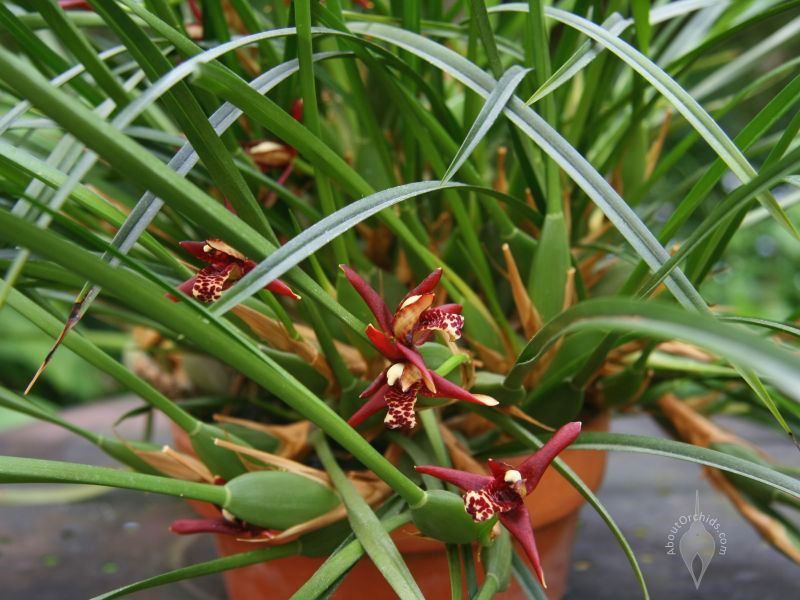
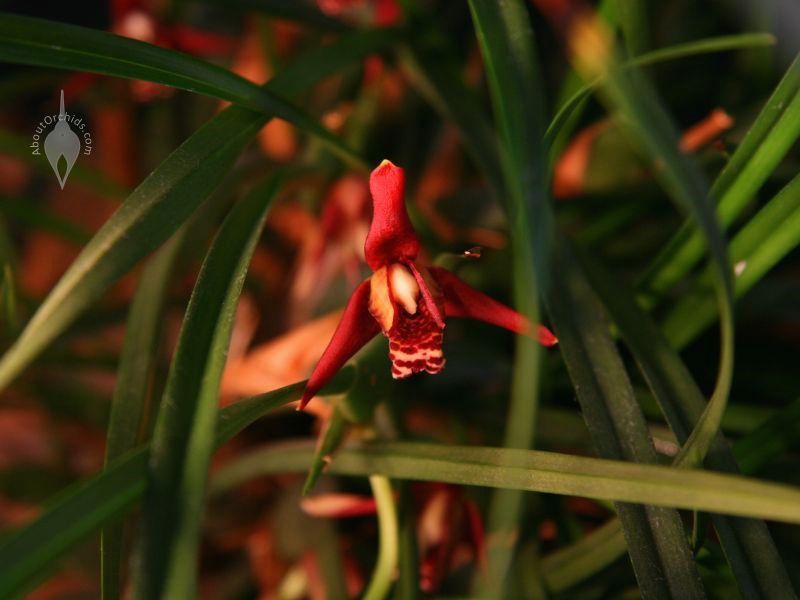
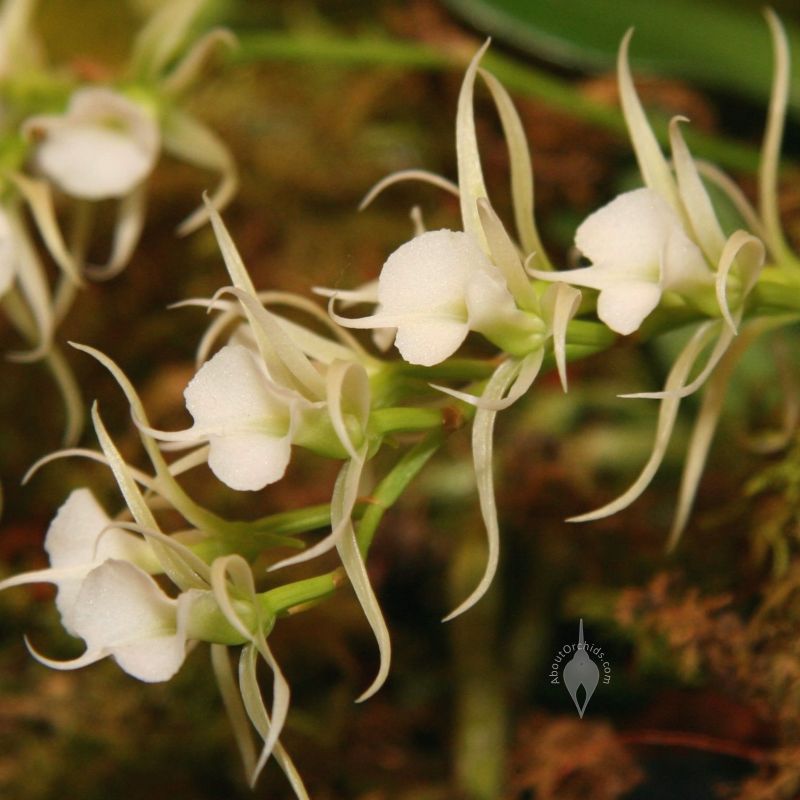
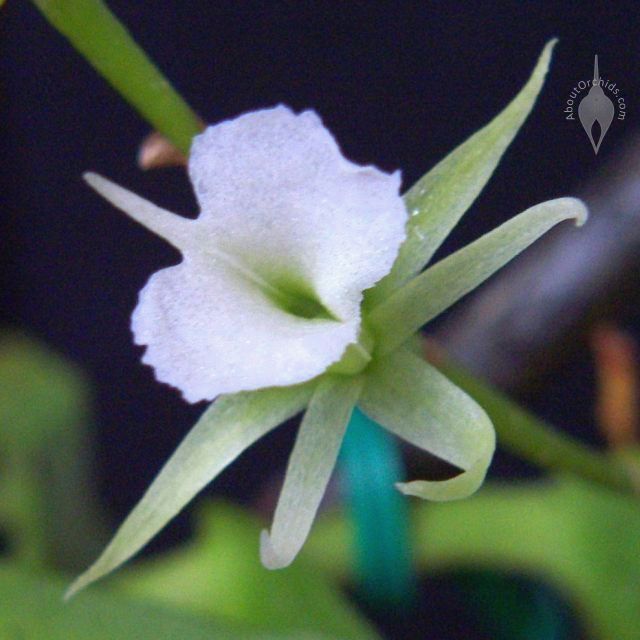
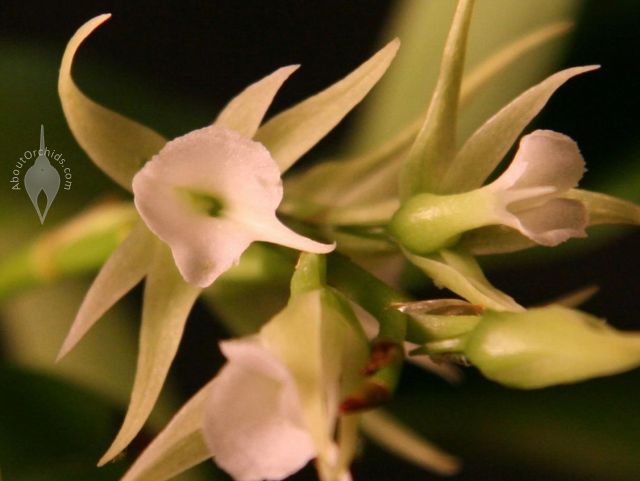
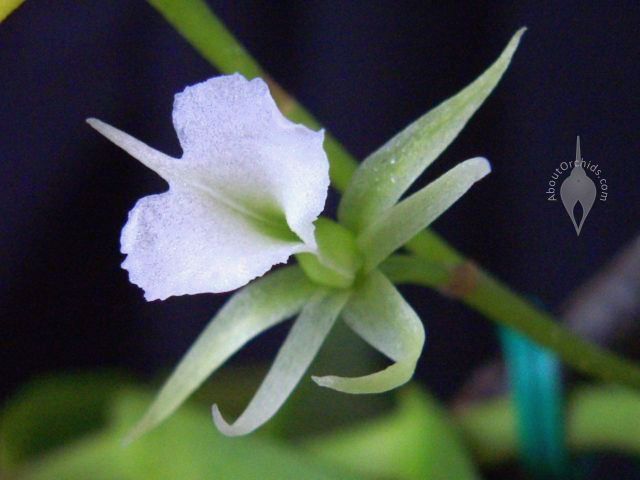
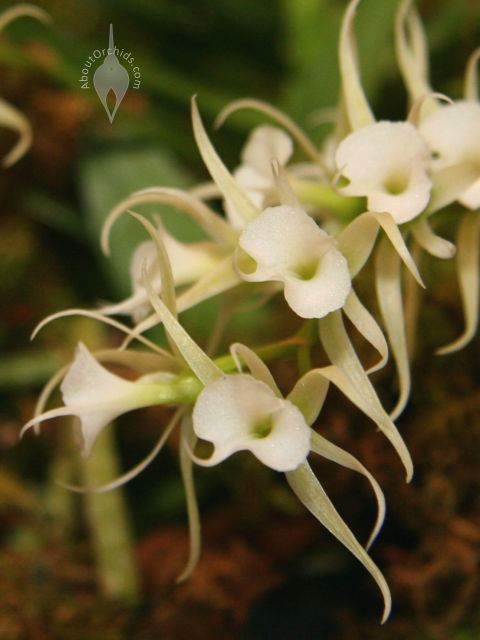
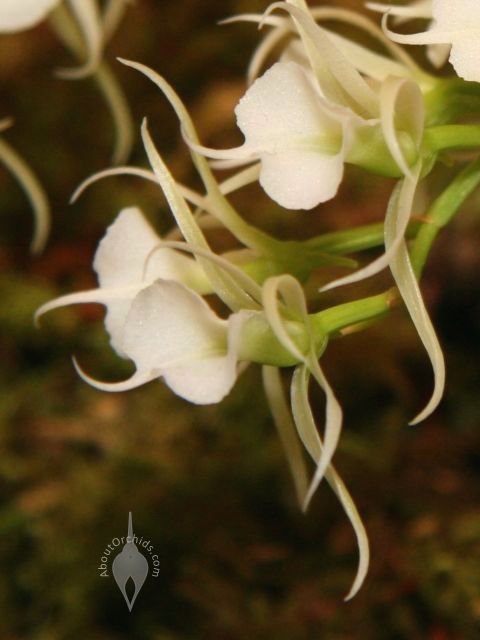
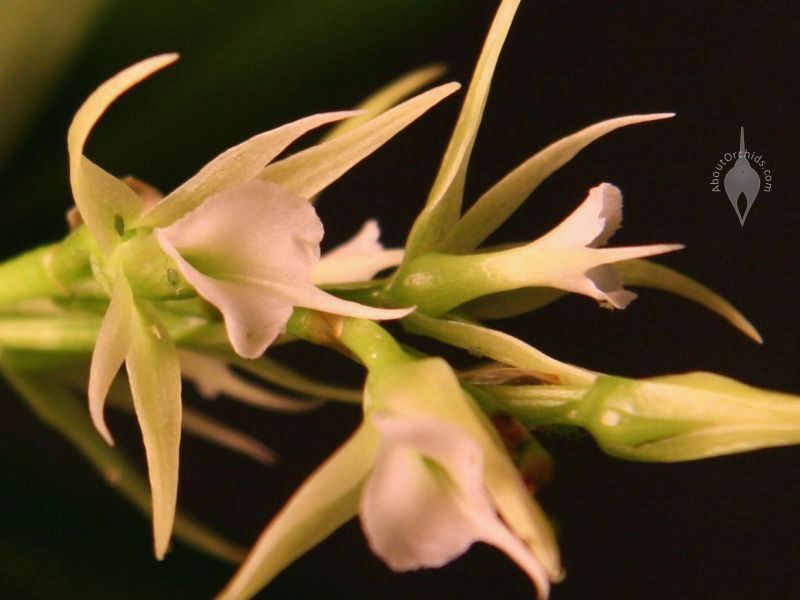
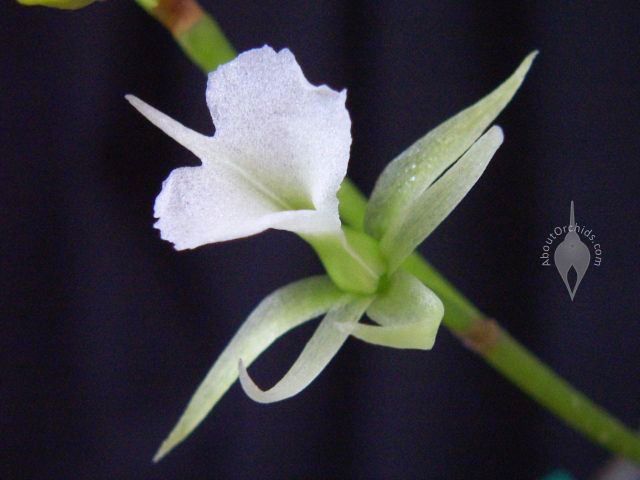
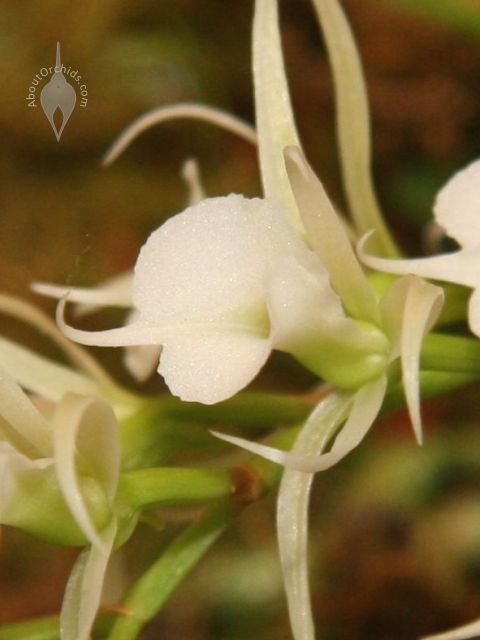
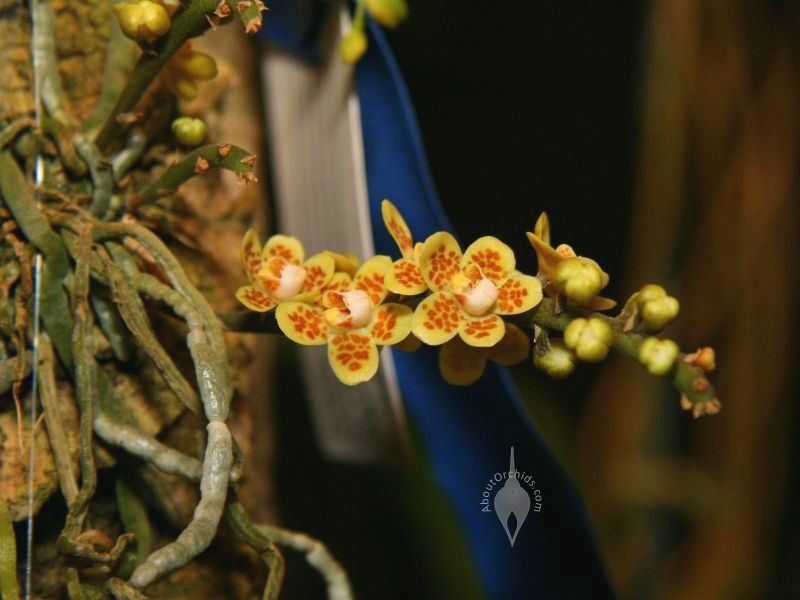
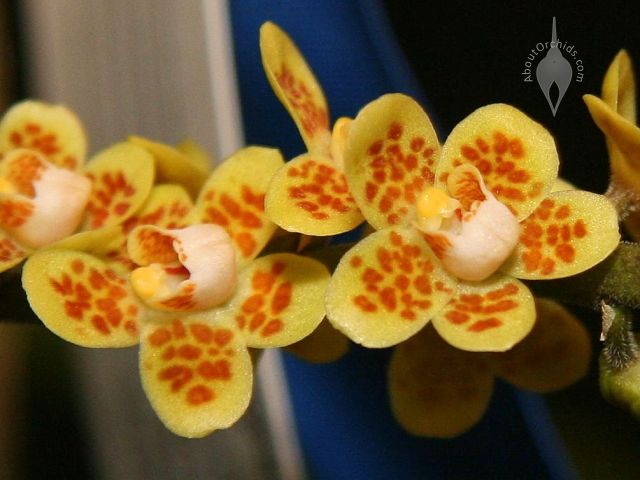
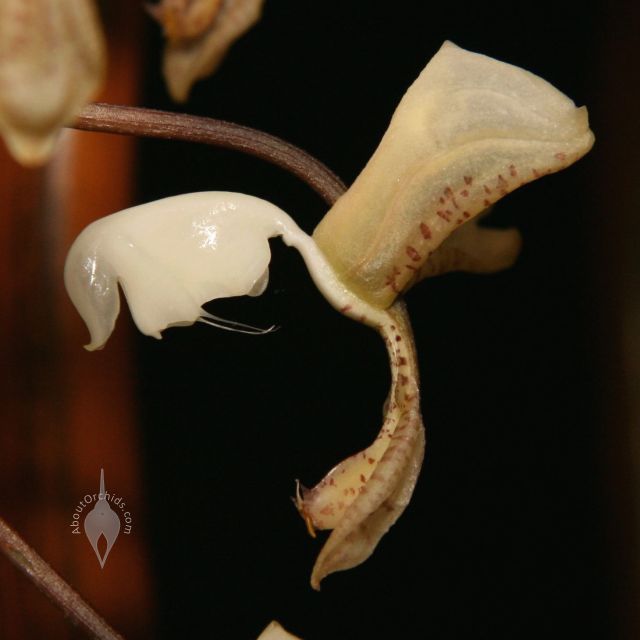
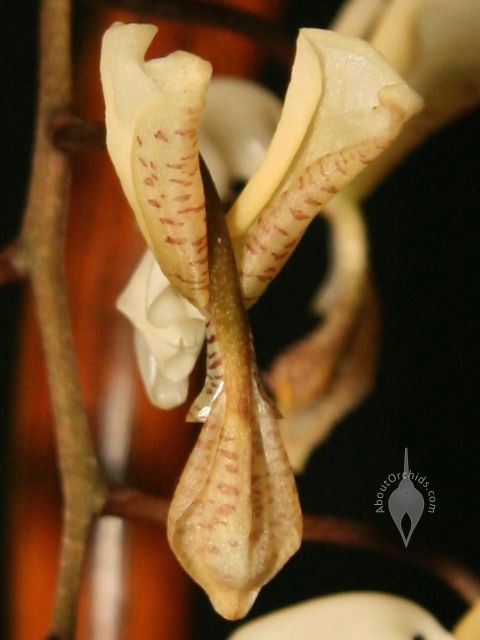
No matter how many vowels in its name, Oeoniella has plenty of charms. It’s an orchid species that’s easy to grow, with dainty flowers that produce a strong, sweet scent.

Oeoniella flowersOeoniella flowerOeoniella flowers

Pronounced “oh-ee-NEE-ella,” rhymes with “go see me, Ella,” its name comes from Greek words describing the flower’s resemblance to an eagle’s wings. Maybe the pointed tip on the flower lip also inspired thoughts of a bird’s beak.

Oeoniella flowerOeoniella flowersOeoniella flowers

Oeoniellas are native to Madagascar, the Seychelles, and other small islands of the Indian Ocean. They need high humidity, bright light, warm temperatures, and regular water. With good humidity, they can handle temps over 90F (32 C.) Flowers can last a month or more. Like many white orchids from Africa, they’re only fragrant at night when their moth pollinators are active.

Oeoniella flowers with aphidsOeoniella flowerOeoniella flower

Spring Forward

Posted March 13th, 2010 by Marc Cohen
Categories: Dormancy, Fertilizing, Growing, Problems, Watering

Northern gardeners who are enduring a long and snowy winter may take some solace that spring is arriving in San Francisco. The old Japanese Maple in the back garden is leafing out, and the leaves of my Sobralia have turned light green, telling me that the sun is strengthening. We had to endure some chilly temps at the beginning of the season, but otherwise it’s been a mild and rainy winter here. After a stormy day yesterday, the sun is out today. With spring coming by calendar and thermometer on the California coast, it’s time for some orchid chores.
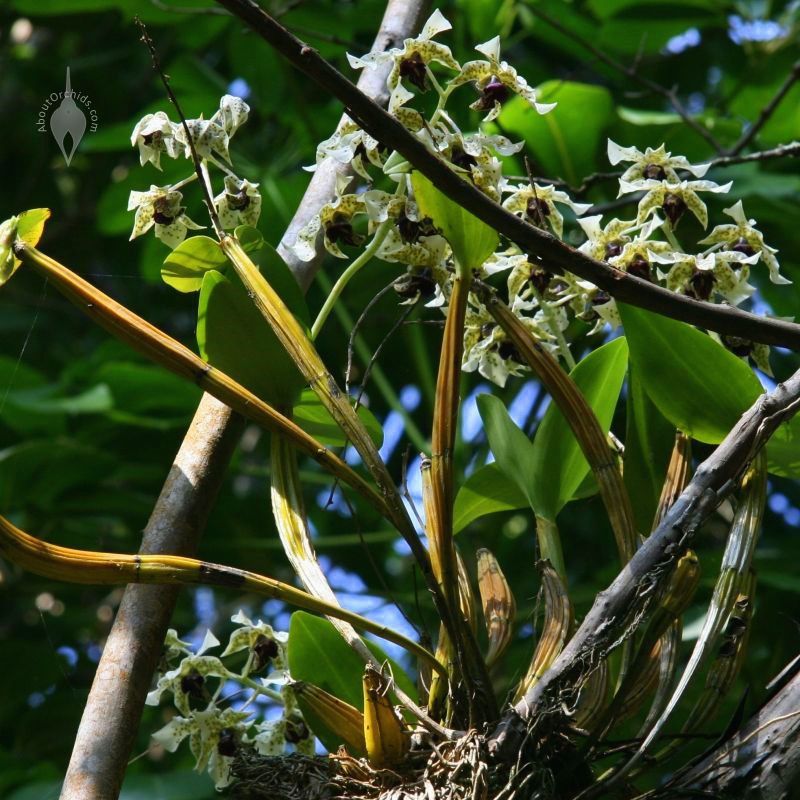
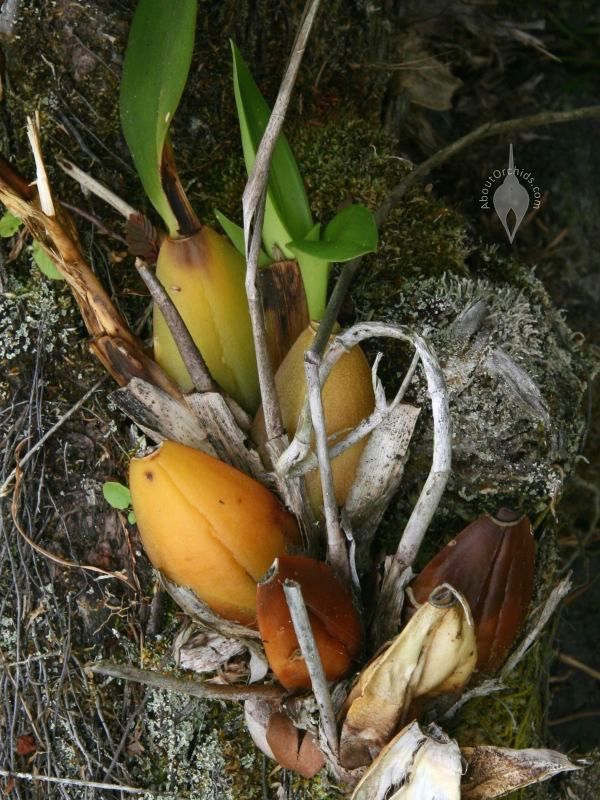
  • Move orchids from their brighter winter locales to the shade needed for spring and summer. For most orchids, if leaves are a light green color, then the orchid is receiving enough light to bloom.
  • Keep an eye out for new leaf and root growth, which often starts after flowers finish. This is a good time to repot, if necessary.
  • For dormant orchids, increase watering and fertilizing gradually. With deciduous orchids like Bletilla and Cycnoches, water new growth sparingly for the first few weeks. Too much water can rot new leaves.
  • As always, maintain high humidity and good air movement around plants. New growth is especially susceptible to pests when the air is dry or stagnant.
  • For growers in colder climates, continue to watch for pests, keep plants in brighter light, and take heart that the long winter shall pass.

The Law of the Jungle

Posted March 10th, 2010 by Marc Cohen
Categories: Orchids in the Wild, Photos

After enjoying the polished perfection of an orchid show, it’s an interesting contrast to see some wild orchids. In the wild, orchids endure damage from wind, rain, animals, and insects. Other plants grow over and around them. Jungle debris accumulates and rots away.

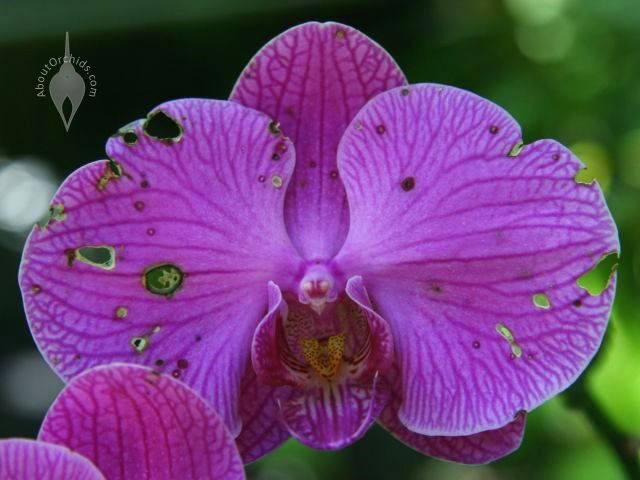
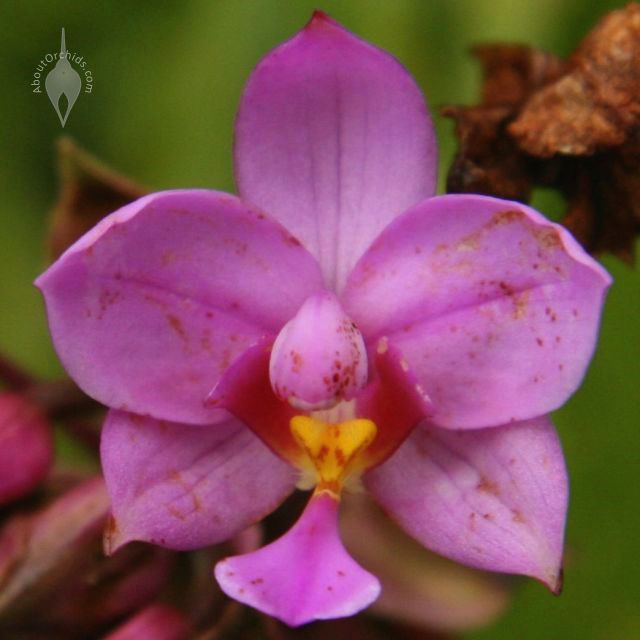
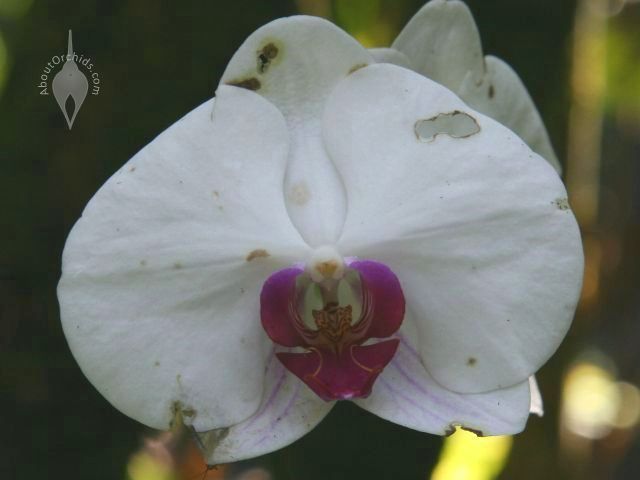
Bug-eaten Moth OrchidDamaged SpathoglottisDamaged Moth Orchid

When you’re surviving in the wild, perfection is a luxury. These eaten and beaten orchids aren’t in a beauty pageant. They’reĀ  just trying to bloom and reproduce like any plant, and they don’t worry about appearances. A few dead leaves or dried pseudobulbs won’t kill the deal.

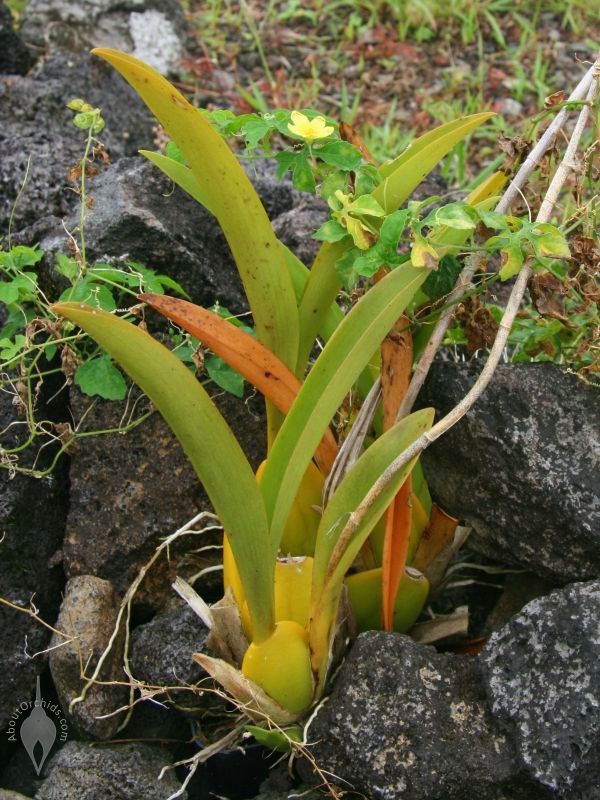
Orchid with yellow leaves and flowering vine on topDendrobium with dried yellow pseudobulbsNew growth emerging from brown pseudobulbs

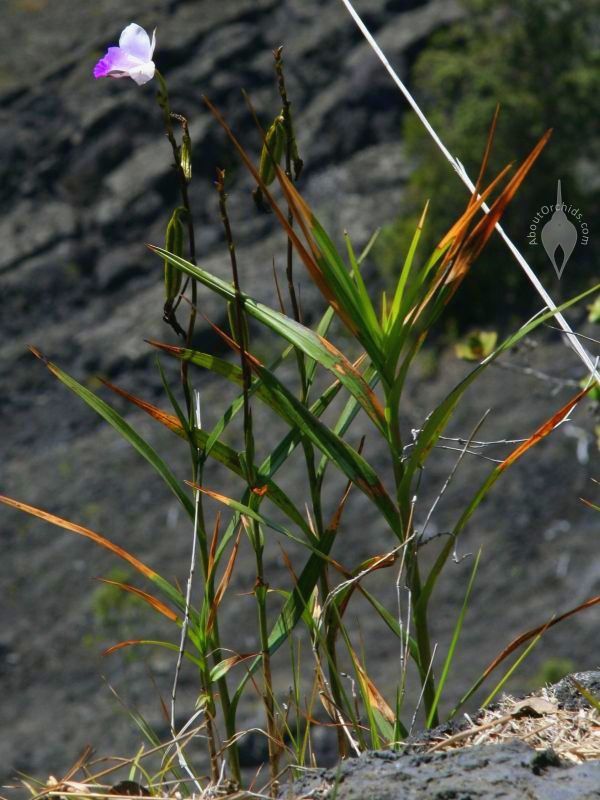
The Law of the Jungle may seem brutal, but orchids have evolved to be tough enough to make it. Take these imperfect specimens as consolation that a beaten-up orchid can still have some life in it. Even if a judge won’t give a ribbon to a munched-up Phal, the orchid doesn’t care. It’s just trying to survive another day in the jungle.

Cricket and damaged Spathoglottis flowers Arundina with flower and brown leavesBug-eaten Moth Orchid

More from Pacific Orchid Expo 2010

Posted March 6th, 2010 by Marc Cohen
Categories: Events, Fragrant Orchids, Growing Orchids in San Francisco, Mini Orchids, Photos

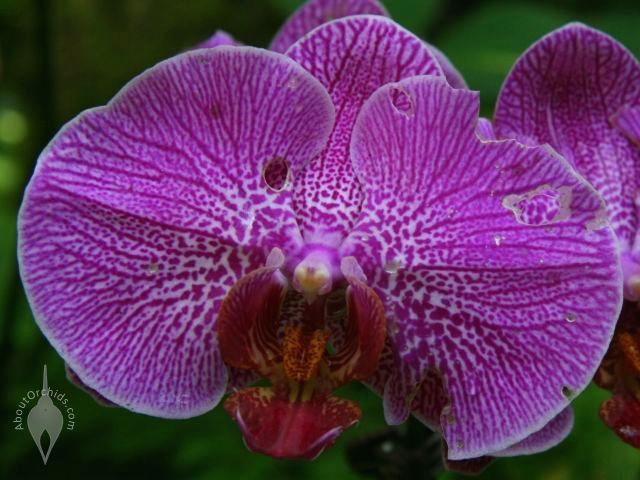
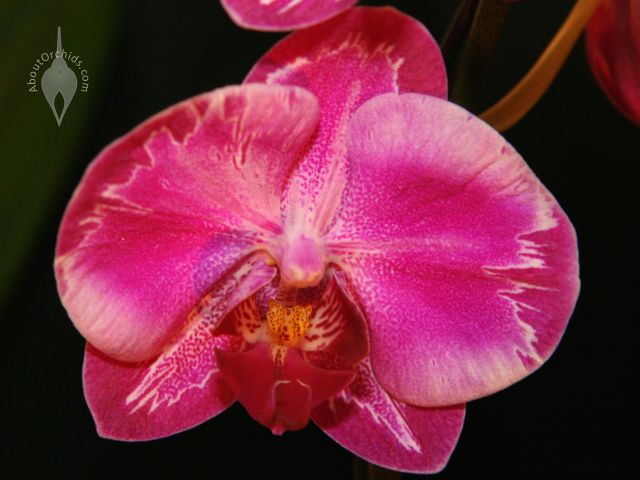
There were so many remarkable orchids at this year’s Pacific Orchid Expo that it would be impossible to fit them into just one post. For example, these first two photos show stunning Phal hybrids. The third photo shows a smaller Phal species that’s native to the Philippines. It may be less showy, but it’s important in the Phal family tree as one of the original parents used to create hybrids.

Moth Orchid hybridMoth Orchid hybridMoth Orchid species

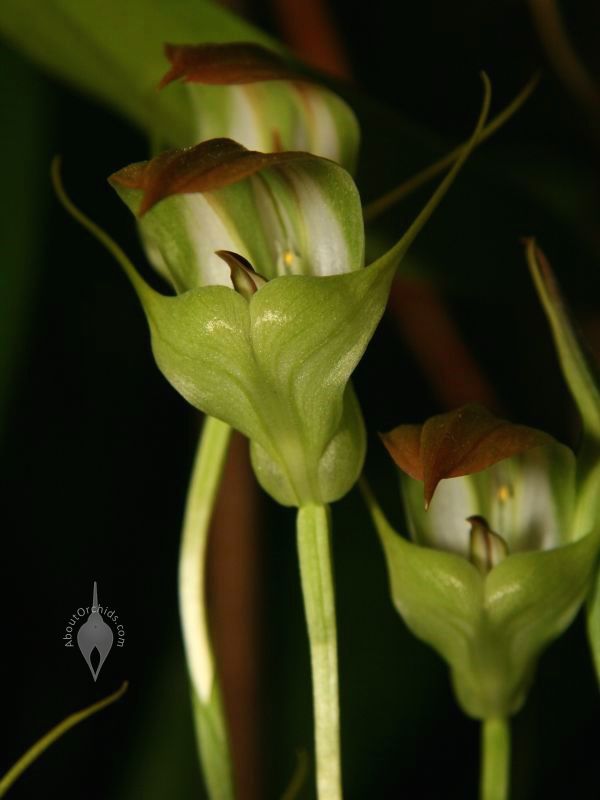
Have you ever seen a leafless orchid? Like the famous Ghost Orchid, the small Chiloschista orchid in the next two shots has chlorophyll in its roots. In the third photo, an unusual Australian Pterostylis does have leaves, although you can’t see them here. It’s known as the King Greenhood, and it’s related to the smaller greenhood species I keep.

Leafless orchidLeafless orchid - flower close upAustralian Greenhood flowers

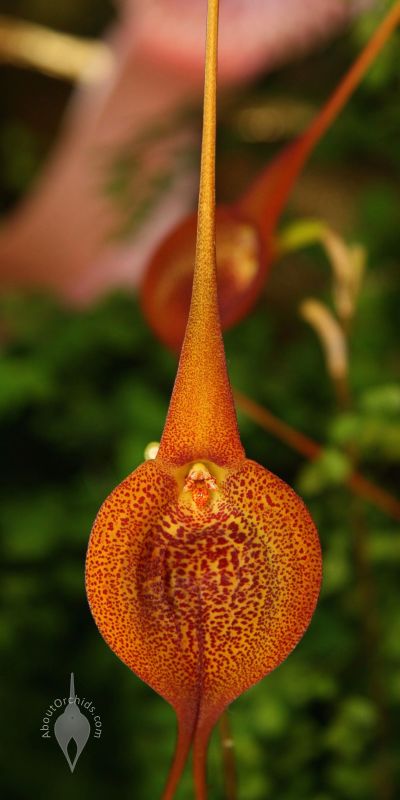
These Masdevallias were also among the show’s spectacular specimens. Also in the Masdevallia family, the frilly and colorful leaves of this tiny Lepanthes compensate for its minuscule flowers.

Masdevallia flowersMasdevallia flowerLepanthes leaves with tiny flowers

Finally, strange Gongora flowers give the impression of flying birds. With petals stretched back like wings, they fly around their flower spike. These sweetly scented flowers last less than a week, and like the annual orchid show, require patience for next year after they’re gone.

Gongora flowers with Mardi Gras beads in backgroundGongora flower side viewGongora flower

March Orchid Shows

Posted March 2nd, 2010 by Marc Cohen
Categories: Botanical Gardens, Events

On cue for spring, orchid shows all over the world invite you to see amazing orchids, and meet local growers and vendors. This month, major shows are taking place in Taiwan, London, Santa Barbara, San Diego, Montreal, Chicago, Sao Paulo, and Sydney.

March 5 – 7
Victoria Orchid Society Show, Univ. of Victoria, Student Union Building, Finnerty St., Victoria, British Columbia, Canada
March 6
Wessex Orchid Society Show, Portchester Community School, Whitehart Ln., Portchester, Hampshire, UK
March 6 – 7
South Bay Orchid Society Show, Torrance Cultural Arts Center, 3330 Civic Center Dr., Torrance, California
March 6 – 7
Denver Orchid Society Show, Tagawa Garden Center, 7711 South Parker Rd., Centennial, Colorado
March 6 – 7
Oregon Orchid Society Show, Doubletree Lloyd Center Exhibition Hall, 1000 Multnomah Blvd., Portland, Oregon
March 6 – 15
Taiwan International Orchid Show, Taiwan Orchid Plantation, 31 Sheng Li 1st St., Rende Shiang, Tainan Hsin, Taiwan
March 11 – 14
Orchid Society of Coral Gables Show, Fairchild Tropical Botanic Garden, 10901 Old Cutler Rd., Coral Gables, Florida
March 12 – 14
Maryland Orchid Society Show, Timonium Fairgrounds, 2200 York Rd., Timonium, Maryland
March 12 – 14
Port St. Lucie Orchid Society Show, Port St. Lucie Community Center, 2195 SE Airoso Blvd., Port St. Lucie, Florida
March 12 – 14
Santa Barbara International Orchid Show, Earl Warren Showgrounds, 3400 Calle Real, Santa Barbara, California

Read the rest of this post »

Candyfest 2010

Posted February 28th, 2010 by Marc Cohen
Categories: Events, Growing Orchids in San Francisco, Photos

If you saw me at Pacific Orchid Expo 2010, it’s likely I looked like a kid in a candy store. Eyes wide, I’m at the mercy of the sights and scents as I jump from one orchid treat to the next. Fortunately, unlike candy, photos have no calories.

Pacific Orchid Expo exhibitCymbidium flowersEpidendrum flowers

Whether it’s new hybrid colors on a Cymbidium or an Epidendrum, or a fascinating Dendrobium species, each one is its own special delight. This year’s ‘Carnaval’ theme also added to the show’s flavor, as seen with an eye-catching Mardi Gras mask made from Cymbidiums.

Dendrobium flowers and budsLady SlipperZygopetalum flower

Cymbidiums displayed for the Carnaval show themePhalaenopsis flowersMasdevallia flower

With remarkable individual orchids and breathtaking mass displays, it’s easy to become engrossed by tens of thousands of orchids at the show. So if I saw you there and didn’t say hello, sorry about that. I was just a kid lost in a candy store.

Lady SlippersLady SlipperLaelia flower

Pacific Orchid Expo

Posted February 25th, 2010 by Marc Cohen
Categories: Events, Growing Orchids in San Francisco, In the News, Photos

Vanda flowerPhalaenopsis flowersMasdevallia flower

These 3 pictures from last year’s show should be enough to convince you to come to this year’s Pacific Orchid Expo. If you need more convincing, or just want to see more pictures, check out this link to a local news story about the show. Held at Fort Mason, the San Francisco Orchid Society’s annual event is the largest orchid show in the nation. This year’s theme is “Carnaval” celebrated with vibrant orchids. The show runs from Friday, Feb. 26 through Sunday, Feb. 28, with a special Gala Benefit on Friday night. There will be thousands of orchids on display, and thousands more for sale. Vendors come from all over California and the West, and even Hawaii and South America. See you there…

Heliconias

Posted February 21st, 2010 by Marc Cohen
Categories: Botanical Gardens, General Gardening, Photos

Besides orchids, few flowers inspire more superlatives than Heliconias. These blooms scream tropical. Sometimes called lobster-claws, wild plantains, or false birds-of-paradise, their bizarre flowers have wild colors and shapes.

Heliconia flowers and leavesBrazilian Heliconia flowerHeliconia flower

Parrot Heliconia Heliconia flowerHeliconia flower

These remarkable blooms are actually small flowers encased in large, colorful bracts. Some varieties have flower spikes that grow more than 8 feet (2.4 m) long. Heliconia flowers can hang down, stick up, or have a horizontal direction. Many have zig-zags and twisty-turns that seem to defy the imagination.

Heliconia flowerColombian HeliconiaVery long flowers of a Colombian Heliconia

Heliconias are banana and ginger relatives, and it’s no surprise that they’re hummingbird favorites. They’re native to jungles of tropical America and some Pacific Islands. These photos show plants growing in a rainforest climate at Hawaii Tropical Botanical Garden. In colder areas, some Heliconias can be grown outdoors as container plants, and moved indoors for winter.

Heliconia flowerHeliconia flowersHeliconia flower

Up A Tree

Posted February 17th, 2010 by Marc Cohen
Categories: Botanical Gardens, Orchids in the Wild, Photos

If you’re ever in a tropical rainforest, and you’re wondering where the orchids are, look up! After all, most orchids are epiphytes, or air plants, which live in the forest canopy. In the wild, they attach to tree trunks and branches. Roots grow into cracks and crevices of the bark, but they don’t harm the trees. Often the orchids are high up and tough to see, but Hawaii Tropical Botanical Garden has lots of spectacular specimens in view.

Phalaenopsis blooming in treeCattleya blooming in a treePhalaenopsis plant with roots attached to tree

Oncidium hybrid blooming in treeWhite and purple Cattleyas blooming in treeCattleya hybrids in tree

Orchids share the crowded trees with ferns, bromeliads, vines, mosses, lichens, insects, birds, lizards, and a miraculous variety of other living things. Even when out of bloom, it’s possible to spot orchids by looking for webs of white roots attached to trees or hanging in the air. Rain is usually plentiful, but constant high humidity keeps these roots from drying out if rains are scarce.

Phalaenopsis attached under branch with roots growing upWhite orchid roots hanging in the airOrchids attached to tree with old flower spikes hanging down

These exposed roots help demonstrate how orchids differ from other houseplants. You can clearly see why orchid roots need good air flow and water drainage. Regular potting soil is too dense. Loose mixtures of bark or moss simulate jungle conditions by allowing air and water to pass through. That’s how potted orchids allow us to enjoy some of the rainforest canopy without having to strain our necks.

Unrequited Love

Posted February 14th, 2010 by Marc Cohen
Categories: Growing, In the News, Orchids in the Wild

Whether you had a nice valentine’s weekend or not, I’ll think you’ll enjoy this NPR story and remarkable video of a frustrated bee. The objects of the bee’s intentions are orchids that leave him brokenhearted with pollen stuck to his head. C’est l’amour, but it provides a great close-up of orchid pollination. Here’s a direct link to the same video in the story.

If you did have a better valentine’s weekend than that bee, maybe you received a gift orchid, and now you’re terrified that you’re going to kill it. Relax — it’s very likely that your gift is a tough hybrid, and with some basic orchid care info, it’s no harder to grow than other houseplants.

  • All orchids need bright light and high humidity. Low humidity will cause the flowers to wilt quickly.
  • It helps to identify your orchid so you can learn its specific light, temperature, and water needs. You don’t need to figure out its exact name, just the family of orchids where it belongs.
  • Don’t worry about watering your orchid right away. Depending on what kind of orchid you have, and whether it’s in winter dormancy, it may not need water for several weeks.
  • You’ll eventually need to remove wrapping paper, ribbons, or decorative containers if they’re blocking the holes in the bottom of the flower pot. Orchids need good air flow and water drainage around their roots, and they’ll quickly rot if left sitting in water.