Mounted Orchid Care

Posted May 21st, 2013 by Marc Cohen
Categories: Fertilizing, Growing, Photos, Watering

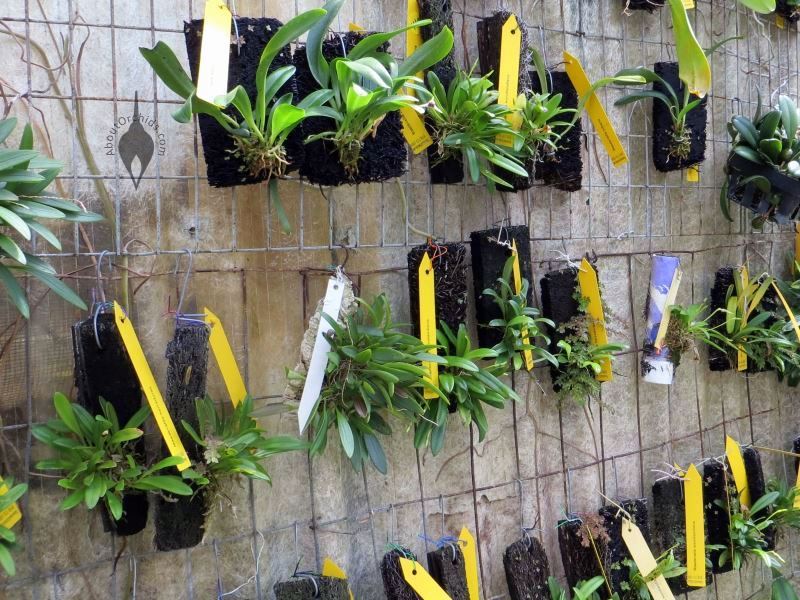
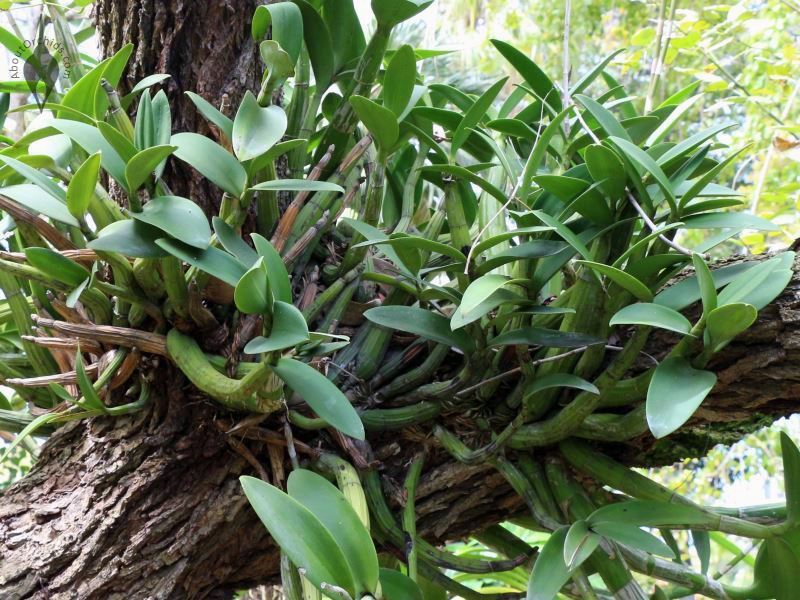
Who needs flowerpots? Orchids can grow attached to wooden mounts or trees, mimicking how they live in the wild as air plants. Despite this more natural look, mounted orchids aren’t as common as potted ones, since mounted orchids need extra care. Potted plants are usually better choices for orchid beginners.

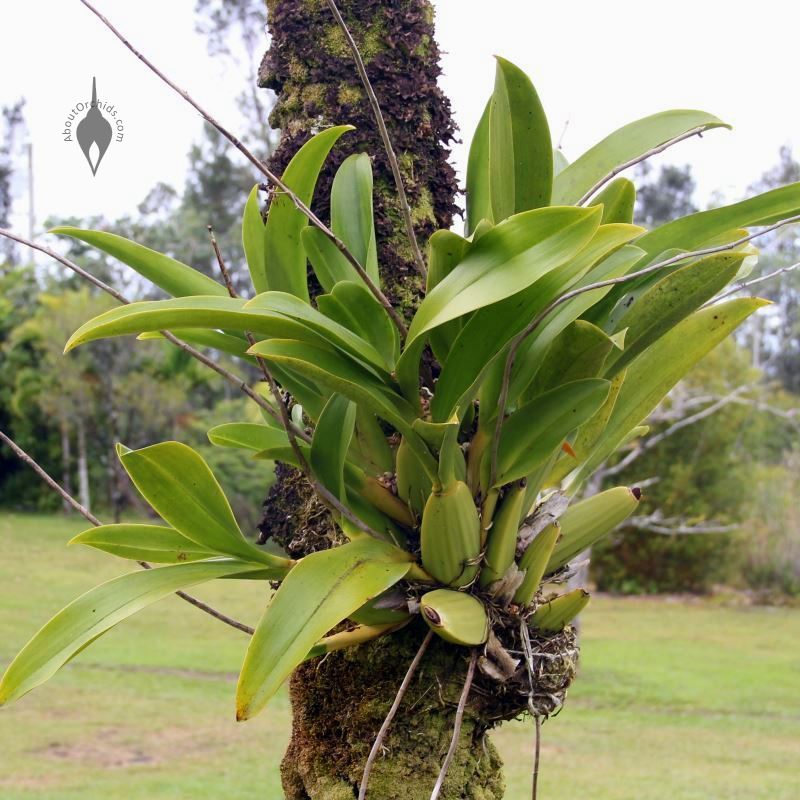
Moth Orchid mounted in palm treeSamurai Orchids mounted on treefern barkOrchid mounted on tree trunk

For gardeners in tropical and subtropical areas, people with greenhouses, and experienced growers, mounted orchids can fill vertical gardens. Many types of orchids prefer to grow on mounts. For example, Vandas like to have their roots in the open air. Cattleyas need to dry thoroughly between waterings. Angraecums don’t like repotting.

To grow mounted orchids, consider how their care differs from potted orchids:

  • Extra water – Mounted orchids need more frequent waterings, especially on warm or windy days. Exposed roots dry much faster than roots in a pot. That’s good, because it limits problems with bacterial or fungal infections.
  • Constant high humidity – All orchids need high humidity. However, without moist potting material around their roots, mounted orchids are very susceptible to dry air. Maintain at least 50% humidity at all times. Heaters and air conditioners can dry the air, leading to problems when growing mounted orchids indoors.
  • Consistent fertilizer – Mounted orchids need regular fertilizer. Without decomposing potting material as nutrients, their roots have no food reserves. Fertilize weakly, weekly.
  • On trees or in trees? – Rather than attaching plants directly onto trees, many growers hang mounted orchids on branches. On its own mount, the plant is not permanently attached to the tree. Growers can bring orchids indoors for harsh weather, or to better enjoy the blooms.
  • Remounting – If an orchid outgrows its mount, it may be best to attach the entire plant, with its old mount, to a new mount. Removing an orchid from its old mount can severely damage the roots. If an old mount breaks or falls apart, remove all rotten material, and attach the orchid to a new mount.

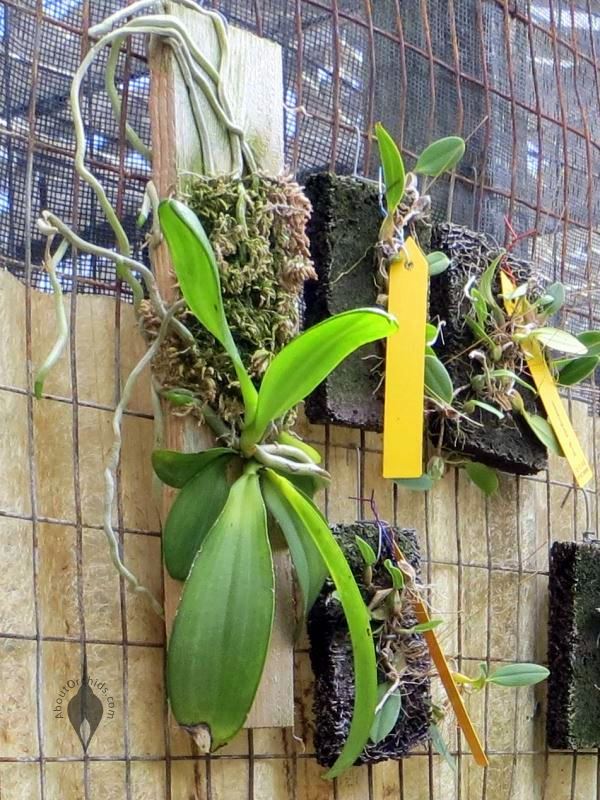
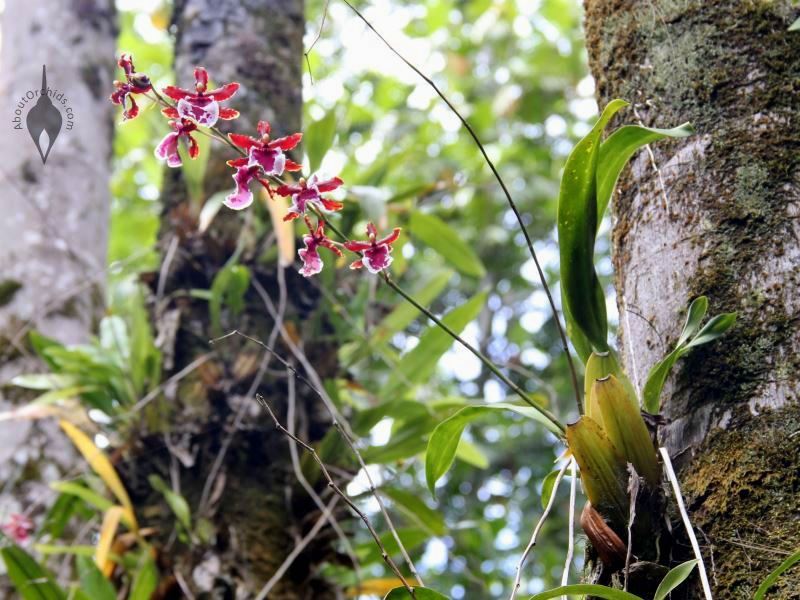
Mounted orchids including Moth Orchid on leftOncidium hybrid mounted in treeBrassavola mounted on slanted branch

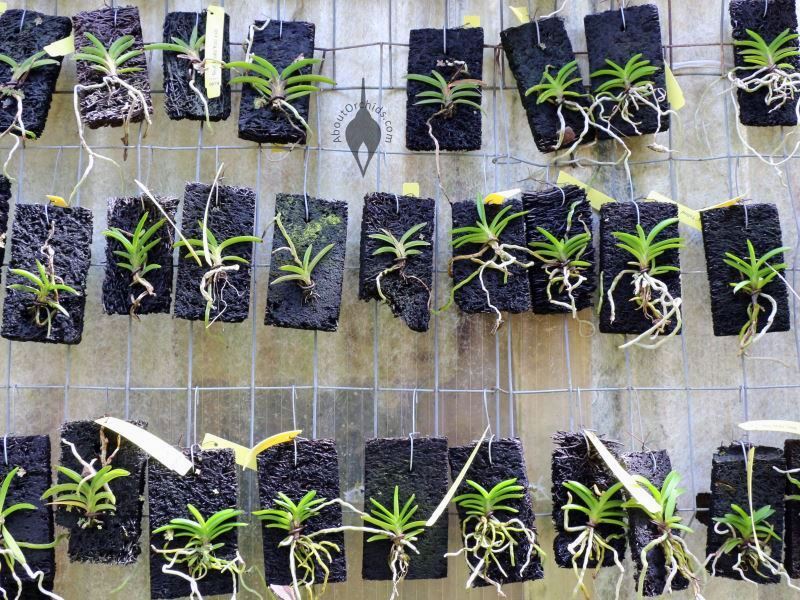
Small mounted orchidsOrchid mounted on cork with fishing lineOrchid mounted on two branches

Check back soon to explore further. I’ll cover how to mount an orchid.

An Orchid Grows in Ithaca

Posted May 16th, 2013 by Marc Cohen
Categories: In the News

Take a virtual tour of a large East Coast orchid greenhouse in “An Orchid Grows in Ithaca,” courtesy of Mountain Home magazine. In Ithaca, New York, The Orchid Place is a family operation which supplies blooming orchids to supermarkets from Maine to Maryland. Begun in 2005, it has a 10,000 square foot (929 square meter) greenhouse with 150,000 orchids. The plants begin life in Taiwan, one of the world’s largest orchid exporters. Young plants are shipped to greenhouses like this one in Ithaca belonging to the Liu family. Here they acclimate and mature before landing on supermarket shelves.

Surprisingly for an operation of this size, The Orchid Place is not automated, and does all its plant care by hand. Thousands of Phal, Paph, Cattleya, Oncidium, and Dendrobium hybrids thrive in an area best known for long, cold winters. I know about the climate there because, before I moved to San Francisco in the late 1980’s, I lived in Ithaca while I attended Cornell University. I even owned my first orchid there, bought during a visit to Washington DC’s National Botanic Garden. It was a baby Cattleya which never stood a chance in the low light and dry air of my living room, but I didn’t know any better then. Years after I did my orchid wrong, it’s great to see that orchids are thriving in Ithaca now.

Be sure to click on the pictures in the article to enjoy the excellent large photos.

Mother’s Day Orchids

Posted May 12th, 2013 by Marc Cohen
Categories: Growing, Photos

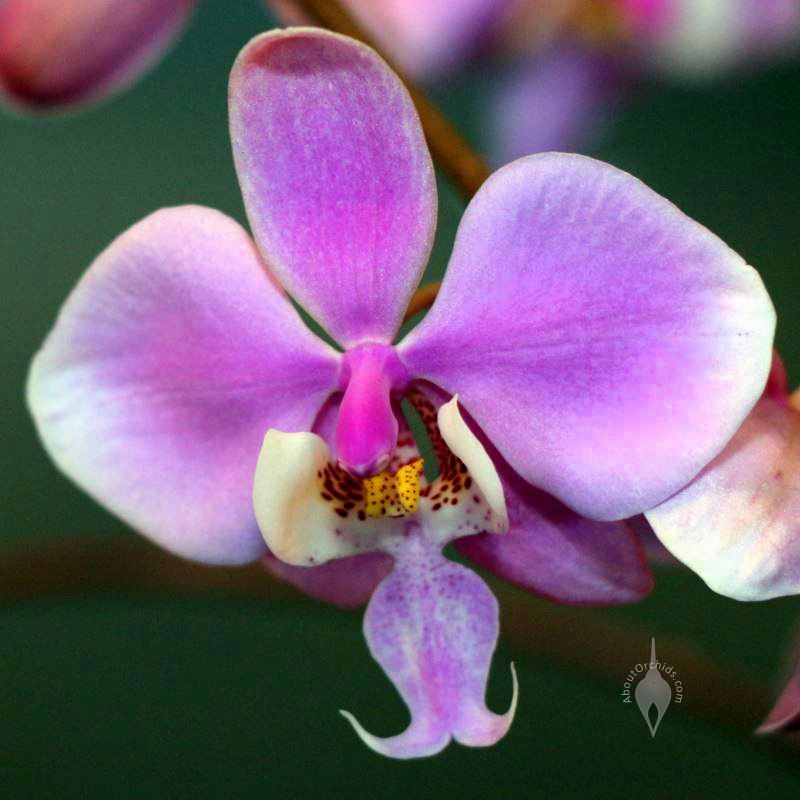
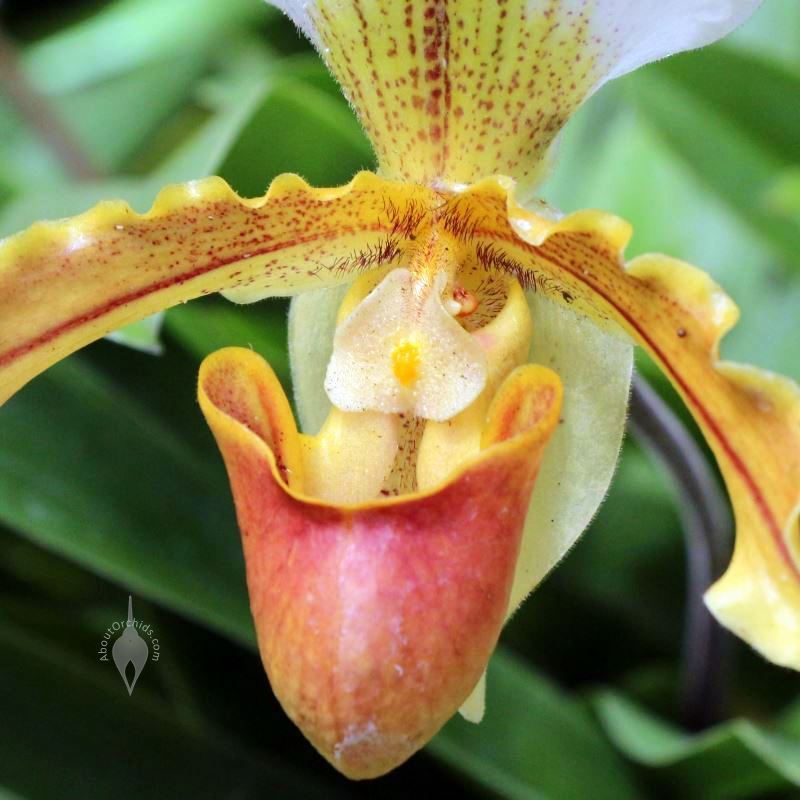
Phal speciesLady Slipper close upDendrobium flower

With endless choices of brilliant colors and magic shapes, orchids have become Mother’s Day favorites. No need to worry if you don’t have a green thumb — most orchids don’t deserve their finicky reputations. With a few care basics, you can enjoy their tropical flowers for weeks or even months.

  • Identify your orchid to learn its light, temperature, and water needs. You don’t need its exact name, just its orchid family. Phals, or Moth Orchids, are the most common types sold. Cattleyas, Dendrobiums, Epidendrums, Oncidiums, and Paphs are also popular.
  • If you cannot identify your orchid, use these basic care tips.
  • When watering, soak roots and potting material thoroughly until water runs out of the holes in the pot. Let all excess water drain completely. Never allow the pot to sit in water for more than a few hours, or the roots may rot.
  • Eventually you need to remove ribbons, wrapping paper, or decorative containers if they block water draining from the flower pot.
  • All orchids need high humidity and good air movement. Dry, stagnant air can lead to wilting flowers and pests.
  • As cut flowers, orchids don’t need any special care. Change the water every couple days to keep blooms fresh.
  • Browse AboutOrchids for more growing tips, FAQ, and beautiful photos. Enjoying orchids has never been easier.

Cattleya flowersAscocentrum species, a Vanda relativePhal hybrid

What To Do After the Orchid Blooms Drop

Posted May 10th, 2013 by Marc Cohen
Categories: Fertilizing, Growing, In the News, Watering

Two recent news articles help demystify orchids. Wisconsin’s Journal Times and New York’s Chronogram magazine bring good news about basic orchid care. Both articles make the same point often made on this site: orchids are easy with a few key care points.

The Journal Times covers Phals, or Moth Orchids, the most common orchid sold today. “The blooms can last two to four months, and there are some that seem to be in bloom nearly all year.” Helpful Phal potting advice includes replacing moss with bark after blooms drop. Moss works great for the experts, but bark is much easier for beginners. “With a good quality orchid mix, bright light, fertilization and the right moisture, your orchid will bloom again in a few months. Enjoy.”

From the Hudson Valley of New York, Chronogram has a helpful article about orchid basics, looking closely at Phals, Catts, and Dendrobiums. “First-Orchid Confidence” begins with a common scenario: “You are gifted or impulsively buy your first orchid. A bit of panic sets in. They’re ethereal, celestial, and otherworldly, aren’t they? And therefore must be fussy as heck? Not so. … They just need consistent care that mimics the conditions of their native environment.” The article’s helpful info includes tips for water, light levels, humidity, and fertilizer. There are also sidebars for “Sourcing Orchids Responsibly” and “Orchid Fun Facts.”

Orchid Specialties

Posted May 5th, 2013 by Marc Cohen
Categories: Buying Tips, Fragrant Orchids, Mini Orchids, Photos

As the largest and most diverse flower family, orchids can be overwhelming. To make them more manageable, many growers specialize. With 30,000 species, and over 150,000 hybrids, there are countless ways to find a niche in the orchid world. Here are a few:

Collect mini’sMiniature orchids are short on stature, but full of exotic beauty. Out of necessity from lack of space, or simply because they’ve succumbed to mini charms, many growers focus on small varieties. Mini Phals and mini Cattleyas join small members of the Dendrobium, Masdevallia, and Oncidium families to guarantee that you’ll never get bored with their endless diversity.

Create a fragrant orchid collection – Many members of the Cattleya, Cymbidium, Dendrobium, and Oncidium families exude rich scents. Always sniff it to see if it’s a smell you like. Some members of the large Masdevallia and Bulbophyllum families have unpleasant smells. White flowers may only be fragrant at dusk or nighttime.

Grow orchids from a certain region –  How about orchids native to Mexico, like Laelias, Epidendrums, and Vanillas? Cattleyas, Oncidiums, and Miltonias from the Amazon? Or Madagascar’s Angraecums, Jumelleas, and Oeoniellas? People in China and Japan have collected native Cymbidiums and Samurai Orchids for centuries. Southern Africa is home to fascinating terrestrials like Disa and Stenoglottis, and epiphytes like Mystacidium and Aerangis.

Collect one genusPaphs, or Lady Slippers, inspire collectors who grow nothing else. Phals are a source of endless fascination, and new hybrids appear all the time. Epidendrums have long lasting blooms in a rainbow of colors.

Pick award winners – Why not have the best? Expert judges award exceptional orchids. Awards become part of the orchid name, so look for initials at the end of nametags, like CCE/AOS or FCC/AOC.

Cultivate orchid species – Species are Mother Nature’s original handiwork, as opposed to hybrids created by humans. Many growers like me enjoy the extra challenges of cultivating orchid species. They can be more finicky than hybrids, needing high quality water or precise temperatures. If you buy orchid species, always buy from reputable dealers, and never take orchids from the wild.

Mini Dendrobium speciesFragrant Cattleya hybridPaphiopedilum flower

May Orchid Shows

Posted April 30th, 2013 by Marc Cohen
Categories: Botanical Gardens, Events

From Albuquerque to Zululand, orchid shows fill every corner of the globe. Many are perfectly timed for Mother’s Day. Among this month’s great events, London’s Chelsea Flower Show is the most famous flower show in the world, and showcases plenty of orchids. The San Jose Orchid Expo pairs floral beauty with wine tasting. Canada’s Bruce Peninsula Orchid Festival isn’t a show, but offers nature tours with the rare opportunity to see 44 native orchid species growing in the wilds of Ontario.

May 2 – 5
Sociedad de Orquidistas del Este Show, Fito Ramos Gimnasio, Route 976, Bo. Florencio, Fajardo, Puerto Rico
May 2 – 5
Exposicion Nacional de Orquideas, Jardin Botanico Eloy Valenzuela, Floridablanca, Santander, Colombia
May 3 – 4
Maclean District Orchid Society Show, Maclean Bowling Club, 1 McLachlan St., Maclean, NSW, Australia
May 3 – 5
Long Island Orchid Festival, Planting Fields Arboretum, 1395 Planting Fields Rd., Oyster Bay, New York
May 3 – 5
New Mexico Orchid Guild Show & Sale, ABO BioPark Botanic Garden, 2601 Central Ave. NW, Albuquerque, New Mexico
May 3 – 5
Platinum Coast Orchid Society Show & Sale, Kiwanis Island Park, 951 Kiwanis Island Park Rd., Merritt Island, Florida
May 3 – 5
Zululand Orchid Society Autumn Show, Boardwalk Inkwazi Shopping Centre, Richards Bay, KwaZulu-Natal, South Africa
May 3 – 5
Orchid Society of the Northern Transvaal Autumn Show, Safari Garden Centre, Lynnwood Rd., Pretoria, Gauteng Province, South Africa
May 3 – 5
Exposicao OrquidaRio, Jardim Botanico do Rio de Janeiro, Rio de Janeiro, Brazil
May 3 – 5
Exposicao de Orquideas de Timoteo, Fundacao Aperam Acesita, Alameda 31 de outubro, Centro Norte, Timoteo, Minas Gerais, Brazil

Read the rest of this post »

Philippine Ground Orchids

Posted April 26th, 2013 by Marc Cohen
Categories: Dormancy, Fertilizing, Photos, Warm Growers, Watering

Spathoglottis, or Philippine Ground Orchids, are hallmarks of the tropics. This great terrestrial orchid family offers a range of colors and sizes for tropical gardeners. The best known member of the family is the species Spathoglottis plicata. Shown in the first photo below, its purple and yellow flowers are a common sight in moist tropical and subtropical climates, where it can be an invasive weed. However, this type is just the start of the show. The Spathoglottis family includes dozens of other species with dazzling color variations. In addition, orchid growers have created countless hybrids with electric hues and bold patterns. These photos show only a few choices.

Spathoglottis species growing wild near Hilo, HawaiiSpathoglottis hybridSpathoglottis flowers

Spathoglottis hybridSpathoglottis hybridSpathoglottis flower

Despite their name, Philippine Ground Orchids aren’t just from the Philippines. They’re native to a large area from India through Southeast Asia, Indonesia, New Guinea, northern Australia, and many Pacific islands besides the Philippines. They’ve spread to Hawaii, Florida, Puerto Rico, and other parts of the Caribbean.

Spathoglottis hybridSpathoglottis flowersSpathoglottis hybrid

Spathoglottis hybridSpathoglottis flowerSpathoglottis plicata leaves
Read the rest of this post »

A Child’s Garden of Orchids

Posted April 23rd, 2013 by Marc Cohen
Categories: Botanical Gardens, Events, In the News

Daily Kos offers a tropical respite from a chilly New York spring. Skilled photographer Eddie C shares his visual obsession with an overview of the New York Botanical Garden’s orchid show. At the outset, he declares “For me the Orchid Show in the New York Botanical Garden is like Christmas is to a child.” Hunting for the perfect Phal portrait, he captures the essence of the event with over three dozen magnificent photos. With colorful Phals, Cattleyas, Lady Slippers, Oncidiums, and more, he also manages to evoke the show’s floral saturation.

The exhibit ran for more than seven weeks in the Enid Haupt Conservatory, a Victorian glasshouse in the Bronx. Some of the tree branches used in this year’s displays were knocked down by Hurricane Sandy.

Orchid Urban Myths

Posted April 20th, 2013 by Marc Cohen
Categories: Dormancy, Fertilizing, Growing, Problems, Watering

Orchid myths are nothing new. Some myths cause problems for growers, so I’m going to bust these common misunderstandings about orchid care.

Myth: Orchids are only suited for gardeners with greenhouses or tropical climates.
Growers who have an understanding of basic care can make orchids thrive anywhere. With diverse choices from cool growers to warm growers, there are orchids suited for every home and office. People who live in cold or dry areas need to work extra hard to provide proper temps and humidity, but orchid lovers coax plants into bloom in some surprising places. Want proof? Check out the amazing flowers of Orchid Karma, a fellow orchid blogger in Sweden. Don’t miss her stunning photo gallery.

Myth: Water orchids with ice
Ice is too cold for orchids, and melting ice cubes don’t provide enough water to flush out pots. Some modern hybrids can tolerate ice, but even they will be happier with room temperature water. Save the ice for your drink.

Myth: Don’t fertilize an orchid in bloom
I hear this one all the time, but don’t know how it started. Continue to fertilize orchids while they’re in bloom for optimal plant health. Fertilize weakly, weekly. If an orchid flowers during the winter dormant season, use a weaker fertilizer solution.

Myth: Phals and Paphs like deep shade
It’s true that Phals, or Moth Orchids, and Paphs, or Lady Slippers, don’t want full sun. However, they still need bright light, and they won’t flower if they’re kept too dark. Many will enjoy morning sun.

Myth: Orchid flowers last forever / Orchid is dead when it stops blooming
Since Phals and Cymbidiums can stay in bloom for months, it’s understandable how this myth began. When blossoms drop, that doesn’t mean the plant is dead. All plants go through cycles of flowering, growth, and rest. Healthy plants live to bloom again.

Myth: Don’t water orchids at night
This myth is only partially busted. Of course, in the wild, rain doesn’t fall on a set schedule, and orchids receive moisture at all hours. If pots drain well, and there’s good air flow around leaves and roots, you can water at any time of day. However, growers in warm, humid climates do need to be careful. In those environments, excess water on leaves and flowers at night can lead to fungal or bacterial infections.

Any other orchid urban myths you can think of?

More from Foster Botanical Garden

Posted April 15th, 2013 by Marc Cohen
Categories: Botanical Gardens, Photos, Warm Growers

During our recent visit to Foster Botanical Garden in Honolulu, Dave and I took plenty of photos. Since my first post was almost all orchids, this post highlights Foster’s other natural wonders. Don’t worry — there are more orchids at the end.

The crown jewels of Foster’s extensive collections are undoubtedly its exceptional trees, many planted in the 1850’s. Spread throughout the garden grounds, over two dozen of these impressive tropical trees are protected by state law. It’s not easy to capture the magnificence of a massive tree in a small photo, but I hope these pictures can offer a taste.

Quipo tree in Foster Botanical GardenTrees in Foster Botanical GardenLooking at Downtown Honolulu from southern tip of Foster Botanical Garden

Alongside Honolulu’s busy downtown, Foster is a great place to take pictures, hike through the gardens, or have a picnic. For gardeners in the tropics and others who can grow these plants, Foster is a showcase for exotic beauties. For the rest of us, these lush blooms and greenery are the stuff of garden fantasy.

Bizarre flower of the Cannonball TreeOrchid Conservatory Foster Botanical Garden in HonoluluBromeliad flower near entrance to Foster Botanical Garden

Jamaican Poinsettia in Foster Botanical Garden, HonoluluElephant Ear Plant in Foster Botanical Garden Orchid ConservatoryRoyal Poinciana flowers and buds

Foster also has many native Hawaiian plants. In addition, the adjacent Liliuokalani Botanical Garden grows only native Hawaiian species.

I’ll finish this tour, as promised, with a few more orchids from Foster’s Orchid Conservatory. These warm growers include a Tolumnia (an Oncidium relative,) a Dendrobium hanging from above, and one of many Cattleya hybrids. They’re just a few of Foster’s delights hidden in the middle of downtown Honolulu.

Tolumnia hybrid in Foster Botanical Garden Orchid ConservatoryUnusual Dendrobium  in Foster Botanical Garden Orchid ConservatoryCattleya hybrid in Foster Botanical Garden Orchid Conservatory